
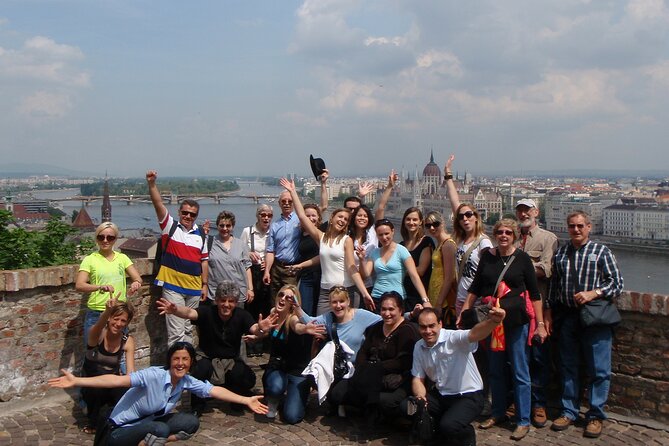
Reviewed · CITY TOURS
Budapest City Landmarks Walking Tour in 2 Hours
Two hours, and Budapest clicks into place. This city landmarks walk links the big sights of Pest and the Danube with the stories that explain how Budapest became Budapest.
I love the efficient route, because you get a clear overview fast and then you can use the rest of your day at your own pace. I also like the mix of major monuments plus real local culture, from Herendi and Zsolnay porcelain to the Shoes on the Danube memorial.
One drawback to plan around: it is mostly an outside, stop-and-look style tour, and it does not enter Szent István Bazilika, so you will want a separate visit if you care about interior time.
In This Review
- Key highlights worth your attention
- A smart start for first-timers: big landmarks, real context
- Price and value: $3.63 plus the donation at the end
- Getting started: meeting point, pace, and how to hear the guide
- Stop-by-stop: from Erzsébet tér to St. Stephen’s Square
- Erzsébet tér (Elisabeth Square), where the tour story begins
- St. Stephen’s Basilica area, without going inside
- St. Stephen’s Square and the food-story stop
- Jozsef Nador Ter and Vorosmarty ter: porcelain, Habsburg lore, and people-watching
- Jozsef Nador Ter, Habsburg and two famous ceramic names
- Vorosmarty Square, Váci Street energy, and Christmas-market context
- Korzo and the Danube embankment: UNESCO views and tramline panache
- Korzo – Danube Embankment, plus iconic skyline viewpoints
- Little Princess Statue and Vigadó Square: charming stops that teach social memory
- Little Princess Statue, with the wish ritual
- Vigado Square and royal-era music culture
- Chain Bridge and Gresham Palace: engineering history meets Art Nouveau style
- Széchenyi Lánchíd and the Chain Bridge story
- Gresham Palace, Secession architecture and ornate Art Nouveau details
- Hungarian Academy of Sciences and the word lesson you will actually use
- Shoes on the Danube Bank and Parliament: memory, recent history, then your next day plan
- Shoes on the Danube Bank, Holocaust memory in a very direct way
- Hungarian Parliament Building, neo-Gothic architecture and a wrap-up
- What you should do after the tour ends
- Who this walking tour suits best
- Should you book the Budapest City Landmarks Walking Tour?
Key highlights worth your attention

- Meeting near Budapest Eye makes it easy to orient before the walk starts
- Language and culture lessons show up in small moments, including basic Hungarian words
- Danube-area stops connect views to specific stories, not just photo ops
- Practical food tips help you avoid tourist traps and know what to try
- Art, architecture, and public memory get equal time, including Shoes on the Danube
- Finish at Hungarian Parliament so your next steps are obvious the moment you’re done
A smart start for first-timers: big landmarks, real context
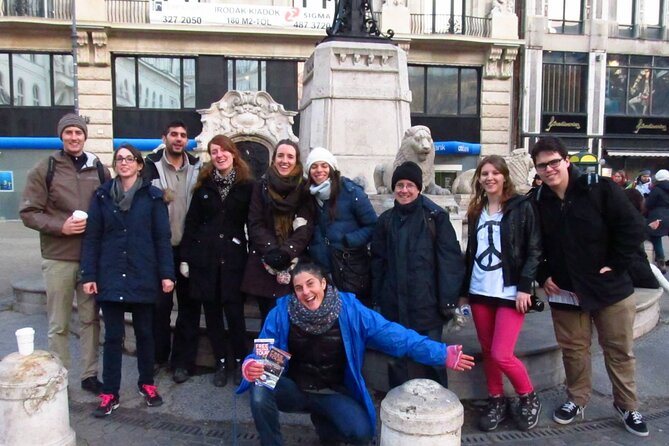
If it is your first time in Budapest, this kind of walk is the shortcut to feeling oriented. You cover a lot of the most famous areas without turning it into a day-long grind. You also get the connections that make the city make sense, like how Pest and Buda developed different identities, and how public art and memorials reflect modern Hungary.
The tone is also a big part of the value. The tour leans into history, architecture, society, and everyday life, with basic Hungarian sprinkled in along the way. Guides like Balázs and Sofia (and others such as Esther, Marton, Andy, and Dora) are repeatedly praised for being engaging, friendly, and easy to follow, including when a speaker is used to keep the narration clear.
More City Tours in Budapest:
- Budapest: City Highlights Sightseeing Cruise
★ 4.6 · 43,981 reviews - Budapest: City Sightseeing Hop-On Hop-Off Bus Tour & Extras
★ 4.1 · 4,337 reviews - Budapest: Nighttime or Daytime City Sightseeing Cruise
★ 4.1 · 2,046 reviews
Price and value: $3.63 plus the donation at the end
On paper, the price looks almost too low, listed at $3.63 per person. What you are really paying for here is the tour booking, including the booking fee. The good news is that the sightseeing stops are free to see, and the tour is designed to give you maximum “where am I and what should I do next” value per hour.
Just be honest with yourself about one detail: this is not a paid-guiding-only model. The guide earnings depend on donations at the end of the tour, and the amount is at your choice. If you want a “premium guide time” experience, plan to budget something extra for that donation even if the ticket price is small.
Getting started: meeting point, pace, and how to hear the guide
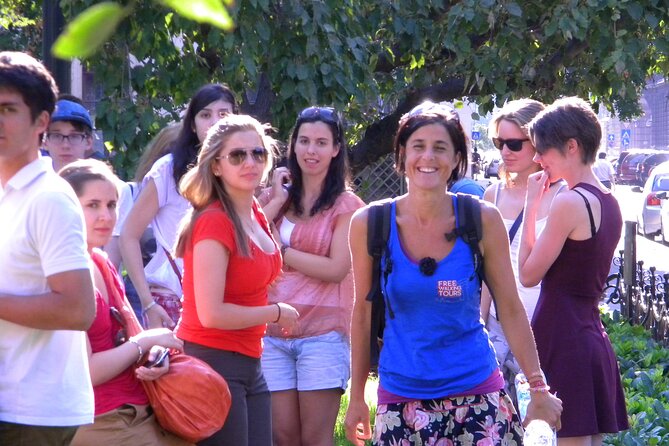
You start at Erzsébet tér, at the Ferris Wheel of Budapest area, specifically near Elisabeth Square. Your guide meets you about 20 meters from Budapest Eye, holding a small blue flag. The tour runs in English, and confirmation comes right when you book.
The walking pace is built for a broad mix of travelers, and the group is kept to a maximum of 30. That matters because you do not want a long tourist shuffle at every corner. It also helps at the tighter stops where the guide talks in short bursts and then you move on.
One practical tip from how guides describe the experience: bring a drink. It is easy to lose track of time when stories are flowing, and you want to stay comfortable, especially if the day is warm.
Stop-by-stop: from Erzsébet tér to St. Stephen’s Square
This opening stretch is all about setting up the “big picture” without exhausting you.
More Walking Tours in Budapest:
- Budapest: Buda Castle Walk with Saint Stephen’s Hall
★ 4.5 · 3,012 reviews - Big Bus Budapest Hop-On Hop-Off Bus and Walking Tour
★ 3.5 · 2,206 reviews - Budapest: Buda Castle District Walking Tour
★ 4.6 · 2,108 reviews - 3-Hour Orientation Walking Tour of Buda and Pest
★ 4.8 · 1,834 reviews
Erzsébet tér (Elisabeth Square), where the tour story begins
Your guide meets you near Budapest Eye and starts mapping out the plan, both literally and in conversation. This is where you get a quick sense of what you will see, plus the city’s themes: history, architecture, public art, society, food, and basic Hungarian. The payoff is simple. After this start, you can return to landmarks on your own later with a better understanding of what you are looking at.
St. Stephen’s Basilica area, without going inside
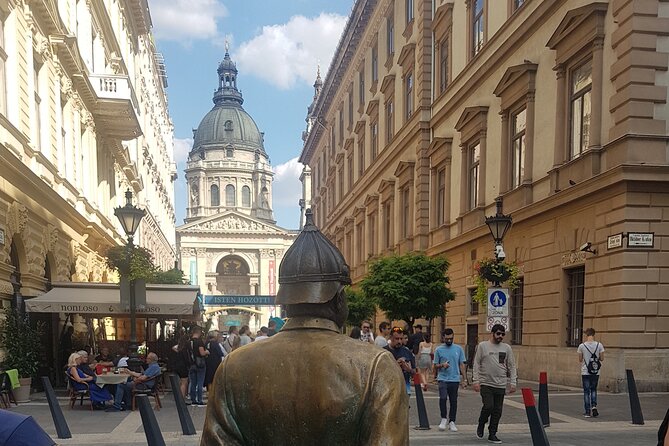
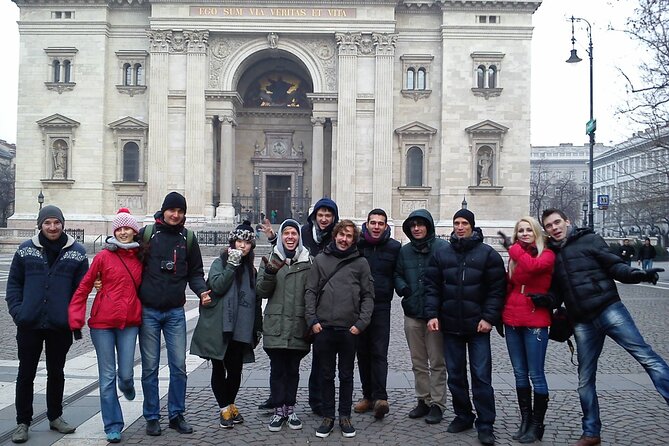
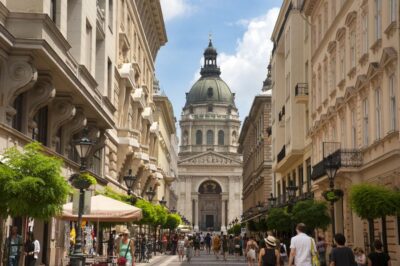
Next up is Szent István Bazilika, the largest church in Budapest. You get facts like the seating capacity (around 8,500 people) and the way the basilica’s architecture reflects different periods of splendor. The key consideration: the tour does not enter the basilica, so you are viewing it as part of your orientation.
This is actually a good match for a short tour. Inside visits can turn a two-hour walk into a half-day event, and this one is designed to keep your schedule intact.
St. Stephen’s Square and the food-story stop
St. Stephen’s Square is quick, with public art that includes fat policemen with shiny bellies. Then the guide pivots into Hungarian culinary art: what Hungarians cook historically, what to eat in Budapest now, and how to spot and avoid tourist traps.
If food is a big part of your trip, this stop is one of the most useful. You are not just learning restaurant names, you are learning how to think about meals locally, which makes it easier to choose even if your guide is not around later.
Jozsef Nador Ter and Vorosmarty ter: porcelain, Habsburg lore, and people-watching
This section feels like Budapest in miniature, high culture mixed with street-level daily life.
Jozsef Nador Ter, Habsburg and two famous ceramic names
At Jozsef Nador Ter you hear about “the most Hungarian Habsburg” and you see what collectors and design fans will recognize: Herendi porcelain (hand-painted) and Zsolnay colorful glazed ceramics. The tour does not linger too long, but it gives you names you can chase later.
That is the real trick with these short stops. A two-hour walk cannot replace a museum day. Instead, it gives you leads. If you spot Herendi and Zsolnay in a shop window later, you will know what you are looking at.
Vorosmarty Square, Váci Street energy, and Christmas-market context
Vorosmarty ter sits at the end of the famous pedestrian street Váci utca. You get a breather with a park setting that is ideal for people-watching. It is also connected to transit history, including a terminal linked to the second oldest underground in the world.
The guide also discusses Christmas markets and traditions in Budapest. Even if you visit in summer, these details help you understand why parts of the city feel like they do, because seasonal culture affects where people gather and what neighborhoods prioritize.
Korzo and the Danube embankment: UNESCO views and tramline panache
Now you shift toward the Danube, where the city opens up visually.
Korzo – Danube Embankment, plus iconic skyline viewpoints
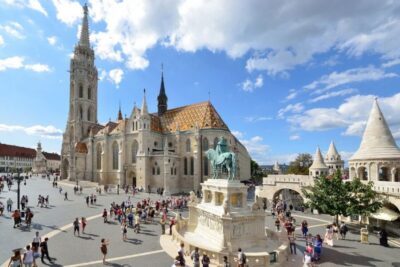
At the Dunakorzo riverside area, you learn about the first non-Communist statue in Budapest. You also get the panoramic tramline in Central Europe reference, and the main riverside buildings. Most importantly, you get a layered view toward Castle Hill, including Matthias Church, Fisherman’s Bastion, Buda Castle, and Gellert Hill with Citadel.
The tour frames many of these as UNESCO World Heritage Listed Sights, which helps you understand why these areas get protected and promoted the way they do. You are not just looking at famous structures. You are learning what makes them internationally significant.
Little Princess Statue and Vigadó Square: charming stops that teach social memory
Two quick moments, but they stick.
Little Princess Statue, with the wish ritual
The Little Princess Statue stop is short. You are encouraged to make a secret wish while touching the statue’s shiny knees. It sounds playful, because it is, but it also shows something about Budapest: the city uses small public rituals and cheeky art to keep history and identity approachable.
Vigado Square and royal-era music culture
At Vigado ter you hear about Franz Joseph and Sissy’s coronation banquette in the 19th century. Then the focus turns to famous Central European musicians tied to the area, including Franz Liszt, Debussy, and Brahms. This is where architecture and cultural life overlap, and where the guide helps you notice that Budapest is not only grand monuments, it is also a city of music and public gatherings.
Chain Bridge and Gresham Palace: engineering history meets Art Nouveau style
After the charm, you get structure.
Széchenyi Lánchíd and the Chain Bridge story
At Szechenyi Lánchid, you learn about the history of Pest and Buda told through the Chain Bridge, described as the first permanent bridge built in the city. This is a smart teaching method because it ties a physical connection to the broader story of how the city functioned and grew.
Even if you know the name Chain Bridge, you will likely leave this stop understanding why it mattered beyond just being pretty.
Gresham Palace, Secession architecture and ornate Art Nouveau details
Then comes Gresham Palace, celebrated as an exceptional Sezessionist building from the golden age of Budapest at the turn of the century. The guide points out the Art Nouveau style and talks about major ornaments.
This is another “quick stop, long impact” moment. A place like Gresham Palace becomes much more interesting once you know which design period you are looking at and what details you should notice. After the walk, you can spot other Art Nouveau touches around town and connect the dots yourself.
Hungarian Academy of Sciences and the word lesson you will actually use
At the Hungarian Academy of Sciences stop, the tour shifts from buildings to people and ideas. You pick up some Hungarian words and phrases meant to impress friends back home. You also learn why Hungary has the largest Nobel-prize awards per capita, plus famous people of Hungarian origin and Hungarian inventions you might miss in daily life.
Even if you only remember a couple of phrases, this stop earns its place. It makes Hungary feel personal instead of only monumental.
Shoes on the Danube Bank and Parliament: memory, recent history, then your next day plan
The final stretch is the emotional and practical payoff.
Shoes on the Danube Bank, Holocaust memory in a very direct way
At the Shoes on the Danube Bank memorial, you see 60 pairs of shoes placed to commemorate the 60th anniversary of the Holocaust. The guide speaks about WWII history, the deportations, and the more recent history of the Hungarian Jewish people.
You are also asked to close your eyes and imagine the individuals who died here, described in the story from synagogue goers to assimilated Jewish people, and across different roles. This is heavy material, and it is handled with a guided, reflective approach.
It is also an important reminder of why Budapest history belongs in the open air. Standing at the Danube gives the story gravity because it ties people and suffering to the same public space where you are walking.
Hungarian Parliament Building, neo-Gothic architecture and a wrap-up
Your walk finishes at the Hungarian Parliament Building. You learn about recent history, elections, and the building’s neo-Gothic architecture, described as harmonically beautiful. This is also where you get useful recommendations about restaurants and nightlife, plus suggestions for what to do on your next days in Budapest.
That finish is a big reason the tour works well early in your trip. If you start your day here instead, you would lose that built-in planning moment. Starting early gives you a “now I know what to do next” feeling before you scatter across neighborhoods.
What you should do after the tour ends
Because the tour is about two hours and designed so the rest of the day is free, you should treat it as a routing tool. Use the landmark names you heard, then pick one or two areas to go deeper in.
A practical approach:
- If you want interiors, plan a separate visit on a day when you can slow down, since this tour does not enter Szent István Bazilika.
- If you care about design, look for opportunities to see or recognize Herendi and Zsolnay ceramics in shops or displays after you’ve been given those names.
- If you want views, return toward Castle Hill and the riverfront. The walk gives you the skyline references so your photos will have meaning.
And if you are trying to avoid a “see it, forget it” trip, write down two stops you want to revisit. The tour ends at Parliament, so you will have an easy reference point for planning your next route.
Who this walking tour suits best
This works especially well if you:
- Are visiting Budapest for the first time and want a quick orientation route
- Prefer walking and outdoor viewing over long museum time
- Want a guided explanation of major landmarks plus practical city tips for food and what to avoid
- Like learning a bit of local language without it feeling like school
It may be less ideal if you:
- Want extensive interior time inside major churches or long structured stops
- Get frustrated by a schedule with many short segments and minimal lingering
Should you book the Budapest City Landmarks Walking Tour?
Yes, if your goal is a fast, guided overview that makes the rest of your trip easier. For a low listed price, you get a lot of ground coverage and the kind of “why does this matter” storytelling that helps you choose what to do next. You also benefit from guides who are consistently praised for friendly energy and good communication, and you end at Parliament with recommendations in hand.
Book it particularly early in your stay so you can use the rest of the day to explore with context. If your travel style is all about deep interiors and slow museum time, still consider it, but plan at least one extra visit to any major spot you want to see up close.
Latest to land in Budapest
- Visegrád Hike & Castle Tour with Ferry from Budapest★ 4.6 · 3 reviews
- Budapest: Vacation Photographer to collect great memories★ 5.0 · 49 reviews
- Trash Art Museum: Hungary’s First Scrap Metal Exhibition★ 4.3 · 72 reviews
- True Crime Walking Tour in the Buda Castle district★ 5.0 · 26 reviews
- Budapest: 3-Hour Trabant Sightseeing Tour★ 4.7 · 28 reviews
- Audio visual multi-sensory chefs journey dinner experience★ 5.0 · 3 reviews
- Private Szentendre and Vac Tour from Budapest with Transport★ 5.0 · 3 reviews
- Wine Tasting in the Countryside from Budapest★ 5.0 · 14 reviews
City Tours, compared.

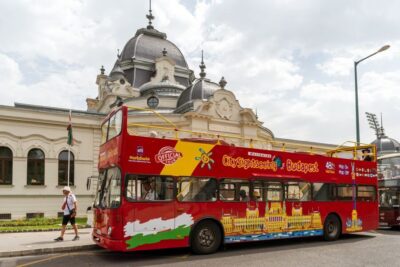
City Sightseeing Hop-On Hop-Off Bus Tour & Extras
Read our review →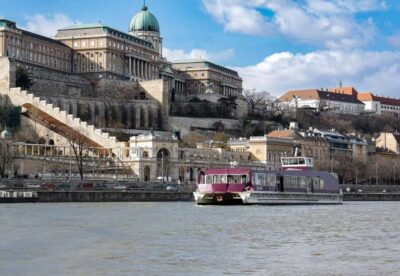

Hungarian Chimney Cake Workshop in the City Center
Read our review →
Browse the lists this tour appears in