Reviewed · BUDAPEST TOURS
Budapest: Official Guided Tour of the House of Music,Hungary
One building teaches you how sound works. The House of Music in Budapest is an architecture lover’s treat, with a floating, leaf-like roof that shapes light and sound, plus a spiral staircase that feels like sculpture. The only catch is that this guided visit is design-focused, so you do not get access to exhibitions, the Sound dome, or the Creative sound space.
I really like the way the building sits in Budapest’s City Park, with glass walls that make you feel connected to trees and sky while you learn. If your guide is Dora, you are in good hands, based on the way she brings the details to life and keeps the tour moving with questions and answers.
Plan for about an hour, in English, starting in the foyer. It is a great fit for adults and older teens, and it can feel less suited if you are mainly looking for hands-on exhibits or a full museum walk.
In This Review
- Key things to notice on this guided visit
- Meet the House of Music in Budapest’s City Park foyer
- The undulating roof: leaf-like metal and sound design in plain sight
- Inside the glass levels: open spaces, warm materials, and community areas
- The spiral staircase: a sculptural pause during your 1-hour walk
- Concert hall acoustics without a show, and why that still counts
- Sustainability you can actually point at: geothermal and rainwater
- What’s included and what’s not, so you do not feel shortchanged
- Is one hour enough, and does $13 feel fair?
- Who should book this House of Music tour?
- Should you book this tour?
- FAQ
- What is the duration of the House of Music guided tour?
- Where do we meet for the tour?
- Is the tour guided in English?
- Is wheelchair access available?
- What is included in the guided tour?
- What is not included during this tour?
- Is this tour suitable for children?
- Are pets allowed?
- How flexible is booking and cancellation?
Key things to notice on this guided visit
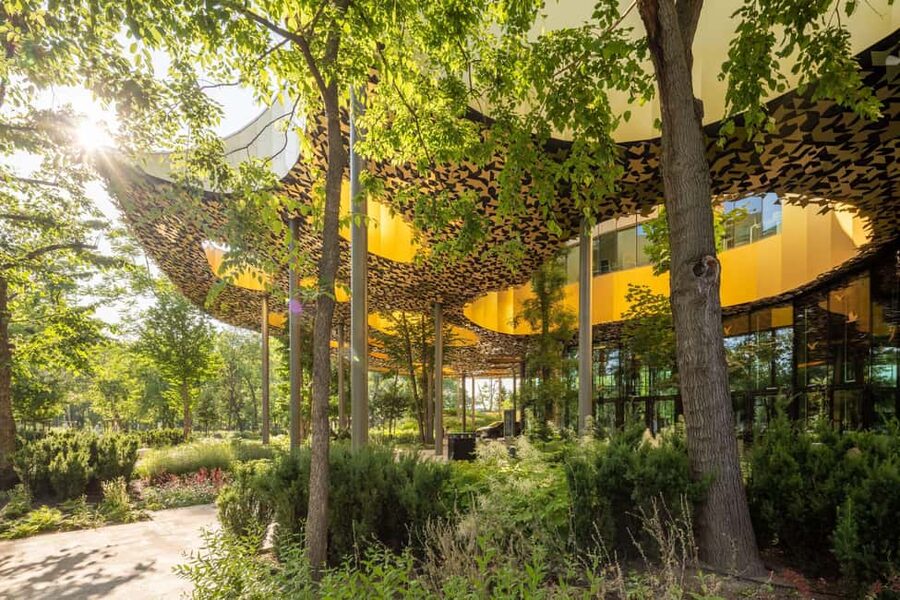
- The undulating metal roof made of thousands of leaf-like elements, tuned for light and acoustics
- Sou Fujimoto’s organic design that blurs indoor and outdoor space
- The spiral staircase where you naturally slow down and look closely
- City Park views through big glass openings and open levels
- Music-focused spaces without a concert where the guide explains the sound design
- Sustainability details you can spot, including geothermal energy and rainwater harvesting
Meet the House of Music in Budapest’s City Park foyer
Your tour starts inside the spacious foyer, so you get oriented before you head outside and up. This is not a quick “look and run” stop. You begin with the building as a whole, then zoom in on structure, materials, and how the spaces were meant to be used.
What I like here is how the foyer sets expectations. The guide points out the big ideas early, like how the building continues the park rather than fighting it. It also helps that the space feels open and bright, thanks to the glass and the roof design.
If you care about architecture, this starting point is smart. You get context for everything that follows: the roof above you, the open levels around you, and the way the interior stays connected to the outdoors. If you wanted only the museum rooms, you might feel a bit pulled into the design story first, but that is exactly the point of this tour.
A few more Budapest outings worth comparing
- Budapest: Parliament Building Entry Ticket and Audio Guide
★ 4.5 · 3,844 reviews - Budapest: Guided Pub Tour to Ruin Bars with Games & 6 Shots
★ 4.7 · 1,641 reviews - Budapest: Opera House Guided Tour
★ 4.6 · 1,533 reviews
The undulating roof: leaf-like metal and sound design in plain sight
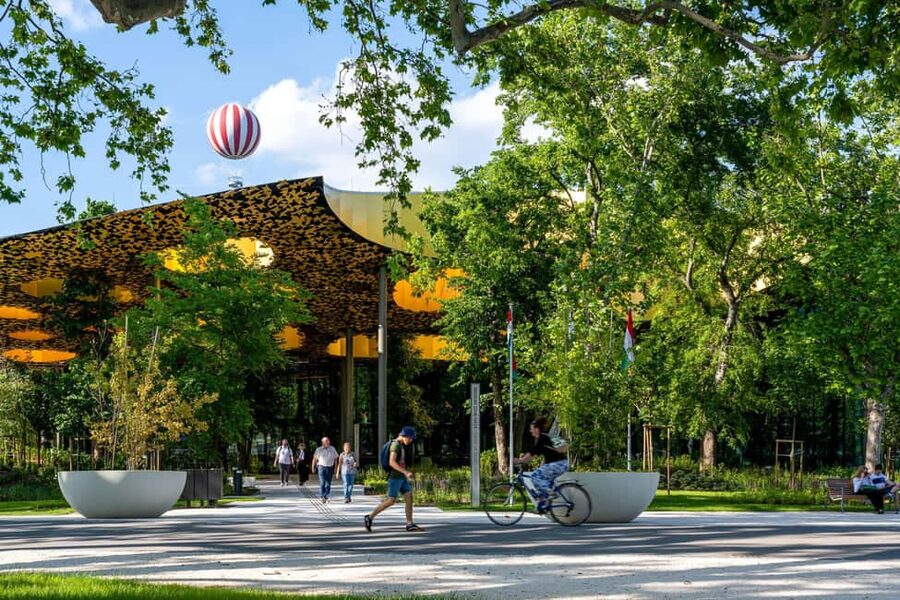
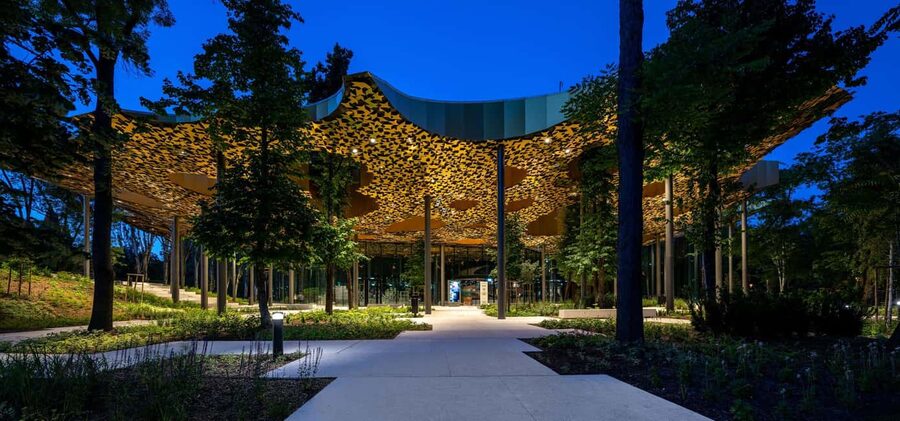
The most famous first impression is outside. The House of Music has that undulating roof, a canopy made of thousands of leaf-like metal elements. From a distance it looks sculptural, and up close you can see how it creates rhythm and texture above the public areas.
Here is what the guide explains that makes the roof matter beyond looks. The roof is not just decorative. It plays a role in acoustics and natural lighting, which is a big deal for a building devoted to music.
As you walk around viewpoints the guide chooses, you start to connect the dots. The organic shape and the openings help shape how sound travels, so the building can support performances and listening spaces even when you are standing in the lobby areas. The result is that you stop thinking of sound as something that happens only on stage.
If you love architecture, this part is a highlight. It is also a good moment to slow down with your camera, because the roof line and glass walls give you easy framing against City Park greenery.
Inside the glass levels: open spaces, warm materials, and community areas

Once you enter, the tour shifts to what is inside the shell. You will spend time in open spaces with lots of glass, which lets daylight move through the building. Even if you do not know the architect’s name, you can feel the design intention as you walk from level to level.
The guide calls attention to structural elements, including exposed concrete surfaces and intricate wooden features. I like this contrast. Concrete keeps things crisp and architectural, while wood adds warmth so the whole place does not feel cold or purely technical.
You will also hear how the building was conceived as a continuation of the park, blurring indoor and outdoor space. That idea matters when you are trying to understand why the layout feels airy and communal instead of closed and museum-like.
You may not have access to every exhibition area, but you will still see levels and open zones designed for community engagement and music education. That is the reason the tour works even without a full museum ticket. You are learning how the building supports people gathering, listening, and learning.
The spiral staircase: a sculptural pause during your 1-hour walk
At some point, you will reach the spiral staircase, and it is hard not to linger. It is described as impressive and is treated like a centerpiece during the tour because it is both functional and artistic.
Why it is worth the time: stairs are usually just a route. Here, the staircase becomes a viewpoint, a way to see levels, and a physical marker of how the building layers space. When the guide references it, they are usually connecting the structure to how the interior experience is shaped.
Also, this is where the tour benefits from a strong guide. Dora’s style, based on past experiences, seems especially good at turning “look at the stairs” into “notice what this shape does for movement and sightlines.” You get more meaning out of the same few minutes than you would alone.
If you are traveling with someone who just wants a quick photo, this is the moment where it helps to go early in the day or arrive relaxed. It is not the kind of staircase you sprint past. It is the kind you stand beside and let the space explain itself.
A different sort of day out in Hungary:
- Budapest: City Highlights Sightseeing Cruise
★ 4.6 · 43,981 reviews - Budapest: Unlimited Prosecco, Beer and Aperol Spritz Cruise
★ 4.8 · 37,304 reviews - Budapest: Széchenyi Spa Day Ticket with Optional Upgrades
★ 4.3 · 23,911 reviews - Budapest: Nighttime or Daytime Sightseeing Cruise
★ 4.2 · 21,062 reviews
Concert hall acoustics without a show, and why that still counts
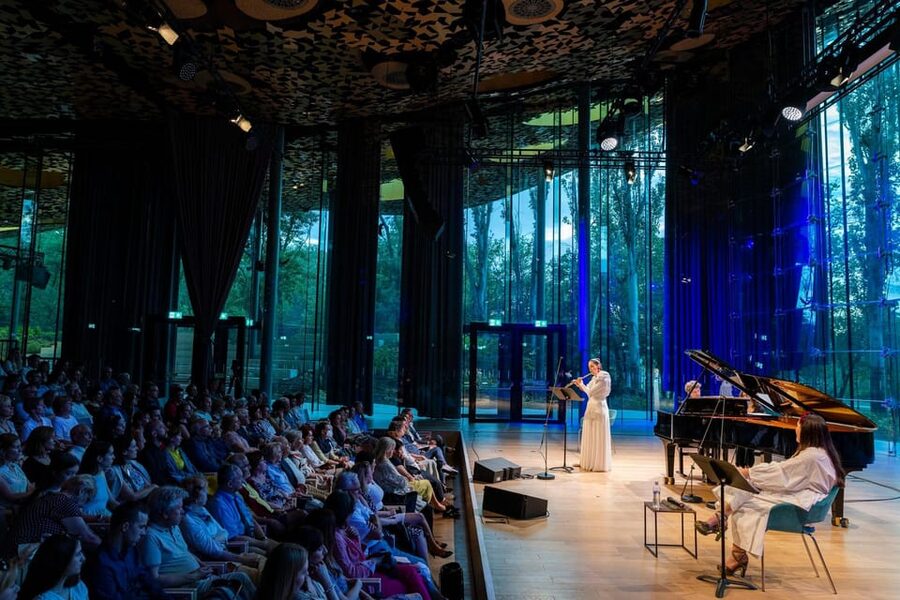
This is a music building, so you should expect the tour to focus on sound. The guide explains the building’s acoustics, using the shape, materials, and roof structure as evidence.
What you do not get is the experience of sitting through a performance during the tour. The good news is that you still get the reasoning behind the design. That makes this a smart choice if you are curious about how a room can make music feel different.
One standout detail from past tours is that sometimes visitors are lucky enough to listen to a rehearsal. If that happens during your visit, it is a bonus for hearing the space in action, even briefly. But even when you do not get that, the guide’s explanation is the point.
This part of the tour works best if you enjoy questions like these:
- How do materials change sound?
- Why do shapes matter?
- What does a roof do besides cover?
If you only came for exhibitions, the focus on acoustics might feel more like a lecture than a museum stroll. But if architecture and sound engineering interest you, it is one of the most satisfying parts of the hour.
Sustainability you can actually point at: geothermal and rainwater
A pleasant surprise in the tour is that sustainability is not treated as a footnote. You learn about features like geothermal energy and rainwater harvesting.
The practical value of this is simple. A music venue is an energy-intensive building in many cities. Seeing how this one was designed with energy efficiency in mind gives you a more complete picture of the architecture.
Also, when a guide ties sustainability back to real parts of the building, it feels less like marketing and more like design thinking. You are not only admiring the roof and glass walls. You are seeing how the building tries to operate responsibly.
If you like to travel with a “use your eyes” mindset, this section is easy to follow. You can usually identify where these systems connect to the building’s logic, even if the technical details are explained at a high level.
What’s included and what’s not, so you do not feel shortchanged
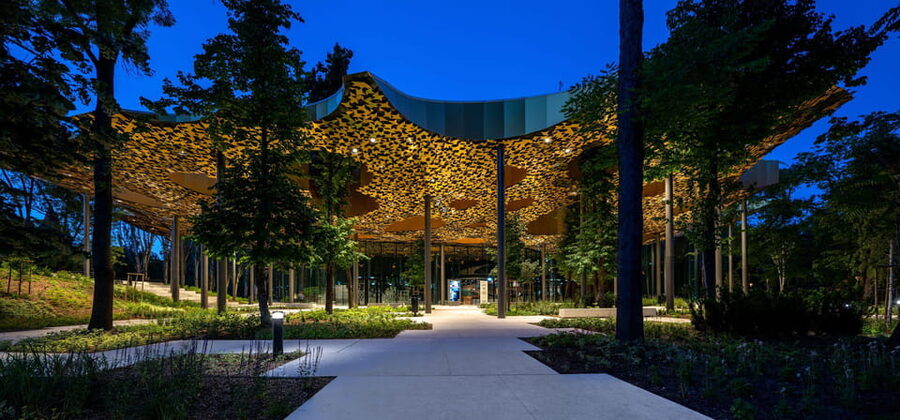
This guided visit includes a look at the concert hall, the library and archives, outdoor spaces, and the gift shop. So you are not stuck only in the foyer and corridors.
But it explicitly does not include entry to any exhibitions, the Sound dome, or the Creative sound space. That is the main consideration when deciding if this tour fits you.
I recommend thinking of it like this:
- If you want the building experience plus the design story, this tour is a strong match.
- If you want the museum experience with all the exhibit spaces, you may need separate tickets or a different plan for what those areas offer.
The upside of this format is time. At about one hour, you get a guided route through the most architecture-defining parts without spending half a day. The downside is you will not see everything.
Is one hour enough, and does $13 feel fair?
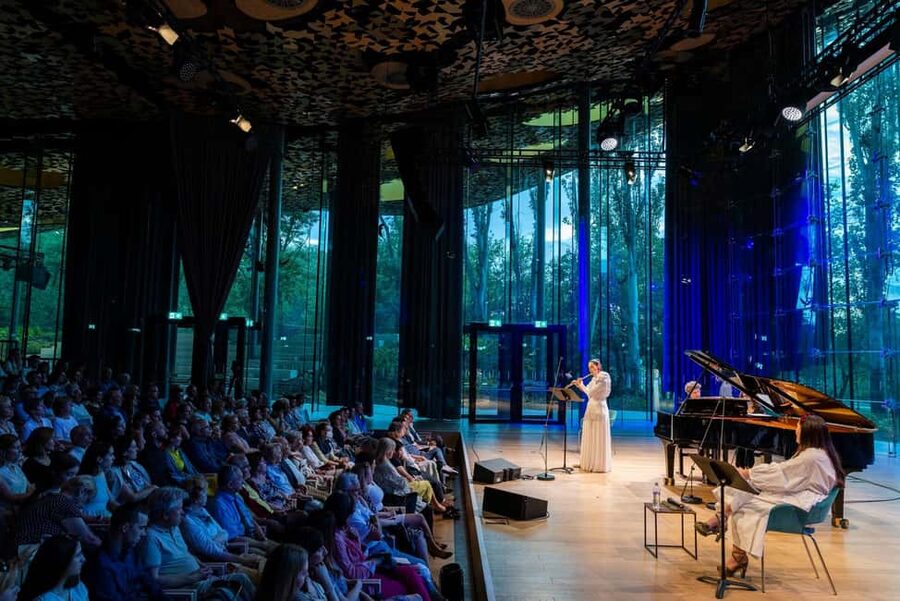
At $13 per person for a 1-hour English guided tour, the value depends on what you care about. For architecture, acoustics, and building design, it is a fair price because the guide points out details you would likely miss alone.
This is also a good budget choice compared to longer museum days. You can fit it between other City Park stops and still keep your afternoon open. The tour includes real highlights like the concert hall spaces and outdoor areas, not just a single room.
The tour can also be surprisingly personal. One past booking reported it turned into a private tour, which made the experience feel more tailored. Private access is not guaranteed, but it hints that the guide can adapt and answer questions rather than rushing.
If you are the type who enjoys stopping often to look up, this tour will reward you. If you only want exhibits or interactive sound rooms, you might feel the missing Sound dome and Creative sound space right away.
Who should book this House of Music tour?
Book it if you:
- Like modern architecture and want to understand why it is shaped this way
- Care about acoustics and want the explanation tied to the building
- Want an hour-long plan in City Park that feels more thoughtful than a checklist
It may be less suitable if you:
- Mainly want exhibition galleries and hands-on exhibit areas
- Are traveling with children under 15, since this tour is not suitable for them
- Are bringing pets, because pets are not allowed (assistance dogs are allowed)
Should you book this tour?
Yes, I think you should book it if your travel style is to learn by looking. The House of Music works best when someone helps you see the connections between design, sound, and space, and the guide role is clearly a big part of why people rate this tour so highly.
If your priority is exhibits and immersive sound spaces, plan on separate access for those areas since they are not part of this guided circuit. But if you want the building to make sense fast, this one-hour tour is a strong way to start.
FAQ
What is the duration of the House of Music guided tour?
The tour lasts about 1 hour.
Where do we meet for the tour?
You meet inside the foyer.
Is the tour guided in English?
Yes, the live tour guide speaks English.
Is wheelchair access available?
Yes, the experience is wheelchair accessible.
What is included in the guided tour?
The guide includes time to look at the concert hall, the library and archives, outdoor spaces, and you can also visit the gift shop.
What is not included during this tour?
Entry to exhibitions is not included, and the tour also does not include the Sound dome or the Creative sound space.
Is this tour suitable for children?
No, it is not suitable for children under 15.
Are pets allowed?
Pets are not allowed, but assistance dogs are allowed.
How flexible is booking and cancellation?
You can reserve now and pay later. Free cancellation is available up to 24 hours in advance for a full refund.
Latest to land in Budapest
- Visegrád Hike & Castle Tour with Ferry from Budapest★ 4.6 · 3 reviews
- Budapest: Vacation Photographer to collect great memories★ 5.0 · 49 reviews
- Trash Art Museum: Hungary’s First Scrap Metal Exhibition★ 4.3 · 72 reviews
- True Crime Walking Tour in the Buda Castle district★ 5.0 · 26 reviews
- Budapest: 3-Hour Trabant Sightseeing Tour★ 4.7 · 28 reviews
- Audio visual multi-sensory chefs journey dinner experience★ 5.0 · 3 reviews
- Private Szentendre and Vac Tour from Budapest with Transport★ 5.0 · 3 reviews
- Wine Tasting in the Countryside from Budapest★ 5.0 · 14 reviews
Budapest Tours, compared.


Unlimited Prosecco, Beer and Aperol Spritz Cruise
Read our review →
Széchenyi Spa Day Ticket with Optional Upgrades
Read our review →

By Night Sightseeing Cruise with Welcome Drink
Read our review →