Reviewed · BUDAPEST TOURS
Café Wandering: An Excursion through Budapest’s Belle Epoque
Budapest’s café rooms are miniature museums. On this 3-hour walk, an art historian turns Belle Epoque architecture and café culture into a guided story, starting at Café Gerbeaud and stopping for interiors like Café Astoria. I love the way the guide points out design choices you could otherwise miss, and I like the smooth rhythm of café interiors plus street and tram scenery. One drawback to plan for: refreshments and cakes are not included, so you may pay extra if you want to linger with coffee.
If you want a small-group experience, this one is built for you, with a limit of just 8 participants and an English-speaking guide. You’ll also get time to notice the tour’s focus on Asian motifs and other design flourishes, before ending at the art nouveau Orthodox Kazinczy Street Synagogue.
In This Review
- Key things to look forward to
- Why Budapest’s Belle Epoque cafés deserve your attention
- Meeting at Café Gerbeaud in Vörösmarty tér
- From Gerbeaud to the Danube: Central Cafe and the Habsburg vibe
- Café Astoria’s lavish interior and the art of design mixing
- Museum Cafe, opulence cues, and what to watch for
- Urania Café on Rákóczi Street and the intellectual café tradition
- More stops for context: Művész Coffee House and New York Palace
- Ending at Kazinczy Street Synagogue, where style turns sacred
- Guides, group size, and what $123 buys you in real terms
- Who should book Café Wandering
- Should you book Café Wandering?
- FAQ
- How long is the Café Wandering tour?
- Where does the tour start?
- Is the tour guided and in English?
- How big is the group?
- What is included in the price?
- Are refreshments and coffee included?
- Does the route include public transport?
- What are some of the main stops?
- What if I need to cancel?
- Can I book without paying right away?
Key things to look forward to
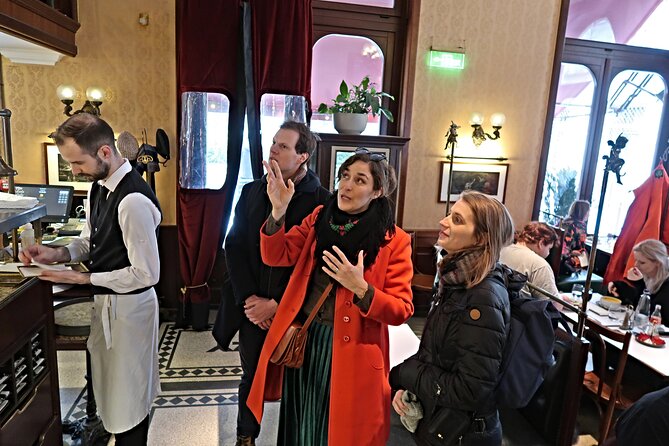
- Gerbeaud’s Imperial atmosphere: more than a century of social café life in one stop
- A tram ride along the Danube that links café interiors to the city’s big-picture setting
- Art nouveau interior details including Asian motif influences in café design
- Café Astoria and other grand rooms where architecture and everyday life meet
- An ending at Kazinczy Street Synagogue for a final visual and cultural contrast
Why Budapest’s Belle Epoque cafés deserve your attention
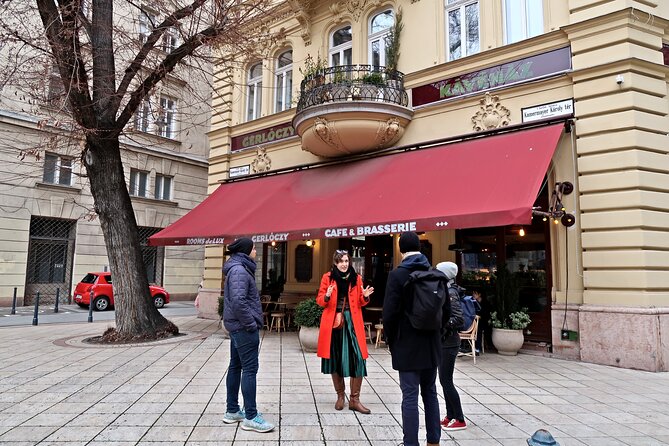
Budapest does not do museums the only way it knows how. It also keeps its art, style, and social theater in places you can still step into, order from, and watch people move through. That is the real trick of Café Wandering: you see buildings and interiors as lived-in spaces, not just postcard views.
You’ll spend your 3 hours absorbing 19th and early 20th-century Hungarian architecture through café culture. The tour keeps the focus tight. Instead of naming everything, you learn how cafés became meeting points where writers, artists, and intellectuals gathered, and how that social role shaped the look and feel of the rooms. That makes the architecture easier to remember later, when you’re back on the street doing your own exploring.
More of Budapest worth an hour of your evening:
- Budapest: City Highlights Sightseeing Cruise
★ 4.6 · 43,981 reviews - Budapest: Unlimited Prosecco, Beer and Aperol Spritz Cruise
★ 4.8 · 37,304 reviews - Budapest: Széchenyi Spa Day Ticket with Optional Upgrades
★ 4.3 · 23,911 reviews
Meeting at Café Gerbeaud in Vörösmarty tér
The tour begins at Café Gerbeaud at Budapest Vörösmarty tér 7-8. This is a strong starting point because the building and its setting are already part of the story, so you get oriented right away. You start with the kind of café atmosphere that helped define the late 19th-century idea of Imperial Budapest.
At Gerbeaud, you get the first dose of what makes the tour different from a normal walking tour: your guide treats the room like a text. You’ll pay attention to the details that signal wealth and confidence, and you’ll hear how the café worked as a central social hub for both visitors and locals during that period. Even if you do not order anything, just walking through the space with an art historian’s lens changes how you see the place.
Practical tip: plan to look up and around. A lot of the most interesting design cues are not at eye level.
From Gerbeaud to the Danube: Central Cafe and the Habsburg vibe
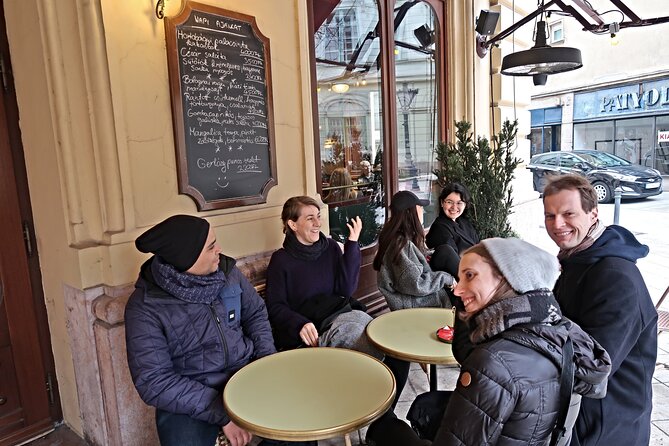
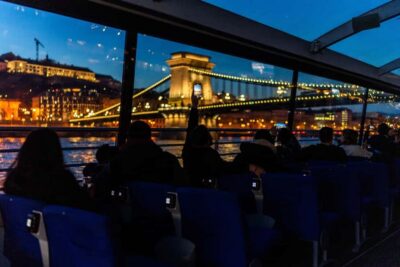
After Gerbeaud, the route takes you by tram along the Danube to Central Cafe and Restaurant 1887. That short transit piece matters more than you might think. It stops the experience from feeling like a sequence of room checklists. You get a moving, city-scale reminder that these cafés were part of a bigger economic and cultural machine.
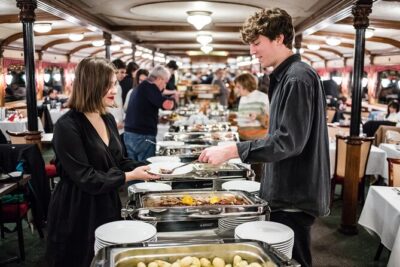
Central Cafe is described as dignified, and that word is a clue. This is not about a casual neighborhood hangout. It’s about the café house culture at the peak of the Habsburg Empire’s power in the 19th century. In other words, you’re meant to feel how food and drink sat inside a formal social stage.
What I like about this stop is that it trains your eye for how design communicates status. You’ll look at the decor and how the dining and dessert culture fits the atmosphere of a bygone era. Even if you only skim the menu from outside, the goal is to understand the setting, not to treat it like a food tasting tour.
Café Astoria’s lavish interior and the art of design mixing
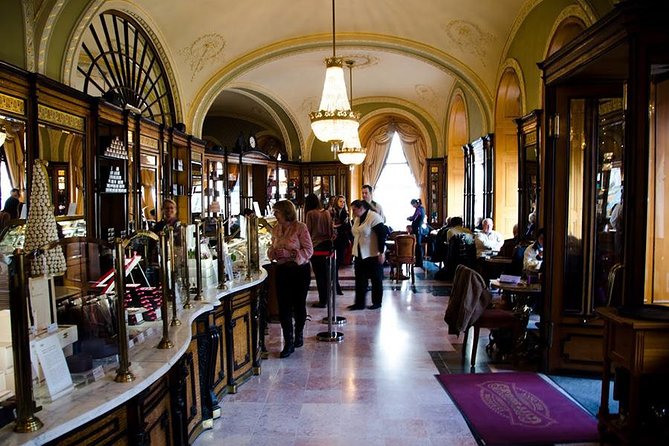
Café Astoria is one of the highlights, and for good reason. The tour frames it as lavish and more than a century old, the kind of room that evokes the grandeur of classic European coffee houses. When you walk into a place like this, you can feel the intention immediately: it wants to impress.
This is also where the tour leans into visual comparisons. You’ll look at the architecture of the room and how designers used decorative techniques to create a particular mood. One of the tour’s explicit themes is the use of various Asian motifs and elements by designers, and you’ll get help noticing those references as part of the broader design language of the time.
Possible drawback: if you already have an intense interest in one very specific style, this stop may feel like a curated overview rather than a focused deep technical breakdown of one detail. Still, the tradeoff is you walk out with a working sense of how and why these cafés looked the way they did.
A different sort of day out in Hungary:
- Budapest: Nighttime or Daytime Sightseeing Cruise
★ 4.2 · 21,062 reviews - Budapest: By Night Sightseeing Cruise with Welcome Drink
★ 4.3 · 15,533 reviews - Budapest: St. Stephen’s Basilica Entry with Options
★ 4.6 · 12,322 reviews - Budapest: 1-Hour Evening Sightseeing Cruise with Drink
★ 4.5 · 9,421 reviews
Museum Cafe, opulence cues, and what to watch for
You’ll also admire the lavish walls associated with Museum Cafe. This stop is less about doing something active and more about learning to read a room. Think of it like guided pattern recognition: where does your eye go first, what materials or colors dominate, and how does the interior design reinforce the idea of a place where people came to be seen?
The tour uses these cafés as checkpoints along a theme. You’ll start to notice that the grandeur is not random. It reflects a social ideal. Cafés were public, but not casual. They were semi-permanent social stages.
If you want to get the most from this kind of interior stop, slow down your walking. Give yourself enough time to glance from wide view to close details, then back again. The guide’s pointers help you do that without feeling lost.
Urania Café on Rákóczi Street and the intellectual café tradition
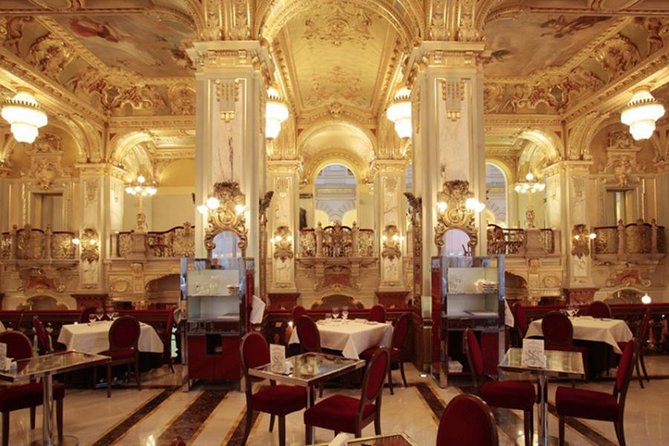
After another short walk, you’ll reach Urania Café on Rákóczi street. The setting has a built-in cultural hook: the café houses the oldest film theater in the city. That kind of combination is exactly why this tour works. It connects café life to broader media and public discourse.
This stop also comes with an intellectual angle. Urania is known for lectures given by prominent intellectuals before large audiences. So while other cafés help you understand social elegance, Urania shows the next step: how cafés and related venues supported ideas, speeches, and public discussion.
If you enjoy travel that mixes architecture with lived culture, this is a great moment. It reminds you that cafés were not only about leisure. They were about conversation, attention, and access to public ideas.
More stops for context: Művész Coffee House and New York Palace
The tour includes additional landmark café stops that help you compare styles instead of just collecting famous names. You may visit Művész Coffee House, which is also referred to as the Artist Cafe. That label alone tells you what to look for. You’re meant to connect the room to the creative people who would have been drawn to it.
You’ll also include New York Palace Café, which fits the tour’s larger theme of grand interiors shaping social life. The point here is contrast. Each café is a different mood, even when the overarching time period overlaps. By the end, you should feel more confident sorting Budapest’s architectural flavors into understandable categories.
Small-group bonus: with a group of up to 8, you get better chances to ask questions and get clarifications when something catches your eye. And since the guide is not just reciting dates, that matters.
Ending at Kazinczy Street Synagogue, where style turns sacred
You conclude the experience at Kazinczy Street Synagogue, described as fascinating and art nouveau in style. Ending here is smart. It breaks the pattern of cafés only, and it shows you that the same era that shaped café grandeur also shaped religious architecture and community identity.
The tour specifically notes that this synagogue is Orthodox. That detail gives you a lens for what you are seeing. You’re not just looking at decoration. You’re also seeing how design expresses identity and meaning.
What you’ll likely appreciate most is the visual contrast. Cafés are social stages. A synagogue is sacred space. The art nouveau design language links them, but the purpose and the atmosphere stay different. That kind of contrast is often what makes architecture tours memorable.
Practical tip: if you want photos, be mindful of how you move in the area. With any religious site, a calm pace is part of the respect.
Guides, group size, and what $123 buys you in real terms
This experience is priced at $123 per person and runs for 3 hours, with a small group limited to 8 participants. That price can feel high if you compare it to a self-guided walk. The value comes from three areas.
First is the guide. The tour’s guides include professors, doctoral students, historians, journalists, art critics, and published authors. That range matters because you’re not only learning facts. You’re learning how to look, how to connect design choices to social context, and how to avoid turning interiors into background noise.
Second is the density of notable stops in a short time. You’re not doing one café and calling it a day. You’re moving through multiple landmark interiors, plus a Danube tram segment, and then finishing at an art nouveau Orthodox synagogue.
Third is the pacing. A 3-hour walk is long enough to gather patterns, but short enough to keep energy up. You’ll cover a lot, without feeling like you’re spending the whole day in a classroom.
For a sense of what the guide quality feels like in practice, one English-speaking guide named Kota received excellent feedback for being strong and clear. That lines up with what you want from an art historian style approach.
Who should book Café Wandering
I’d book this if you like any of these:
- You want Budapest architecture with a human story attached to it
- You enjoy café culture beyond food, meaning people, ideas, and style
- You like small-group tours where questions are welcome and the guide can react to what you notice
It’s also a good match if you’re traveling with someone who enjoys visuals, since the tour emphasizes interiors, decorative motifs, and the shift from café rooms to synagogue architecture.
I would not make this your only plan if you crave a full food-focused experience. Refreshments are not included, and the tour’s main job is interpretation, not eating.
Should you book Café Wandering?
Yes, if you want an art-and-architecture guided walk that stays grounded in real places you can still visit. For $123, you’re paying for an art historian perspective, a tight 3-hour route packed with major interiors, and a structured finish at Kazinczy Street Synagogue. That’s a useful combination if you want to understand Budapest’s Belle Epoque style instead of just screenshotting it.
If you prefer total spontaneity, or if you know you will not want to pay for anything beyond the basic walking part, you may feel the cost more. But if cafés and architecture are part of your travel style, this tour gives you a clear, memorable way to see the city.
FAQ
How long is the Café Wandering tour?
The tour lasts 3 hours.
Where does the tour start?
It starts at Café Gerbeaud, Budapest Vörösmarty tér 7-8 1051.
Is the tour guided and in English?
Yes. It has a live English-speaking guide.
How big is the group?
The group is limited to 8 participants.
What is included in the price?
The 3-hour guided walk and the art historian guide are included.
Are refreshments and coffee included?
No. The cost of refreshments, cakes, and coffees selected at the cafés visited is not included.
Does the route include public transport?
The plan includes a tram ride along the Danube.
What are some of the main stops?
You’ll visit places including Café Gerbeaud, Central Cafe and Restaurant 1887, Café Astoria, Művész Coffee House, New York Palace Café, and you end at Kazinczy Street Synagogue.
What if I need to cancel?
Free cancellation is available up to 24 hours in advance for a full refund.
Can I book without paying right away?
Yes. You can reserve now and pay later.
Latest to land in Budapest
- Visegrád Hike & Castle Tour with Ferry from Budapest★ 4.6 · 3 reviews
- Budapest: Vacation Photographer to collect great memories★ 5.0 · 49 reviews
- Trash Art Museum: Hungary’s First Scrap Metal Exhibition★ 4.3 · 72 reviews
- True Crime Walking Tour in the Buda Castle district★ 5.0 · 26 reviews
- Budapest: 3-Hour Trabant Sightseeing Tour★ 4.7 · 28 reviews
- Audio visual multi-sensory chefs journey dinner experience★ 5.0 · 3 reviews
- Private Szentendre and Vac Tour from Budapest with Transport★ 5.0 · 3 reviews
- Wine Tasting in the Countryside from Budapest★ 5.0 · 14 reviews
Budapest Tours, compared.
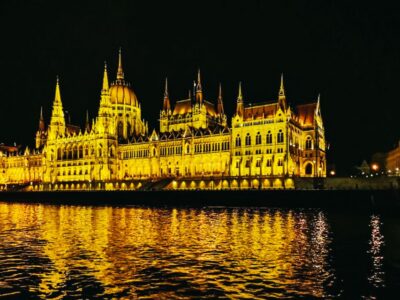

Unlimited Prosecco, Beer and Aperol Spritz Cruise
Read our review →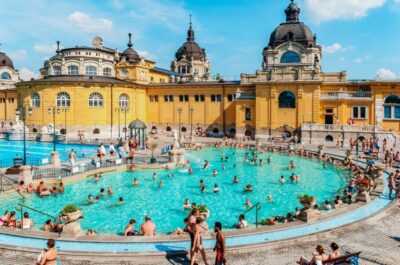
Széchenyi Spa Day Ticket with Optional Upgrades
Read our review →

By Night Sightseeing Cruise with Welcome Drink
Read our review →