Reviewed · BUDAPEST TOURS
Capital Budapest – Half Day Private Tour (4hr)
Budapest hits hard in four hours. This private half-day is built for people who want big sights, smart pacing, and real local context. I like that it strings together Buda’s Castle District viewpoints, the Danube bridges, and then swings into Pest for Parliament and iconic churches.
What makes it especially useful is the structure, a mix of photo stops and squares you actually walk through, plus a built-in public transport plan. You’ll also get a short, relaxed break with a drink at Kamara Café near the Great Synagogue, which is a nice reset before your next plan. One consideration: several key stops list admission as not included, so if you want interiors at places like Fisherman’s Bastion, Matthias Church, Parliament, St Stephen’s Basilica, and the Great Synagogue, budget extra time and ticket costs.
In This Review
- Key highlights I’d plan around
- Why this 4-hour route makes sense in Budapest
- What $489.24 buys you with a private group up to 4
- Hotel pickup and Metro Line M1, your fast-track through the city
- Liberty Bridge to St Gellért Square, where you get the Danube story fast
- Clark Square and the Castle District walk, the part that feels like a movie still
- Fisherman’s Bastion and Matthias Church: views plus symbolism
- Buda-to-Pest pivot, Vienna Gate square to Széll Kálmán tér
- Heroes’ Square and the Parliament Building, big civic symbols in fast focus
- St Stephen’s Basilica to Deák Ferenc tér, and a quick look at how nightlife works
- Dohány Street Synagogue area to Kamara Café, from public monuments to people
- Is a private half-day your best move?
- Should you book the Capital Budapest Half Day Private Tour?
- FAQ
- How long is the Capital Budapest half-day private tour?
- What is the price for this tour?
- Does the tour offer hotel pickup?
- Is this a private tour?
- What’s included in the tour?
- What language is the tour offered in?
- Are admission tickets included for all stops?
Key highlights I’d plan around
- A true private group up to 4, so you can ask questions and move at your pace
- Metro Line M1 (Millennium Underground) included via a public transport pass, and it is Budapest’s oldest metro line
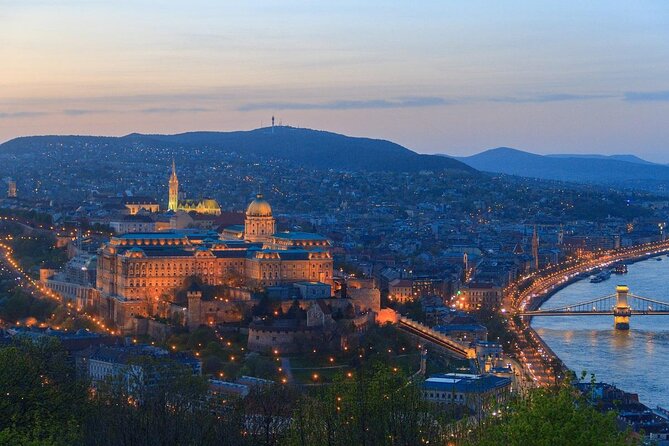
- Castle District viewpoints timed for the walk up under Fisherman’s Bastion toward the Royal Palace area
- Architectural and place-name stories at Liberty Bridge, St Gellért Square, and around Buda’s historic squares
- Jewish Quarter contrast with the Great Synagogue area, then a calmer pause at Kamara Café
Why this 4-hour route makes sense in Budapest
Budapest can feel like two cities joined by the Danube, and this tour does a neat job of covering both. You start with the bridge and the Buda side lead-in, then work your way through the Castle District viewpoints. After that, the route shifts over to Pest landmarks such as Heroes’ Square and the Hungarian Parliament Building, before finishing at the synagogue area.
This time length is ideal for first-timers who are also planning a longer trip. You get enough landmark density to orient yourself, and you also get square time. Squares in Budapest are not just empty space, they’re social hubs, transport junctions, and sometimes political or cultural memory.
The other smart part is the tempo. You do not spend the whole half-day waiting in lines or committing to every interior ticket. Instead, you use the exteriors, terraces, and viewpoints to set up what you’ll likely want to return to later.
A few more Budapest outings worth comparing
- Private Budapest TukTuk Tour: Custom Route, Hotel Pickup
★ 5.0 · 1,307 reviews - Budapest Essentials Private Tour Highlights and Hidden Gems
★ 5.0 · 861 reviews - Budapest Private Tuk Tuk Half-Day Tour
★ 5.0 · 606 reviews
What $489.24 buys you with a private group up to 4
The price is listed per group, up to 4 people, which changes the math fast. If you’re traveling with a friend or two, you can split the cost and end up with something close to a high-end guided sampler rather than separate individual tours.
What you get for that money is not only a guide, you also get practical trip assets:
- a public transport pass
- a city map
- one hot or cold beverage
- a small notebook with pen
That beverage and the notebook sound minor until you’re halfway through a walking-and-metro plan. You’ll appreciate having a drink at the end when your legs need a reset and your brain needs a moment to pick the next stops for the rest of your day.
Now for the realistic tradeoff. Admission is not included at several major attractions along the way. So your total spend may go up depending on whether you want interiors at Fisherman’s Bastion, Matthias Church, the Parliament Building, St Stephen’s Basilica, and the Great Synagogue.
Hotel pickup and Metro Line M1, your fast-track through the city
You can meet at the starting point in the Jewish Quarter area, Dohány u. 4 (1074), or you can arrange a pickup at your hotel or a central meeting spot. That matters in Budapest, because the city’s sights look close on a map, but moving on foot can eat time quickly.
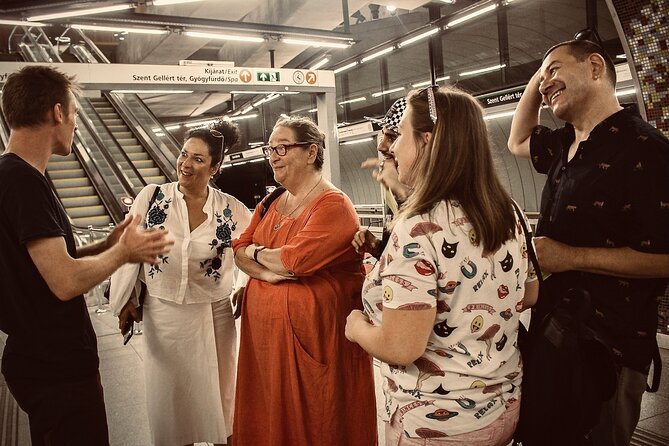
The route also uses Metro Line M1, the Millennium Underground Railway, which is Budapest’s oldest metro line. It is also described as the first underground on the European mainland, and the world’s third oldest after the London Underground and the Liverpool Mersey Railway. Even if you do not care about transit trivia, this gives you a fast, efficient way to cross town without turning your half-day into a wandering puzzle.
Your “near public transportation” setup means you’re not stuck in the middle of nowhere after a stop. You can keep momentum, and your tour plan stays realistic in everyday traffic conditions.
Liberty Bridge to St Gellért Square, where you get the Danube story fast
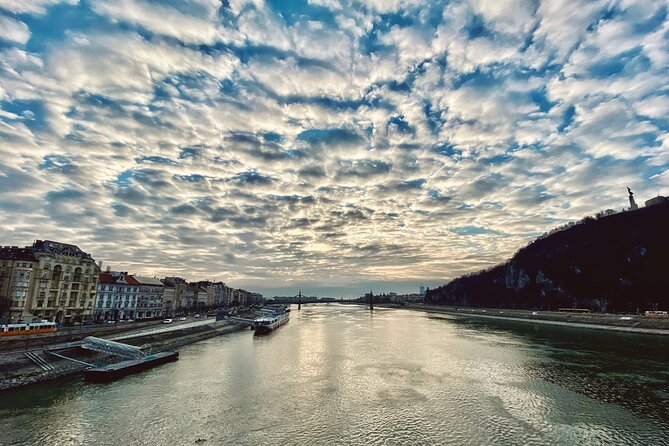
The morning starts with a classic Budapest divider, the Danube, and your first major landmark is Liberty Bridge (Szabadság hid). It connects Buda and Pest across the river and is described as the third southernmost public road bridge in Budapest. It originally had the name Franz Joseph Bridge, which is the kind of detail a good guide uses to link architecture to shifting eras.
You’ll spend a short time here, and that is intentional. Liberty Bridge is a view-and-orientation stop. It helps you understand where the Castle side sits in relation to central Pest streets, so later stops start to click.
From there, you move toward St Gellért Square, named after Bishop St Gellért, also called the Martyr for Hungarian Christendom. The payoff is less about one building and more about how this square fits into the Buda side identity. If you’ve never looked closely at Budapest’s place names, this is a quick way to do it without doing homework.
A different sort of day out in Hungary:
- Budapest: City Highlights Sightseeing Cruise
★ 4.6 · 43,981 reviews - Budapest: Unlimited Prosecco, Beer and Aperol Spritz Cruise
★ 4.8 · 37,304 reviews - Budapest: Széchenyi Spa Day Ticket with Optional Upgrades
★ 4.3 · 23,911 reviews - Budapest: Nighttime or Daytime Sightseeing Cruise
★ 4.2 · 21,062 reviews
Clark Square and the Castle District walk, the part that feels like a movie still
Next comes Clark Square, a daily meeting point where big links converge. This is where you’ll pass through with the sense that you are moving along the city’s veins. The description highlights that the Chain Bridge, the tunnel beneath Castle Hill, the funicular to Szt. György Square near the Royal Palace, and several major streets all connect here. It’s a great place to notice how locals move, because it doesn’t feel like a tourist corridor.
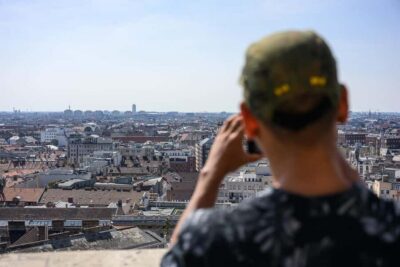
Then you transition into the climb up toward Buda Castle. You travel along a winding road that turns right under Fisherman’s Bastion toward the Royal Palace area. This is your photo window, and it’s worth knowing what you’re looking for. You’re not just getting a pretty view, you’re seeing how the Castle District sits above the Danube, like it was designed for watching the river flow.
You also pass through Dísz tér, a long central square in the Castle District with mostly one- and two-storey old residential buildings. The medieval story matters here. In the Middle Ages, the area had simpler Gothic houses, and the remains are still found in foundations and walls of several houses. That gives the square extra meaning. It’s not empty, it’s layered.
Fisherman’s Bastion and Matthias Church: views plus symbolism
Fisherman’s Bastion (Halászbástya) is one of the big stops because the panorama is the point. The lookout terraces are described as a Neo-Romanesque design, and the monument’s main façade is parallel to the Danube. The seven high-pitched towers symbolize the seven chieftains of the Hungarians who founded Hungary in 895.
If you care about photo angles, this is where you’ll want to slow down for a moment. The terraces are built to give you multiple viewpoint options, and even on a short schedule, you’ll get at least one moment where the city opens up below.
A few minutes away, you can see Matthias Church (Mátyás-templom) in front of Fisherman’s Bastion in the Castle District heart. It is Roman Catholic, and it sits in a spot people associate with stories. Church tradition says it was originally built in Romanesque style in 1015, though no archaeological remains exist. That detail is a useful reminder: Budapest’s most famous buildings are also tied to legends, not only records.
Admission is not included for these two stops, so keep your expectations flexible. If you decide to go inside, you might extend time at the area. If you stay outside, you still get the main payoff, the viewpoint and the visual relationship between the church and the Bastion.
Buda-to-Pest pivot, Vienna Gate square to Széll Kálmán tér
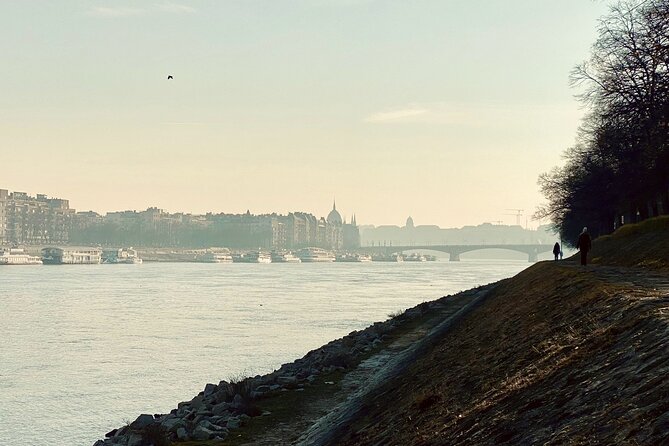
After you’ve taken in the Castle District, the tour helps you reconnect the dots between historic Buda and everyday Pest movement.
There’s a stop connected to the Vienna Gate (Bécsi kapu). The name tells you the original role, a port connecting the Castle with the highway to Vienna. That kind of stop makes Budapest feel practical. Cities grow from routes, and Hungary’s capital was always tied to movement.
Then you move toward Széll Kálmán tér, which is described as one of Budapest’s busiest transport interchanges. It also is considered the center of Buda because of traffic and nearby stores, including the shopping mall Mammut. It is also interesting that the square used to be known as Moszkva tér, Moscow Square between 1951 and 2011, so the name itself is a quick lesson in political change.
This shift is valuable because it prevents the day from becoming only postcards. You see the machinery of the city, then you switch back into grand landmark mode.
Heroes’ Square and the Parliament Building, big civic symbols in fast focus
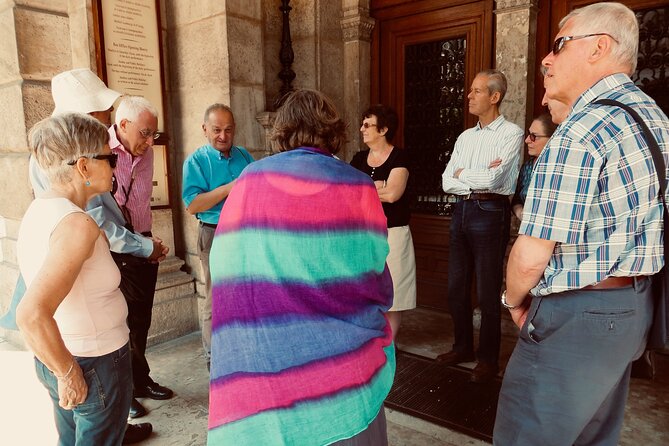
Heroes’ Square is your next major emotional hit. The statue complex is described as featuring the Seven chieftains of the Magyars and other important Hungarian national leaders, plus the Memorial Stone of Heroes, which is often mistakenly called the Tomb of the Unknown Soldier. This is one of those places where a guide’s explanation helps you read the symbolism instead of just snapping a photo.
Heroes’ Square is also free to spend time at, so you’re not making your schedule decisions based on tickets. You get about 15 minutes here, which is enough to take in the layout and then decide what you want to revisit later.
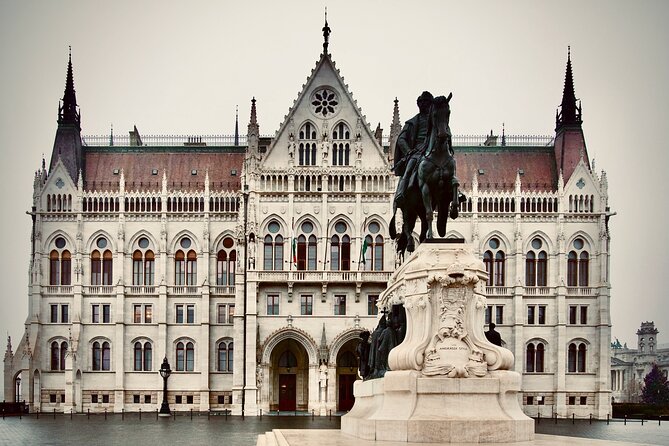
Then comes the Hungarian Parliament Building on Kossuth Square in Pest. It is the seat of the National Assembly of Hungary and has neo-Gothic design by architect Imre Steindl, opened in 1902. It has been the largest building in Hungary since completion. Even from outside, that scale is hard to miss.
This stop is not presented as a quick selfie moment. The square itself matters too. It faces the Museum of Ethnography and the Ministry of Agriculture, and the area has a mix of business and residential buildings. Some buildings around the square are Art Nouveau style, which adds variety beyond the Parliament’s strong look. Admission is not included here, so if you want the interior, plan on that being separate from your guided pacing.
St Stephen’s Basilica to Deák Ferenc tér, and a quick look at how nightlife works
Next you head toward St Stephen’s Basilica (Szent Istvan Bazilika). It is named after Stephen, the first King of Hungary, whose supposed right hand is housed in a reliquary. You’ll also see the scale of the building and the idea that this is a national religious anchor. The description notes it was the sixth largest church building in Hungary before 1920.
The route then includes the area near Deák Ferenc tér. The park next to Deák Ferenc tér is described as a popular gathering for young people, with alcohol sold at the grassy area, and it is common for it to stay lively until midnight. Even if you are not staying out late, this detail helps you see that Budapest has a weekday rhythm too. It’s not only historic monuments.
Admission is not included for St Stephen’s Basilica on this tour, so you may treat it as an exterior or decide what you want based on your energy level that day.
Dohány Street Synagogue area to Kamara Café, from public monuments to people
The final landmark in your tour arc is the Great / Central Synagogue (Nagy Zsinagóga), also known as the Dohány Street Synagogue. This is described as the largest synagogue in Europe, seating 3,000 people, and it is a center of Neolog Judaism. It is a powerful contrast after the civic and church landmarks. You feel the cultural shift immediately in the streetscape and in how the building holds attention.
Admission is not included here, so you’re choosing between a focused exterior visit and paying separately if you want to go in.
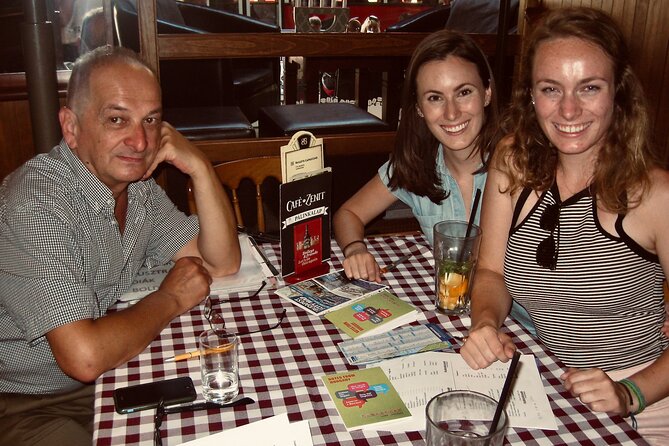
Then you get the part I really like: a quiet break at Kamara Café. The tour ends with a relaxed drink on the terrace when possible, giving you a chance to catch your breath, practice Hungarian, and plan what to do next. This is not just a random stop. It’s a pacing tool. After walking and looking for a few hours, you’ll appreciate having time to decompress without hunting down a café yourself.
Also, you get a notebook with a pen. I’d use it right away, write down which sights you want to revisit for interiors, and note your best viewpoint photo spot so you can return later with the right timing.
Is a private half-day your best move?
This tour is a strong match if:
- you want to cover the most important Budapest zones in one run, Castle District plus Pest landmarks
- you prefer guided context so you understand what you’re seeing, not only what it looks like
- you like efficient public transport and want Metro Line M1 experience as part of the day
- you travel with up to three friends and want to keep it private rather than joining a large group
It might be less ideal if:
- you are set on doing interior tickets at every major attraction listed
- you hate walking, because a 4-hour plan still includes multiple outdoor stops and stairs or uneven terrain in the Castle area
If you care about the feel of the guiding, this experience tends to succeed when the stories are clearly told and the pacing matches your group. A strong local guide can make the differences between a place-name fact and a real sense of why that square exists.
Should you book the Capital Budapest Half Day Private Tour?
Yes, I think you should book it if you want a high-value orientation tour that hits Budapest’s signature areas in a single half-day. The included public transport pass, plus the short drink at Kamara Café, makes it feel like a complete outing instead of just a string of exterior stops.
Before you book, do one quick check with yourself: do you want interiors at Fisherman’s Bastion, Matthias Church, the Parliament Building, St Stephen’s Basilica, and the Great Synagogue? If you do, plan for extra ticket time and costs. If you mostly want the views, the architecture, and the city context, this tour is a smart way to get grounded fast.
If you want, tell me your travel dates and whether you want any of the not-included interiors, and I’ll help you map a realistic follow-up plan for the rest of your Budapest day.
FAQ
How long is the Capital Budapest half-day private tour?
It is approximately 4 hours.
What is the price for this tour?
The price is $489.24 per group (up to 4).
Does the tour offer hotel pickup?
Yes. You can meet at your hotel in Budapest or at a central point you agree upon.
Is this a private tour?
Yes. Only your group participates.
What’s included in the tour?
A public transport pass, a city map, one hot or cold beverage, and a notebook with pen.
What language is the tour offered in?
The tour is offered in English.
Are admission tickets included for all stops?
No. Liberty Bridge and Heroes’ Square list admission as free, while several other stops list admission as not included, including Fisherman’s Bastion, Matthias Church, Hungarian Parliament Building, St Stephen’s Basilica, and the Great Synagogue.
Latest to land in Budapest
- Visegrád Hike & Castle Tour with Ferry from Budapest★ 4.6 · 3 reviews
- Budapest: Vacation Photographer to collect great memories★ 5.0 · 49 reviews
- Trash Art Museum: Hungary’s First Scrap Metal Exhibition★ 4.3 · 72 reviews
- True Crime Walking Tour in the Buda Castle district★ 5.0 · 26 reviews
- Budapest: 3-Hour Trabant Sightseeing Tour★ 4.7 · 28 reviews
- Audio visual multi-sensory chefs journey dinner experience★ 5.0 · 3 reviews
- Private Szentendre and Vac Tour from Budapest with Transport★ 5.0 · 3 reviews
- Wine Tasting in the Countryside from Budapest★ 5.0 · 14 reviews
Budapest Tours, compared.
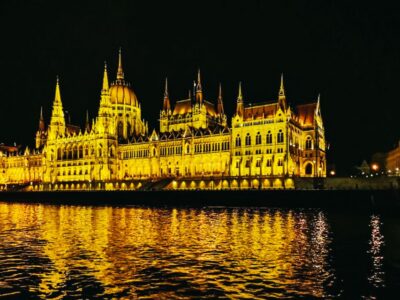

Unlimited Prosecco, Beer and Aperol Spritz Cruise
Read our review →
Széchenyi Spa Day Ticket with Optional Upgrades
Read our review →

By Night Sightseeing Cruise with Welcome Drink
Read our review →