Reviewed · BUDAPEST TOURS
Explore Budapest from the Local’s Perspective – Public Transportation Tour
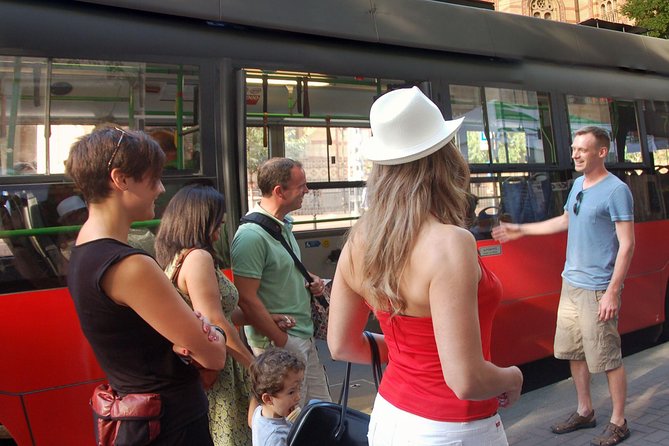
Budapest looks best when you know where to stand and what to board. This local-style tour uses the city’s public transportation system to connect major sights in a smart, learn-it-once way. Two highlights I love: you get a 24-hour transit pass you can actually use after the tour, and the guide teaches you how to ride like a resident, not like a confused tourist.
The main tradeoff is time. In about 3 hours, you cover a lot of ground, so you will not linger for long museum-style visits unless you add time on your own.
In This Review
- Key things I’d watch for
- Why Budapest by transit beats the usual sightseeing loop
- What’s included, and why it matters for value
- How the tour teaches you the city, step by step
- Andrássy Avenue and Heroes’ Square, grandeur with a purpose
- City Park highlights: Vajdahunyad Castle, art museums, and an old-school ice rink
- A small consideration
- Margaret Bridge to the Nagykörút ring, where Budapest’s transit personality shows
- Nyugati Railway Station and Deák Ferenc tér, learn these and you win
- Elizabeth Square and the late-day atmosphere near Deák Ferenc tér
- Buda Castle area and funicular choice, getting up to the views
- Szent Gellért Square, water-inspired design, and the thermal-bath landmark
- Liberty Bridge to Kálvin tér, finishing near another key connection point
- How to think about the price: what you are actually buying
- Who should book this, and who should not
- If you want the most out of the 3 hours
- Should you book this Budapest public-transport tour?
- FAQ
- How long is the Budapest public transportation tour?
- What is the tour price per person?
- Do you get a public transportation pass with the tour?
- Is pickup available?
- Is the tour offered in English?
- Is the tour private or shared?
- What is included in the tour materials?
- Is food included?
- Do I need to buy tickets for the included stops?
- Are children allowed?
Key things I’d watch for
- 24-hour pass for any means of transportation, so your tour time turns into real-day mobility
- A local guide focused on using trams, metro, and connections efficiently
- Iconic anchor stops like Heroes’ Square, Buda Castle area, and Gellért Hill viewpoints
- Neighborhood-to-neighborhood route design, built around major hubs such as Deák Ferenc tér
- City Park landmarks from Vajdahunyad Castle to the Museum of Fine Arts area
Why Budapest by transit beats the usual sightseeing loop
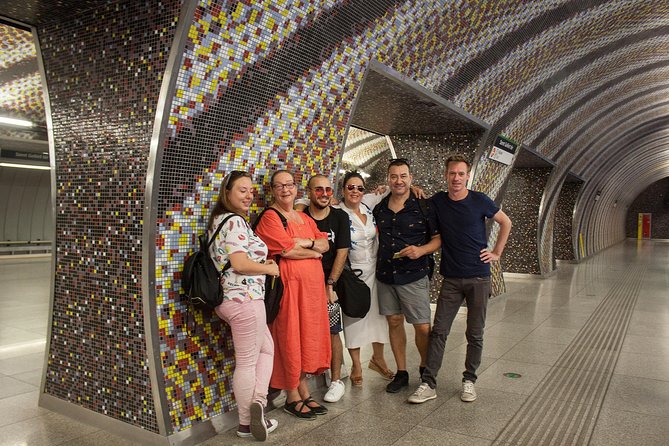
If your plan is only photographs and bus rides, Budapest can feel like a blur. This tour works differently. You learn the rhythm of the city by riding it, so the next day you can move with confidence.
I like that the route is built around how Budapest actually functions. You start on grand, recognizable streets, then quickly switch to the practical network of squares and stations where locals spend their days. You end up with a mental map, not just a checklist.
You will also notice something useful, the city’s beauty is not limited to one postcard zone. The viewpoints, river crossings, and cultural buildings are all tied together by the same transit web. That makes the day feel coherent.
More of Budapest worth an hour of your evening:
- Budapest: City Highlights Sightseeing Cruise
★ 4.6 · 43,981 reviews - Budapest: Unlimited Prosecco, Beer and Aperol Spritz Cruise
★ 4.8 · 37,304 reviews - Budapest: Széchenyi Spa Day Ticket with Optional Upgrades
★ 4.3 · 23,911 reviews
What’s included, and why it matters for value

The price is $118.58 per person for about 3 hours, and you get more than a guide walking beside you. Your kit includes a notebook, a souvenir pen, a map of the route, and a rider’s booklet that acts like a quick manual for using Budapest transit.
Then there’s the big practical win, the 24-hour pass for any means of transportation. That is what turns a short guided day into a repeatable skill. Even if you do not visit every stop during the tour itself, you can use the pass later to get to dinners, museums, or an evening ride across the Danube.
You also get a mobile ticket and the tour is offered in English. Pickup is available from your accommodation, which helps a lot when you arrive tired or just want the first boarding step handled.
How the tour teaches you the city, step by step
The best part is not that you will see landmarks. It is that you will learn what to do when you get on a tram or connect at a metro hub.
The itinerary is structured around major nodes, especially:
- Squares like Heroes’ Square, Deák Ferenc tér, and Kálvin tér
- Rail and transit terminals like Nyugati pályaudvar
- Bridges that naturally connect Buda and Pest, including Margaret Bridge and Liberty Bridge
As you go, you get a sense for where lines run and where they intersect. That is why this tour feels more like training than sightseeing. You can copy the approach later, which is the whole point.
Andrássy Avenue and Heroes’ Square, grandeur with a purpose
You start with Andrássy Avenue, a boulevard dating to 1872 and recognized as a World Heritage Site in 2002. The street is known for Neo-renaissance mansions and townhouses, and it functions as a major shopping and cultural corridor, with cafes, theatres, embassies, and luxury boutiques lining the way.
Then you move to Heroes’ Square, one of Budapest’s key landmarks. The iconic statue complex includes the Seven chieftains of the Magyars plus other national leaders. There’s also the Memorial Stone of Heroes, often mistaken for the Tomb of the Unknown Soldier, so it is worth knowing the difference to avoid a common mix-up.
This pair works well for first-time orientation. Andrássy Avenue sets the visual tone, while Heroes’ Square gives you a national history anchor point and a central meeting ground that you can return to easily.
A different sort of day out in Hungary:
- Budapest: Nighttime or Daytime Sightseeing Cruise
★ 4.2 · 21,062 reviews - Budapest: By Night Sightseeing Cruise with Welcome Drink
★ 4.3 · 15,533 reviews - Budapest: St. Stephen’s Basilica Entry with Options
★ 4.6 · 12,322 reviews - Budapest: 1-Hour Evening Sightseeing Cruise with Drink
★ 4.5 · 9,421 reviews
City Park highlights: Vajdahunyad Castle, art museums, and an old-school ice rink
Next comes City Park, where the architecture and the stories feel playful but still meaningful. You see Vajdahunyad Castle, built in 1896 for the Millennial Exhibition celebrating 1,000 years since the Hungarian Conquest of the Carpathian Basin in 895. The design is by Ignác Alpár and it includes copies of landmark buildings from different parts of the Kingdom of Hungary, especially the Hunyad Castle in Transylvania (today in Romania).
A practical bonus here is that the castle houses the Museum of Hungarian Agriculture, described as the biggest agricultural museum in Europe. Even if you do not step inside during the tour, the fact that the building has a real museum purpose helps you understand why it exists.
Right nearby, you also face the Museum of Fine Arts, built between 1900 and 1906 in an eclectic-neoclassical style. The collection includes international art across European periods, with more than 100,000 pieces. Across the square is the Budapest Hall of Art, a contemporary space in a historic building that hosts temporary exhibitions, plus it has a bookshop, library, and a café with a view over the square.
If you like a break from museum focus, there’s also the City Park Ice Rink, opened in 1870 and described as one of the largest and oldest in Europe. It is a reminder that City Park is not only for summer walks. It is a year-round public space with history attached to everyday recreation.
A small consideration
City Park can tempt you into thinking you’ll do everything at once. The tour is short, so treat these as “see and learn” moments, then decide later if you want museum time.
Margaret Bridge to the Nagykörút ring, where Budapest’s transit personality shows
When you reach Jászai Mari tér, you get a taste of how transit hubs double as social spaces. This area is a spacious gathering point near the east foot of Margaret Bridge, named after Mari Jászai, a major Hungarian theatrical figure. That theater connection matters because it hints at the city’s habit of blending culture with daily movement.
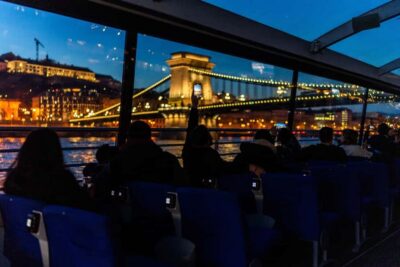
Then comes Margaret Bridge, connecting Buda and Pest and linking the banks with Margaret Island. The bridge is noted as the second-northernmost and second-oldest public bridge in Budapest. Even if you have only a few minutes here, crossing between riverside worlds is a useful mental shortcut.
Now the tour shifts to one of Budapest’s most transit-defining ideas. You ride along the Nagykörút, the big ring road where tram lines run at short intervals, often around 15 minutes and as frequently as every 2 minutes during rush hours. There is a legend that it’s the busiest tram line arrangement in the world, and even if you treat that as folklore, the practical reality is clear: trams are the city’s workhorse.
This is a great segment for learning “how to ride” instead of “what to look at.” You see the network in action while moving through Pest.
Nyugati Railway Station and Deák Ferenc tér, learn these and you win
One stop that tends to feel instantly useful is Nyugati pályaudvar, or Nyugati for short. It is one of Budapest’s three main railway terminals, and it sits on the Pest side. The area around it has become a busy meeting point with restaurants, bars, and diverse shops.
What matters for you is the transit connection. The station is accessible by tram lines 4 and 6 and the M3 metro line. When you understand those lines, you stop feeling like the city is a puzzle you have to solve every time you move.
Then you reach Deák Ferenc Square, named for Ferenc Deák, often called The Wise Man of the Nation. This is a major junction where three metro lines converge under the square. Trams 47 and 49 originate here, and several bus lines serve the area too.
If you only learn one place in Budapest transit logic, make it this. It is a living hub that helps you connect in multiple directions without guessing. The tour’s decision to include it makes sense for anyone trying to get around efficiently on their own.
Elizabeth Square and the late-day atmosphere near Deák Ferenc tér
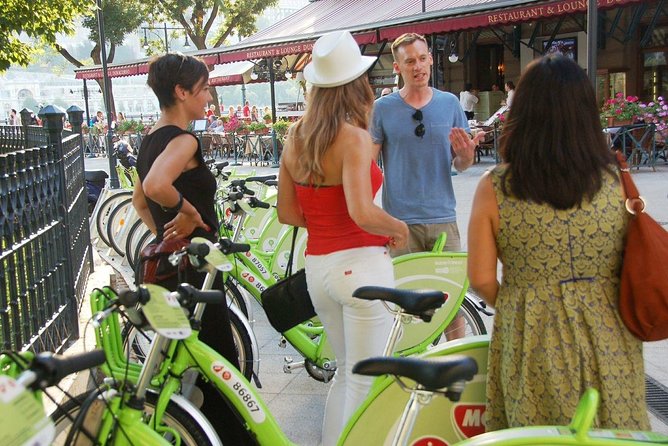
You also pass Elizabeth Square next to Deák Ferenc tér. This is described as a park and social gathering space popular with younger crowds, and it is common for alcoholic beverages to be sold in the grassy area. The area around Deák Ferenc tér can stay busy until midnight.
That means you get a clue about timing, Budapest nightlife and hangout culture tends to concentrate near major transit junctions. If you plan dinner or a bar stop, you’ll usually find it easiest when you are near a place like this instead of far from the network.
Buda Castle area and funicular choice, getting up to the views
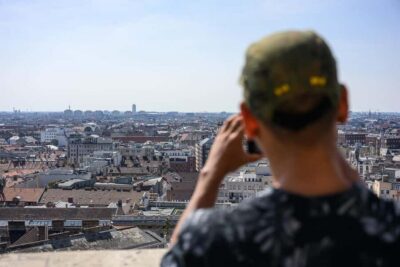
Crossing into the Buda side brings you toward the city’s big “look down over Budapest” moments. The tour notes that you explore the Buda Castle area and mentions a funicular option tied to going up near Gellért Hill.
This matters because the hill geography is real. Budapest can feel vertical on foot, so having the idea of a funicular in your mind helps you pick the less exhausting route. Even if you do not choose it during the tour, the suggestion gives you a practical fallback plan.
Szent Gellért Square, water-inspired design, and the thermal-bath landmark
Next is Szent Gellért Square, dominated by a water-themed design. You see wavy benches and a small fountain with a pond-like decoration at the entry, including design details connected to the underground station experience.
Then you encounter the big landmark right in this zone, Gellért Thermal Baths and Swimming Pool, also known as Gellért fürdő. It is part of the Hotel Gellért complex. The tour does not promise you time inside the baths, but it does give you the reference point. If you want to soak later, you’ll know exactly where to aim.
After that, you head to Gellért Hill, listed at 235 meters high and described as one of the best panorama viewpoints above the capital. The hill is named for Bishop Gellért, who came to Hungary from Italy around 1000 AD. The story is dramatic, resisting pagans rolled him down a hill in a barrel into the Danube in 1046, and that legend is part of why the name sticks.
This segment is where the day turns scenic. Transit teaches you movement, and these stops teach you why the effort is worth it.
Liberty Bridge to Kálvin tér, finishing near another key connection point
To reach the base area for Gellért Hill, you cross Liberty Bridge (Szabadság hid). Short bridge time still pays off because it frames what you are about to see and helps you understand the river as a connector, not a barrier.
Then you arrive at Kálvin tér, a major city center square and intersection named after John Calvin. The reason for the name is the large Reformed Church located there. Like other squares on this route, Kálvin tér functions as a transport hub served by trams, buses, and trolleybuses.
The Hungarian National Museum is near Kálvin tér, so if you want to keep going after the 3-hour tour, you will be positioned well. Even without stepping into museums during the tour, you end with a practical base for your next move.
How to think about the price: what you are actually buying
At $118.58 per person for about 3 hours, you are paying for three things:
1) A guide who connects sights to transit logic
2) A 24-hour pass you can use after the tour
3) A toolkit, map, and rider booklet that helps you repeat the system later
If you are the type who wants to self-navigate, this still helps because Budapest transit is efficient but not always intuitive at first. A guide cuts the learning curve, especially at hubs like Deák Ferenc tér and Nyugati where multiple modes meet.
Group discounts and pickup help the value too. Pickup means less stress before you even reach your first boarding point, and group discounts matter if you are traveling with a friend.
The key is to match the tour to your travel style. If you want a deep, slow museum day, this one may feel too tight. If you want smart momentum and a way to move freely on your own afterward, the price starts to look very reasonable.
Who should book this, and who should not
This is a strong fit if:
- You want to see major Budapest highlights without spending your day stuck planning
- You like learning practical skills, how to ride tram and metro systems efficiently
- You plan to keep using transit after your guided block
It may not be ideal if:
- You want long indoor visits where the schedule can stretch
- You dislike walking between transit nodes and bridges, even though most stops are brief
For families, children must be accompanied by an adult. Service animals are allowed, and the tour is listed as near public transportation and suitable for most travelers.
If you want the most out of the 3 hours
A few things will help you get real value fast:
- Wear comfortable shoes. The route includes multiple bridge crossings and several transit connections.
- Use the rider’s booklet right after the tour. The pass is only useful if you know where you can go.
- Treat the tour as training. Take photos at stops, then plan longer time for the places you actually want to revisit.
Also, the guide experience is a big part of why people rate this so highly. The emphasis is on clear transit explanations and making the system feel usable. Some guides have even helped with planning beyond the immediate route, like how to handle an airport departure, which is the kind of practical advice that saves time later.
Should you book this Budapest public-transport tour?
Yes, if your goal is to feel at home in Budapest quickly. This tour is built around major hubs and a real 24-hour pass, so you gain both context and the ability to act on it the same day.
If you are only chasing a list of monuments and you plan to use taxis or ride shares for most trips, the transit focus might feel less valuable. But if you want to ride, connect, and return later to the neighborhoods you like, this is one of the smarter ways to start.
FAQ
How long is the Budapest public transportation tour?
The tour runs for about 3 hours.
What is the tour price per person?
The price is $118.58 per person.
Do you get a public transportation pass with the tour?
Yes, you receive a 24-hour pass for Budapest’s public transportation system for any means of transportation.
Is pickup available?
Yes. Pickup is offered from every guest’s accommodation, and you are asked to provide your address in the special requirements box.
Is the tour offered in English?
Yes, the tour is offered in English.
Is the tour private or shared?
This is listed as a private tour/activity, meaning only your group participates.
What is included in the tour materials?
Included items are a notebook, a souvenir pen, a map showing the route, a rider’s booklet/manual for Budapest public transport, the 24-hour transit pass, and a local guide.
Is food included?
No. Food and drinks are not included.
Do I need to buy tickets for the included stops?
The itinerary lists several stops with admission ticket free access, but the tour data does not state paid entry costs for specific museums or venues beyond those free listings.
Are children allowed?
Children must be accompanied by an adult.
Latest to land in Budapest
- Visegrád Hike & Castle Tour with Ferry from Budapest★ 4.6 · 3 reviews
- Budapest: Vacation Photographer to collect great memories★ 5.0 · 49 reviews
- Trash Art Museum: Hungary’s First Scrap Metal Exhibition★ 4.3 · 72 reviews
- True Crime Walking Tour in the Buda Castle district★ 5.0 · 26 reviews
- Budapest: 3-Hour Trabant Sightseeing Tour★ 4.7 · 28 reviews
- Audio visual multi-sensory chefs journey dinner experience★ 5.0 · 3 reviews
- Private Szentendre and Vac Tour from Budapest with Transport★ 5.0 · 3 reviews
- Wine Tasting in the Countryside from Budapest★ 5.0 · 14 reviews
Budapest Tours, compared.

Unlimited Prosecco, Beer and Aperol Spritz Cruise
Read our review →
Széchenyi Spa Day Ticket with Optional Upgrades
Read our review →

By Night Sightseeing Cruise with Welcome Drink
Read our review →