Reviewed · BUDAPEST TOURS
Urban Tour of Budapest’s Most Controversial District.
Budapest has a second face, and District VIII is it. This 2.5-hour walk pulls you off the main sights and into outer-neighborhood reality, with stops that range from rail history to crime stories and controversial memorials. I love how it’s budget-friendly, and I love that you end at the lively China Market instead of back at another tourist street.
You also get a clear, story-driven route that keeps moving, with time set aside for big places like Fiumei Road Cemetery and the market finish. On guides, one standout mentioned is Victoria, and her style comes through as organized, funny, and easy to follow in English, with a pace that makes details stick.
The main drawback is tone and setting. Some stops are heavy, including forensic and serial-killer material, and the district you’re walking through is not a postcard version of Budapest, so you should be ready for a more gritty, real-world feel.
In This Review
- Key things to know before you go
- District VIII in Budapest, not the postcard version
- Keleti pályaudvar and the Sissi arrival hall
- Police Museum: forensics, crime cases, and a Sunday heads-up
- Fiumei Road Cemetery: Communist Cemetery history and real burial customs
- Laszlo ter and Carbon Market history, plus a writer’s place name
- Párbeszéd Háza (House of Fates): strange architecture and contested memory
- Orczy tér, Csobánc Társasház, and the Kokárda Catacomb
- Golgota tér, Europe Television odd history, and the Goyla stop
- MÁVAG Kolónia: worker care, fortress-like housing, and film locations
- China Market finish: Four Tigers Market, food stops, and immigrant stories
- Price, walking pace, and who this tour is best for
- Should you book this Budapest District VIII walk?
Key things to know before you go
- District VIII route that links rail history, cemeteries, and everyday markets in one tight walk
- Keleti pályaudvar with the Sissi-era arrival hall vibe, plus the surprising ballroom-style space details
- Police Museum forensic displays and crime cases, including darker topics that may be unpleasant to some
- Fiumei Road Cemetery as an outdoor museum, with Kossuth tomb views and mausoleum time
- House of Fates (Párbeszéd Háza) and other contested sites, handled as architecture and debate, not just sightseeing
- China Market finish at Józsefváros Four Tigers Market, with time to keep browsing after the tour
District VIII in Budapest, not the postcard version
This tour is built around a simple idea: Budapest is not only grand boulevards and riverside classics. District VIII (Józsefváros) shows you where history and daily life overlap, sometimes uncomfortably. You’ll walk past places that explain why this part of the city has such strong stories attached to it.
What I like most is the balance of “big landmarks” and “human scale” moments. A train station hall, a cemetery architecture climb, and a massive market all sit inside the same day plan. You’ll also get a guided thread through it, so it doesn’t feel like a random walk.
The tour’s theme is also why it works well for curious travelers. It’s not trying to smooth over controversy. Instead, it points you to sites where Hungary’s modern debates show up in buildings, institutions, and public memory.
More of Budapest worth an hour of your evening:
- Budapest: City Highlights Sightseeing Cruise
★ 4.6 · 43,981 reviews - Budapest: Unlimited Prosecco, Beer and Aperol Spritz Cruise
★ 4.8 · 37,304 reviews - Budapest: Széchenyi Spa Day Ticket with Optional Upgrades
★ 4.3 · 23,911 reviews
Keleti pályaudvar and the Sissi arrival hall
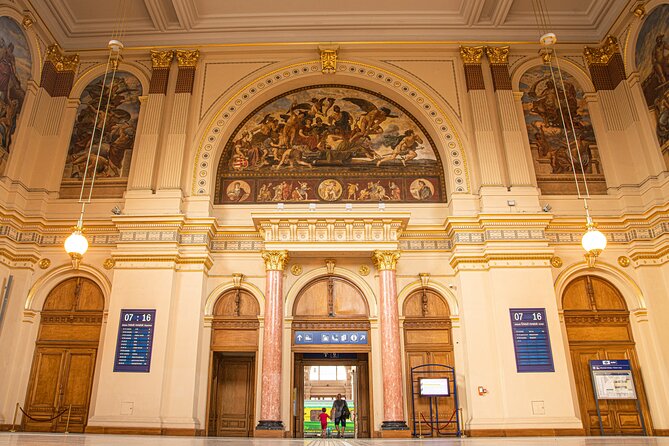
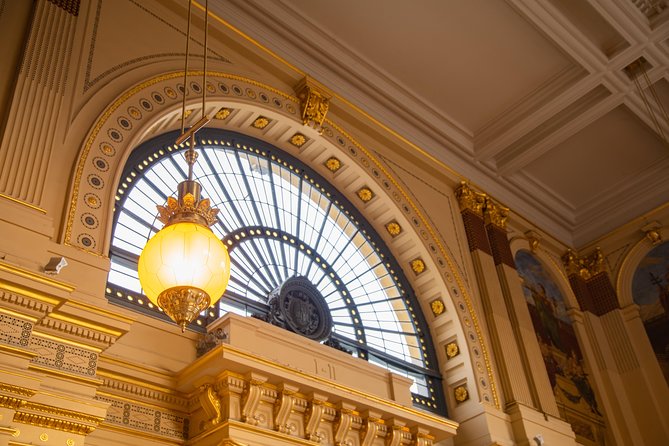
You start at Keleti pályaudvar, Budapest’s major rail hub, and you get a history lesson in the space itself. The arrival hall connected to Princess Sissi is the headline moment, and it sets an old-world tone right away.
Your guide also frames what you’re seeing by comparing it to other prominent hall design, like the frescoed Lotz Hall that serves as the treasury. Even if this hall isn’t as visually “perfect” as the famous painted spaces, the surprise comes from the eclectic ballroom feel. You’ll notice Greek-style supporting columns, big window frames, marble coverings, and carved wooden features that hint at an earlier golden era.
One practical value here: Keleti is a great start point because you can orient yourself quickly. It’s easy to reach with public transportation, and it gives you a logical rail-based beginning before you head into the neighborhood.
Police Museum: forensics, crime cases, and a Sunday heads-up
The next stop is the Police Museum, a short visit that packs an unusual mix. Expect a forensic science exhibition with case material, then a police history section with relics like uniforms, weapons, documents, certificates, sculptures, awards, and photos. There’s also a Past and Present photo exhibition.
If you’re sensitive to grim visuals, take this seriously. The crime-case coverage includes topics such as the Black Angel case, Béla Kiss (described as the first Hungarian serial killer), and other serial-murder and criminal-history stories. The tone is investigative, but the content is dark.
Here’s the important practical consideration: on Sundays, the Police Museum is closed and you do not enter. Your tour still moves through the broader route, but this stop will not happen the way it does on other days. If you’re coming specifically for the forensic portion, plan your day around that.
Fiumei Road Cemetery: Communist Cemetery history and real burial customs
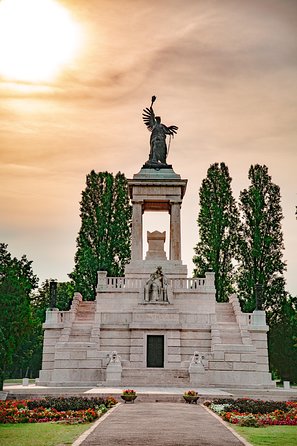
Then you move into one of the most meaningful stops of the whole walk. Fiumei Road Cemetery feels like an outdoor museum because it’s built for memory, architecture, and public remembrance.
You learn how the cemetery was once nicknamed the Communist Cemetery, and you get context about death customs. This matters because it turns the location from “pretty tomb photos” into an understanding of how communities mark loss, status, and belief.
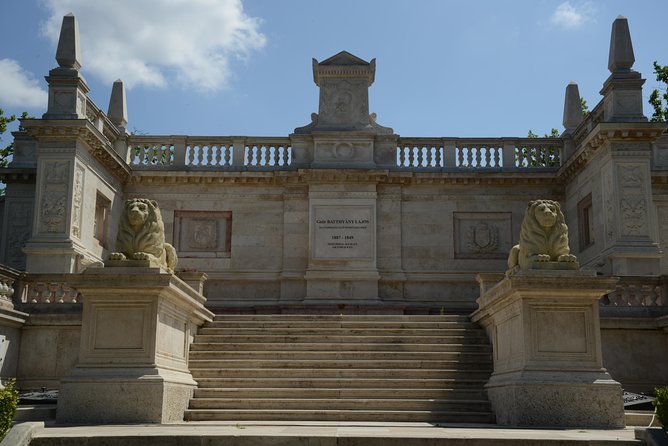
The tour also includes active highlights, not just standing around. You can climb to the top of Kossuth’s tomb for the best views over the 8th district. You also hear what happened to prime minister Batthyány, described here as martyred, which places individual graves inside broader political history.
You’ll have time to enter one of the mausoleums, which changes the feeling from open-air monument to enclosed, tangible space. Another vivid detail is the mention of a grand horse-drawn funeral hearse that was last used for Count Apponyi. These specific markers make the cemetery feel less abstract.
One plus for your day planning: this stop is free, so it gives strong value without forcing extra ticket purchases.
A different sort of day out in Hungary:
- Budapest: Nighttime or Daytime Sightseeing Cruise
★ 4.2 · 21,062 reviews - Budapest: By Night Sightseeing Cruise with Welcome Drink
★ 4.3 · 15,533 reviews - Budapest: St. Stephen’s Basilica Entry with Options
★ 4.6 · 12,322 reviews - Budapest: 1-Hour Evening Sightseeing Cruise with Drink
★ 4.5 · 9,421 reviews
Laszlo ter and Carbon Market history, plus a writer’s place name
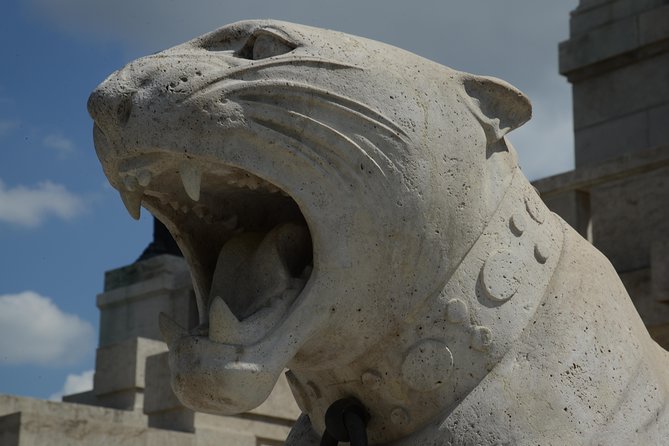
After the cemetery, the route gets lighter in pace but not in meaning. You visit Laszlo ter, tied to a refurbished area known as Természet Fitotéka Kkt.
Here you learn about the history of the carbon market that was once located at this spot, and why the place is named after a famous Hungarian writer. It’s the kind of stop you might normally ignore if you were walking independently, but it teaches you how a simple square name can carry working-life history.
This is also a good reset after the emotional weight of the cemetery. You’re not losing momentum, but you’re shifting from memorial architecture to the city’s older economic geography.
Párbeszéd Háza (House of Fates): strange architecture and contested memory
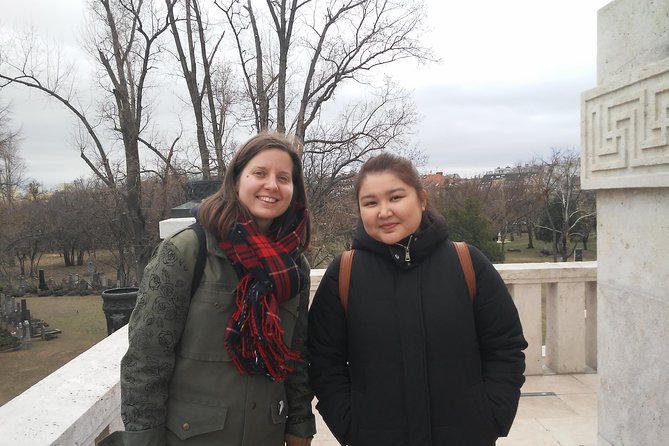
One of the most thought-provoking stops is Párbeszéd Háza, often referred to as the House of Fates. The description you get is not neutral in the way a typical museum intro might be. The building is described as unfinished and disputed, with the government of Viktor Orbán tied to its message about the Holocaust of Hungarian Jews.
You also get a sense that Holocaust memory in Hungary has been turbulent for decades, especially after communist control ended. That history of disagreement matters because it changes how you should read the building.
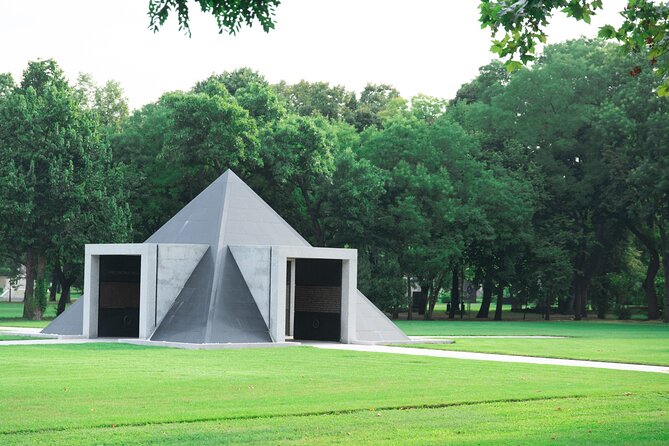
Visually, the site is designed to be hard to forget. You’ll see a giant star and railway carriage towers, meant to echo the terrible beginning of events tied to this location. Even if you disagree with the message or the politics, you can still learn how architecture can be used as argument, not just shelter.
A small time note: this stop is short, around 10 minutes, so use it like a snapshot. If this topic truly interests you, you may want follow-up reading afterward, but you won’t feel stuck in a debate for hours.
Orczy tér, Csobánc Társasház, and the Kokárda Catacomb
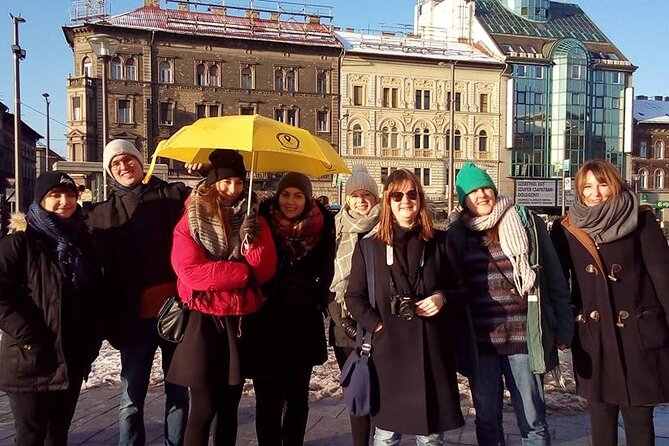
Next up is Orczy tér, described as an unfortunate symbol of traffic disorder, with decades of renewal plans and a confusing arrangement of tram tracks and sidewalk islands. The guide also frames why this “mess” is more than layout, tying it to social problems and commuter pressure.
But the key reason you come here is what you see nearby: Csobánc Társasház, a striking housing complex designed by award-winning György Kévés. The building uses brick architecture and numerous arches, evoking early modern styles around 1910. It’s a strong example of how architecture can feel both historic and imposing.
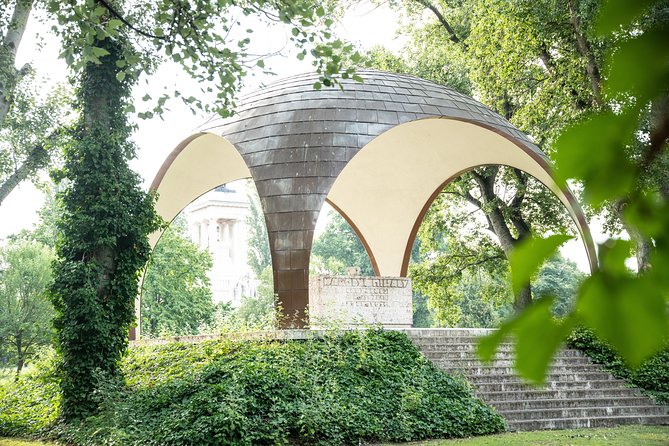
In the center of the project is the Kokárda Catacomb, with a memorial and an underground chapel. This commemorates failed revolutions in 1848 and 1956. You’re shown how the new housing complex became tied to the start of painful gentrification in the area, which adds a modern social layer to the historical commemorations.
This is one of those stops where your takeaway isn’t just “cool building.” It’s a lesson in how cities reorganize space and memory, and how that reshapes who benefits.
Golgota tér, Europe Television odd history, and the Goyla stop
At Golgota tér, you move into small gardens and see remains of a chapel that workers in nearby apartment buildings once frequented. The story here includes communist efforts to destroy it, with the note that the destruction attempts only succeeded on the third try. Learning that process helps explain why remnants can feel like stubborn proof of community life.
Then the route ties the square to art and reconstruction. You see reconstruction work of the original bronze 14 reliefs by sculptor Antal Szécsi, featuring the Máriabesnyő Calvary Station. Even with the short timing, it’s a clear example of how cultural objects get copied, restored, and used to keep traditions visible.
From there, you get an unusual detour into media history. Budapest Europe Television is described as Hungary’s first commercial TV station, with a business model and structure that sounded almost precarious. The guide also explains how the relationship between the company manager and the liquidator nearly escalated to violence on multiple occasions, and then you learn the station’s strange end.
To keep things human, you also see the Goyla bar and community center and learn what kind of events and activities it runs. That gives you a real-time connection between “old stories” and today’s local culture.
MÁVAG Kolónia: worker care, fortress-like housing, and film locations
Then you reach MÁVAG Kolónia, a fortress-like apartment block that once housed three thousand workers. The big point is how the apartments were designed for daily life, with a room and kitchen, but also with communal support.
The site description highlights services that sound surprisingly complete: bathhouse, canteen, laundry, doctor’s office, kindergarten, and a public market. The goal was to provide the best care and conditions for workers at the time, and the complex shows how industrial employers shaped whole neighborhoods.
Today, it’s used as a film location. You’ll hear that Colorado Kid, The Exam, and the documentary The City Dweller’s were shot there. That detail matters because it explains why the architecture still feels visually strong on camera, even if it’s not the style most tourists chase.
China Market finish: Four Tigers Market, food stops, and immigrant stories
Your tour ends at Kínai Piac (China Market) in Józsefváros, also known as the Four Tigers Market. This is where the tour’s “local life” side becomes obvious fast.
The market is described as one of the largest in eastern central Europe for southeast Asian goods, located in an old industrial estate. You’ll get an overview of the scale: over 10,000 workers and about 1,500 business locations, selling everything from socks and frying pans to dragon fruit, Chinese medicine, hot chicken, fake flowers, and fresh live fish.
You also learn about immigrants who settled here, and you explore the market with your guide. The guide then gives you time to keep wandering on your own at the end, and you can try street food if you want.
Two practical notes for planning: the market is closed on holidays such as Christmas and Easter. Also, this is not the place for a quiet, slow stroll. Expect crowds and lots of movement, and treat it like you would any busy market, stay aware of your pace and personal space.
The value here is that you end where people actually shop. Many city tours dump you back at the obvious center. This one helps you see a different Budapest rhythm, then gives you a way to keep exploring.
Price, walking pace, and who this tour is best for
The price is $27.04 per person for about 2 hours 30 minutes. That’s strong value given the number of major sites included, including one place with an admission ticket mentioned at Keleti, and then several stops where admission is free. Even without shopping, you’ll likely walk away with a fuller sense of the district than you’d get from spending the same time alone.
The trade-off is physical effort. You need to be able to walk 4 km in about 2.5 hours, which is a steady pace for a tour that includes short stops. Wear shoes you can trust, and plan to take the guided rhythm rather than rushing between photo moments.
It’s offered in English, uses a mobile ticket, and is private, meaning only your group participates. That format can be great if you want questions answered without sharing attention with strangers. It’s also described as near public transportation, so it fits well as a structured “neighborhood day” segment.
This tour is best for you if you like history that isn’t clean. If you enjoy political context, architecture tied to memory, and a serious mix of everyday life plus heavy stories, you’ll probably feel satisfied by the full arc from rail station to cemetery to market.
Should you book this Budapest District VIII walk?
Book it if you want a Budapest that feels real, not only curated for visitors. The route gives you standout moments like Kossuth’s tomb views, the Sissi-connected Keleti hall, and the scale of the China Market, all linked by a guided story thread.
Skip it or consider a different option if you know you cannot handle crime-case material or grim visuals, since the Police Museum includes forensic and serial-crime topics. Also, if you’re visiting on a Sunday, remember the Police Museum is closed and you will not enter that stop.
If you’re ready for a walk with opinions, debates, and emotion, this is an efficient way to understand District VIII in one day without paying museum-level prices across multiple venues.
Latest to land in Budapest
- Visegrád Hike & Castle Tour with Ferry from Budapest★ 4.6 · 3 reviews
- Budapest: Vacation Photographer to collect great memories★ 5.0 · 49 reviews
- Trash Art Museum: Hungary’s First Scrap Metal Exhibition★ 4.3 · 72 reviews
- True Crime Walking Tour in the Buda Castle district★ 5.0 · 26 reviews
- Budapest: 3-Hour Trabant Sightseeing Tour★ 4.7 · 28 reviews
- Audio visual multi-sensory chefs journey dinner experience★ 5.0 · 3 reviews
- Private Szentendre and Vac Tour from Budapest with Transport★ 5.0 · 3 reviews
- Wine Tasting in the Countryside from Budapest★ 5.0 · 14 reviews
Budapest Tours, compared.
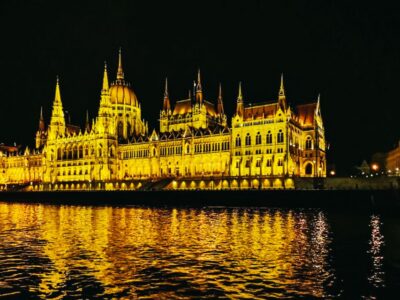

Unlimited Prosecco, Beer and Aperol Spritz Cruise
Read our review →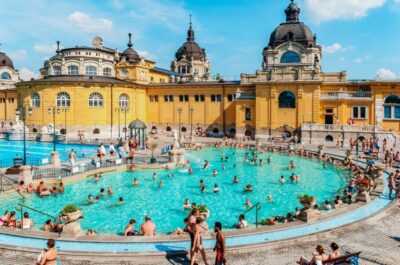
Széchenyi Spa Day Ticket with Optional Upgrades
Read our review →

By Night Sightseeing Cruise with Welcome Drink
Read our review →