
Reviewed · BUDAPEST
Vienna: Budapest & Bratislava Two Capitals Day Trip
A long drive, two capitals, and big skyline moments. I love the panoramic Buda viewpoints and the focused stops like Heroes’ Square, where you get real context fast. The main thing to consider is time, the day is full, and you will spend most of it moving between landmarks.
This is set up well for people who want structure without giving up your own wandering time. You get a guided run plus 2 hours in Budapest and 1.5 hours in Bratislava to do your own café hopping and photo stops. The only drawback I’d flag up front is that pick-up is limited to certain central Vienna hotels, otherwise you’ll start at Albertina Platz.
In This Review
- Key things I’d watch for
- Two capitals, one 13-hour day: what this trip really delivers
- Vienna to Budapest at 08:00: the ride time and why it matters
- Buda-side orientation: the Danube views that set the tone
- Heroes’ Square and the Hungarian Parliament: history you can actually see
- Pest free time: Basilica vibes, cafés, and a Danube walk plan
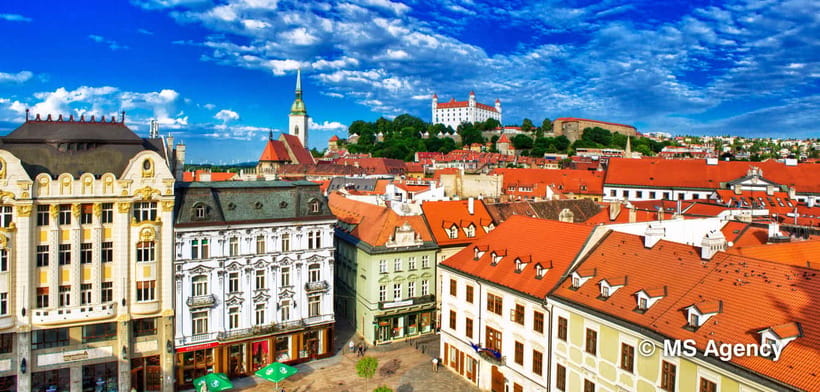
- Bratislava in the afternoon: how the vibe changes
- Bratislava Castle views and St Michael’s Gate photos in 1.5 hours
- Guide and group setup: minivan comfort, bus scale, and photo help
- Price and value: is $163 a good deal for two capitals?
- Pick-up, meeting point, and how to reduce stress on departure day
- Practical tips for a long 13-hour route
- Should you book this two-capitals day trip?
- FAQ
- How long is the Vienna to Budapest and Bratislava day trip?
- Where is the meeting point in Vienna?
- Do I get hotel pick-up?
- Is food included?
- Are entrance fees included?
- How much free time do I have in each city?
- Can I cancel for a full refund?
Key things I’d watch for
- Breathtaking Danube views from Buda with photo stops built in, even before the big sightseeing hits
- Heroes’ Square and Hungarian Parliament are treated as must-see history photo moments
- Real breathing room in Pest with 2 hours to mix cafés, shops, and riverside wandering
- Bratislava Castle viewpoint time plus an easy Old Town stroll in 1.5 hours
- St Michael’s Gate in your photo plan during the free-time block
- Guide style can adjust to conditions, like fog, so you do not lose the whole story
Two capitals, one 13-hour day: what this trip really delivers
This is the kind of day trip you do when you want maximum “wow per hour” without booking a whole second trip. You start in Vienna at 08:00, hit Budapest in the middle, then swing over to Bratislava in the afternoon before returning to Vienna. It is long, but the itinerary is built to keep you from staring out the window the entire time.
I like how the tour balances guided sightseeing with genuine free time. Budapest gets 2 hours on your own, and Bratislava gives you 1.5 hours to slow down, grab something to eat, and wander the Old Town. If you hate being rushed at every stop, you’ll still want to manage your time, but you do get breathing space.
One thing to know: this is not a slow, pick-your-own pace day. You are on a set route with stops, so if your goal is deep museum time, you may feel a little starved by the clock.
More of Hungary worth an hour of your evening:
- Budapest: City Highlights Sightseeing Cruise
★ 4.6 · 43,981 reviews - Budapest: Unlimited Prosecco, Beer and Aperol Spritz Cruise
★ 4.8 · 37,304 reviews - Budapest: Széchenyi Spa Day Ticket with Optional Upgrades
★ 4.3 · 23,911 reviews
Vienna to Budapest at 08:00: the ride time and why it matters
You begin with a scenic drive departing Vienna at 08:00, and the journey includes commentary from your English-speaking live guide. On the way in, there are short stops, which is practical for coffee, bathroom breaks, and stretching your legs. The drive is long enough that the guide’s storytelling becomes part of the experience, not just background noise.
If you get motion sick, plan for it now. It is a coach or van, air-conditioned, but you should still be ready for a full day on the road. I also suggest keeping a light jacket handy, not because it is always cold, but because vehicle temperatures swing.
This ride segment is your warm-up. By the time you reach Budapest, you are not just arriving in a new city, you are already primed for what you are going to see, the Danube, the Buda and Pest contrast, and why the landmarks are where they are.
Buda-side orientation: the Danube views that set the tone
Budapest is often explained like it is two cities stitched together, Buda on one side, Pest on the other. Here, your morning starts on the Buda side, with an overview and panoramic photo stops designed to get your bearings quickly. Even if you only catch glimpses between other stops, the viewpoints help the rest of the day click into place.
This is also where you can understand the city’s storytelling. Buda is about elevation and history-driven scenery, while Pest is more street-level energy and city life. The tour uses that logic right away, so you are not guessing why you keep looking at certain hills and bridges.
A small but important practical note: your best photos will likely happen during those designated photo moments. I recommend having your phone or camera ready before the guide calls the stop, because the timing is tight and the group moves as one.
Heroes’ Square and the Hungarian Parliament: history you can actually see
After your Buda overview, you head to Heroes’ Square, one of the big identity points in Hungary’s capital. It is the kind of location where you can take a wide shot and still feel the scale, which is why it works so well in a day trip. The guide connects what you see to the broader story, so it does not become just a pretty monument stop.
Next up is the Hungarian Parliament, widely recognized for its dramatic architecture and the way it dominates the riverfront skyline. This stop is valuable because you get a clear visual reference for the city’s power and politics, then you move on without getting stuck in one place too long.
If you care about photos, bring your patience. Everyone wants the same angles, and the group is arriving together. I like that the tour keeps these landmarks early in the day, because lighting and crowds are often more manageable than later.
A different sort of day out in Hungary:
- Budapest: Nighttime or Daytime Sightseeing Cruise
★ 4.2 · 21,062 reviews - Budapest: By Night Sightseeing Cruise with Welcome Drink
★ 4.3 · 15,533 reviews - Budapest: St. Stephen’s Basilica Entry with Options
★ 4.6 · 12,322 reviews - Budapest: 1-Hour Evening Sightseeing Cruise with Drink
★ 4.5 · 9,421 reviews
Pest free time: Basilica vibes, cafés, and a Danube walk plan
Once the guided portion ends, you get 2 hours of free time in Pest. This is your chance to choose your own rhythm, whether that means cafés, shopping, or simply walking toward the river.
The highlights for this part include St. Stephen’s Basilica and the Opera House area, and your free time is the likely window to enjoy them at your own pace. If your plan is to get inside a church or linger for photos, prioritize what matters most, because 2 hours goes fast in a city center.
For a simple, low-stress strategy, I’d do it in this order: first, get one or two landmark shots while the light looks good, then wander. That way, even if you end up detouring for a coffee or running into a busier street than expected, you still leave with the photos and the sense of place.
And yes, this is the part where you can just soak in the local atmosphere. Budapest’s center is active, and walking is the easiest way to catch that everyday rhythm without trying to cram in extra stops.
Bratislava in the afternoon: how the vibe changes
After Budapest, the tour continues to Bratislava later in the day. The switch is noticeable, the city feels smaller and more Old World, with a compact center that’s easy to explore on foot once you’re there.
Your guided time includes Bratislava Castle, a high viewpoint option that helps you understand how the city sits by the Danube. Even if the weather is not perfect, the guide’s job is to keep the story moving so the visit still feels meaningful.
Once you arrive, you also get 1.5 hours of free time in the Old Town. That block is ideal for grabbing a local treat, taking photos, and walking the medieval-feeling lanes at your own pace.
Bratislava Castle views and St Michael’s Gate photos in 1.5 hours
Bratislava Castle is the big viewpoint stop. It gives you city geometry, river perspective, and a clean sense of direction, which matters when you only have limited time to explore.
Your free time in the Old Town is your photo and snack window. The most mentioned photo moment is St Michael’s Gate, and it is a great choice because it is instantly recognizable and sits in an area that’s pleasant to stroll around. If you want one sure thing, go there early in the free time, then walk outward from that point.
One thing I appreciate about this tour style is that it does not treat Bratislava like a rushed list. You get one strong guided viewpoint, then you get time to wander the center on your terms, which makes the afternoon feel less like a transfer and more like an actual visit.
Guide and group setup: minivan comfort, bus scale, and photo help
This trip runs with English live guidance, and depending on group size it may be in a minivan with a driver-guide or a bus with a licensed guide. If you are traveling with a smaller group, the minivan option is often easier to handle. You stay closer to the guide for explanations, and it can feel more relaxed.
I also like how guides on this route tend to keep an eye on group photos. In practical terms, that means pauses at the most important spots, and a willingness to help people get everyone in the frame. It matters when you are traveling with family or a mixed group and you want photos that look like you actually planned them.
On less-than-perfect weather days, a good guide is the difference between just seeing fog and still understanding what you are looking at. If conditions are hazy, the tour can feel more about context than skyline perfection, and that can still be a win.
As for content, you might hear stronger political commentary during discussions tied to the 20th century. If that topic comes up in your group, you can use it as a conversation starter, not a requirement to agree.
Price and value: is $163 a good deal for two capitals?
At $163 per person for a 13-hour day, you are paying for more than just transit. You are buying a guided, structured run plus transportation between three cities, plus designated sightseeing time where your guide handles route logic and timing.
Here is what you do get in your favor:
- Transport by air-conditioned coach or van, which is a huge time-saver compared to self-planning three stops in a single day
- Guided touring on the way, including context while you are traveling
- Entrance fees are not needed, which keeps your day simpler, especially if you dislike surprise costs
- You return to a fixed central drop point in Vienna, ending at Vienna State Opera, Albertinaplatz
What you should factor in:
- Food and drinks are not included, so plan for meals on your own during the free time windows
- The day is long, so you are paying for convenience more than rest
In my view, it is good value if your goal is first-time impressions and landmark coverage. If you already know Budapest well and want a deep dive, you may feel the schedule is too packed for the money.
Pick-up, meeting point, and how to reduce stress on departure day
You meet at Albertina Platz in Vienna, beside the State Opera House, in front of the Albertina Museum. The nearest underground station is Karlsplatz on the U1, U2, and U4 lines.
Hotel pick-up is optional but limited. It is only provided from central hotels with postcodes 1010 to 1090, and you must request it at least 24 hours before departure. If you are staying outside that zone, you should assume you will start at the meeting point.
Since the tour ends at Vienna State Opera, Albertinaplatz, it is easy to link to evening plans in central Vienna. Still, plan your return logistics. If you are staying far from the center, give yourself buffer time after the tour concludes.
What to bring is straightforward: passport or ID card and travel insurance. Health insurance is compulsory for the tour. Also, if you are bringing a camera or phone, charge fully, because you will likely use it more than you expect across three-city sighting stops.
Practical tips for a long 13-hour route
This day can feel like a sprint, even when it is well run. To keep it fun, I’d pack smart and move with the flow.
- Wear comfortable shoes for Old Town walking and castle viewpoints
- Bring a light layer for temperature swings in the vehicle and at viewpoints
- Keep cash or card ready for food during free time, since food and drinks are not included
- Use your free time blocks wisely, because you only get 2 hours in Budapest and 1.5 hours in Bratislava
Also note the tour is not recommended for infants. And like any long day trip, there is an assumption you can handle many stops and a full schedule.
If you want the day to feel balanced, set a personal target. For example, aim for one landmark photo in each city plus one long walk. You will still get the big stuff without feeling like you must do everything.
Should you book this two-capitals day trip?
Book it if you want an efficient “greatest hits” day that pairs major landmarks with real free time. You like having an expert guide handling timing and context, and you do not mind that the itinerary is tightly packed.
Skip it if you want slow travel, lots of museum hours, or you are picky about unstructured time. This is a route-heavy day, and while you do get 2 hours and 1.5 hours to explore, the overall pacing is still about coverage.
If you are visiting the Vienna area and you want a meaningful taste of Hungary and Slovakia without adding an overnight, this is a strong value play, especially because the driving day includes guided commentary and the trip is designed around landmark viewpoints.
FAQ
How long is the Vienna to Budapest and Bratislava day trip?
The duration is 13 hours.
Where is the meeting point in Vienna?
You meet at Albertina Platz, beside the State Opera House, in front of the Albertina Museum. The nearest underground station is Karlsplatz on the U1, U2, and U4 lines.
Do I get hotel pick-up?
Hotel pick-up is optional and is provided only from central hotels in Vienna with postcodes 1010 to 1090, if your hotel is stated at least 24 hours prior to departure. Pick-up from apartments and small hostels is not available.
Is food included?
No. Food and drinks are not included.
Are entrance fees included?
No. Entrance fees are not included, and the tour indicates that they are not needed.
How much free time do I have in each city?
You have about 2 hours of free time in Budapest and about 1.5 hours of free time in Bratislava.
Can I cancel for a full refund?
Yes. You can cancel up to 24 hours in advance for a full refund.
Latest to land in Hungary
- Visegrád Hike & Castle Tour with Ferry from Budapest★ 4.6 · 3 reviews
- Budapest: Vacation Photographer to collect great memories★ 5.0 · 49 reviews
- Guided wine tasting at Rókusfalvy Estate★ 4.6 · 6 reviews
- Trash Art Museum: Hungary’s First Scrap Metal Exhibition★ 4.3 · 72 reviews
- True Crime Walking Tour in the Buda Castle district★ 5.0 · 26 reviews
- The only Wine Cocktail Club in Tokaj, Lunch & Fun, Hungary★ 5.0 · 3 reviews
- Sailing at Lake Balaton★ 5.0 · 21 reviews
- Budapest: 3-Hour Trabant Sightseeing Tour★ 4.7 · 28 reviews