
Reviewed · MUSEUMS
Budapest: Budapest Retro Interactive Museum Ticket
Communism, but make it playable.
This Budapest Retro Interactive Museum turns daily life in the 1970s and 80s into something you can touch, watch, and try, with highlights like the Lada police car simulator and a functioning vintage TV news studio. The main drawback to plan for is that some room information may not be fully in English, and on warmer days the air might feel less than ideal.
I like that it packs a lot of real artifacts into a tight visit, with three floors of themed rooms. Plan 1-2 hours for a satisfying loop, and you get skip-the-line entry so you can get straight to the interactive parts.
In This Review
- Key highlights worth prioritizing
- Stepping into 1970s and 80s Budapest across three themed floors
- The museum’s real-objects approach, and why it feels different
- Soviet cars and motorcycles: black Volga and the big “how did they fit it all?” factor
- Patrol Gazdagrét in the Lada police car simulator
- The period TV news studio with working cameras
- A typical apartment, and the idea of functionality first
- School life with red pioneer scarves, propaganda songs, and summer camps
- The space race room: 1980 Hungary, Salyut 6, and folk goulash
- Retro bistro after your visit: coffee, drinks, pastries, and a jukebox
- Price and value: what $17 buys in a short 1-2 hour slot
- Who should book, and who might feel underfed
- Quick practical tips for a smoother visit
- FAQ
- How long should I plan to spend at the Budapest Retro Interactive Museum?
- Is the ticket skip-the-line?
- Is food included with the ticket?
- Do I need to book for a specific day?
- Can I cancel and get a full refund?
- Is the museum wheelchair accessible?
- Should you book this Budapest Retro Interactive Museum ticket?
Key highlights worth prioritizing
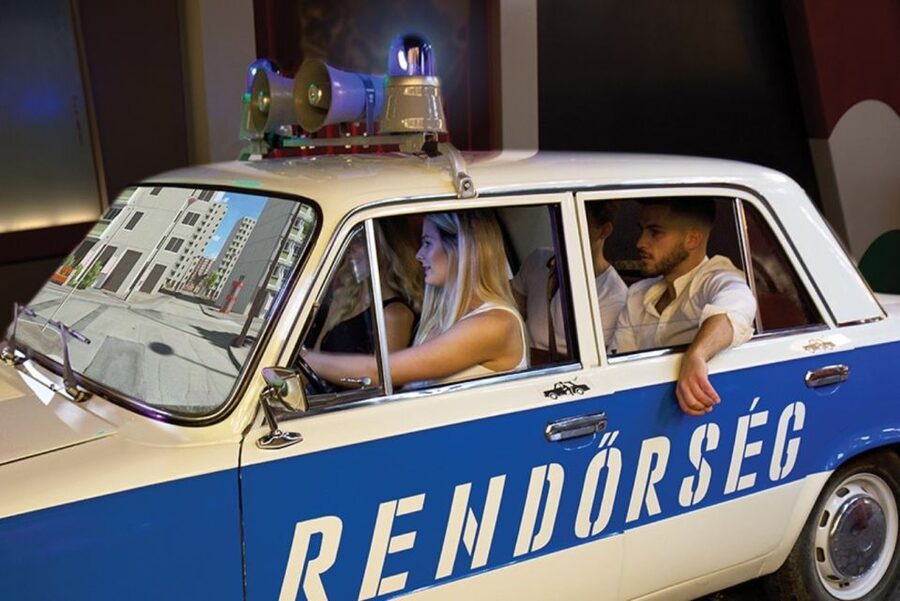
- Lada police car simulator over Gazdagrét with virtual patrol action in a famous Budapest housing estate
- Vintage TV news studio with original, functioning cameras and period broadcasts
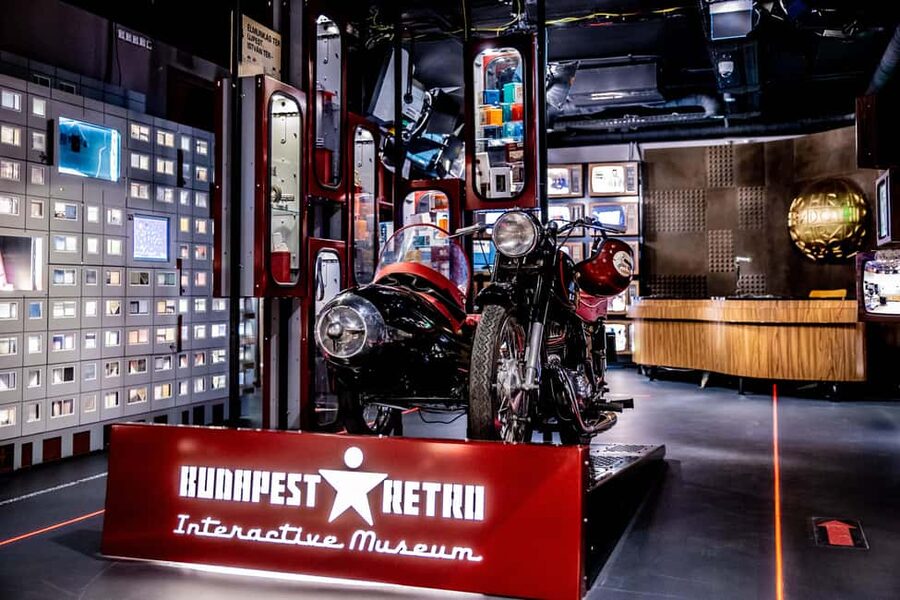
- Soviet cars and motorcycles including a distinctive black Volga and nine motorcycles
- A typical communist-era apartment built around the idea of functionality first
- Hands-on school life and summer camp memories like red pioneer scarves and Lake Balaton
- Space race details with Hungarian folk goulash tied to the Salyut 6 mission
Stepping into 1970s and 80s Budapest across three themed floors
What I love about this museum is its focus. It is not a vague lesson about politics. It is about what daily life felt like in communist Hungary, especially the everyday comfort side that people often miss when they only hear the hard headlines.
The layout works like a time machine you can walk through. Three floors bring you room by room through the routines of school, apartments, community life, and the media environment. You also get thousands of real items from the era, arranged thematically so you can make sense of it even if you are not a history expert.
The practical side matters too. You are looking at a 1-2 hour visit for a full experience. That makes it a smart add-on day activity, not something that swallows your whole afternoon.
More Museum Visits in Budapest:
- Budapest: Cat Museum Budapest Entry Ticket
★ 4.4 · 2,210 reviews - Budapest: Light Art Museum Skip-the-Line Entry Ticket
★ 3.9 · 1,531 reviews - Budapest Card: Free Public Transport, Spa & Museums with Delivery
★ 3.5 · 241 reviews
The museum’s real-objects approach, and why it feels different
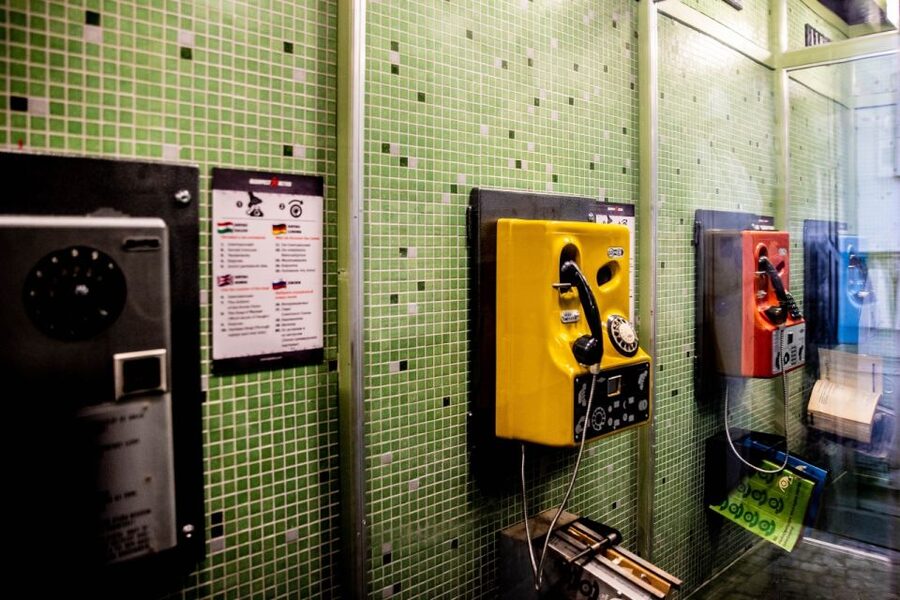
A lot of museums show replicas or cleaned-up displays. This one leans hard on the authentic stuff. The themed rooms use actual artifacts from the time, protected and presented in a way that helps you understand the setting without it turning into a dusty storage unit.
I find that approach helpful because you start noticing the small things: the practical household items, the media tools, the style of everyday objects, and the way the rooms are staged to feel lived-in. It is easier to grasp what changed, and what stayed the same, when you are looking at tangible items instead of broad explanations.
If you are traveling with kids, this is a big plus. The museum does not rely only on reading. It builds in interactive moments that keep attention moving, even when the topic is serious.
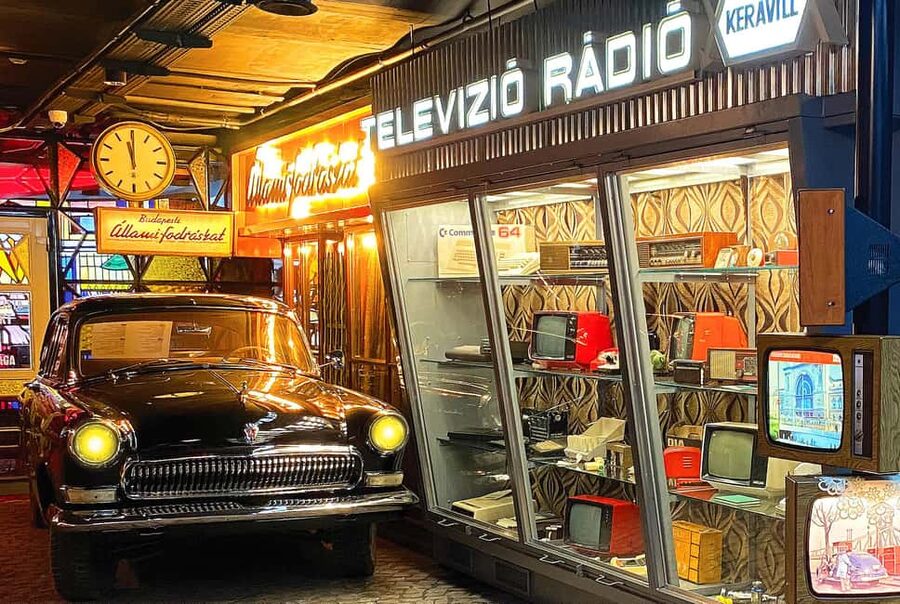
Soviet cars and motorcycles: black Volga and the big “how did they fit it all?” factor
One of the first things you notice is the collection of period vehicles and the space they take up. There are nine motorcycles and three renovated vintage Soviet cars, including a standout black Volga. It is a fun visual entry point, but it also tells you something useful about the era.
These vehicles are more than decoration. They help you picture transportation, maintenance culture, and everyday mobility in a system where consumer choices were limited. Seeing them parked in a museum setting also makes the objects feel real, like you could almost hear the mechanics at work.
If you have any interest in cars, mechanics, or design quirks, this part of the museum often turns into a longer stop than you planned. Just be sure you still leave time for the apartment and simulator rooms, since those are the payoff areas for interaction.
Patrol Gazdagrét in the Lada police car simulator
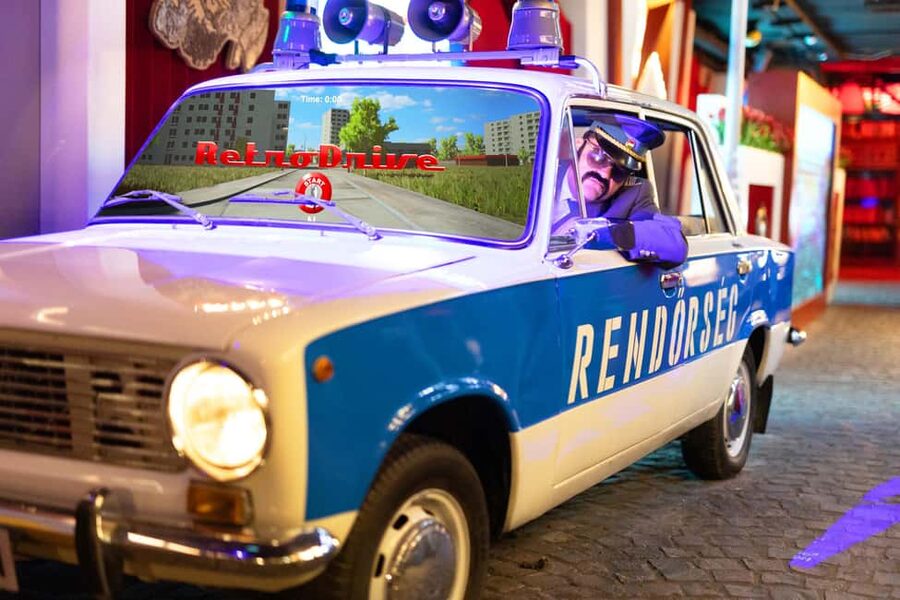
The museum’s most playful high point is the Soviet-made Lada police car simulator. You do not just watch the story. You get to patrol a virtual version of Gazdagrét, a well-known Budapest housing estate built from long rows of nearly identical apartment blocks.
This is where the museum does something smart: it connects everyday architecture to daily experience. Gazdagrét represents that repetitive urban style you hear described as part of communist city planning. Here, you see it as a space you navigate, not just something you read about.
One useful tip, purely practical: if you get a little impatient with interactive stations that take time, be ready for a short wait during busy hours. The simulator is a magnet, especially for families and people who like hands-on activities.
A few more Budapest outings worth comparing
- Budapest: Széchenyi Spa Day Ticket with Optional Upgrades
★ 4.3 · 23,911 reviews - Budapest: Parliament Building Entry Ticket and Audio Guide
★ 4.5 · 3,844 reviews - Budapest: Cinema Mystica Entry Ticket
★ 4.3 · 3,103 reviews - Budapest Széchenyi Thermal Spa Ticket
★ 4.0 · 2,178 reviews
The period TV news studio with working cameras
Another standout is the TV studio, because it feels like the museum understands media is part of the daily routine. You step into a period news broadcast setup with two authentic, functioning TV cameras. Then you can read original news broadcasts from the communist era in that studio setting.
This stop is valuable because it reframes propaganda as something ordinary. News is not only something delivered from a distance. It is produced, framed, and presented through specific equipment and routines. Seeing the cameras in action-oriented form makes the entire media idea feel less abstract.
If you care about how governments shape reality through information, this room usually lands well. Even if you do not read everything line by line, the studio environment helps you understand the role of TV in that time.
A typical apartment, and the idea of functionality first
If you want the most direct taste of everyday life, go for the typical apartment room. The museum’s design uses the principle of functionality first. Square apartment blocks appear throughout cities, and each unit is built with the same kind of furniture and household layout.
In this apartment, you can look at household items from the period and get a feel for how consistent design shaped daily routines. The museum also emphasizes that the “standard” approach showed up in details like carpets, furniture, fridges, and TV sets. That is a big concept made visible.
There is even more to do here. Through an interactive mirror, you can try on vintage outfits for photos. It is playful, yes, but it also nudges you to think about how people dressed for school, work, and public life.
Practical note: this is one of the rooms where you may want a little patience if it is crowded, because people tend to linger around the mirror and the room staging.
School life with red pioneer scarves, propaganda songs, and summer camps
The museum does not only focus on constraint. It also shows how community life still existed and how people filled their time. One themed area covers school education, including the distinctive red pioneer scarves and propaganda songs.
What makes this section more useful than a generic school exhibit is the contrast. You see the message side, but you also see the social side: summer camps at Lake Balaton, community activities, and a sense of group life that shaped identity.
If you are traveling with kids, this is often a good bridge. They may not have context for pioneer programs or party youth movements, but they can connect to the feelings of uniforms, gatherings, performances, and summer freedom. It makes the past understandable without oversimplifying it.
For adults, it helps you grasp a key point about communist-era culture: people experienced it as a mix of rules and routines, plus real human activities layered on top.
The space race room: 1980 Hungary, Salyut 6, and folk goulash
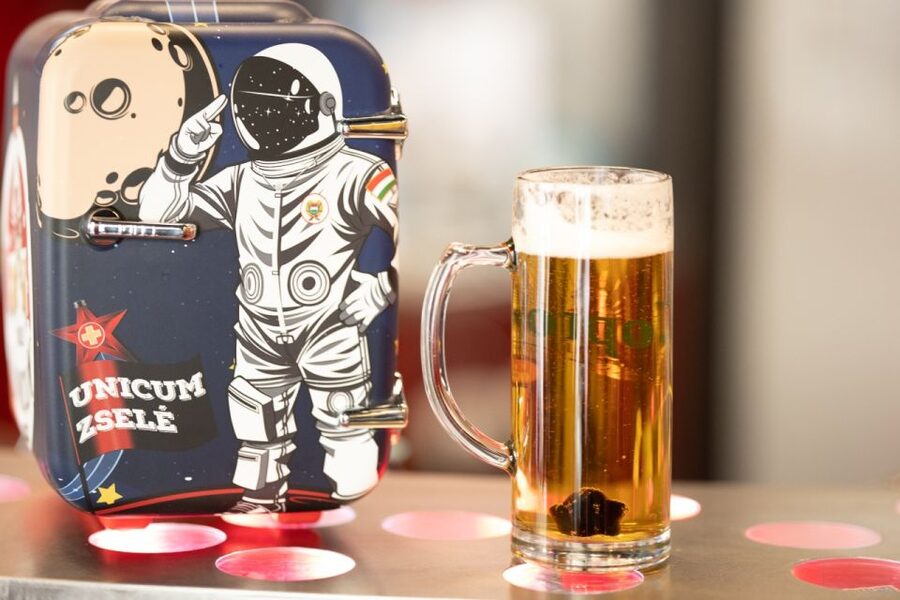
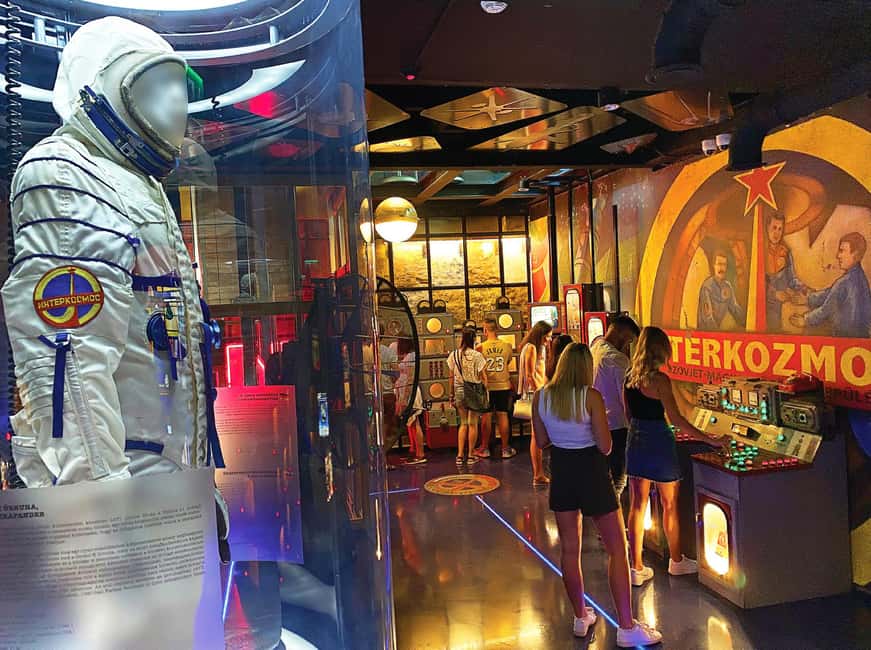
Some museums treat space as a distant scientific story. Here, it is tied back to national pride and cultural packaging. In 1980, Hungary became the seventh nation to send an astronaut to space as part of a Soviet mission. The museum includes a dedicated room for that journey, with a spacesuit and a memorable object tied to the crew.
A Hungarian folk art-patterned canned goulash was presented as a gift to the Salyut 6 space station crew. It is an oddly charming detail, and that contrast is part of the point. Even in a system dominated by large political forces, small cultural symbols still traveled outward.
If you like science history, you will appreciate how the museum connects it to everyday identity. If you prefer social history, the canned goulash still works because it shows how culture gets carried into power narratives.
Retro bistro after your visit: coffee, drinks, pastries, and a jukebox
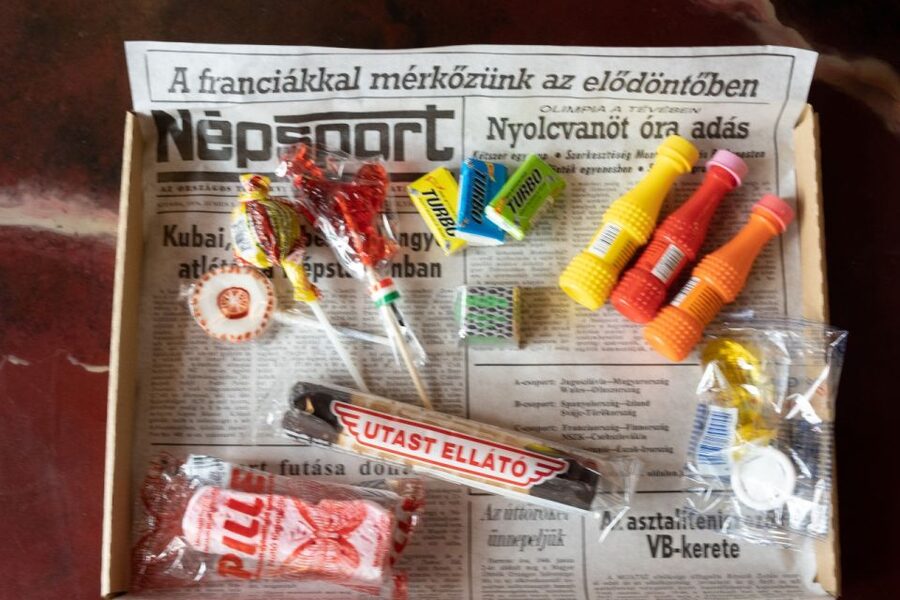
Once you finish the last floors, the museum offers a retro bistro area. It has coffee, drinks, and pastries, plus a jukebox-style setup that keeps the mood in sync with the exhibits.
Food is not included with the ticket, but this is a convenient place to stop without changing plans. It is also a good time to look through the souvenir selection, especially if you want something small and themed to remind you of the visit.
If you are pairing this with walking around the city, plan your timing so you can eat when you actually want, not when you feel museumed out. An hour passes faster than you think once the interactive stations start pulling you in different directions.
Price and value: what $17 buys in a short 1-2 hour slot
At around $17 per person, this ticket is priced like an experience, not a long museum marathon. That matters because the visit is typically 1-2 hours, meaning you are paying for access to interactive moments, real artifacts, and themed rooms, all without needing a half-day commitment.
It is also a skip-the-line ticket. In practice, that can make a big difference in busy seasons, since interactive attractions tend to draw people to the same areas.
Worth knowing: ticket prices vary by day of the week. If you have flexibility, check the schedule before booking so you do not pay a peak-day rate by accident. There is also a small senior perk: seniors 65+ who purchase a senior ticket receive a complimentary coffee every Wednesday.
My takeaway on value is simple. If you like hands-on museums, period media, vehicles, and everyday-life recreations, this is a strong buy for the time you spend. If you want lots of text-based deep explanation in English, then you may need to manage expectations.
Who should book, and who might feel underfed
This museum fits best if you want something unusual in Budapest. It is family-friendly, and the interactive format makes it easier for kids to engage with a topic that could otherwise feel heavy.
It is also a great match for:
- People who like interactive exhibits and stations that let you do something, not just watch
- Anyone drawn to Soviet-era design, vehicles, and apartment layouts
- Families who want a child-friendly pace without giving up meaningful context
- Travelers who want a different angle on communist history than the usual big memorial sites
You might be less satisfied if you strongly prefer quiet, scholarly museums with lots of fully translated text across every room. One practical consideration is that some exhibit text may not be fully in English, so a language gap can reduce how much you extract from certain sections. Another practical point: on hot days, indoor cooling may not feel like a relief.
Quick practical tips for a smoother visit
- Aim for 1-2 hours so you can interact without rushing. The museum is not huge, but the interactive parts slow you down in a good way.
- If you care about the simulator and TV studio, prioritize those earlier in your visit. They are popular stops.
- Plan around comfort. If you are going on a warm day, wear something breathable, and expect you may want breaks.
- When you arrive, present your voucher at the museum desk for entry.
- If you need a meal, remember that food and drink are not included, so plan to use the bistro if you want refreshments.
FAQ
How long should I plan to spend at the Budapest Retro Interactive Museum?
Plan about 1 to 2 hours to fully experience the museum.
Is the ticket skip-the-line?
Yes. Your ticket includes skip-the-line admission, so you can head straight to the museum desk for entry.
Is food included with the ticket?
No. Food and drink are not included. The retro bistro is available after your visit for coffee, drinks, and pastries.
Do I need to book for a specific day?
The ticket is valid for 1 day, and you should check available starting times.
Can I cancel and get a full refund?
Yes. You can cancel up to 24 hours in advance for a full refund.
Is the museum wheelchair accessible?
Yes. The museum is wheelchair accessible.
Should you book this Budapest Retro Interactive Museum ticket?
I’d book it if you want a short, hands-on Budapest experience that shows communist-era daily life through real artifacts, interactive tech, and period design. The Lada police car simulator and the TV news studio are the kind of specifics that turn a museum visit into a story you can actually feel.
Skip or reconsider if you need everything presented with fully English text, or if you are traveling expecting heavy indoor comfort on warm days. Otherwise, this is a fun, family-friendly way to understand a complicated era without drowning in facts that never stick.
Latest to land in Budapest
- Visegrád Hike & Castle Tour with Ferry from Budapest★ 4.6 · 3 reviews
- Budapest: Vacation Photographer to collect great memories★ 5.0 · 49 reviews
- True Crime Walking Tour in the Buda Castle district★ 5.0 · 26 reviews
- Trash Art Museum: Hungary’s First Scrap Metal Exhibition★ 4.3 · 72 reviews
- Budapest: 3-Hour Trabant Sightseeing Tour★ 4.7 · 28 reviews
- Audio visual multi-sensory chefs journey dinner experience★ 5.0 · 3 reviews
- Private Szentendre and Vac Tour from Budapest with Transport★ 5.0 · 3 reviews
- Wine Tasting in the Countryside from Budapest★ 5.0 · 14 reviews
Museums, compared.
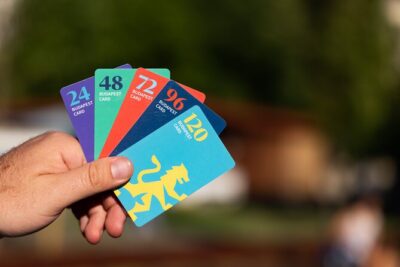
Budapest Card: Free Public Transport, Spa & Museums with Delivery
Read our review →
Budapest Dohany Synagogue & Hungarian Jewish Museum & free extras
Read our review →
Skip the Line: Budapest Pinball Museum Admission Ticket
Read our review →

Trash Art Museum: Hungary’s First Scrap Metal Exhibition
Read our review →
Browse the lists this tour appears in