
Reviewed · WALKING TOURS
Budapest Grand Walk
Budapest doesn’t really settle in until you walk it. This 4-hour guided Budapest Grand Walk gives you big landmarks, plus quieter corners, with real context about how the city got here. I love the way the tour mixes photo stops with street-level stories, and you start with a glass of Hungarian sparkling wine before you even leave the wine cellar.
Two other highlights I like: you ride the oldest metro line for a change of pace, and you end with dramatic Danube views that make everything feel connected. One thing to consider: the walk is moderately active, and you’ll want good shoes, plus enough energy for a full afternoon.
In This Review
- Key highlights worth planning for
- Meeting in the Palace District, with wine to set the tone
- Pest’s power corridor: Opera House, museums, and 1956 context
- St. Stephen’s Basilica: a free stop with a very specific story
- Europe’s oldest metro ride and a real coffee break
- The Jewish Quarter: big monuments and street life you can still feel
- Heroes Square and the Danube bank: views plus the weight of memory
- Parliament, Liberty Square, and the Buda Castle courtyards vibe
- How much you really get for $125
- Timing, pacing, and what to do after the tour ends
- Who should book this tour, and who should skip it
- Should you book Budapest Grand Walk?
Key highlights worth planning for

- Sparkling wine start in the Palace District, a nice way to kick off an orientation-style walk
- M1 metro ride on Europe’s oldest underground line, built into the route
- Jewish Quarter focus including sights around the Grand Synagogue and Király utca
- Shoes on the Danube Memorial where the scenery suddenly gets very heavy
- Danube promenade viewpoints for Parliament, Chain Bridge, and the Buda Castle area from across the water
- Small-group feel with a maximum of 8 travelers, usually smaller in practice
Meeting in the Palace District, with wine to set the tone
You meet in the Pest side Palace District at Tasting Table Budapest, at Bródy Sándor u. 22. The timing is mid-afternoon, which I like because you get daylight for photos but you are not stuck in the harshest part of the day. The guide starts you with an aperitif, a glass of Hungarian sparkling wine, served before the walking really begins.
This matters more than it sounds. Budapest can feel like two cities glued together by bridges, and a guided start gives you a sense of direction fast. You are also in a good mood when you begin, which helps on any tour that mixes history, walking, and a few emotionally intense stops later.
The group stays small, shared and capped at 2 to 8 guests. That size is big enough for energy and conversation, but small enough for questions and quick course corrections if you are lagging behind or your brain wants more details.
More Walking Tours in Budapest:
- Budapest: Buda Castle Walk with Saint Stephen’s Hall
★ 4.5 · 3,012 reviews - Big Bus Budapest Hop-On Hop-Off Bus and Walking Tour
★ 3.5 · 2,206 reviews - Budapest: Buda Castle District Walking Tour
★ 4.6 · 2,108 reviews
Pest’s power corridor: Opera House, museums, and 1956 context
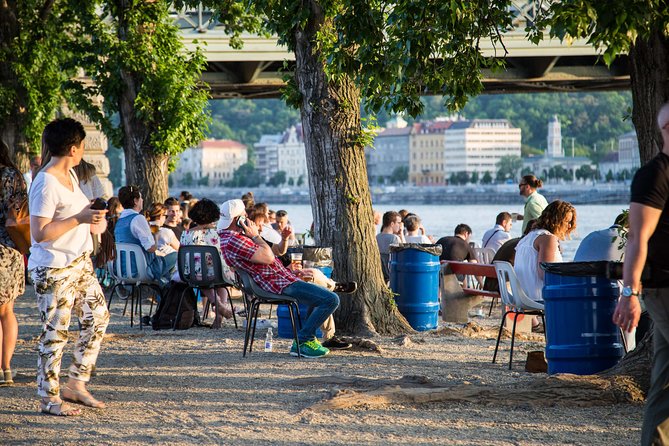
From the first streets, the tour works like an orientation map in motion. You pass through the Palace district atmosphere and you get a feel for why Pest long served as the political and cultural center. One of the most memorable points early on is the Hungarian National Radio Building, tied to Hungary’s 1956 revolution. Even if you only know the outline of 1956, your guide can turn it into something you can picture: who stood where, why radio and communication mattered, and what the city felt like under stress.
You also go by the National Museum area, which helps you understand where Hungary’s public identity has been staged for centuries. Then you move along toward Andrássy Avenue, a grand boulevard that gives you that “this is a capital” feeling without needing to sprint through it. The Hungarian State Opera House sits along the way, a neo-Renaissance building designed by Miklós Ybl. The building is best appreciated slowly, even if you are just passing by, because the whole street is designed to frame the city’s ambition.
A practical note: the tour is built for walking, but it is not just aimless strolling. You will stop for photos and questions at intervals, so you are not forced to keep your eyes down the entire time. Still, this is not the kind of tour where you can comfortably doze through in sneakers that were designed for mall floors.
St. Stephen’s Basilica: a free stop with a very specific story
One of the cleanest “anchor points” in the walk is St. Stephen’s Basilica (Szent Istvan Bazilika). It’s free to enter during the stop, and it has a headline detail you will actually remember: the basilica is named for Stephen, the first King of Hungary, and the church houses his mummified right hand.
This is where the tour shifts from landmark sightseeing into meaning. A basilica stop can be a quick box-check on some tours, but here it’s used to connect religion, state-building, and how a nation tells its origin story. Even if you are not a church person, you are still learning what people chose to preserve and display.
If you plan to climb steps elsewhere in Budapest later, keep in mind that basilica stops tend to include inside time plus a few minutes for perspective outside. Go slow on the inside so you do not feel rushed.
Europe’s oldest metro ride and a real coffee break
To keep your energy up, you get a small public transport break. You ride the continent’s oldest metro line, which in practice is one of those experiences that turns a long walk into something more like a city systems tour. It’s short, but it is memorable, and it also breaks up the rhythm so your legs get a reset.
Then you stop for a coffee break at a local café. Coffee is included, and the tour includes coffee and/or tea as well, depending on what the café is serving that day. In one instance, a guide reportedly worked in dessert and lemonade for non-coffee drinkers. I would still assume coffee time is part of the plan, but it is reassuring to know the guides sometimes tailor the “fuel stop” to what your group needs.
This is also a good moment to ask your guide the question you did not want to ask earlier, like what to do next after the tour ends, or where to find a good lunch without falling into the most touristy traps.
A different sort of day out in Hungary:
- Budapest: City Highlights Sightseeing Cruise
★ 4.6 · 43,981 reviews - Budapest: Unlimited Prosecco, Beer and Aperol Spritz Cruise
★ 4.8 · 37,304 reviews - Budapest: Széchenyi Spa Day Ticket with Optional Upgrades
★ 4.3 · 23,911 reviews - Budapest: Nighttime or Daytime Sightseeing Cruise
★ 4.2 · 21,062 reviews
The Jewish Quarter: big monuments and street life you can still feel
The former Jewish Quarter is not treated like a quick photo wall. You see key stops connected to Jewish community history, and you get context on what the district meant, not just what it looks like today.
The headline is the Grand Synagogue, described as Europe’s largest. Even from street level, it can feel like a landmark that carries a lot of weight, and the area around it helps you understand that this was once a center of community life. You also pass by or see the Gozsdu udvar complex and Király utca, which keeps the tour grounded in everyday street culture, not only memorials and architecture.
A good guide will also help you understand the difference between seeing history as “old buildings” versus seeing it as people’s daily lives disrupted and reshaped. That framing is important, because the tour later includes the Shoes on the Danube Memorial, and the emotional contrast lands better when you have already been given the human context.
Heroes Square and the Danube bank: views plus the weight of memory
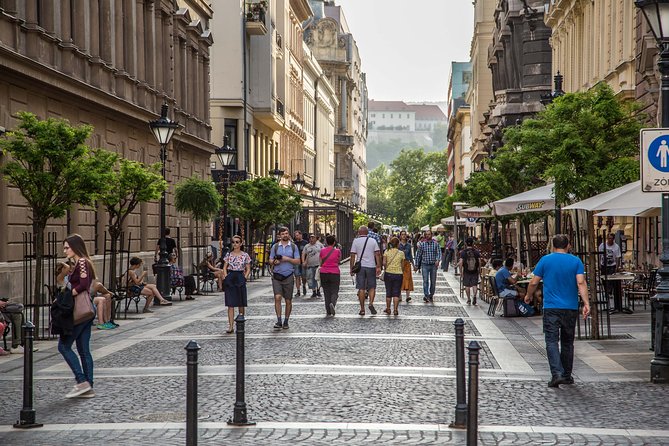
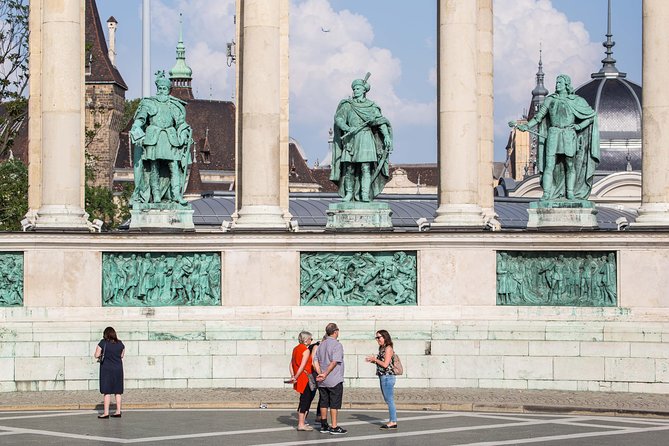
The tour brings in Heroes Square as one of the major Pest highlights. It’s a natural place for a skyline-level overview, and it also helps you learn the geometry of the city, since from that broader view you can start to connect avenues, districts, and river crossings.
Then you shift toward the Danube, and this is where the route becomes cinematic. From the river bank you get sightlines across to Parliament, and you are set up for the major Danube photo moment: Chain Bridge and the Buda Castle area in the same sweep.
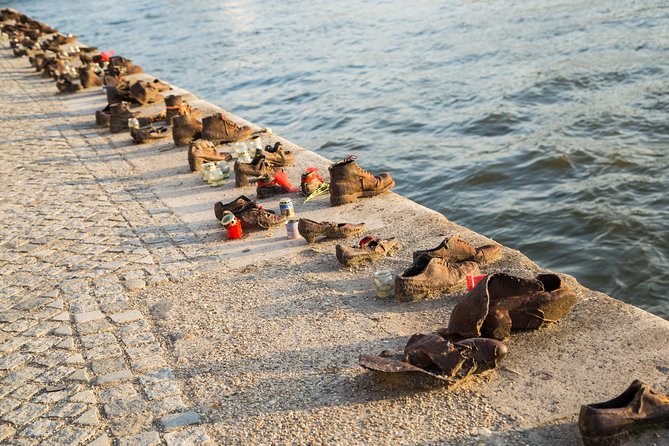
You will also see the Shoes on the Danube Holocaust Memorial. This is the kind of stop that can change your mood in two minutes. The memorial is intentionally simple, and your guide’s job is to make sure you understand what the scene is representing, not just that it is “a memorial with shoes.” Expect a few minutes of silence or at least slower walking, because this one hits.
Nearby, your guide also references other memory markers, including details about memorials connected to international figures such as a US major and Ronald Reagan. That’s useful because it explains why certain names appear in a Hungarian city space, and what these monuments are saying to the world.
Parliament, Liberty Square, and the Buda Castle courtyards vibe

The neo-Gothic Parliament building dominates the Danube bank views, and the tour uses it for more than photos. Parliament is one of those buildings where people either take it for granted or treat it like a backdrop. Here, you get a guided sense of why the building matters and how it fits into the city’s political story.
After Danube-side stops and memorial moments, the tour heads toward the Buda Castle area for views and atmosphere. You pass through a complex described as seven connected buildings with courtyards, and you get a look at the lively courtyards with shops and restaurants. That matters because Buda Castle is not only palaces and monuments, it is also a working tourist neighborhood with real street life. The courtyard area gives you that in-between feeling of “grand and lived-in.”
You also see other landmarks tied to larger political eras, including the Soviet Monument, and you learn how memorials are used to compress decades into a single street scene. Another highlight on the Buda side is the Hungarian Academy of Sciences, in an elegant neoclassical palace built in 1865. If you like architecture, this stop helps connect the city’s 19th-century ambitions to what you are seeing now.
Then you get Liberty Square, flanked by beautiful buildings, including the former stock exchange. That is a nice capstone because it rounds out the story from empire-era buildings to the modern identity of the city.
How much you really get for $125
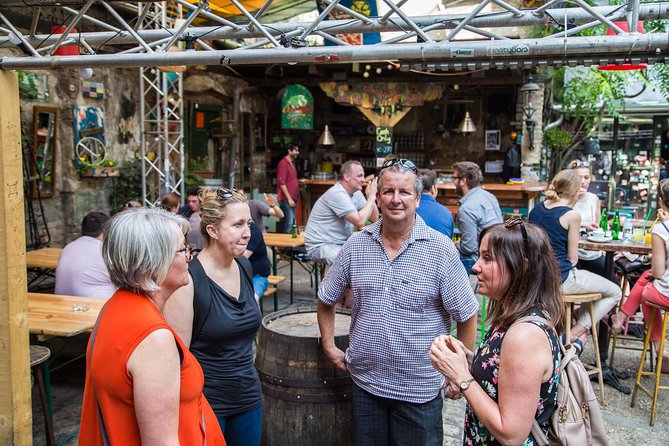
At $125 per person, this is not a budget add-on. But it can be good value if you like guided context and you want your first hours in Budapest to feel efficient.
Here’s what you are paying for:
- A guide who provides history and daily-life context while you move across multiple neighborhoods
- Multiple major sights in a single afternoon without you having to plan train stops or route puzzles
- Included perks that reduce mental workload, sparkling wine, a coffee break, and public transport time
- A small-group cap of 8, so you are not lost in a crowd
If you like to wander on your own, you might feel this is priced for guidance rather than admissions. But if you want a structured introduction that also teaches you what to notice, it is easier to justify.
Also, doing this early in your trip can make the rest of Budapest click. Once you have a mental map of Pest versus Buda and where the big sightlines are, you waste less time later figuring things out.
Timing, pacing, and what to do after the tour ends
The tour runs about 4 hours. In practice, the guide can stretch it beyond four hours if your group is chatty and you are not in a rush. So if you have dinner reservations or a specific plan afterward, tell your guide at the start.
The tour ends near Chain Bridge on the Pest side when the guide departs. The helpful part is that you are dropped near one of the most central decision points in Budapest. From there, you can cross into the Buda Castle area if you want more time, linger for sunset views, or simply continue exploring at your own pace.
Pacing is “moderate walking.” Comfortable shoes are strongly recommended, because you are covering a lot of ground between stops, and some areas involve stairs or uneven sidewalks typical of old city streets.
Who should book this tour, and who should skip it
This tour is a great match if:
- You want a first-day orientation that mixes famous landmarks with lesser-seen context
- You like history told through real street locations, not just museum slides
- You enjoy the Danube viewpoints and want them connected to the city’s political story
- You prefer a small group, not a huge coach crowd
It might be less ideal if:
- You want a mostly seated experience
- You are very sensitive to emotionally heavy memorial stops, since the Shoes on the Danube Memorial is part of the route
- You have limited mobility and cannot handle a moderate walking day
Should you book Budapest Grand Walk?
I think you should book it if you want a guided Budapest “map and meaning” in one afternoon. The combination of sparkling wine, a metro ride, major Pest sights, and Danube viewpoints makes the time feel efficient, and the memorial stops are handled with enough context that you will likely understand what you are seeing.
If you are the type who likes to plan routes yourself and already knows Budapest’s geography, you could cobble together a similar route. But you would still miss the built-in sequencing, the public transit breaks, and the way the guide connects events like the 1956 revolution to what you see on the street.
If your goal is to leave Budapest with better bearings and a few unforgettable “aha” moments, this is a strong pick.
Latest to land in Budapest
- Visegrád Hike & Castle Tour with Ferry from Budapest★ 4.6 · 3 reviews
- Budapest: Vacation Photographer to collect great memories★ 5.0 · 49 reviews
- Trash Art Museum: Hungary’s First Scrap Metal Exhibition★ 4.3 · 72 reviews
- True Crime Walking Tour in the Buda Castle district★ 5.0 · 26 reviews
- Budapest: 3-Hour Trabant Sightseeing Tour★ 4.7 · 28 reviews
- Audio visual multi-sensory chefs journey dinner experience★ 5.0 · 3 reviews
- Private Szentendre and Vac Tour from Budapest with Transport★ 5.0 · 3 reviews
- Wine Tasting in the Countryside from Budapest★ 5.0 · 14 reviews
Walking Tours, compared.

Big Bus Budapest Hop-On Hop-Off Bus and Walking Tour
Read our review →
Budapest City Landmarks Walking Tour in 2 Hours
Read our review →
3-Hour Orientation Walking Tour of Buda and Pest
Read our review →
Budapest Historical Sightseeing – Free Walking Tour
Read our review →
Budapest All in One Small Group Walking Tour with Strudel Stop
Read our review →Browse the lists this tour appears in