
Reviewed · HISTORICAL TOURS
Budapest Historical Sightseeing – Free Walking Tour
Budapest makes more sense on foot, and this free style history walk lines up the city’s major stories in a tight Pest route. In about 2.5 hours, you go from myth and monarchy to communism and Holocaust memory, with plenty of modern culture threaded in.
What I like most is the way you get an instant orientation. You’ll learn where things sit, how neighborhoods connect, and what to look for later, especially along the Danube. Second, the guides get real credit in the reviews, with names like Peter and Victoria showing up repeatedly for clear explanations and smart, useful local advice.
One heads-up: this is a real walking tour. It is not for slow, stop-and-go sightseeing, and you should plan for long, sometimes chilly stretches, especially if the weather is harsh.
In This Review
- Key things to know before you go
- Why this Budapest historical walk is a smart first-day move
- Meeting at Kálvin tér, spot your guide, and start with a plan
- National Museum gardens: myths, founders, and the 1948 uprising
- Kalvin Square and the Protestant reformer link
- Unger’s House: Miklós Ybl’s mash-up of styles
- Elizabeth Square and the Budapest Eye, plus nightlife context
- Astoria area: French Empire elegance and film-era glamour
- Through the Jewish Quarter: community, ghetto history, then present-day street life
- St. Stephen’s Basilica, Liberty Square, and the communist memorial contrast
- Stock Exchange Palace and the Ronald Reagan statue, plus symbolic city tricks
- Hungarian Parliament Building: neo-gothic drama and Danube viewpoint payoff
- Fisherman’s Bastion viewpoint run: St. Matthias, the palace, and river islands
- Széchenyi Lánchíd and the Shoes on the Danube Bank
- How long it takes, how much you walk, and what to bring
- Group size and sound: the part you control
- So is it worth the price for you?
- Should you book Budapest Historical Sightseeing?
- FAQ
- How long is the Budapest Historical Sightseeing walking tour?
- Where do I meet the guide, and where does the tour end?
- Is this tour really free, and what does the $3.63 price mean?
- Are entrance tickets included for all the stops?
- Do you serve coffee or any food during the tour?
- Are toilets available during the tour, and do they cost money?
- Is the tour suitable for people with limited mobility?
- Is free cancellation available, and what happens if the weather is bad?
Key things to know before you go
- Tip-based value with a low per-person cost, so your money goes mainly to getting a great local guide for 2.5 hours
- English-language guiding with clear stop-by-stop explanations at landmark points
- Big-picture history on the Pest side, including communism, the Jewish Quarter, and 20th-century memory sites
- Outdoor-focused sights, with some major buildings not included for admission
- Danube views plus must-see memorials, including the Shoes on the Danube Bank
- Comfort matters because cobblestones and cold weather can make the walk feel longer
Why this Budapest historical walk is a smart first-day move
If Budapest feels like a puzzle when you first arrive, this kind of tour is how you solve it fast. The route mostly covers the Pest side, so you see a lot of the city without needing tickets, trains, or major detours right away. You also end near the Chain Bridge area, so it is easy to keep exploring after the tour.
The best part is the historical framing. Instead of treating famous buildings like photo backdrops, you connect what you see to what happened here, and how the city thinks about it now. The tour keeps switching gears on purpose, from monarchy-era symbolism to communist memorials, and then to Holocaust remembrance at the waterline.
And yes, it is budget-friendly. At $3.63 per person, you are paying for access to a guide and a planned route, not a bundle of paid attractions. Since tips are part of the model, you can decide how much to add based on what you felt you received.
More History Tours in Budapest:
- Budapest: Historic Cruise with Welcome Drink
★ 4.7 · 6,512 reviews - Buda Castle District Dark History, Legends and Vampire Night Tour
★ 4.5 · 1,240 reviews - BloodThirsty Hungary: Walking tour & Dark Historical Stories
★ 4.9 · 633 reviews
Meeting at Kálvin tér, spot your guide, and start with a plan
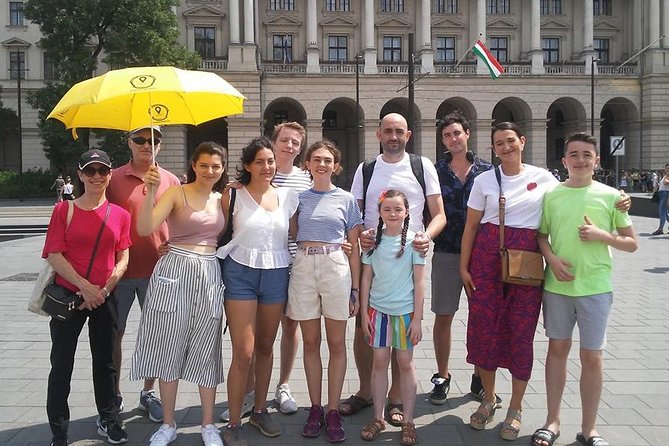
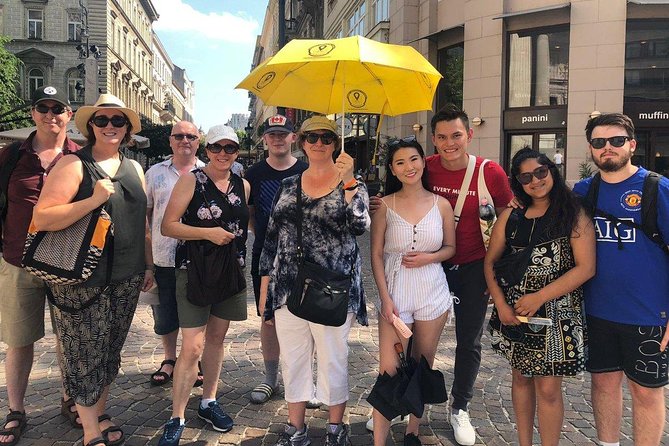
You meet at OTP Bank Budapest, Kálvin tér 12-13 (1085). The guides wear yellow, which makes it easier to find each other quickly, even when you are still waking up in a new city.
The start point matters because it sets you up to walk like you live here. Kálvin tér is a strong launchpad for moving across central Pest, and it gives the tour a clean, logical backbone. You also get time early to settle into the pace before the route starts stacking landmark after landmark.
One practical note: the tour uses a mobile ticket. Make sure your phone battery is happy. You do not want to be hunting a QR code while the group forms.
National Museum gardens: myths, founders, and the 1948 uprising
The tour begins with a stop in the gardens of the Hungarian National Museum. Even before you talk about politics, you get a sense that Budapest storytelling can be symbolic. You’ll see the statue of the turul bird, a mythical bird tied to Hungarian identity.
From there, you shift from legend to history. You’ll hear about the museum, its collections, and its founder, and then you’ll zoom into a specific political moment: the 1948 uprising. It is the kind of anchor detail that helps you understand why so many later sites feel like they are reacting to something that came before.
A small but useful bonus is the way you are taught to notice the urban layer around you, too. You’ll learn about the notorious VIII district, once known for grand palaces. That’s helpful because Budapest does not just have buildings, it has eras stacked side by side, and this stop teaches you how to read that.
Kalvin Square and the Protestant reformer link
Next is Kálvin Square (Kalvin ter). The guide shows you the square and connects it to the French Protestant Reformer John Calvin. This is one of those stops that might sound “small” on paper, but it works because it shows how international ideas ended up shaping local streets.
You also get a benefit that matters in real travel: the square has places to sit and shelter from the elements. That is not just comfortable, it also gives your legs a tiny reset before the tour picks up again.
More Walking Tours in Budapest:
- Budapest: Buda Castle Walk with Saint Stephen’s Hall
★ 4.5 · 3,012 reviews - Big Bus Budapest Hop-On Hop-Off Bus and Walking Tour
★ 3.5 · 2,206 reviews - Budapest: Buda Castle District Walking Tour
★ 4.6 · 2,108 reviews - Budapest City Landmarks Walking Tour in 2 Hours
★ 5.0 · 2,048 reviews
Unger’s House: Miklós Ybl’s mash-up of styles

Unger’s House is brief, but it is a good example of how Budapest loves mixing references. You’ll stand in the courtyard of a creation by Miklós Ybl, and the design is described as a blend of Byzantine, Gothic, Moorish, Renaissance, and Romantic elements.
Why you should care: when you see a place like this on your own, you might treat it as pretty architecture. On this tour, you learn to ask what kind of message a building sends, and how style can be tied to status, taste, and the era that commissioned it.
This stop is short, so if you like architectural nerd details, keep your questions ready for the guide here. It is the easiest moment to get a thoughtful answer.
Elizabeth Square and the Budapest Eye, plus nightlife context
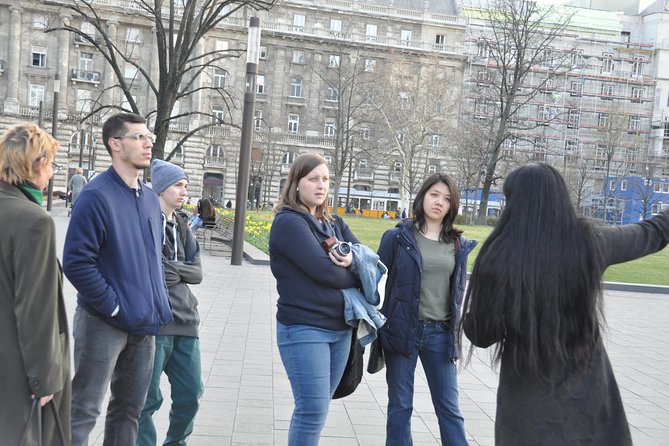
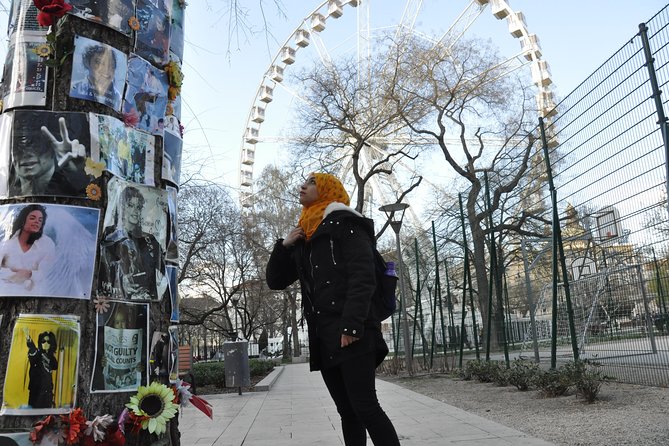
At Elizabeth Square, you’ll see the Budapest Eye. The guide also covers the history of the square and points out the location of some of the coolest bars and nightlife nearby.
I like this kind of stop because it gives you a real-life way to use the tour’s orientation. After you leave, you are not staring at a map like it is homework. You know where the fun area cluster is, and you can choose where to spend your evening without wandering blindly.
Astoria area: French Empire elegance and film-era glamour
The tour passes by Danubius Hotel Astoria, which is in a French Empire style. Even from the outside, the building’s presence is the point. The guide connects it to the cosmopolitan atmosphere of the era and even mentions film connections, including the Josephine Baker Story, directed by Brian Gibson.
This stop is mostly a “look and learn,” not a deep interior visit. Still, it is valuable because it shows another side of Budapest: it is not only monuments and memorials. It is also places that were part of international life, even when politics later took over the conversation.
Through the Jewish Quarter: community, ghetto history, then present-day street life
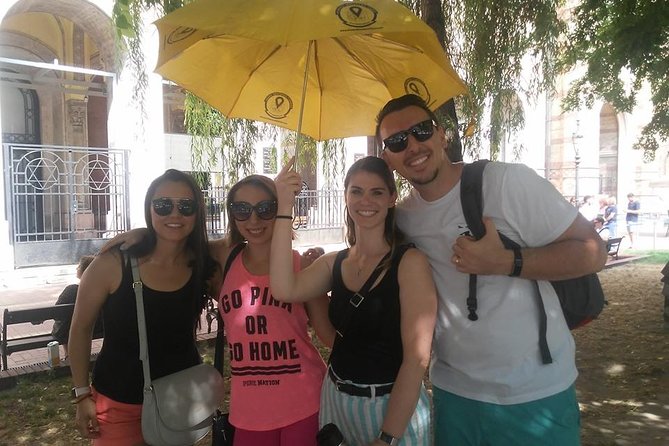
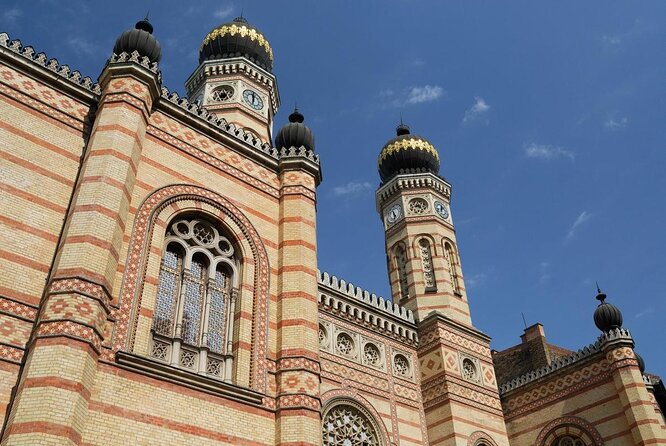
One of the most important stretches is the walk through the Jewish Quarter. Here the tour focuses on how the area changed through the 20th century: from a home to a vibrant Jewish community to the creation of a ghetto during the Second World War. Then the story moves forward again, because today the neighborhood includes artists and students, plus independent shops, designers, and bars.
When done well, this kind of route helps you understand the neighborhood as a living place, not a museum. You’ll finish the section with a better sense of what to respect, what to notice, and how to move through the area without turning people’s homes and streets into a background set.
If you prefer to keep your phone away for part of the time so you can actually listen, this is one of the best moments to do it.
St. Stephen’s Basilica, Liberty Square, and the communist memorial contrast
Outside St. Stephen’s Basilica (Szent Istvan Bazilika), you learn why it is named after Hungary’s first king. Admission is not included here, which is normal for a walking tour focused on outside viewing and narration. Still, even standing out front you get the scale and the idea of how religious identity is tied to national identity.
Then you head to Szabadság tér (Liberty Square), where you spend time seeing the communist memorial. This is one of the strongest “then and now” contrasts on the route. You’ve got a religious national landmark on one end and a political memorial on the other, and the guide helps you hold both ideas at once.
If you are doing Budapest for the first time, this sequence is smart. It prevents the common mistake of treating communism as a separate topic. Here, it gets placed into the same story framework as everything else.
Stock Exchange Palace and the Ronald Reagan statue, plus symbolic city tricks
The tour passes the Stock Exchange Palace, described as the largest privately owned historic landmark in Budapest, with 50,000 m². Admission is not included, so again, it is an outside focus.
Then you get two fun, slightly surreal moments near the political core. You’ll see the Ronald Reagan statue, learn why Reagan is depicted walking away from Parliament looking happy, and also hear why Bush’s statue is stood waiting nearby.
Those statues can feel like tourist trivia at first. On this tour, they become a clue to something bigger: Budapest’s public art sometimes records international relationships and political themes in a way that is easier to notice than in a textbook.
Hungarian Parliament Building: neo-gothic drama and Danube viewpoint payoff
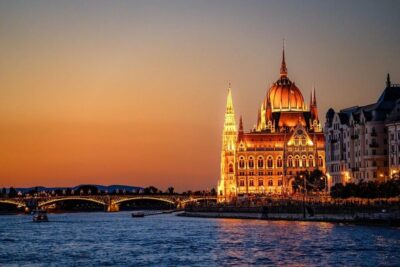
At the Hungarian Parliament Building, you stand outside the electric/neo-gothic structure and enjoy the view toward the Danube. You also learn about other important buildings on the square, including the Chocolate Museum, the former Ministry of Justice, and the Agricultural Museum.
This stop works for two reasons. First, it gives you a clear future reference point, so later you can find your way back to the area. Second, the guide ties the architecture and setting to the story of Hungary’s political evolution, not just to style.
One caution: because the Parliament area can be busy, it helps to position yourself where you can actually hear. If the group gets large, sound can bounce around in open space.
Fisherman’s Bastion viewpoint run: St. Matthias, the palace, and river islands
Next comes Fisherman’s Bastion from the Pest side. You’ll see the castle area and the Fisherman’s Bastion, and you learn the area’s history. The guide also calls out St Matthias church with its stunning colored tiled roof and points toward the Hungarian National Palace from afar on the Pest side.
From here, you also look over toward St Margit’s Island and Gellert Hill. The key value is perspective. Budapest is a city of viewpoints, and this sequence teaches you where those viewpoints are when you are standing on the Pest bank.
This is also a nice part of the tour to grab a quick breath, because by now you’ve covered enough ground that your brain needs a moment to reset.
Széchenyi Lánchíd and the Shoes on the Danube Bank
The tour finishes with two iconic Danube moments.
At Széchenyi Lánchíd (Chain Bridge), you see the bridge and learn its history, including its reconstruction. Bridges in Budapest are not just transport. They are emotional connectors between parts of the city that feel like different worlds.
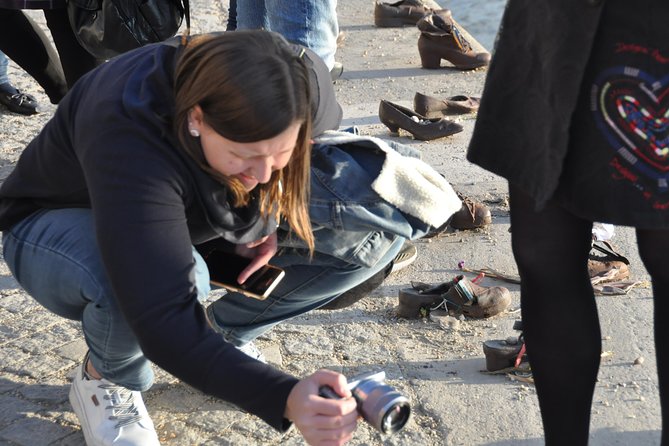
Then comes the stop that you will not forget easily: Shoes on the Danube Bank. The guide explains the monument of 60 pairs of shoes dedicated to Holocaust victims who were lined up and shot on the banks. It is simple, and it hits hard because it is about details you can imagine, not abstract numbers.
This is a sober ending. If you want a tour that helps you understand the city’s past and its moral memory, this stop is the core reason you choose this route.
How long it takes, how much you walk, and what to bring
The tour runs about 2 hours 30 minutes (approx.). You should plan on a steady walking pace and a schedule where most stops are short viewing and explanation moments.
The experience is not recommended if you cannot walk about 3 miles. Even if you can handle that distance, wear shoes you trust. Cobblestones can make “short” walks feel longer than you expect.
For comfort, the provider suggests bringing water, sunscreen, and weather gear like umbrellas or warm jackets. On cold days, this matters a lot.
There is also a short 5-minute break for drinks and to use the toilet. No coffee or tea is served, and no food is included. Toilet use costs 100 HUF to 500 HUF, so it is smart to carry a little cash even if you plan to pay for other things by card.
If you travel with luggage: guides are not able to carry guest luggage or equipment, so keep it light if you can.
Group size and sound: the part you control
The tour has a maximum of 50 travelers. In practice, group size can affect how easy it is to hear in busy areas like major squares and the Parliament vicinity.
If you know you struggle with hearing a guide in crowds, consider choosing timing that feels less chaotic for you. Since there is no hearing induction loop offered, bring your best listening strategy: stand close when you can, and ask questions when the guide pauses.
Also, this tour is in English, and it runs on a mobile ticket, so plan your phone access and attention span accordingly.
So is it worth the price for you?
At $3.63 per person, you are getting a planned route plus an in-person guide built around major landmarks, political context, and Danube viewpoints. For budget travelers, that is strong value, especially because most stops are outside and free to view.
I think it is best if:
- You are visiting Budapest for the first time and want a fast orientation
- You care about how communism, national identity, and the Jewish Quarter story shaped the city
- You like walking and can handle a solid distance without frequent long rests
- You want to end near the Chain Bridge area so you can continue on your own
I would skip it or pick a different style of tour if:
- Cold weather and long outdoor standing times make you miserable
- You cannot comfortably walk close to 3 miles
- You need lots of indoor time or paid attractions included
Should you book Budapest Historical Sightseeing?
Yes, if you want a guided way to understand Budapest’s big turning points while you also pick up real navigation help for the rest of your trip. The standout theme is that the guide approach gets serious praise, including frequent mentions of Peter and Victoria for clear storytelling and practical suggestions.
Book it early in your visit if you want the route to help you plan the rest of your days. Just bring good walking shoes, a bit of cash for toilets, and weather gear, and you’ll be set for a memorable Pest-side overview that goes beyond photos.
FAQ
How long is the Budapest Historical Sightseeing walking tour?
It runs about 2 hours 30 minutes (approx.).
Where do I meet the guide, and where does the tour end?
You start at OTP Bank Budapest, Kálvin tér 12-13, 1085 Hungary. You end at Budapest, Id. Antall József rkp. 1, 1052 Hungary, near Lanchid (the Chain Bridge).
Is this tour really free, and what does the $3.63 price mean?
The tour is described as a minimal fee tour and tips for the guides are not included. Plan to budget for tips if you feel the guide earned it.
Are entrance tickets included for all the stops?
Most stops are free to view. However, admission is not included for St. Stephen’s Basilica, the Stock Exchange Palace, and the Hungarian Parliament Building.
Do you serve coffee or any food during the tour?
No. There is a short 5-minute break to buy drinks and use the toilet, but no coffee or tea is served and no food is included.
Are toilets available during the tour, and do they cost money?
Yes, there is a short break for toilets. Toilet use costs 100 HUF to 500 HUF.
Is the tour suitable for people with limited mobility?
It is not recommended for travelers who are unable to walk about 3 miles.
Is free cancellation available, and what happens if the weather is bad?
You can cancel for a full refund if you cancel at least 24 hours in advance. The tour requires good weather, and if it is canceled due to poor weather, you will be offered a different date or a full refund.
Latest to land in Budapest
- Visegrád Hike & Castle Tour with Ferry from Budapest★ 4.6 · 3 reviews
- Budapest: Vacation Photographer to collect great memories★ 5.0 · 49 reviews
- Trash Art Museum: Hungary’s First Scrap Metal Exhibition★ 4.3 · 72 reviews
- True Crime Walking Tour in the Buda Castle district★ 5.0 · 26 reviews
- Budapest: 3-Hour Trabant Sightseeing Tour★ 4.7 · 28 reviews
- Audio visual multi-sensory chefs journey dinner experience★ 5.0 · 3 reviews
- Private Szentendre and Vac Tour from Budapest with Transport★ 5.0 · 3 reviews
- Wine Tasting in the Countryside from Budapest★ 5.0 · 14 reviews
Historical Tours, compared.

Buda Castle District Dark History, Legends and Vampire Night Tour
Read our review →
BloodThirsty Hungary: Walking tour & Dark Historical Stories
Read our review →
Budapest Jewish Heritage Memorial Walking Tour & Synagogue Entry
Read our review →
Jewish Heritage Guided Tour with Synagogue Ticket
Read our review →
Budapest Historic Downtown Bicycle Tour in small groups
Read our review →
Historic Downtown ride on E-Bicycles Buda & Pest
Read our review →
Jewish History Guided Walking Tour with Historian
Read our review →Browse the lists this tour appears in