
Reviewed · WALKING TOURS
Original Budapest Walking Tour
Budapest clicks into focus on foot. This walking tour strings together the big-name sights on both sides of the Danube, then explains the stories behind what you are seeing. You get a clear sense of the city’s geography fast, without needing to study a map for hours first.
I like that it is a budget-friendly way to hit top landmarks and still have time to actually look around. I also love the storytelling and trivia-style moments, with guides like Robert, Istvan, and Janet praised for keeping the group engaged.
One thing to consider, especially if you are counting minutes, is that the route balance can feel different on different days. A review noted the pacing may skew toward Pest rather than spending as much time on the Buda side as expected from the headline list.
In This Review
- Key things to know before you go
- Why This 3.5-Hour Walk Works for First-Time Budapest
- From St. Stephen’s Basilica to the Parliament Building: Getting Oriented Fast
- Parliament to Chain Bridge: Why the Danube Views Matter
- Chain Bridge to Buda Castle: The Castle District Without the Head-Scratching
- Matthias Church and Fisherman’s Bastion: Fairytale Views With Real Clues
- St. Stephen’s Basilica, Liberty Square, and Andrassy Avenue: Pest’s Big-Street Storytelling
- Shoes on the Danube and the Ferris Wheel: Memory and Modern Views
- Margaret Island and Gellért Hill: A Breather Before the Final Square
- The Guides: Stories, Trivia, and Practical Advice You Can Use
- Price and What You Really Get at $2.88
- What to Bring and How to Pair This With Your Own Plans
- Should You Book This Tour?
- FAQ
- Where does the Original Budapest Walking Tour start and when?
- How long is the tour?
- Is the tour offered in English?
- What’s included in the price?
- Are there admission tickets required for the stops?
- Is bottled water included?
- What happens if the weather is bad, or if I need to cancel?
Key things to know before you go

- Low price, high hit-rate: major icons, with stops marked as admission ticket free
- A guide who tells the why, not just the what, with fun fact moments along the way
- You leave with navigation confidence, because you learn how the city lays out
- Classic views at the Danube crossing points, especially around Chain Bridge and the Castle District
- A mix of big monuments and quiet breaks, including Margaret Island
- Group size cap at 100, and it can run smaller on some departures
Why This 3.5-Hour Walk Works for First-Time Budapest
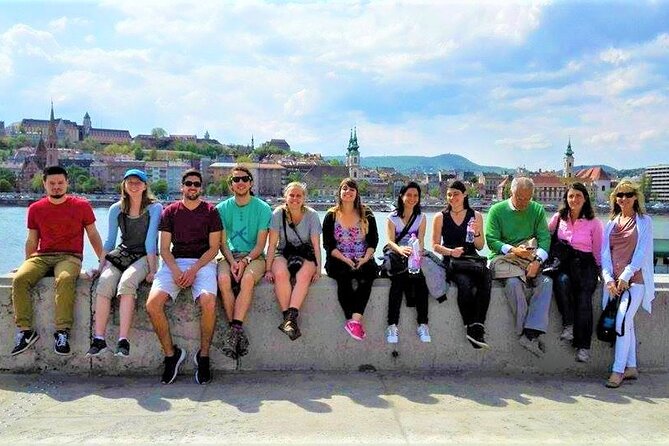
If you have only one day (or just one big morning) in Budapest, this kind of tour is hard to beat. You are not trying to “do everything,” you are building a mental map. After a walk like this, the city stops feeling like separate postcard scenes and starts feeling like a connected place you can explore on your own.
The timing matters, too. At about 3 hours 30 minutes, you get a real overview, but you are not stuck all day with sore feet and museum-fatigue. The tour is also offered in English and includes a local tour guide, which is the main quality factor for this type of sightseeing. When the guide can explain context, the landmarks turn from background into meaningful stops.
Value is the big headline here. The price is listed at $2.88 per person, and the itinerary’s stops are marked admission ticket free. Even if you do not agree with every detail a guide shares, you are still getting a guided walk through the city’s most recognizable locations for a very small amount.
More Walking Tours in Budapest:
- Budapest: Buda Castle Walk with Saint Stephen’s Hall
★ 4.5 · 3,012 reviews - Big Bus Budapest Hop-On Hop-Off Bus and Walking Tour
★ 3.5 · 2,206 reviews - Budapest: Buda Castle District Walking Tour
★ 4.6 · 2,108 reviews
From St. Stephen’s Basilica to the Parliament Building: Getting Oriented Fast
The tour starts at St. Stephen’s Basilica (Szent István tér 1, 1051) at 11:00 am. That is a smart starting point because it anchors you in Pest, gives you an iconic landmark right away, and sets you up for the Danube corridor you will keep seeing throughout the route.
From there, you head toward the Hungarian Parliament Building, a stop listed at about 10 minutes with admission ticket free. You will mostly be viewing it from outside, but you still get a lot from a guided approach. The building is instantly recognizable, yet it is easy to miss the bigger picture if you are only looking at the façade. A good guide helps you connect Budapest’s national identity to the architecture and the city’s political story.
One practical upside of a guided start: it helps you learn what direction you are moving and why. Budapest can feel like two different cities stuck together, and this kind of opening section helps you stop guessing and start walking with confidence.
Parliament to Chain Bridge: Why the Danube Views Matter
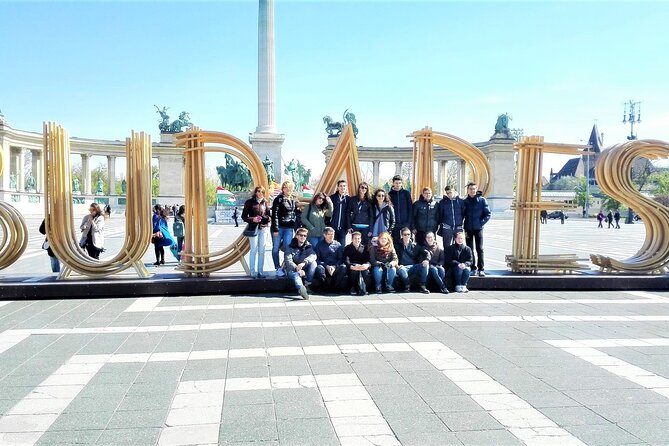
Once you get to the Széchenyi Chain Bridge, you understand why Budapest is so obsessed with the river. The bridge is listed at about 15 minutes, and it is the first major bridge connection between Buda and Pest. Even if you have seen photos before, seeing it in person changes the scale. The river corridor becomes a street-level highway for your eyes, not just water underneath.
This is one of those stops where the guide’s role matters more than you might think. You can stand on a bridge and take pictures, but you might not notice how the city’s neighborhoods stack up behind the bridge approaches. With a guide, you start reading the skyline as a map.
Also, this section usually sets the tone for the walking pace. It is a chance to settle into the group, figure out where you want to stand, and get your bearings before the Castle District becomes the main event later.
Chain Bridge to Buda Castle: The Castle District Without the Head-Scratching
The walk brings you into Buda Castle, listed for about 20 minutes. This is a huge site on paper, and it is even bigger in your head once you are standing near it. The complex dates back to 1265, but the dominant palace you see today was built later, between 1749 and 1769. That timeline helps you understand why the area feels like multiple eras layered on top of each other.
You do not just get a “this is old” lesson. You get a sense of how Budapest built its identity around a royal and administrative center. The stop being marked admission ticket free also means you can focus on orientation and exterior views, rather than losing time waiting for tickets and entry.
What to watch for at this stage:
- How the Castle District sits above the river, so you can visualize where you will return to later
- How the streets curve as they climb, which affects where you will want to walk next on your own
If you like the idea of going inside the castle buildings afterward, you will be in a better position to choose where to head first. Even a short stop like this can save you from wandering blindly later.
A different sort of day out in Hungary:
- Budapest: City Highlights Sightseeing Cruise
★ 4.6 · 43,981 reviews - Budapest: Unlimited Prosecco, Beer and Aperol Spritz Cruise
★ 4.8 · 37,304 reviews - Budapest: Széchenyi Spa Day Ticket with Optional Upgrades
★ 4.3 · 23,911 reviews - Budapest: Nighttime or Daytime Sightseeing Cruise
★ 4.2 · 21,062 reviews
Matthias Church and Fisherman’s Bastion: Fairytale Views With Real Clues
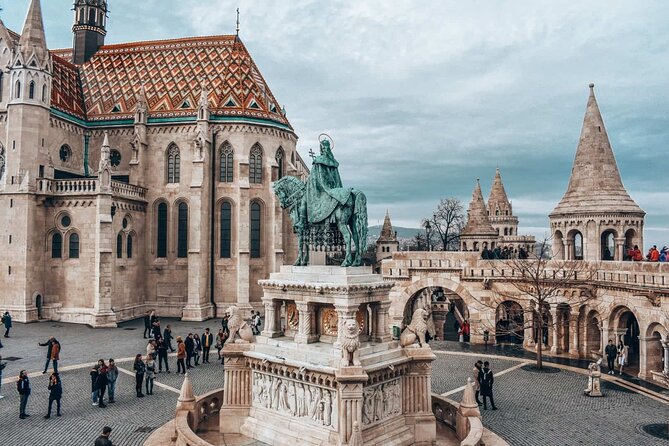
In the Castle District, you hit Matthias Church (about 20 minutes). The listing notes it is the Church of the Assumption of the Buda Castle, a Roman Catholic church in Holy Trinity Square near Fisherman’s Bastion. It also says the church is named for Stephen, with his right hand housed in a reliquary. That kind of detail turns a pretty façade into a clue about Hungarian religious and royal traditions.
Then comes one of the most photo-friendly viewpoints in the city: Fisherman’s Bastion, listed at about 20 minutes. The big value here is the panorama. From the terraces, you get an elevated view over the Danube and across toward Pest. The listing also calls it Neo-Romanesque, which is a good hint that the style is not just decorative, it is tied to how later generations chose to present the past.
Potential drawback: this area can feel busy. If you hate crowds or want slow solitude, you will want to manage expectations. On a walking tour, you are usually there long enough to see the view, not long enough to “own” the viewpoint. Go early in the day if you can.
St. Stephen’s Basilica, Liberty Square, and Andrassy Avenue: Pest’s Big-Street Storytelling
The route brings you back into Pest’s grand street scenery, and a key stop here is Liberty Square (Szabadság tér), about 10 minutes. The listing notes it is in the Lipótváros neighborhood and includes major institutions such as the United States Embassy in Hungary and the Hungarian National Bank headquarters. It also says you will see historicist-style buildings plus Art Nouveau designs. This is an easy stop to enjoy because you can look up and around without needing a ticket.
Next you get Andrássy Avenue, listed for about 15 minutes. It dates to 1872 and links Erzsébet Square with Városliget. The highlight for architecture lovers is the line of neo-renaissance mansions and townhouses. The listing also states the avenue was recognized as a World Heritage Site in 2002. Even if you do not go deep into styles, walking a UNESCO-marked boulevard gives you a sense that Budapest planned its beauty, not just accidentally collected it.
This is also where pacing matters. You will likely be shifting from major “I must photograph this” moments to more “slow down and read the street” moments. If your feet are getting tired, this is the section where a guide’s explanations can make the stop feel worth your energy.
Shoes on the Danube and the Ferris Wheel: Memory and Modern Views
Budapest never stays only pretty for long, and the tour does not dodge the serious part. Shoes on the Danube Bank is listed at about 15 minutes, and it is a memorial created in memory of people who lost their lives under the Arrow Cross rule. The listing says it was erected on April 16, 2005 and created by film director Can Togay and sculptor Gyula Pauer. It consists of 60 pairs of iron shoes anchored to the ground.
This is one of those stops where silence can hit harder than facts, but a guide can help you understand what you are looking at and why it was placed here. It also changes how you see the river afterward. The Danube stops being scenery and becomes a historical boundary.
Right after, the tour includes the Ferris Wheel of Budapest, about 15 minutes. It is described as the Eye of Budapest, with city views that you can connect to Danube ships, Buda Castle, and Pest’s temple towers. Since the stop is marked admission ticket free, think of it as sightseeing from the surrounding area rather than buying a ride on the spot. Still, it gives you a clean, modern “wrap up the skyline” moment before you step into the more relaxed areas of the route.
Margaret Island and Gellért Hill: A Breather Before the Final Square
Not all walking tours give you a true pause. Here, you get Margaret Island in the itinerary, described as a calm pocket in the middle of the Danube. The listing points out pedestrian promenades, an art nouveau water tower, ruins of a 13th-century Dominican convent, a musical fountain, and even a small zoo. It also notes that in summer you might find pop-up bars and restaurants plus live music.
Even when you are not stopping for long, Margaret Island is valuable because it resets your legs and your mood. You are still in Budapest, but the environment feels less like monuments and more like a city park.
Then you head to Gellért Hill, listed at about 15 minutes. The hill is 235 m high and overlooks the Danube. The listing says it was named after Saint Gerard, who was thrown to death from the hill. That short legend can make the hill feel personal instead of just scenic.
Finally, the tour includes Szechenyi Square, about 10 minutes, with the statue of Széchenyi noted as being in place since 1880. This gives you a neat “landing zone” at the end of the walk, where you are set up to continue exploring nearby streets without needing to immediately plan a long transit.
The Guides: Stories, Trivia, and Practical Advice You Can Use
The most consistent praise in the supplied info is about guide quality. Guides named Robert, Istvan, and Janet show up with comments about good pace, clear explanations, and storytelling that goes beyond guidebook basics.
A few specific strengths you should expect from a tour like this:
- Engagement: the guide keeps the group moving, but also makes time for questions.
- Memorability: storytelling helps you remember what you saw and why it matters.
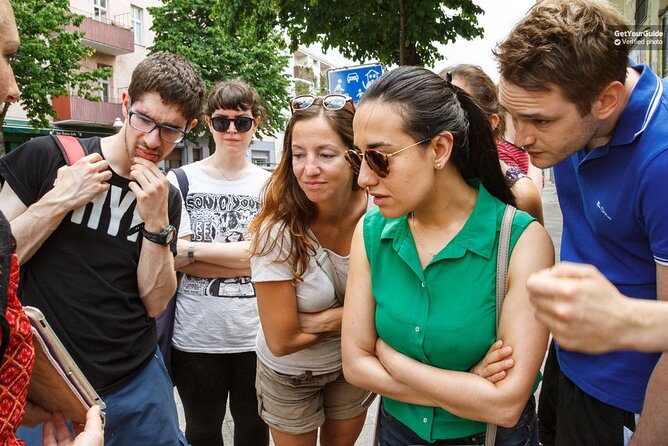
- Fun fact moments: at least one guide setup includes trivia-style questions with a small surprise for correct answers, described as a DOTS cake in one note.
You will also benefit from the practical side. Some guide callouts mention recommendations for where to eat, what to try, and what else to do in Budapest. That is the kind of help that turns a “seen it” tour into a “now I know what to do next” day.
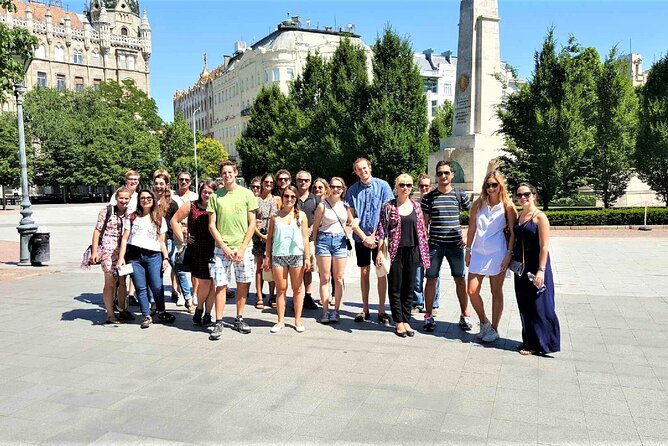
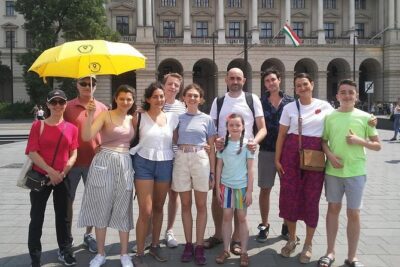
Group size can vary within the cap of 100 travelers. One note describes a much smaller feel, with about 18 people, which usually means you can hear well and follow along without constant elbow work.
Price and What You Really Get at $2.88
It is hard to wrap your head around the price: $2.88 per person for an English guided walk covering major icons across the Danube. The value is not just low cost, it is what you get for that cost.
You get:
- A local tour guide
- A mobile ticket
- A route packed with landmark stops that are marked admission ticket free
- A guided pace that should leave you more confident walking independently afterward
For most visitors, the biggest cost of sightseeing is time, not money. This tour helps you buy back time by compressing orientation, context, and highlights into one route. If you are deciding between paying for a single attraction versus doing a guided tour that helps you understand multiple attractions, this one leans toward the “smart overview” choice.
Just be honest about your goals. If you want to spend hours inside buildings with museum tickets, this is not that type of tour. But if your goal is to see the key places and learn the story behind them, the math is in your favor.
What to Bring and How to Pair This With Your Own Plans
Since the route is built on walking between major sites, your comfort matters. Bring comfortable shoes and plan for stairs near the Castle District and viewpoints. The tour also includes a day out in open areas like bridges and lookouts, so you will want weather-ready clothing.
A small practical note: bottled water is not included. I always treat that as a reminder to carry a refillable option or plan a quick purchase stop so you do not lose time or energy.
For pairing your day, think like this:
- If you are intrigued by Buda Castle or Matthias Church, use the tour as your orientation, then decide later which interiors (if any) are worth your ticket time.
- After Shoes on the Danube and Memorial stops, give yourself a little breathing room. Margaret Island is a good candidate, because it breaks the emotional intensity with a calmer setting.
- If the Ferris Wheel view makes you curious about another skyline angle, you can build your future plans around where you want to stand for views.
Tour length is fixed in spirit, but the exact end point can vary. The listing says the end points varies, so keep that in mind if you are trying to catch a specific afternoon reservation.
Should You Book This Tour?
Book it if you want a first-day overview, a low-budget introduction to Budapest’s layout, and a guide-led way to understand what you are seeing at major icons. It is a strong choice for solo travelers, couples, and anyone who likes “walk and learn” more than “museum and sit.”
Skip or double-check your expectations if you need a strict, guaranteed, equal split of Buda versus Pest, or if you hate longer walking segments. One note in the supplied information highlights that some departures may skew more toward Pest than you might expect from the overall list.
If you book with the right mindset, you will likely get the best part: leaving Budapest with a usable mental map, plus stories you can recall later when the streets look familiar.
FAQ
Where does the Original Budapest Walking Tour start and when?
It starts at St. Stephen’s Basilica at 11:00 am. The meeting address listed is Szent István tér 1, 1051 Hungary. The tour’s end point can vary.
How long is the tour?
The duration is listed as about 3 hours 30 minutes.
Is the tour offered in English?
Yes, the tour is listed as being offered in English.
What’s included in the price?
A local tour guide is included. The tour also uses a mobile ticket.
Are there admission tickets required for the stops?
The itinerary lists each stop with admission ticket free, but if you plan to go inside any building on your own, you may need separate planning for that.
Is bottled water included?
No. Bottled water is not included, so you should plan to bring water or buy some nearby.
What happens if the weather is bad, or if I need to cancel?
The experience requires good weather. If it is canceled due to poor weather, you’ll be offered a different date or a full refund. For cancellations, you can cancel up to 24 hours in advance for a full refund.
Latest to land in Budapest
- Visegrád Hike & Castle Tour with Ferry from Budapest★ 4.6 · 3 reviews
- Budapest: Vacation Photographer to collect great memories★ 5.0 · 49 reviews
- Trash Art Museum: Hungary’s First Scrap Metal Exhibition★ 4.3 · 72 reviews
- True Crime Walking Tour in the Buda Castle district★ 5.0 · 26 reviews
- Budapest: 3-Hour Trabant Sightseeing Tour★ 4.7 · 28 reviews
- Audio visual multi-sensory chefs journey dinner experience★ 5.0 · 3 reviews
- Private Walking Tour in The Jewish District Budapest★ 4.5 · 16 reviews
- Private Szentendre and Vac Tour from Budapest with Transport★ 5.0 · 3 reviews
Walking Tours, compared.


Big Bus Budapest Hop-On Hop-Off Bus and Walking Tour
Read our review →
Budapest City Landmarks Walking Tour in 2 Hours
Read our review →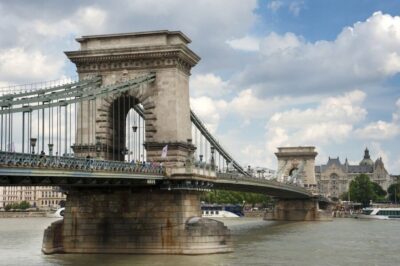
3-Hour Orientation Walking Tour of Buda and Pest
Read our review →
Budapest Historical Sightseeing – Free Walking Tour
Read our review →
Budapest All in One Small Group Walking Tour with Strudel Stop
Read our review →Browse the lists this tour appears in