
Reviewed · JEWISH HERITAGE TOURS
Past and Present of Budapest Jewish District Tour
Budapest’s Jewish Quarter tells stories you can see. In about 1 hour 45 minutes, this walking route connects District VII landmarks with the arc from Belle Époque life to the Holocaust and what stands today.
What I really like is how organized it feels: you get a chronological flow, with named sights along the way, plus clear context on movements like Neologue and Orthodox Judaism at the big sites. I also like the focus on the parts most visitors miss, like the medieval city wall traces and how the ghetto line still shows up at Gozsdu.
One thing to consider upfront: this tour does not enter the synagogues. You’ll see major places from outside, and that’s a dealbreaker only if you specifically want indoor viewing time.
In This Review
- Key Points That Make This Walk Worth Your Time
- A 90-Minute Walk That Actually Gives You the Map of District VII
- Erzsébet tér Start: Elizabeth Square and the Golden-Age to Tragedy Arc
- Deák Ferenc Square: Gaudiopolis, Schutzpass, and City Wall Boundaries
- Great/Central Synagogue Exterior Views: Neologue, Orthodox, Zionism, and the Courtyard
- Rumbach Street Synagogue: Restoration, Murals, and Street-Level Jewish Culture
- Gozsdu Udvar (Gozsdu Passage): Entertainment, Food Culture, and the Last Ghetto Wall
- Kazinczy Street Synagogue Area: Orthodox Families, Kosher Food, and Ritual Bath
- Szimpla Kert Finish: Murals, Pop-Up Exhibitions, and a Proper Let-Your-Feet-Stop Moment
- Who This Tour Fits Best (And Who Might Be Happier With Something Else)
- Price, Value, and Why This Feels Like a Smart First Stop
- Should You Book This Past and Present of Budapest Jewish District Tour?
- FAQ
- Does this tour enter the synagogues?
- How long is the walking tour?
- Where do you meet and where do you end?
- What language is the tour offered in?
- How big is the group?
- What is the price, and is tipping included?
Key Points That Make This Walk Worth Your Time
- Licensed local guides with a structured route through District VII
- Synagogue exteriors only, including the Great Synagogue memorial courtyard and cemetery viewpoints from outside
- Holocaust era context, presented as part of the full story from earlier Jewish life in Hungary
- Stops that go beyond the postcard, like the city wall ruins and the last ghetto wall trace at Gozsdu Passage
- Group size capped at 25, which keeps the pace manageable
- Ends at Szimpla Kert, so you can immediately keep exploring, with pop-up exhibitions and street art nearby
A 90-Minute Walk That Actually Gives You the Map of District VII
This is a practical walking tour for first-time visitors who want an overview without turning the day into a museum sprint. You start on Erzsébet tér at the Ferris Wheel area, then move through the Jewish Quarter toward Szimpla Kert, picking up orientation as you go.
The route is designed around visibility. Most stops are on streets where you can actually notice details: wall lines, restored facades, murals, and urban changes that reflect changing Jewish life in Budapest. That matters because Budapest rewards looking closely, not just checking boxes.
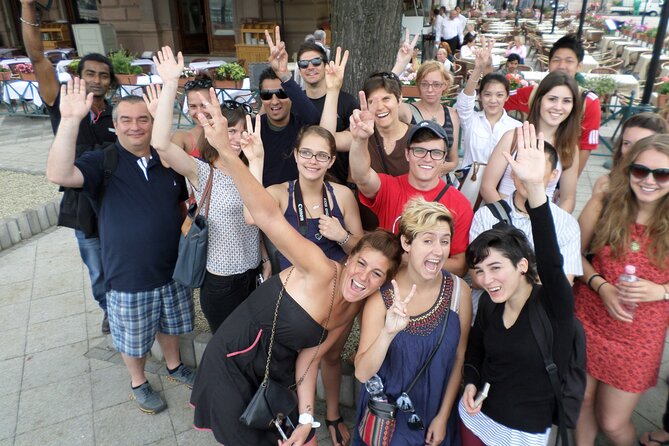
Timing is also part of the value. The pacing is built for a strong narrative in about 1 hour 45 minutes, and the small group size (up to 25 people) helps you ask questions without the guide talking past your whole cluster. In reviews, guides including Eszter, Gary, Edith, and Dora get credited for keeping the group engaged and responding to questions.
More Jewish heritage walks:
- Budapest Jewish Heritage Memorial Walking Tour & Synagogue Entry
★ 5.0 · 568 reviews - Budapest: Jewish Heritage Guided Tour with Synagogue Ticket
★ 4.8 · 533 reviews - German tour in the Budapest city centre & the Jewish quarter
★ 5.0 · 359 reviews
Erzsébet tér Start: Elizabeth Square and the Golden-Age to Tragedy Arc
You meet at Elizabeth Square, Erzsébet tér, with a fully licensed local guide. The tour begins with a sketch of the route and the major sights, so you understand where you’re headed before you start walking.
From the first stop, you’ll get the big storyline the rest of the walk supports. The emphasis is on the Jewish community of Hungary, framed from the Belle Epoque and Golden Age through destruction. That sounds heavy, and it is, but the tour keeps it readable by sticking to landmarks and a clear sequence of events.
There’s also a smart expectation-setting detail here. The walk doesn’t waste time trying to cram in indoor museum-type experiences. Instead, it uses the streets around Erzsébet tér as a gateway into the Jewish Quarter, so by the time you reach the synagogues, you already understand the “why” behind what you’re seeing.
Love this kind of approach if you like learning as you walk. If you prefer indoor time first, you might want to combine this with a separate synagogue visit afterward.
Deák Ferenc Square: Gaudiopolis, Schutzpass, and City Wall Boundaries
At Deák Ferenc Square, the tour shifts into story facts with specific names and concepts. You’ll hear about Gaudiopolis, the City of Joy in Latin, which helps balance the narrative so it isn’t only about loss.
You’ll also cover the idea of the Schutzpass, described in the tour as something that saved thousands of Jewish life. That turns the history from abstract to concrete. When you learn how survival depended on documents and protection systems, the later tragedy feels less like a sudden rupture and more like a process you can trace.
Then you add physical context. You’ll see former medieval city wall ruins that excluded Jewish people to trade within city limits. This is one of those stops that makes the tour more than “synagogue spotting.” You’re watching how urban design and power shaped everyday economic life.
This is also a good time to ask your guide how the different waves of community life connect, because the tour keeps returning to “past and present” themes.
Great/Central Synagogue Exterior Views: Neologue, Orthodox, Zionism, and the Courtyard
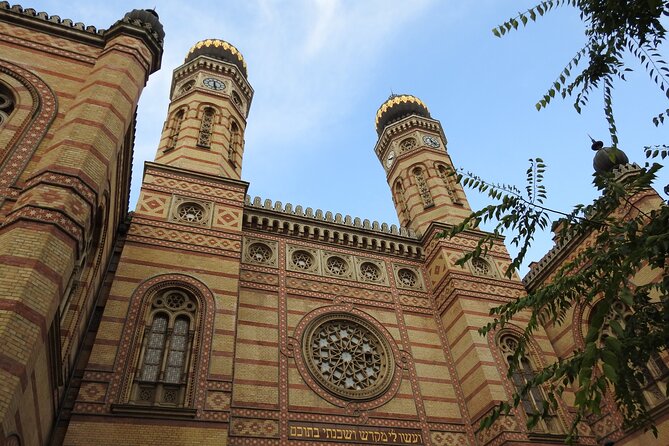
Next comes the big one: the Great/Central Synagogue (Nagy Zsinagóga). This stop is about understanding what you’re looking at, even if you’re not going inside.
You’ll learn about the Neologue and Orthodox movements, plus the Zionism element tied to Jewish political and cultural life. That’s useful because Budapest’s Jewish story is not just one community at one time. It includes different beliefs and institutions coexisting in the same district, sometimes alongside tension and change.
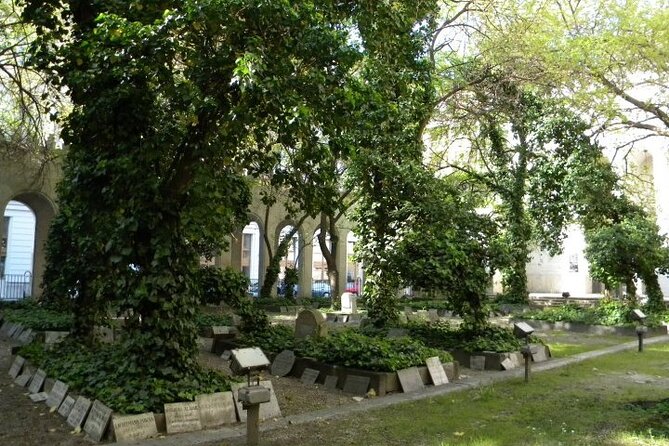
The tour does not enter the synagogue. Instead, you see the Memorial Courtyard and the cemetery from outside. For many visitors, that works better than an indoor-only visit because the memorial space frames the emotional weight of the story without turning it into a quick photo stop.
Practical tip: this is a stop where you might want to pause and look slowly at what surrounds you. If you move quickly, you can miss the symbolism that the exterior view is meant to communicate.
A different sort of day out in Hungary:
- Budapest: City Highlights Sightseeing Cruise
★ 4.6 · 43,981 reviews - Budapest: Unlimited Prosecco, Beer and Aperol Spritz Cruise
★ 4.8 · 37,304 reviews - Budapest: Széchenyi Spa Day Ticket with Optional Upgrades
★ 4.3 · 23,911 reviews - Budapest: Nighttime or Daytime Sightseeing Cruise
★ 4.2 · 21,062 reviews
Rumbach Street Synagogue: Restoration, Murals, and Street-Level Jewish Culture

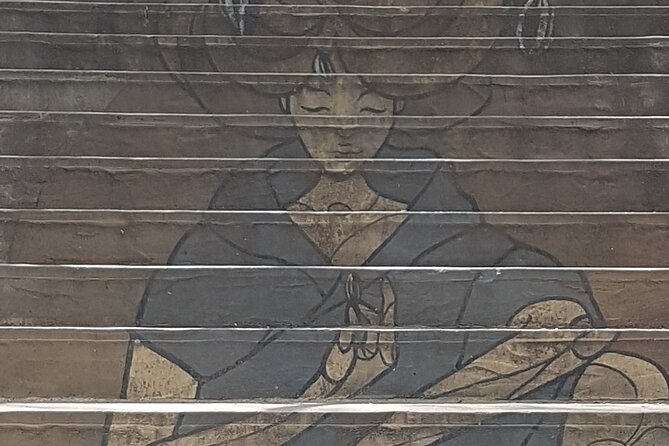
After the Great Synagogue area, you move toward the Rumbach Street Synagogue. Again, no entry. But you get a solid explanation of the beautifully restored building, plus what murals and street art add to the look of the neighborhood now.
This stop is where the tour starts feeling more like a real walk through District VII rather than a history lecture with scenic breaks. Street-level art and restored architecture show you how the neighborhood has transformed while still keeping traces of the past visible.
If you’re the kind of traveler who likes “how the place looks today,” this is a strong moment. The murals aren’t random decoration. They help you see the district as living urban space, not just a memorial district.
One small drawback to keep in mind: if you’re hoping for indoor architecture details, you won’t get them here. But if your goal is orientation plus context, you will.
Gozsdu Udvar (Gozsdu Passage): Entertainment, Food Culture, and the Last Ghetto Wall
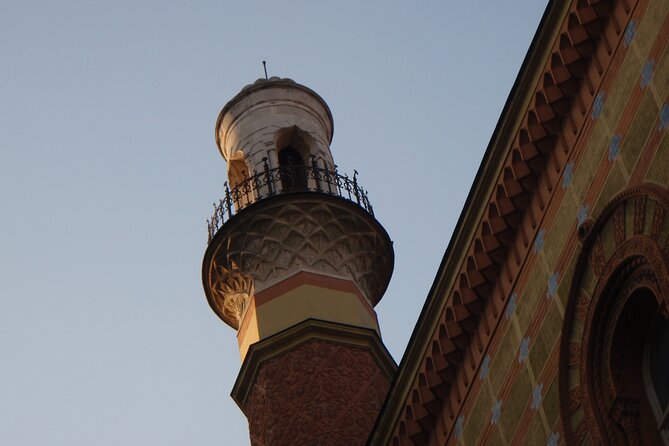
The route then passes Gozsdu Passage, where the tour connects past and present through the way the area functions today. The description highlights entertainment, gastronomy, and culture, which is exactly what you’ll feel in the streets around there.
The crucial part is the historical anchor: you’ll also see the last piece of the ghetto wall. That’s the kind of contrast that makes this stop work. You’re looking at a place that feels social and commercial, and yet the wall trace makes the earlier reality undeniable.
This is one of those moments where the tour is doing real interpretation, not just listing sites. It explains how the neighborhood’s identity has shifted, while still carrying a visible boundary line from its darkest chapter.
If you have time after the tour, you can stay in this area to keep your bearings. It’s a natural place to grab a snack or drink and compare what you learned on the walk with what you see around you.
Kazinczy Street Synagogue Area: Orthodox Families, Kosher Food, and Ritual Bath
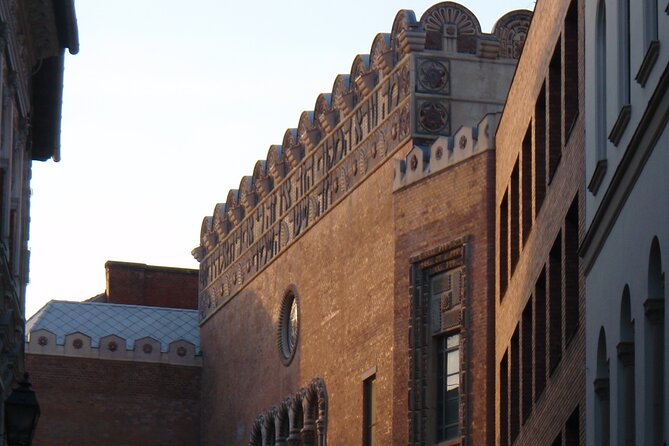
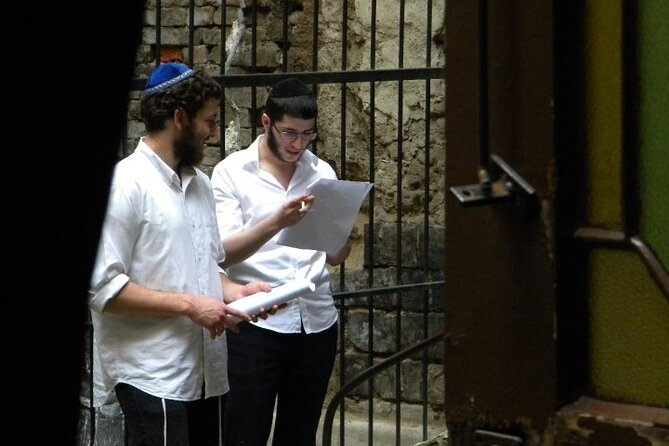
At Kazinczy Street, the tour stops just outside a synagogue associated with the Orthodox community of 50 to 60 families. That’s a specific detail, and I like when tours give numbers instead of vagueness.
The guide also talks about kosher food and a Jewish ritual bath. Those topics help you understand Jewish religious life as more than buildings. You’re learning about daily rules, practices, and community infrastructure.
As with the other synagogue stops, you do not enter the synagogue. You’ll hear about the Ortodox community, then keep moving so the full story stays intact across the full district walk.
If you want the tour to help you plan what to do next, this is where it gives you useful leads. You’ll come away knowing what to search for if you decide to visit a site later or read more about how Orthodox communities organized life in the neighborhood.
Szimpla Kert Finish: Murals, Pop-Up Exhibitions, and a Proper Let-Your-Feet-Stop Moment
The walk continues through additional pieces of murals and street art, then ends at Szimpla Kert, a ruin bar. You’ll get final orientation there, plus the sense that the district is now an arts and social space.
The tour description notes that Szimpla Kert has pop-up exhibitions, and the meeting point details say there’s no entry fee for the ruin bar itself. That’s practical, because your finish point is not a dead end. You can step into the vibe for a drink, or just use it as a comfortable place to regroup and check your next plans.
In reviews, people often like that the tour ends somewhere they can naturally continue exploring rather than being dropped at a far-off transit stop. Szimpla Kert fits that pattern.
Who This Tour Fits Best (And Who Might Be Happier With Something Else)
I’d put this in the sweet spot for travelers who want:
- A clear overview of the Budapest Jewish Quarter in a short time
- The ability to connect major synagogues and ghetto-era landmarks with a straight narrative
- A walk that prioritizes outside sights and street-level context
You might be less satisfied if:
- You want synagogue interior access. This tour is built around exterior viewing only.
- You prefer lighter, less serious storytelling. The content includes tragedy and Holocaust-era material, and the pace can feel heavier than other casual walking tours.
- You struggle with language nuances. One review complained about difficulty understanding due to strong Hungarian accent. The tour is offered in English, but as always, guides vary.
If you’re traveling with seniors or you need a pace that stays comfortable, the tour’s group size and walking segments help, and multiple reviews specifically mention comfortable pacing for people.
Price, Value, and Why This Feels Like a Smart First Stop
At $3.63 per person, this price is low enough that it feels like a “start smart” move for your Budapest day. You’re not paying for entrance tickets during the walk, because the itinerary is designed around exterior highlights and interpretation.
The included booking fee covers administration and does not contribute to the guide’s earnings. That matches the reality of how guides typically get compensated: your optional tip or donation at the end matters. If you want guides to keep giving their best work, plan to budget something for that moment.
Another practical value point: reviews rate it extremely high, with a 4.9 rating from 264 reviews and 99 percent recommending it. That matters, because Jewish history tours live or die on storytelling care and pacing, and this one has repeatedly earned credit for professionalism and responsiveness.
Also, it’s offered in English and usually booked about 10 days in advance, so if you’re going during a busy season, you’ll want to reserve ahead.
Should You Book This Past and Present of Budapest Jewish District Tour?
Book it if you want a fast, organized orientation to District VII with names, context, and visible landmarks that make the story make sense. It’s especially good as your first Jewish Quarter experience, because it gives you the layout, the key places, and the emotional sequence from earlier Jewish life to destruction and what remains visible today.
Skip it or pair it carefully if your top priority is synagogue interiors. This walk is not that kind of tour. Instead, treat it like your map and your narrative spine. Then, if you want more time inside specific buildings, you can plan those visits separately with the knowledge you gained on the streets.
If you’re choosing between doing nothing and doing this: do this. Put on walking shoes, bring your questions, and expect a thoughtful route through one of Budapest’s most meaningful neighborhoods.
FAQ
Does this tour enter the synagogues?
No. The tour does not enter the synagogues. You’ll see major sites from outside, including the memorial courtyard and cemetery viewpoints at the Great Synagogue.
How long is the walking tour?
It runs about 1 hour 45 minutes (approx.).
Where do you meet and where do you end?
You meet at the Ferris Wheel of Budapest on Erzsébet tér (1051). You end at Szimpla Kert, Kazinczy u. 14 (1075).
What language is the tour offered in?
The tour is offered in English.
How big is the group?
The tour has a maximum of 25 travelers.
What is the price, and is tipping included?
The price is listed as $3.63 per person. Tips to your tour guide are not included, and guides depend on donations at the end of the tour, with the amount at your choice.
Latest to land in Budapest
- Visegrád Hike & Castle Tour with Ferry from Budapest★ 4.6 · 3 reviews
- Budapest: Vacation Photographer to collect great memories★ 5.0 · 49 reviews
- Trash Art Museum: Hungary’s First Scrap Metal Exhibition★ 4.3 · 72 reviews
- True Crime Walking Tour in the Buda Castle district★ 5.0 · 26 reviews
- Budapest: 3-Hour Trabant Sightseeing Tour★ 4.7 · 28 reviews
- Audio visual multi-sensory chefs journey dinner experience★ 5.0 · 3 reviews
- Private Szentendre and Vac Tour from Budapest with Transport★ 5.0 · 3 reviews
- Wine Tasting in the Countryside from Budapest★ 5.0 · 14 reviews
Jewish Heritage Tours, compared.
Budapest Jewish Heritage Memorial Walking Tour & Synagogue Entry
Read our review →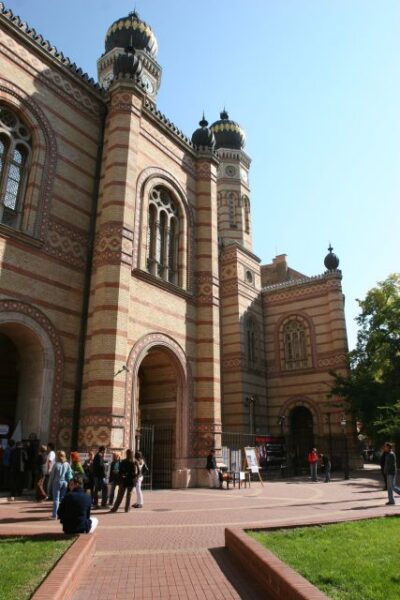
Jewish Heritage Guided Tour with Synagogue Ticket
Read our review →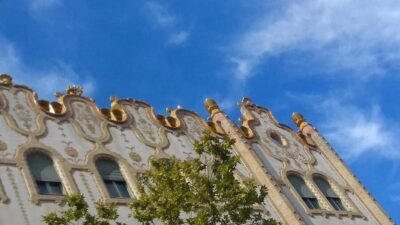
German tour in the Budapest city centre & the Jewish quarter
Read our review →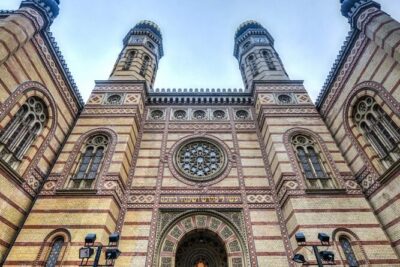
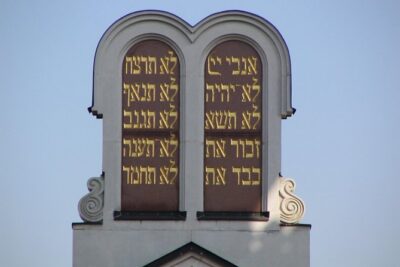
Budapest Dohany Synagogue & Hungarian Jewish Museum & free extras
Read our review →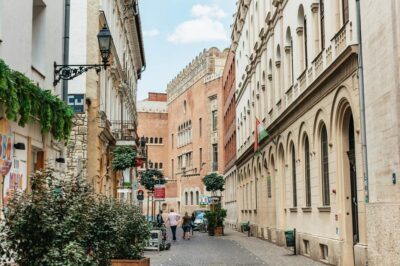
Jewish History Guided Walking Tour with Historian
Read our review →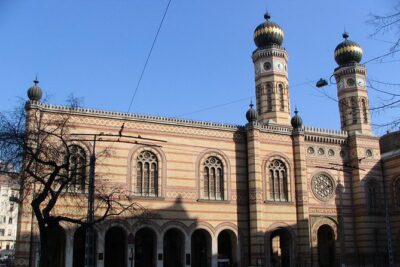
Budapest Dohany, Heroes’, Rumbach synagogues & Jewish Ghetto Tour
Read our review →
Browse the lists this tour appears in