

Reviewed · WALKING TOURS
Walk and Cook Budapest
Budapest tastes like a story. This 5-hour walk and cook turns major landmarks into food clues, then sends you to a kitchen for a full meal. You’ll move through Ottoman, Austro-Hungarian, and Jewish threads in the city, all in one tight loop.
I love the small scale, with up to 10 people, which keeps questions answered and pacing comfortable. I also like that you get guided context first, then hands-on cooking, so dinner feels tied to what you just saw.
One thing to consider: after about 1.5 hours of walking, the workshop can feel like a full swing into cooking mode, so wear comfortable shoes and be ready to stand.
In This Review
- Key highlights to look for
- Why a small-group Budapest walk and cook makes sense
- Ottoman, Austro-Hungarian, and Jewish Budapest, told through your footsteps
- Stop 1: Gul Baba’s Tomb and the Ottoman connection
- Stop 2: The Hungarian Parliament Building and the Austro-Hungarian era
- Stop 3: Nagy Zsinagóga and Jewish Budapest during WWII
- The cooking workshop: your hands-on part of Budapest
- What you’ll eat: a menu built for variety and comfort
- Is the $131.06 price fair for 5 hours, dinner, and cooking?
- Practical stuff you should plan for
- Who this Budapest walk and cook is best for
- Should you book this Budapest walk and cook?
- FAQ
- How long is the Walk and Cook Budapest tour?
- How many people are in the group?
- Is the tour offered in English?
- Does the experience include a full dinner?
- Where does the tour start and where does it end?
- What landmark stops are included?
- Is there hands-on cooking?
- What is the cancellation policy?
Key highlights to look for
- Small-group pace (maximum 10) that makes the history and cooking feel personal
- Landmark triad: Gul Baba’s Tomb, the Parliament Building, and the Great Synagogue
- History-to-food connections tied to Ottoman, Jewish, and Austro-Hungarian influence
- Hands-on Hungarian cooking workshop plus a sit-down full dinner
- A menu with variety, from stuffed peppers to poppy seed desserts and plum dumplings
Why a small-group Budapest walk and cook makes sense
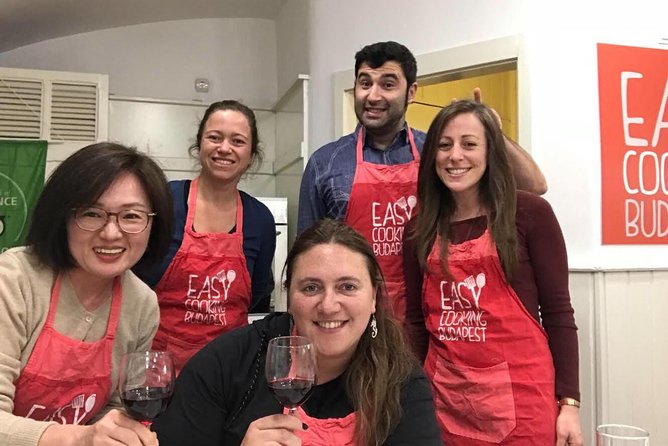
This is the kind of tour that feels built for real life. You get a guided walk through Budapest’s big stories, then you shift gears into a kitchen where those ideas show up on your plate. The result is not just sightseeing, it’s seeing and doing in the same afternoon.
The maximum of 10 people matters more than it sounds. Smaller groups make the stops less rushed, and you’re more likely to hear the details that connect food traditions to the places you stand. It also helps the cooking part, because you’ll spend time actively working rather than watching from the edge of the room.
You should also know this runs in English, uses a mobile ticket, and is near public transportation. That combination makes it easy to slot into a trip day without adding a lot of logistics stress.
Finally, the price, while not cheap, is easier to justify when you look at what’s included: a guided city walk, a cooking workshop, and a full dinner. You’re paying for the whole package, not just a meal.
More Walking Tours in Budapest:
- Budapest: Buda Castle Walk with Saint Stephen’s Hall
★ 4.5 · 3,012 reviews - Big Bus Budapest Hop-On Hop-Off Bus and Walking Tour
★ 3.5 · 2,206 reviews - Budapest: Buda Castle District Walking Tour
★ 4.6 · 2,108 reviews
Ottoman, Austro-Hungarian, and Jewish Budapest, told through your footsteps
What I like about this format is that history stops are not treated like name tags. Instead, they’re treated like ingredients. The tour sets up a path through key periods of Hungary’s past, then asks you to notice how those connections show up in Hungarian food and everyday tastes.
The walk portion focuses on three clear themes:
- Ottoman-era presence, shown through a landmark tied to the Ottoman world
- Austro-Hungarian-era grandeur, seen in one of Budapest’s most famous political buildings
- Jewish history in Budapest during World War II, anchored at the Great Synagogue
After that guided section, you head to the kitchen. That change is important. It turns abstract context into something physical. Food becomes the translator. You’re not just hearing about influence, you’re learning how the flavors and dishes grew out of contact, hardship, and tradition.
If you like tours that blend culture with practical experience, this is a solid fit. If you want only long museum-style viewing and zero hands-on activity, you may find the structure too active.
Stop 1: Gul Baba’s Tomb and the Ottoman connection
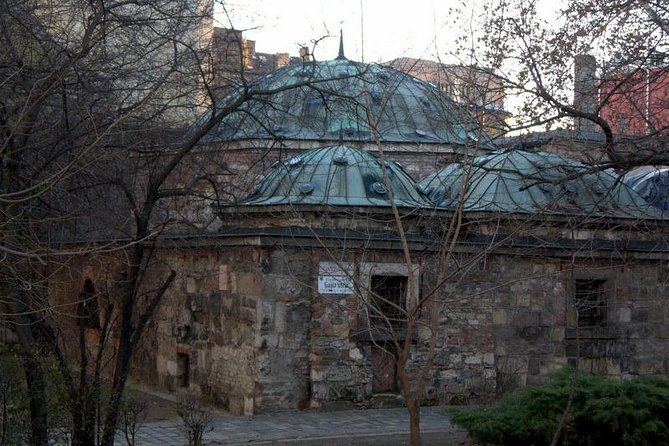
Your first stop is Gul Baba’s Tomb, also called Gul Baba Turbeje. This is the Ottoman thread of the day, and it sets the tone right away: Budapest’s story was shaped by outside forces, and you can still see that layering in the city.
Why this stop works on a walk-and-cook itinerary: it gives you a concrete place to anchor the idea of influence. You stand in one spot, you absorb what it represents, and then the tour moves forward to other eras. That makes the later jumps feel less random.
In a tour like this, the guide’s job is to help you link the cultural shift to how people lived and ate. You’re not asked to memorize dates. Instead, you’re nudged to look at how food traditions carry memory, even when the politics change.
Practical tip: since this is the first stop, arrive with your energy. You’ll get more out of it if you’re mentally ready to connect the dots, even if you are still waking up from travel.
Stop 2: The Hungarian Parliament Building and the Austro-Hungarian era
Next comes the Hungarian Parliament Building. On a walking tour, it’s more than a photo stop. It’s a symbol of state power and civic identity, and that matters when you’re trying to understand how national culture forms.
On this itinerary, the Parliament Building acts like a bridge. You move from an Ottoman-linked landmark into an era tied to Austro-Hungarian prominence. That jump is useful because it frames Hungary as a country that was continually reshaped, not frozen in time.
What I find smart here is how the tour’s food theme keeps pace with what you’re seeing. Big public buildings and institutions can feel separate from everyday meals. The walk-and-cook format refuses to keep them apart. The message is that politics and society influence tastes, ingredients, and the way people celebrate at the table.
If you’re someone who likes architecture but also wants meaning, this stop hits the sweet spot.
A different sort of day out in Hungary:
- Budapest: City Highlights Sightseeing Cruise
★ 4.6 · 43,981 reviews - Budapest: Unlimited Prosecco, Beer and Aperol Spritz Cruise
★ 4.8 · 37,304 reviews - Budapest: Széchenyi Spa Day Ticket with Optional Upgrades
★ 4.3 · 23,911 reviews - Budapest: Nighttime or Daytime Sightseeing Cruise
★ 4.2 · 21,062 reviews
Stop 3: Nagy Zsinagóga and Jewish Budapest during WWII
The last major landmark stop is the Great / Central Synagogue, known as Nagy Zsinagóga. The tour uses this point to address what happened with Jewish people in Budapest during World War II.
This part of the experience is handled through context, not spectacle. That matters. If you want a respectful, story-led approach, this is one of the more important pieces of the day.
Why it belongs in a cooking tour: food can be both a comfort and a reminder. Even when communities face persecution or forced change, culinary traditions often persist in households, recipe margins, and the next generation’s memory.
You’ll feel the connection most during the kitchen segment, when dishes and flavors become a kind of living archive. It’s not about turning trauma into entertainment. It’s about understanding that culture does not vanish just because history turns harsh.
The cooking workshop: your hands-on part of Budapest
After your guided walk portion, you head to the kitchen for the hands-on workshop. This is where the experience becomes more than walking. You get to cook Hungarian dishes, and the tour highlights how each nation’s connection can show up in what you make and eat.
I like this step because it changes your pace from observer to participant. You stop asking, What am I looking at? and start asking, Why does it taste like this? Even a basic technique, like how people build a filling or balance sweet and savory, makes the historical themes feel more grounded.
Group size again helps here. With up to 10 people, the workshop can work as a true teaching moment rather than a crowded demo. If you have any cooking confidence, you’ll still learn something. If you are nervous in the kitchen, you’ll likely get enough guidance to feel comfortable.
Also, this tour includes a sit-down dinner, so you get to enjoy your work as part of a shared meal. That is a big part of the value. A cooking class that ends with leftovers does not feel the same as a full meal in a group setting.
What you’ll eat: a menu built for variety and comfort
The sample menu shows exactly the kind of spread you can expect, and it gives you a good sense of the day’s range. You may see some dishes served as mains, sides, and desserts, with the meal designed to cover multiple Hungarian tastes.
Here are the dishes listed:
- Töltött paprika, stuffed peppers
- Mákos guba, dumplings with poppy seeds
- Roast goose with onion potatoes and braised cabbage
- Fánk, a special donut
- Székelygulyás, goulash soup with sauerkraut
- Szilvásgombóc, plum dumplings
Even if you are not a serious food person, this lineup is smart. It mixes hearty comfort food with sweet desserts, so you are not just eating one style all evening.
A few practical notes on what these dishes mean in real life:
- Stuffed peppers are usually about balance, not just spice. You get a filling that’s more than decoration, and that helps you appreciate how Hungarian cooking builds layers.
- Mákos guba brings in poppy seeds and a soft, comforting texture. It’s the kind of dessert that tastes like a tradition, not a trend.
- Roast goose plus onion potatoes and braised cabbage is the kind of meal that signals real staying power, the sort of food people make when they want a proper dinner.
- Fánk is the dessert break that feels familiar even if you have never had Hungarian donuts before.
- Székelygulyás is goulash soup with sauerkraut, so it leans savory, tangy, and paprika-forward, the opposite of a bland stew.
- Szilvásgombóc, plum dumplings, is sweet comfort, with fruit at the center and dumpling as the vehicle.
If you like a full spectrum of flavors, this menu checks a lot of boxes.
Is the $131.06 price fair for 5 hours, dinner, and cooking?
At $131.06 per person for about 5 hours, you’re paying for several things at once: guided city time, kitchen instruction, hands-on cooking, and a sit-down dinner.
Here’s how I think about value in tours like this:
- A walking tour alone is usually cheaper, but you do not get the dinner and you do not get cooking time.
- A cooking class alone is often similar or more expensive, but it typically does not include landmark context tied to Hungary’s past.
- This experience combines both, so you’re really buying the experience of learning and then eating in the same block of time.
The small group also reduces the risk of feeling lost in the crowd. When you’re paying for instruction and shared meals, group size affects the quality of the time you get.
One more plus: the tour includes a full dinner, which can save you from piecing together food stops around the city later. That is not just money, it’s time and sanity.
Practical stuff you should plan for
Because the itinerary includes walking first and cooking after, your preparation matters.
- Wear comfortable shoes. The walk portion is about 1.5 hours before you head to the kitchen.
- Dress for the weather. You are outdoors during the landmark part, then indoors for cooking.
- Come hungry, but not wildly stuffed. You’ll be doing hands-on cooking and then eating a full dinner, with multiple mains and desserts listed.
- If you have food restrictions, plan ahead. The data provided includes a sample menu, but it does not state how substitutions work. If you have allergies or dietary limits, you should contact the operator before booking.
Language is English, and the tour is near public transportation, so you should be able to reach the start area without major hassle.
Who this Budapest walk and cook is best for
This works especially well if you:
- Want more than sightseeing and prefer an activity that teaches you how to taste and understand culture
- Like guided history stops, but also want the connection to food traditions explained in practical terms
- Enjoy smaller group experiences, where you can ask questions and not get lost
- Plan a day where you want one clear plan that ends with a real sit-down dinner
It might be less ideal if you:
- Hate being hands-on in a kitchen setting
- Prefer long, slow museum time over a structured program
- Want only architecture photos and no historical discussion
Should you book this Budapest walk and cook?
If you like the idea of learning Budapest’s layers, then turning that knowledge into a meal, yes, I’d book it. The combination of landmark stops, history context, and a hands-on cooking workshop is a rare mix that actually feels coherent. The maximum 10-person size helps the day feel controlled and human, and the menu range is the kind that makes dinner feel special without being fussy.
My main check before you book is simple: make sure you’re comfortable with the rhythm of walking first and cooking right after. If that energy level fits you, you’ll leave with a better sense of the city and a full stomach to match.
FAQ
How long is the Walk and Cook Budapest tour?
It lasts about 5 hours.
How many people are in the group?
The tour has a maximum of 10 travelers.
Is the tour offered in English?
Yes, it is offered in English.
Does the experience include a full dinner?
Yes. The tour includes a sit-down dinner.
Where does the tour start and where does it end?
It starts in Budapest, Hungary, and ends back at the meeting point.
What landmark stops are included?
The tour includes Gul Baba’s Tomb (Gul Baba Turbeje), the Hungarian Parliament Building, and the Great / Central Synagogue (Nagy Zsinagóga).
Is there hands-on cooking?
Yes. After the guided walk, you head to the kitchen to cook Hungarian dishes.
What is the cancellation policy?
Free cancellation is available. You can cancel up to 24 hours in advance for a full refund.
Latest to land in Budapest
- Visegrád Hike & Castle Tour with Ferry from Budapest★ 4.6 · 3 reviews
- Budapest: Vacation Photographer to collect great memories★ 5.0 · 49 reviews
- Trash Art Museum: Hungary’s First Scrap Metal Exhibition★ 4.3 · 72 reviews
- True Crime Walking Tour in the Buda Castle district★ 5.0 · 26 reviews
- Budapest: 3-Hour Trabant Sightseeing Tour★ 4.7 · 28 reviews
- Audio visual multi-sensory chefs journey dinner experience★ 5.0 · 3 reviews
- Private Szentendre and Vac Tour from Budapest with Transport★ 5.0 · 3 reviews
- Wine Tasting in the Countryside from Budapest★ 5.0 · 14 reviews
Walking Tours, compared.


Big Bus Budapest Hop-On Hop-Off Bus and Walking Tour
Read our review →
Budapest City Landmarks Walking Tour in 2 Hours
Read our review →
3-Hour Orientation Walking Tour of Buda and Pest
Read our review →
Budapest Historical Sightseeing – Free Walking Tour
Read our review →
Budapest All in One Small Group Walking Tour with Strudel Stop
Read our review →Browse the lists this tour appears in