
Reviewed · ART NOUVEAU WALKS
Budapest Art Nouveau Walking Tour
Budapest wears Art Nouveau like jewelry. In just 3 hours, you’ll get a clear, guided look at Hungarian Secession, where turn-of-the-century design gets its own bold, personal twist.
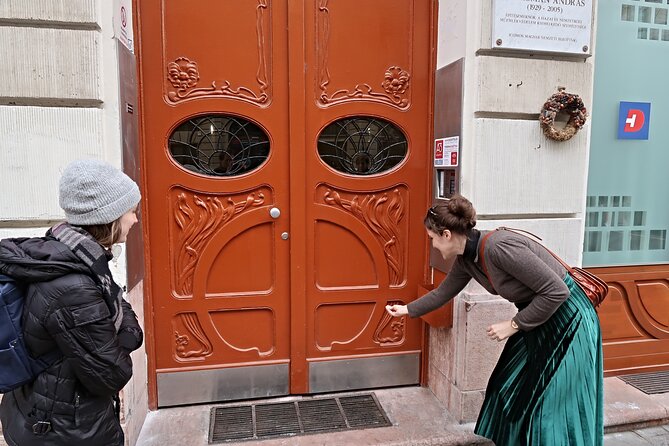
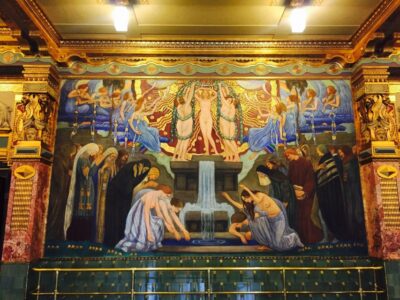
I especially love the tour’s focus on interiors, not just postcard facades. You’ll spend real time inside the entrance halls at the Royal Post (the flamboyant Postal Bank by Ödön Lechner) and at Gresham Palace, so you can see the details up close, not only from the street.
One thing to keep in mind: access depends on the day. On weekends you may not be able to enter the Hungarian National Bank, and the Orthodox Synagogue on Kazinczy Street is closed on Saturdays, with small site fees sometimes applying.
In This Review
- Key things you’ll notice on this Budapest Art Nouveau walk
- Budapest Art Nouveau in 3 hours, what you’ll actually get
- The Hungarian Secession story, porcelain and Asian motifs you can read
- Entrance halls make the Royal Post and Gresham Palace worth the money
- The Royal Post, Hungary’s Gaudi moment
- Gresham Palace, elegance with real architectural intent
- Bedö House and the Hungarian State Treasury, where Secession shows off
- Bedö House
- Hungarian State Treasury
- Rózsavölgyi utca and Paris Passage, shops and passages as part of the art
- Zsolnay porcelain tiles, Pécs ceramics, and why the material matters
- Asian motifs and European Orientalism, explained without turning it fuzzy
- Kazinczy Street Orthodox Synagogue, finishing with a striking interior
- Price and value: is $123 for 3 hours fair?
- Who this tour suits best (and who might want a simpler plan)
- The guide experience, friendly and expert
- Should you book this Art Nouveau walking tour?
- FAQ
- How long is the Budapest Art Nouveau Walking Tour?
- Where does the tour start?
- What is included in the price?
- What is not included?
- How much does the tour cost?
- What language is the tour guide?
- Is this tour private or small-group?
- Are there extra costs for some sites?
- What can affect access to sites?
- Is the tour refundable if my plans change?
Key things you’ll notice on this Budapest Art Nouveau walk
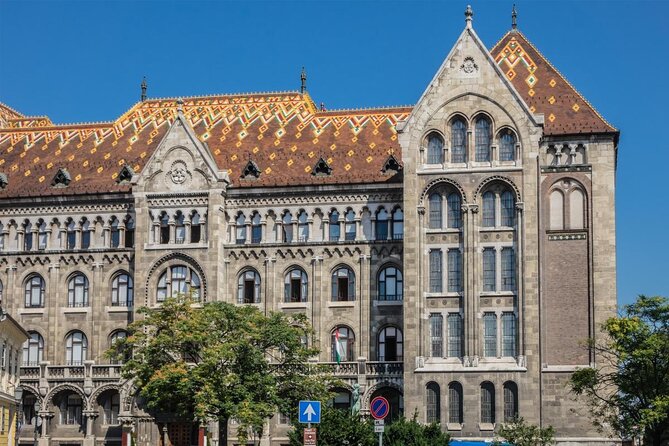
- The Postal Bank by Ödön Lechner, often called Hungary’s Gaudi, for its dramatic Secession look
- Gresham Palace, where you can take in both exterior drama and a peek at the interior design
- Zsolnay porcelain tiles, including the story of ceramics from Pécs and how they’re used on facades
- Asian motifs in Hungarian Art Nouveau, explained through Hungarian origins myths and wider European Orientalism
- Stop-by-stop street design, including banks, passages, and shops like the original interior flower shop
Budapest Art Nouveau in 3 hours, what you’ll actually get
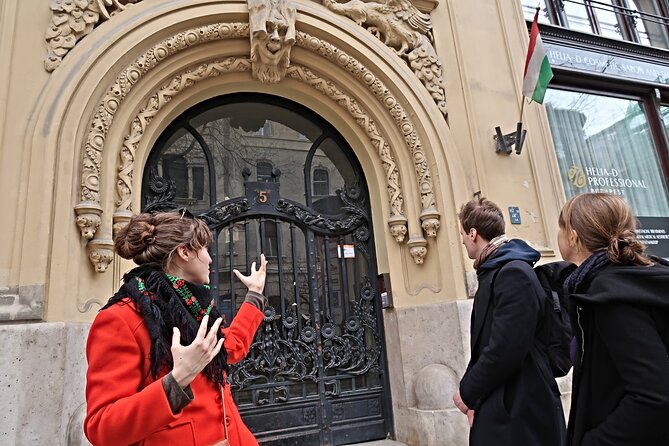
This is a compact, 3-hour walking tour, priced at $123 per person, built for people who want understanding, not just sightseeing. The big value here is the way the route connects buildings you’d otherwise walk past without knowing what to look for.
You’ll move through Central Budapest at an art-nerd pace, with an English-speaking historian guide. The tour is also offered as private or small groups, which helps when you want to ask follow-up questions or take a second look at a tile pattern.
Comfort note: you’re walking, and some stops include brief guided interior hall views. Wear good shoes and plan to keep your eyes up and forward, because the fun details are often in the upper parts of facades.
More Art Nouveau walks:
- Buda Castle Tour: History and Architecture
★ 5.0 · 33 reviews - Art Nouveau Tour in Budapest: 3-Hour Private Tour
★ 4.6 · 21 reviews - Private Art Nouveau Tour Budapest
★ 5.0 · 21 reviews
The Hungarian Secession story, porcelain and Asian motifs you can read
Budapest is loaded with Art Nouveau, but Hungarian Secession is a distinct flavor. You’ll hear how Hungary turned the broader European style into something more local and more theatrical, and how Ödön Lechner became the founding father of that approach.
Two themes show up again and again on this route.
First, porcelain. You’ll see examples tied to Zsolnay, the well-known ceramics maker from Pécs, and the way porcelain tiles became a signature material for many Hungarian Art Nouveau facades. Even if you don’t know the technical story, the tour helps you notice the visual effect: texture, shine, and pattern that make buildings feel almost animated.
Second, Asian motifs. You’ll look at decorative elements that designers used, with an explanation that links them to the supposed eastern origins of the Hungarian nation. You’ll also learn the broader context of European Orientalism, which is important, because it helps you understand the design references without turning them into a history lesson that’s too simplistic.
The takeaway for you: by the end, you’re not just admiring buildings. You’re reading them.
Entrance halls make the Royal Post and Gresham Palace worth the money
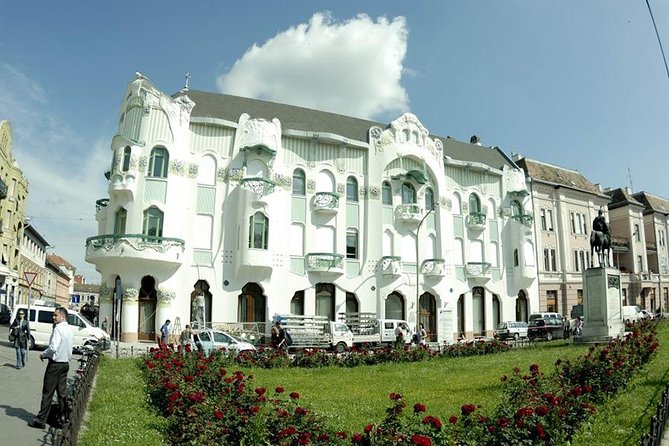
If you only remember two stops, make them these. The tour is designed so you can see standout Art Nouveau interiors cues in the entrance halls.
The Royal Post, Hungary’s Gaudi moment
You’ll focus on the Postal Bank, the Royal Post building associated with Ödön Lechner. It’s famous for being flamboyant, and that reputation is earned. The guide’s job is to translate that flamboyance into specific design features, so you know what you’re looking at instead of just feeling wowed.
A practical upside: entrance-hall access means you can take in exterior details and also catch interior design elements. That matters, because Art Nouveau often saves its best flourishes for entrances and transitional spaces.
More Walking Tours in Budapest:
- Budapest: Buda Castle Walk with Saint Stephen’s Hall
★ 4.5 · 3,012 reviews - Big Bus Budapest Hop-On Hop-Off Bus and Walking Tour
★ 3.5 · 2,206 reviews - Budapest: Buda Castle District Walking Tour
★ 4.6 · 2,108 reviews - Budapest City Landmarks Walking Tour in 2 Hours
★ 5.0 · 2,048 reviews
Gresham Palace, elegance with real architectural intent
Next up is Gresham Palace, where you’ll admire both the facade presence and a guided look into the building’s entrance area. The highlight here is understanding how the style expresses affluence and cosmopolitan ambition from the early 20th century.
If you like the idea that buildings can signal status without being cold, this is your stop. The guide ties the decorative choices to what was happening in Budapest as a modern, international city.
Small consideration: these interior moments can depend on access rules. Still, even when you’re limited to the hall view, the guide’s commentary makes it more than a quick photo stop.
Bedö House and the Hungarian State Treasury, where Secession shows off
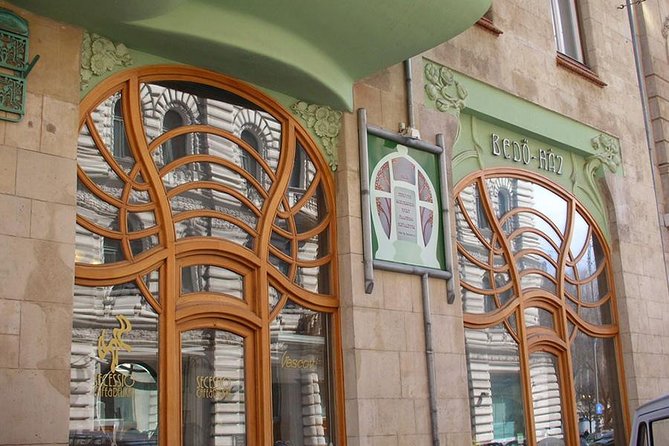
After the flagship buildings, the route keeps the momentum by moving into other Secession-rich stops.
Bedö House
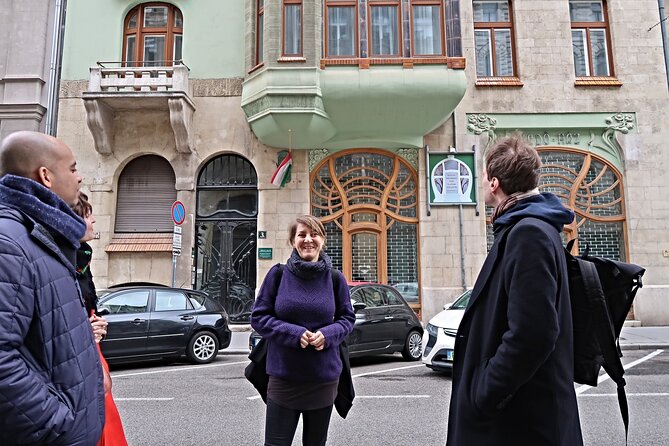
At Bedö House, you’ll get a guided look that trains your eye on the building as a composition, not a random collection of ornaments. The guide typically connects what you see on the facade to the broader Secession approach in Hungary, so the style feels consistent rather than confusing.
Hungarian State Treasury
Then you’ll head to the Hungarian State Treasury, another opportunity to see how Secession architecture translates government power and national confidence into design language. You might also connect this to the tour’s porcelain and motif themes, because these elements are not just decorative flourishes. They’re part of how the buildings communicate identity.
One day-of-week note matters here. On weekends, entry to the Hungarian National Bank is not available, and that building is known for Zsolnay porcelain examples. If your tour date lands on a weekend, ask your guide to adapt, since you can miss some of the planned porcelain emphasis.
Rózsavölgyi utca and Paris Passage, shops and passages as part of the art
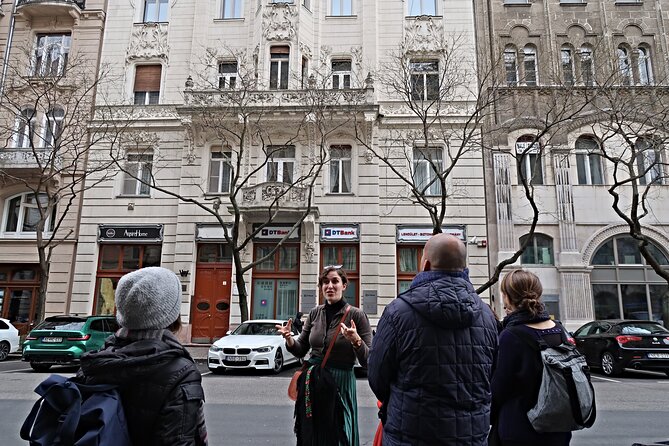
Art Nouveau in Budapest isn’t only for museums and major monuments. This walking tour purposely includes streets and small commercial spaces where the style shows up in day-to-day life.
At Rózsavölgyi utca you’ll get guided context that makes the streetscape feel intentional. The goal is to help you see how Secession design shapes the pedestrian experience, not just the skyline.
Then you’ll pass through Paris Passage. Passages in big European cities often feel half street, half interior world, and this one is part of that story. You’ll also encounter a mix of stops that include a department store, several bank offices, and other small spaces, like a flower shop with its original interior, plus a small Art Nouveau museum and a coffee house.
Why this helps you: it stops the tour from becoming a museum-only route. You get a sense of how Art Nouveau lived in the city’s rhythm, including shopping and social habits that made Budapest feel cosmopolitan.
Zsolnay porcelain tiles, Pécs ceramics, and why the material matters
One of the smartest parts of this tour is how it connects design to materials. You’ll examine ceramics from the renowned Zsolnay factory in Pécs, and the guide explains how extensive use of ceramics on buildings is a characteristic feature of Hungarian Art Nouveau.
For you, the practical value is learning how to identify Zsolnay’s impact visually. Porcelain tiles aren’t just “pretty.” They create depth and reflect light differently than flat stone or plaster. That’s why some facades can look almost glossy or richly textured depending on weather and sun angle.
Also, learning the Pécs link helps you understand why Hungarian Secession feels different from other Art Nouveau regions. It’s not only stylistic inspiration. It’s local industrial craft showing up in architecture.
Tip for your photos: look for patterns where tile transitions meet structural lines. That’s where you can see the design thinking.
Asian motifs and European Orientalism, explained without turning it fuzzy
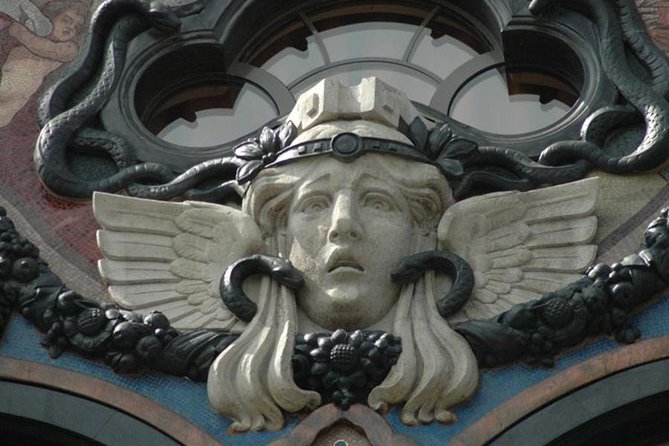
Art Nouveau is full of symbolism, and Hungarian Secession borrows and transforms visual references. This tour helps you make sense of the Asian motifs and decorative elements you’ll spot.
You’ll hear two framing ideas:
1) the supposed eastern origins of the Hungarian nation, which designers used as part of the identity story
2) European-wide Orientalism, which influenced Art Nouveau across much of the continent
The balanced benefit of this approach is that it keeps you from treating everything as literal “history.” Instead, you learn to see ornament as design language, shaped by belief, fashion, and the wider European fascination with the East at the time.
If you’re the kind of person who notices decorative motifs but wonders what they mean, this section is the reason to book.
Kazinczy Street Orthodox Synagogue, finishing with a striking interior
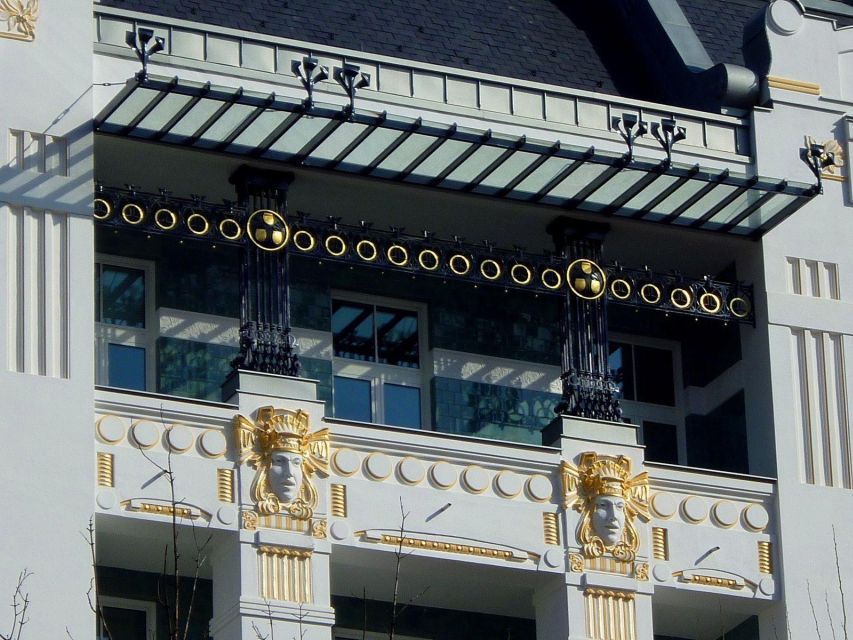
You’ll end the tour at the Kazinczy Street Orthodox Synagogue, described as fascinating and noted for an exquisite Art Nouveau interior. This is a strong ending point because it shows how the style can move beyond banks and grand palaces and into religious architecture.
There’s one practical consideration you should plan for: the synagogue is closed on Saturdays. If you’re touring on a Saturday, the route can be adapted, and you may be guided toward other Art Nouveau stops instead.
Even if you only manage the entrance area, the guide’s focus helps you understand what makes the interior notable, so your final impression is still meaningful.
Price and value: is $123 for 3 hours fair?
At $123 per person for a 3-hour walk, you’re paying for a few things you can’t easily replicate on your own.
You’re paying for:
- a historian guide who can connect style, symbolism, and building details
- targeted access to the most useful view points, including entrance hall moments in major buildings
- a route that stitches together Secession architecture, porcelain material culture, and motif explanations in a way that stays coherent
You are not paying for transit (tram and metro tickets are not included). You might also pay small extra site fees depending on access and the day. For example, the House of Hungarian Art Nouveau can have an entry cost, and the Orthodox Synagogue has an additional fee when open.
So here’s the value logic for you:
- If you like architecture and want to understand why the details look the way they do, this price makes sense.
- If you mostly want exterior photos and don’t care about context, you might feel it’s more than you need.
Who this tour suits best (and who might want a simpler plan)
This fits you best if you:
- enjoy architecture, design, and symbolic details
- want a clear story of Hungarian Secession, with porcelain and motifs explained
- like guided indoor hall views, not only street-level facades
- prefer English narration from a historian, ideally in a private or small group format
It may feel less ideal if you:
- only want a broad “see the sights” walk with no design focus
- plan to visit strictly on a Saturday and won’t be flexible if the synagogue is closed
- expect that every planned interior stop will always be open
The guide experience, friendly and expert
One of the most praised parts of this tour is the guide quality. People highlight a guide like Anna for being friendly and highly educated in art and Budapest history. Another common compliment is strong language ability, including very good German skills from some guides.
That matters because Art Nouveau is full of small visual cues. A good guide helps you notice them and understand what they’re doing in the design.
If you care about turning buildings into a readable story, this tour leans hard into that strength.
Should you book this Art Nouveau walking tour?
Yes, if you want the fastest way to get real insight into Budapest’s Hungarian Secession, with a route that balances major highlights and smaller supporting stops. This is especially worth it for the interior hall access at top buildings, plus the guided explanations of Zsolnay porcelain and Asian motifs.
If your travel date is on a weekend or Saturday, don’t panic. Just know that access can change, and the tour can be adapted to your interests with alternative Art Nouveau sites when needed.
If you want, tell me your travel dates and whether you prefer private or small-group tours, and I’ll help you pick the best day to match the sites you most want to see.
FAQ
How long is the Budapest Art Nouveau Walking Tour?
The tour is 3 hours long.
Where does the tour start?
The starting location depends on the selected option. A central meeting point option is Madal Café, Budapest, Alkotmány u. 4.
What is included in the price?
The tour includes a 3-hour walking tour and a historian guide.
What is not included?
Tram and metro tickets are not included.
How much does the tour cost?
The price is $123 per person.
What language is the tour guide?
The live tour guide speaks English.
Is this tour private or small-group?
Private or small groups are available.
Are there extra costs for some sites?
Yes. Some sites may require additional payment. The House of Hungarian Art Nouveau can be 1000 HUF per person, and the Orthodox Synagogue on Kazinczy Street can be 2000 HUF per person (amounts given as approximately $3.50 and $7.00).
What can affect access to sites?
Some aspects depend on the day of the week. On weekends you cannot enter the Hungarian National Bank, and the Orthodox Synagogue is closed on Saturdays.
Is the tour refundable if my plans change?
There is free cancellation, and you can cancel up to 24 hours in advance for a full refund.
Latest to land in Budapest
- Visegrád Hike & Castle Tour with Ferry from Budapest★ 4.6 · 3 reviews
- Budapest: Vacation Photographer to collect great memories★ 5.0 · 49 reviews
- True Crime Walking Tour in the Buda Castle district★ 5.0 · 26 reviews
- Trash Art Museum: Hungary’s First Scrap Metal Exhibition★ 4.3 · 72 reviews
- Budapest: 3-Hour Trabant Sightseeing Tour★ 4.7 · 28 reviews
- Audio visual multi-sensory chefs journey dinner experience★ 5.0 · 3 reviews
- Private Szentendre and Vac Tour from Budapest with Transport★ 5.0 · 3 reviews
- Wine Tasting in the Countryside from Budapest★ 5.0 · 14 reviews
Art Nouveau Walks, compared.
Art Nouveau Tour in Budapest: 3-Hour Private Tour
Read our review →
Art Nouveau Treasures of Budapest – Exclusive Private Tour
Read our review →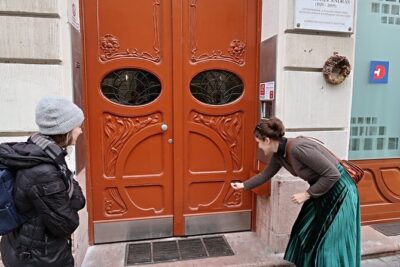
Browse the lists this tour appears in