
Reviewed · COMMUNIST HISTORY TOURS
Budapest Hammer & Sickle Communist Times Tour
Budapest turns political history into street-level drama. This 2.5-hour walk links the big turning points, from WWI and WWII through the 1956 uprising, to real streets where speeches, protests, and marches happened, plus a hands-on look at daily life behind the Iron Curtain.
I especially love the small group feel, where you can ask questions and actually get an answer, and I love the Retro Interactive Museum stop that turns abstract politics into normal objects, routines, and family stories. The main catch to consider is simple: there are no headphones, so you’ll be relying on your guide’s voice, especially if it’s windy or noisy outside.
In This Review
- Key things I found most compelling
- How the 1956 Revolution becomes a walkable map
- Starting at Ferenc Deák Square: your meeting point and the tone
- Szent István Basilica and the politics of faith
- Szabadság tér (Liberty Square): Soviet memory in plain view
- The Hungarian Parliament area: where the uprising ignites
- In memoriam 1956 (October 25): when the story turns darker
- Imre Nagy and October 23 remembrance: symbols with a backstory
- Budapest Retro Interactive Museum: where daily life takes over
- WWII context and the Shoes on the Danube Bank memorial
- Price and value: what $79.65 buys you
- Practical tips for a smoother afternoon
- Who this tour is best for
- Should you book the Budapest Hammer & Sickle Communist Times Tour?
- FAQ
- How long is the Budapest Hammer & Sickle Communist Times Tour?
- What time does the tour start?
- Where do I meet the guide?
- Where does the tour end?
- Is the tour offered in English?
- Is the Budapest Retro Interactive Museum entry included?
- What is included in the price besides the guide?
- Are any attractions tickets included?
- Is pick-up and drop-off included?
- Is there audio equipment or headphones?
- Who is the tour not recommended for?
Key things I found most compelling
- Everyday life under communism, not just dates: expect stories about passports, shortages, black markets, and even silly-sounding items like banana lines.
- A route built around the 1956 arc: you’ll connect the buildup to the uprising, the Soviet crackdown, and the longer prelude to freedom.
- Start with religion, end with memory: the tour frames how communist power affected churches and how later generations memorialized the violence.
- Interactive museum entry included: the Retro exhibition is where the message sticks, because you see and handle period-style details.
- Guides who go beyond the script: many guides bring personal context through family stories, and some have lived through the era themselves.
How the 1956 Revolution becomes a walkable map
If you only do one thing to understand modern Hungary, do it in layers. This tour builds those layers fast, starting with why Hungary ended up at the center of 20th-century politics, then tightening the focus until you are standing at the places tied to the 1956 Revolution.
You’ll move through key locations connected to protests, speeches, and marches, and your guide ties each stop to a bigger story. You’re not just collecting monuments. You’re tracing a cause-and-effect chain: how WWII and its aftermath shaped occupation, how communist control tightened daily life, and how the October uprising escalated into something that could not be contained.
A big reason I like this format is pacing. The route is short enough to stay personal, but long enough to feel like a complete explanation. You’ll also have time at a few sites to absorb details on the spot, rather than racing past them.
More communist-era tours:
- Budapest: Communist History Tour with House of Terror Option
★ 4.8 · 182 reviews - Communism in Hungary with a Historian
★ 5.0 · 70 reviews - Budapest: 3-Hour Walking Tour About Communism (Small Group)
★ 4.7 · 70 reviews
Starting at Ferenc Deák Square: your meeting point and the tone
The tour starts at 3:00 pm at the Lutheran Church near Ferenc Deák Square, Deák Ferenc tér 4 (Deák Ferenc tér is one of the easiest places to reach in Pest). It ends downtown near Szabadság tér 1, close to Liberty Square.
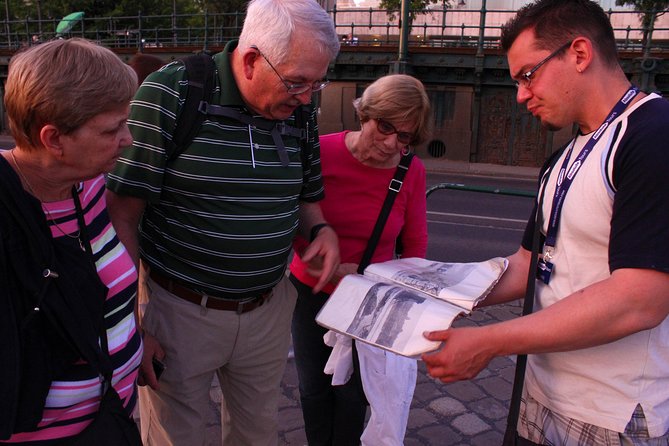
That “easy start, central finish” matters in Budapest. You can slot this into an afternoon early in your stay and get your bearings quickly. The tour is also capped at a maximum of 10 travelers, so it avoids the vibe where you’re stuck listening from the back. Most people can participate, and the tour runs in all weather, so plan for walking.
One practical thing to remember, because it affects your experience: there is no audio equipment. So if you’re the type who needs clear sound to enjoy a story, you may want to stand where you can see your guide’s face and focus on their delivery.
Szent István Basilica and the politics of faith
The first stop is Szent István Bazilika, roughly 15 minutes on-site. Ticket admission is not included. Still, even a short visit here is useful because the tour uses the church setting to talk about something people often gloss over: how communist rule shaped religious life, church operations, and the everyday power relationship between church and state.
This is a strong opening because it changes your mindset. Instead of treating communism as only tanks and slogans, you start thinking about control at the level of institutions, routines, and belief. And because the tour keeps returning to daily life, this “faith under pressure” angle feels like a necessary first step.
If you want to get the most out of it, wear shoes you can walk in for a while. Even when you’re not inside long, you’ll still be moving between streets and squares.
Szabadság tér (Liberty Square): Soviet memory in plain view
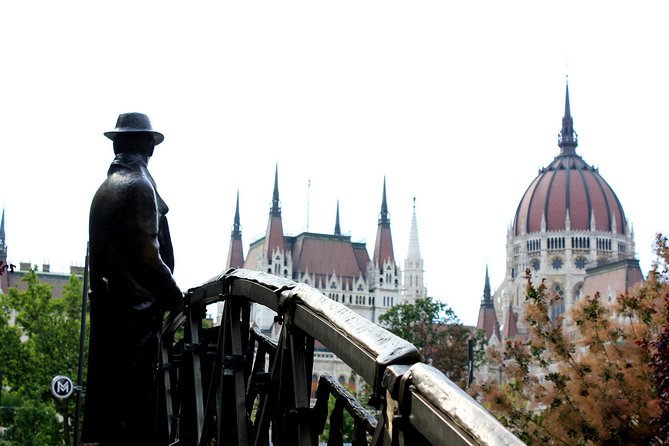
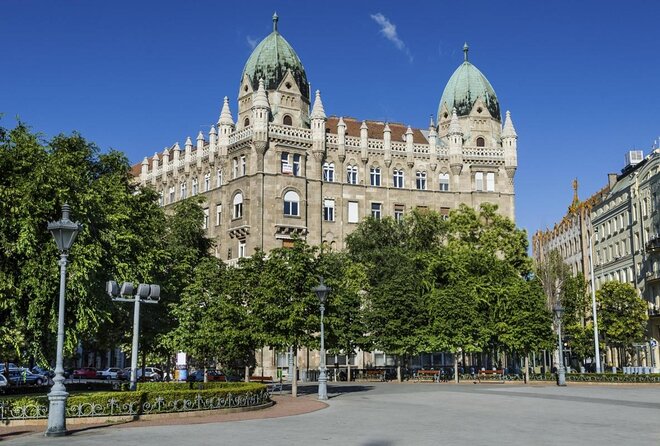
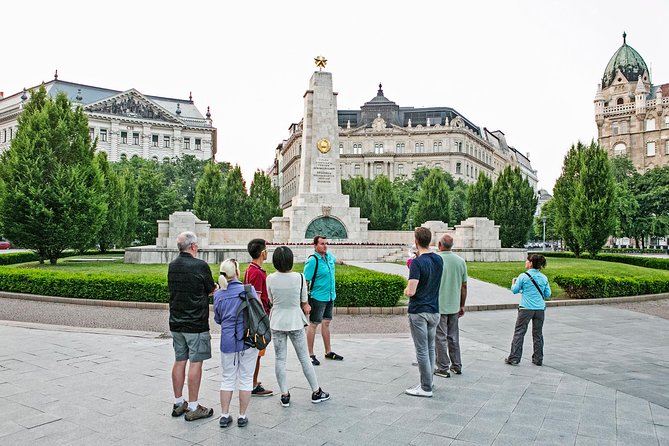
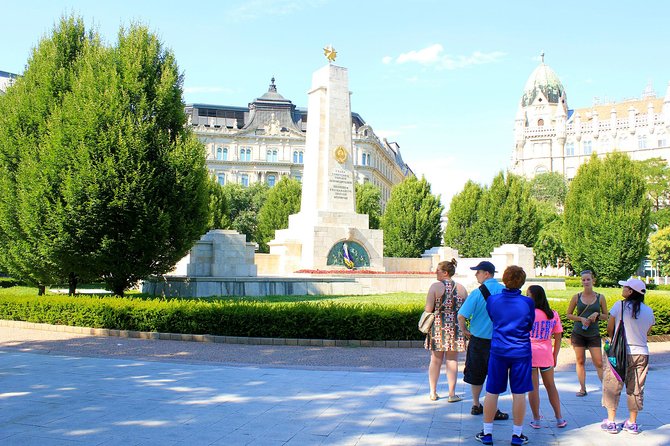
Next comes Szabadság tér for another 15 minutes, and this one is free. This is where the tour shifts into the occupation era directly, using the Soviet memorial as an organizing point.
Here’s what makes the stop valuable: it helps you connect the end of WWII to the beginning of occupation. You’ll learn how power shifted, how the Communist Party seized control, and why these years became the foundation for what followed.
Also, the name Szabadság tér itself gives you a subtle contrast. You’re standing in a place associated with liberty while your guide explains how that liberty was delayed, manipulated, and then brutally interrupted. It’s history you can feel because it’s in the city’s geography.
A different sort of day out in Hungary:
- Budapest: City Highlights Sightseeing Cruise
★ 4.6 · 43,981 reviews - Budapest: Unlimited Prosecco, Beer and Aperol Spritz Cruise
★ 4.8 · 37,304 reviews - Budapest: Széchenyi Spa Day Ticket with Optional Upgrades
★ 4.3 · 23,911 reviews - Budapest: Nighttime or Daytime Sightseeing Cruise
★ 4.2 · 21,062 reviews
The Hungarian Parliament area: where the uprising ignites
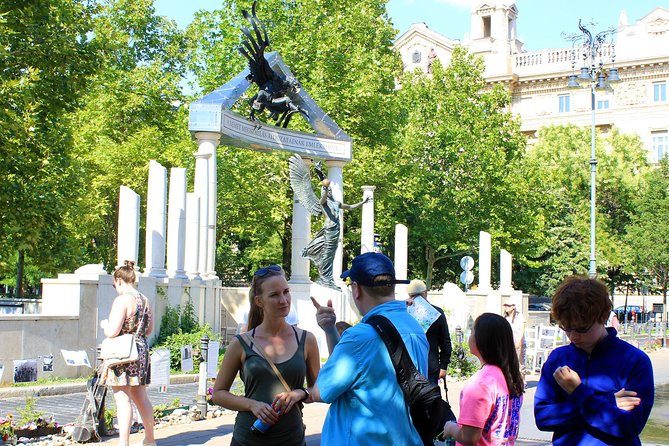
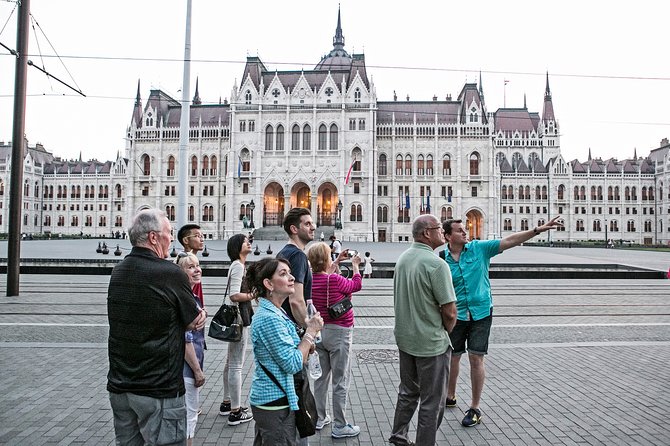
The tour then heads to the Hungarian Parliament Building area, with about 20 minutes focused on the square in front. Parliament ticket admission is not included.
This stop is one of the emotional anchors of the tour because it’s tied to the early days of the 1956 Revolution. Your guide explains what led to the outbreak, and how party leadership tried to handle events as they accelerated beyond control.
Even if you’re not going inside, just standing in that open urban space gives you a sense of how crowds formed and how movement in a square could change momentum. This is a place where politics turns visual. If you like history that includes the human theater of it, you’ll probably enjoy this section the most.
In memoriam 1956 (October 25): when the story turns darker
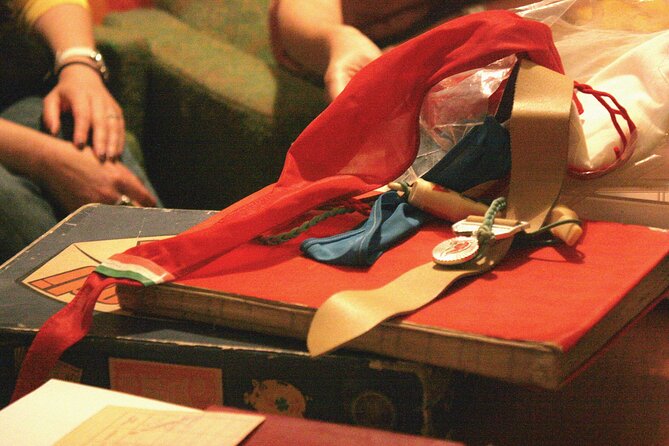
After Parliament, you’ll visit In memoriam 1956. October 25. This is about 15 minutes and is free. This is the second-day crackdown moment: military authorities and Soviet tanks fired into the gathering crowd.
The exhibition uses archive footage and recollections. That matters because it adds texture. You’re not only hearing a timeline. You’re seeing and experiencing how people remembered the chaos and the aftermath.
This is also the point where the tour feels most serious. Expect the atmosphere to shift. If you’re traveling with kids or you’re unsure how this content lands, this is where you decide if the tone is right for your group.
Imre Nagy and October 23 remembrance: symbols with a backstory
Next is the Monument to Imre Nagy and Remembrance Day context around October 23. It’s around 15 minutes and is free.
Imre Nagy is one of the key figures in Hungary’s 1956 story, and your guide connects his role to the larger theme of defiance against Soviet leaders, followed by his execution. You’ll also hear about his reburial as a major moment in the change of the regime.
What I like about this stop is that it treats a statue as more than a photo op. You learn why the symbol mattered, when it mattered, and how public memory shifted over time.
Even if you don’t care much about monuments, it’s worth it because it gives emotional continuity. Earlier you learned how people lived under control. Now you see how society later rebuilt meaning out of loss.
Budapest Retro Interactive Museum: where daily life takes over
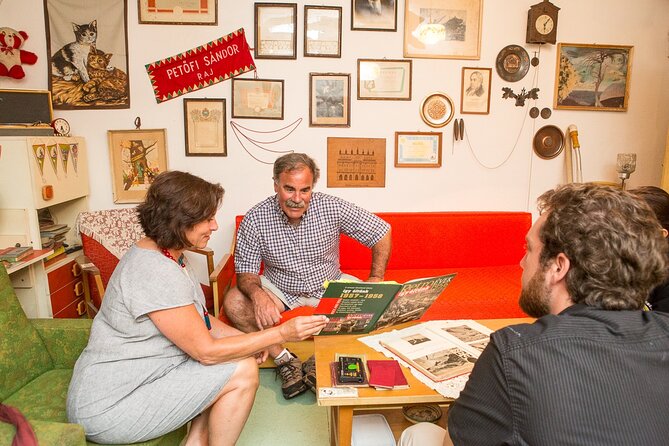
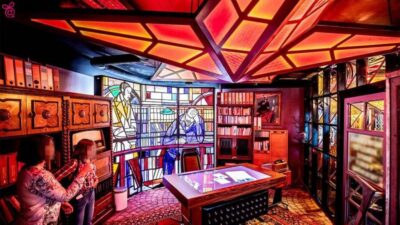
This is the stop most likely to stick in your mind. Entry to Budapest Retro Interactive Museum is included, and it’s the tour’s chance to go beyond public events and into the objects and routines that made daily life feel normal, even when it was constrained.
The museum experience is described as interactive, and it focuses on how families lived and how travel worked. Your guide points out details and explains the stories behind the artifacts. This is where you hear about things like how long it took to get a passport, and you connect those practical frustrations to larger political control.
You’ll also learn about how children were raised and what people did for everyday fun, which is an important counterweight to the darker parts of the tour. One review-style theme you can rely on: guides often use games, childhood scrapbooks, and period items to show that communism was not only about fear. It was also about adaptation and survival.
If you get the right guide, this part feels like stepping into a neighbor’s living room from another decade, not like reading captions in a museum. Some guides, like Anna, are especially praised for mixing historical context with personal and family stories. Others, like Tomas or George, are noted for connecting the grim elements to ordinary joy and hope.
WWII context and the Shoes on the Danube Bank memorial
The tour also includes a WWII overview, and it makes sure you don’t forget what happened to Hungary’s Jewish community. One major element is the Shoes on the Danube Bank Holocaust memorial.
This is a sober stop, and it gives the tour a crucial missing piece: the way WWII set the stage for postwar occupation and the politics that followed. It also prevents the story from becoming only a Hungarian communist narrative, because it anchors the broader tragedy of the era.
If you want to process this section well, don’t rush. Look at the details, then listen. Memorials like this ask for slower attention than a typical street-sight stop.
Price and value: what $79.65 buys you
At $79.65 per person for about 2 hours 30 minutes, this is not a budget impulse buy. But it can feel like strong value if you want a structured orientation and you care about context, not just photos.
Here’s what you are paying for in practical terms:
- An English-speaking guide who walks you through multiple sites tied to the 1956 Revolution.
- Included coffee or tea or a soft drink, which is a small thing, but it helps keep your energy up mid-afternoon.
- Included entry to the Budapest Retro Interactive Museum, which is the tour’s most hands-on component.
- A group size capped at 10, which keeps the discussion conversational rather than one-sided.
What can make it feel overpriced is if your main goal is a quick look at monuments. In that case, you could also piece together a self-guided route. But if you want the stories connecting WWI, WWII, occupation, and 1956, the guide’s interpretation is the product.
In other words: if you enjoy learning from a person, not just from signs, this price tends to make sense.
Practical tips for a smoother afternoon
A few details can help you avoid common annoyances.
Dress for weather and walking. The tour runs in all conditions, and there’s outdoor time at multiple squares and monuments. Bring a layer, even if Budapest looks sunny in the morning.
Arrive a few minutes early. The meeting point is near major public transport at Deák Ferenc tér, but it’s still a street-level rendezvous. You’ll want time to find the right church entrance.
Plan for tickets you may need to buy. Szent István Bazilika and the Parliament Building area are noted as not included for admission. You can still appreciate the stops without going inside, but check your preferences ahead of time so you are not surprised mid-tour.
Stand where you can hear. Since there are no headphones, your best chance for an enjoyable experience is to stay close to the guide and keep your attention forward.
Not ideal for everyone under 14. The tour explicitly says it is not recommended under age 14, likely because the topic includes violent historical material. If you’re traveling with teens, you should use your own judgment about how they handle heavy history.
Who this tour is best for
This works especially well if you:
- Want a Budapest introduction that goes beyond architecture and overlooks the communist-era story that shaped the city.
- Like tours where everyday life is part of the lesson, not just political landmarks.
- Prefer small groups and Q&A, rather than a big bus-style lecture.
It may feel less satisfying if you:
- Want a long museum-only experience and dislike walking between multiple stops.
- Need audio support to hear clearly in outdoor settings, because there’s no headset system here.
- Are looking only for a casual overview, since the content is serious and the tour covers WWII and Holocaust remembrance.
Should you book the Budapest Hammer & Sickle Communist Times Tour?
I’d book it if you want a guided, structured way to understand why Hungary’s 20th-century story matters, and you like the human side of history. The combination of Soviet-era landmarks, 1956 memorial sites, and an included interactive Retro museum is a strong package for the money and time, especially if you’re in Budapest for only a few days.
Skip it if your ideal tour is purely scenic, purely light, or if you strongly prefer self-guided exploration with fewer stops and fewer themes of occupation and violence. Also, if you know you struggle hearing guides outdoors, consider whether this format will be comfortable for you.
If you do book, do yourself a favor: wear comfortable shoes, show up on time at Deák Ferenc tér, and come ready to ask questions. That’s where the best moments tend to happen.
FAQ
How long is the Budapest Hammer & Sickle Communist Times Tour?
It runs about 2 hours 30 minutes.
What time does the tour start?
The start time is 3:00 pm.
Where do I meet the guide?
You meet at the Lutheran Church of Ferenc Deák Square, Deák Ferenc tér 4, Budapest 1052.
Where does the tour end?
The tour ends near Liberty Square in the heart of downtown, close to Szabadság tér 1, Budapest 1054.
Is the tour offered in English?
Yes, it is offered in English.
Is the Budapest Retro Interactive Museum entry included?
Yes, entry to the Budapest Retro Interactive Museum is included.
What is included in the price besides the guide?
Coffee or tea or a soft drink is included. The tour is also described as having a mobile ticket.
Are any attractions tickets included?
Szent István Bazilika and the Parliament Building admission tickets are not included. The Soviet memorial and the In memoriam 1956 exhibition stop are described as free, and the Imre Nagy remembrance monument stop is also free.
Is pick-up and drop-off included?
No pick-up or drop-off is included.
Is there audio equipment or headphones?
No, there is no audio equipment or headphones available on this tour.
Who is the tour not recommended for?
It is not recommended under age 14.
Latest to land in Budapest
- Visegrád Hike & Castle Tour with Ferry from Budapest★ 4.6 · 3 reviews
- Budapest: Vacation Photographer to collect great memories★ 5.0 · 49 reviews
- Trash Art Museum: Hungary’s First Scrap Metal Exhibition★ 4.3 · 72 reviews
- True Crime Walking Tour in the Buda Castle district★ 5.0 · 26 reviews
- Budapest: 3-Hour Trabant Sightseeing Tour★ 4.7 · 28 reviews
- Audio visual multi-sensory chefs journey dinner experience★ 5.0 · 3 reviews
- Private Szentendre and Vac Tour from Budapest with Transport★ 5.0 · 3 reviews
- Wine Tasting in the Countryside from Budapest★ 5.0 · 14 reviews
Communist History Tours, compared.
Communist History Tour with House of Terror Option
Read our review →
3-Hour Walking Tour About Communism (Small Group)
Read our review →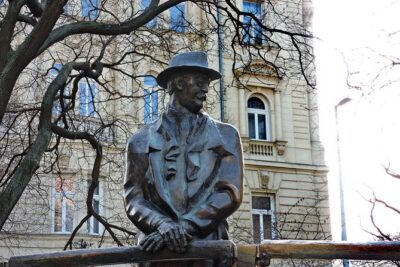
Memento Park Visit with Private Trabant Transfer
Read our review →
Browse the lists this tour appears in