
Reviewed · COMMUNIST HISTORY TOURS
Communism in Hungary with a Historian
Budapest shows communism on every corner. This 3-hour history walk is a practical, story-driven way to understand how the Soviet-era system shaped daily life, and I especially like the small group size and the way guides use family stories to make big events feel human. One thing to consider, a couple of major stops are viewed from the outside and some entrances are not included, so plan for a little extra budget if you want to go in.
If you have visited Budapest for the big sights already, this tour gives you a different lens, political, social, and personal. You will cover Buda and Pest, ride the metro with tickets included, and end with a café stop that feels like a time capsule rather than a quick photo break. The pace is built for questions, so bring your curiosity, not just your camera.
Finally, it is in English, capped at 10 travelers, and it uses a mobile ticket. It starts at Erzsébet tér near Kempinski Hotel Corvinus and usually finishes at Bambi Café on the Buda side close to the center and Margaret Bridge (on colder or wet days, it often ends on the Pest side closer to where you begin).
In This Review
- Key things I’d highlight before you book
- Entering the Budapest version of communism
- Meeting at Erzsébet tér and using metro time well
- Elizabeth Square, the Stalin square you can still feel
- St. Stephen’s Basilica and religion under a party state
- Szabadság tér: memorials, embassies, and a bunker edge
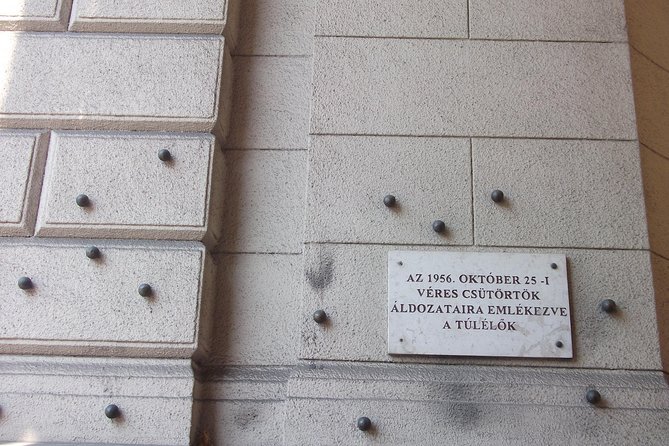
- The Hungarian Parliament and Bloody Thursday in 1956
- A communist-style café stop with coffee included
- Price and value: why $59.13 can make sense
- How the guide approach shapes your experience
- Who should book this Budapest communism tour
- Should you book? My quick decision guide
- FAQ
- How long is the tour, and when does it start?
- Where do we meet, and where do we end?
- What is included in the price?
- Is this tour in English?
- Do we need to pay for museum or church entry tickets?
- How big is the group?
- Can I cancel and get a full refund?
Key things I’d highlight before you book
- Small group feel (max 10) so you are not shouting over other people when you ask questions
- Family-based storytelling from guides like Judit, Raymond, Greg, Gábor, and others that turns policy into real consequences
- Metro included plus a route that covers both sides of the river without tiring you out
- Stalin square to Freedom Square contrast, monuments and memorials plus the political meaning behind them
- A communist-style café stop with coffee included, then a relaxed ending at Bambi Café
- 1956 Bloody Thursday context tied to the Hungarian Parliament area, not just a date on a sign
Entering the Budapest version of communism
Communism in Hungary is not just a textbook topic. It is in the street plan, in what got built, what got renamed, and what people learned to say out loud versus what they whispered. This tour’s strength is that it connects ideology to daily pressure. You are not only looking at monuments. You are learning how control showed up in workplaces, apartments, religion, and public fear.
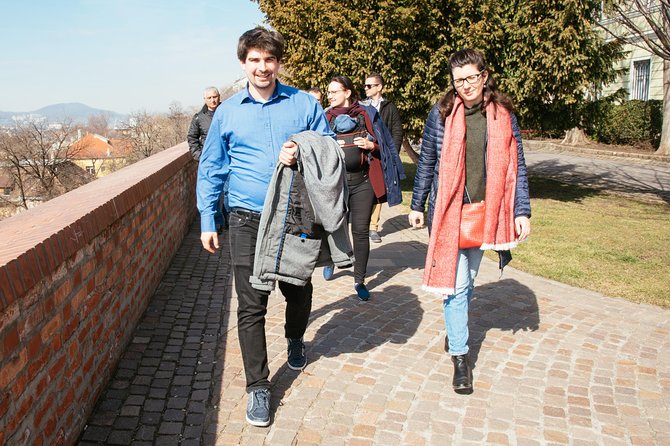
Guides on this tour lean hard on personal and family stories. In the feedback I read, I kept seeing the same pattern: a guide explains how nationalization worked, how families lost property and were reassigned to worse quarters, and how daily routines could be monitored. One guide’s story example that stands out is Raymond describing how his family’s business was nationalized, his grandfather forced to work in his own factory for low pay under someone loyal to the party, and even how housing assignments tore families apart. When you hear details like that, communism stops being an abstract system.
And yes, you still get the big landmarks. The difference is you hear why they matter. The tour uses Budapest’s communist-era geography to teach you how power was displayed and enforced, from squares that renamed history to sites tied to the 1956 revolution.
More communist-era tours:
- Budapest: Communist History Tour with House of Terror Option
★ 4.8 · 182 reviews - Budapest: 3-Hour Walking Tour About Communism (Small Group)
★ 4.7 · 70 reviews - Budapest Hammer & Sickle Communist Times Tour
★ 4.5 · 68 reviews
Meeting at Erzsébet tér and using metro time well
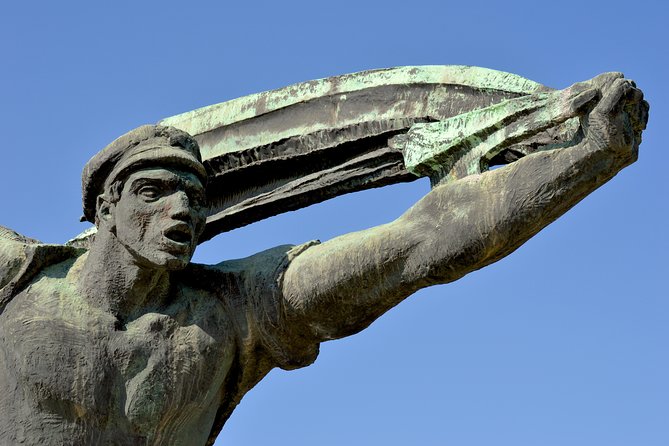
The tour meets at Kempinski Hotel Corvinus Budapest, right on Erzsébet tér (Erzsébet tér 7-8). That matters because Erzsébet tér is one of the easiest starting points for getting your bearings, and it also sets the tone. This is not a random walk with vague landmarks. It starts where the story starts, in the central space tied to Hungary’s communist period.
From there, you will travel by metro, and the metro tickets are included. That is a practical value point: you get to cover more ground in 3 hours without turning it into a leg-burner. It also helps on cold or rainy days, when you do not want to spend your energy slipping on sidewalks while trying to read sculpted stone.
The tour is built for an intimate group of up to 10 travelers, so the metro ride is not just transit. It is part of the lesson. If you like interactive history, this is a good fit because you can ask questions along the way and actually get answers.
Elizabeth Square, the Stalin square you can still feel
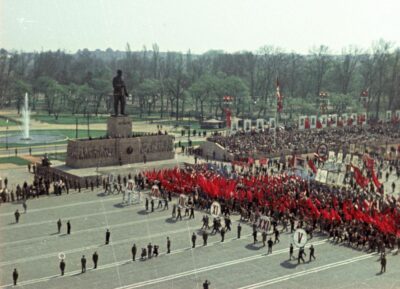
Your first stop is Elizabeth Square. Here, the guide sets the stage by explaining how this space became associated with the former Stalin square name and the type of monuments and messages the communist system used to broadcast its power.
What I like about starting here is the immediate contrast it creates. You get to connect what you might see today, streets, traffic, everyday pedestrians, with what the system wanted people to remember or fear. It is a fast first stop, around 15 minutes, but it is not filler. It is meant to give you a framework so the later monuments do not feel random.
Also, because you are only spending a short time here, you can move on before your attention starts to drift. A lot of city walks overload the early part with too much. This one gets you hooked first, then keeps your brain engaged with the next thematic stop.
St. Stephen’s Basilica and religion under a party state
Next you are at St. Stephen’s Basilica (Szent Istvan Bazilika). The guide talks about churches and religious life during communism, often including family stories to show what religious communities had to navigate under a state that wanted loyalty.
A key detail: you see the basilica from the outside, and admission is not included. That is a tradeoff. If you are hoping for an inside religious visit, you will not get it as part of this specific tour. On the plus side, you can still walk away with a clear understanding of how the state treated religion, what strategies people used to survive, and how faith communities adjusted when the rules changed.
One example that keeps coming up in the feedback is how religious institutions could survive by taking a practical approach, including donating money to the party to reduce pressure. Hearing that kind of detail makes the outside architecture feel less decorative and more political in context.
If you are the kind of traveler who likes asking, Why did people behave this way? this stop works well. It gives you background so later discussions about fear, compliance, and control make sense.
A different sort of day out in Hungary:
- Budapest: City Highlights Sightseeing Cruise
★ 4.6 · 43,981 reviews - Budapest: Unlimited Prosecco, Beer and Aperol Spritz Cruise
★ 4.8 · 37,304 reviews - Budapest: Széchenyi Spa Day Ticket with Optional Upgrades
★ 4.3 · 23,911 reviews - Budapest: Nighttime or Daytime Sightseeing Cruise
★ 4.2 · 21,062 reviews
Szabadság tér: memorials, embassies, and a bunker edge
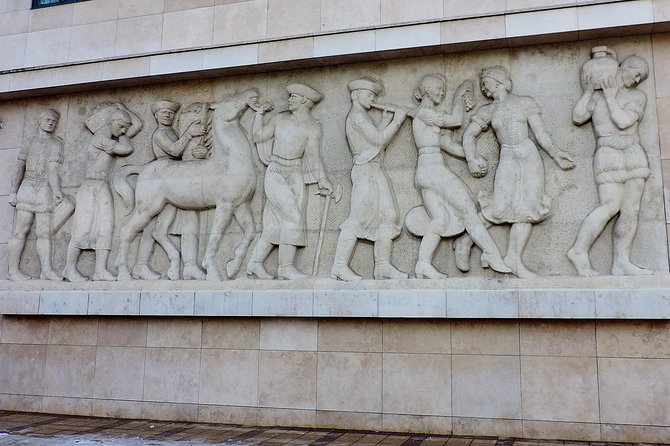
Szabadsag ter is the stop where the tour starts to feel more physical. You see remnants of communism through memorials, statues, and nearby buildings that represent how the era shaped the city. The guide also points out even part of a bunker from the outside.
That bunker detail is one of those moments that makes the history click. You realize the system was not only about posters and speeches. It was also about readiness, secrecy, and the possibility that things could turn violent or unstable. Even seeing it from the outside is meaningful because you can connect it to what the state expected people to do, comply, report, or disappear from public view.
This is a longer stop at about 45 minutes. That length matters because you get time to slow down and look. You are not rushing past the monuments like they are a checklist. Instead, the guide can connect what you see to why the communist state needed specific symbols, including public fear and political theater.
The Hungarian Parliament and Bloody Thursday in 1956
Later, you cover one of the most important moments connected to the 1956 revolution: Bloody Thursday. Your focus is on Kossuth Square, in front of the Hungarian Parliament building.
Admission is not included here. You are in the area to understand what happened, not to do a timed interior visit. That can still be powerful because the location is part of the lesson. The guide connects the event to the city’s political geography, which helps you understand how demonstrations and state responses played out in a central public space.
What I like about this stop is that it pulls the tour out of the Stalin-era mold and into a Hungarian story of resistance and protest. It also helps you see communism as something that was contested, not just enforced from above.
In the best versions of this tour, the guide does not treat 1956 as a closed chapter. The stories tend to connect it to how people learned to live with uncertainty, why fear of punishment existed, and why some changes felt both necessary and dangerous.
A communist-style café stop with coffee included
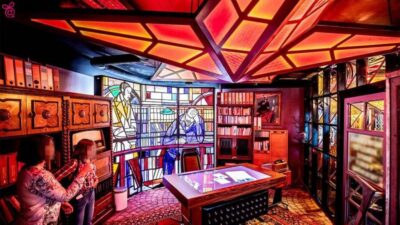
Every good history walk needs a pause that feels real, not staged. This one includes a communist-style café stop, and coffee is included.
I like this kind of ending because it shifts from heavy history to lived atmosphere. It also gives you a low-pressure moment to ask follow-up questions. If you have been holding questions since Elizabeth Square, this is a good time to get them answered.
Many tours end at a modern bar that could be anywhere. Here, the stop points toward Bambi Café, a place that was opened in 1961 and, as shared in the tour notes I saw, has not changed too much. That does not mean it is frozen in time for everyone. It means the setting helps you imagine the era more easily, especially after you just walked through squares and buildings tied to political power.
On top of that, the tour usually ends at Bambi Café on the Buda side close to the center and Margaret Bridge. On colder or wet days, it often ends on the Pest side near where you began. That flexibility is practical, because you do not want to be fighting bad weather at the exact moment you want to decompress.
Price and value: why $59.13 can make sense
The price is $59.13 per person for about 3 hours. That sounds like a standard walking tour price until you look at what is included.
Here, you get a professional guide, mobile ticket, an intimate group capped at 10 travelers, metro tickets, and coffee at the communist-style café stop. Those inclusions matter, because they reduce what you have to pay and plan separately. In other words, you are not just buying narration, you are buying a structured route that uses local transit efficiently.
Is it worth it if you only want a few photo stops? Probably not. But if you want context and you like questions, it can be a very good value. The feedback I read repeatedly praised guides for being enthusiastic and patient, and for sharing stories that go beyond what you typically get on basic sightseeing tours.
How the guide approach shapes your experience
This is the part that really drives reviews. The guides are consistently described as story-driven and easy to follow, and the best ones connect large events to small consequences.
For example, Raymond’s family story example is the kind of detail that makes communism feel like a lived experience. It is not only, The state did this. It is, Here is what it meant for pay, housing, and who you could trust. Other guide examples you will hear tend to cover how churches navigated pressure, and how people feared being reported to the authorities.
What you will also notice is balance. Some feedback explicitly mentions that guides aim to present more than one side, which helps you avoid a tour that feels like propaganda or a single-note lecture. You still get facts, but you also get human motives and tradeoffs.
If you are the type of traveler who asks why something happened, you will probably enjoy this. And if you are shy about asking, the small group size makes it easier to speak up without feeling like you are interrupting strangers.
Who should book this Budapest communism tour
Book this if you fit one of these profiles:
- You already love Budapest’s architecture, and you want the political story behind the city’s look.
- You are interested in communism and the Cold War as systems that shape daily life, not just slogans.
- You want a 3-hour guided walk that covers both sides of the river without feeling rushed.
- You like hearing family anecdotes and personal experiences used as teaching tools.
If you want only major landmarks and inside visits, you might feel constrained. St. Stephen’s Basilica is outside and admission is not included, and the Parliament stop focuses on the 1956 event from the outside area. But if your goal is understanding, not access, this tour delivers.
It is also a solid choice when you are on your second or third Budapest visit. It gives you a new set of themes beyond the usual sights, while still keeping the route central and efficient.
Should you book? My quick decision guide
I would book it if you want Budapest with a political brain and a human heart. The combination of small group format, metro included, and the café coffee pause makes it feel like a real half-afternoon, not just a race between points on a map.
Skip it if you are mainly after interior access or synagogue visits, because this specific program centers on communist-era sites and related themes like religion under the party state and the 1956 revolution location context. Also, make sure you are okay with outside viewing at certain stops and possible separate entrance costs where noted.
If communism in Hungary interests you, and you enjoy asking questions as you walk, this tour is a high-probability win.
FAQ
How long is the tour, and when does it start?
The tour lasts about 3 hours and it starts at 2:00 pm.
Where do we meet, and where do we end?
You meet at Kempinski Hotel Corvinus Budapest on Erzsébet tér 7-8. You usually end at Bambi Café on the Buda side close to the center and Margaret Bridge, and on colder or wet days it often ends on the Pest side in the center close to where you begin.
What is included in the price?
The tour includes a mobile ticket, the guided experience in English, metro tickets, and coffee at the communist-style café stop.
Is this tour in English?
Yes, the tour is offered in English.
Do we need to pay for museum or church entry tickets?
Some stops are free, including Elizabeth Square and Szabadsag ter. St. Stephen’s Basilica (Szent Istvan Bazilika) is listed as admission not included, and the Hungarian Parliament Building is also listed as admission not included.
How big is the group?
The maximum group size is 10 travelers.
Can I cancel and get a full refund?
Yes. You can cancel up to 24 hours in advance for a full refund. If you cancel less than 24 hours before the experience starts, the amount you paid will not be refunded.
Latest to land in Budapest
- Visegrád Hike & Castle Tour with Ferry from Budapest★ 4.6 · 3 reviews
- Budapest: Vacation Photographer to collect great memories★ 5.0 · 49 reviews
- Trash Art Museum: Hungary’s First Scrap Metal Exhibition★ 4.3 · 72 reviews
- True Crime Walking Tour in the Buda Castle district★ 5.0 · 26 reviews
- Budapest: 3-Hour Trabant Sightseeing Tour★ 4.7 · 28 reviews
- Audio visual multi-sensory chefs journey dinner experience★ 5.0 · 3 reviews
- Private Walking Tour in The Jewish District Budapest★ 4.5 · 16 reviews
- Private Szentendre and Vac Tour from Budapest with Transport★ 5.0 · 3 reviews
Communist History Tours, compared.
Communist History Tour with House of Terror Option
Read our review →
3-Hour Walking Tour About Communism (Small Group)
Read our review →
Memento Park Visit with Private Trabant Transfer
Read our review →
Browse the lists this tour appears in