
Reviewed · COMMUNIST HISTORY TOURS
Budapest: 3-Hour Walking Tour About Communism (Small Group)
Communism is history you can still trip over in Budapest. This 3-hour small-group walk mixes historian-led context with family stories, plus a subway ride and a drink in a retro café that has barely changed since the 1970s.
I really liked how the guide connects the big ideas of Communist ideology to street-level details you can actually see, and how the stop at the long-running café gives the whole topic a human pause.
One thing to consider: the theme is very specific. If you want a broad, feel-good highlights tour, this one may feel heavy, especially around war and revolution topics.
In This Review
- Key things that make this tour worth your time
- Why Budapest Communism Still Shows Up on the Streets
- Meeting at Kempinski Corvinus, Then Getting Oriented Fast
- Walking Through Pest’s Remnants of Control, War, and Revolution
- The Guide Matters: Stories from Guides Like Judith, Greg, and Zsuzsanna
- Riding the Red M2 Subway, and Why That Stop Feels Smart
- The 1961 Café Stop: Retro Atmosphere and Real Talk
- Price and Value: What $57 Gets You in Real Terms
- What You Learn, Beyond the Facts
- Who Should Book This Communism Walking Tour
- Should You Book This Budapest Communism Walking Tour?
- FAQ
- Where is the meeting point?
- Where does the walking part begin?
- How long is the tour?
- Is this a small group tour?
- What is included in the price?
- Does the tour include public transit?
- What language is the tour in?
- What are the cancellation and payment options?
Key things that make this tour worth your time
- Historian guide who explains ideology, not just dates
- Family stories that turn politics into everyday memory
- Bullet-hole history and Cold War leftovers you pass on foot
- A ride on Budapest’s red M2 subway, included in the ticket
- A café drink in a spot that feels frozen in time since 1961
- Small group size (max 10), so questions actually get answered
Why Budapest Communism Still Shows Up on the Streets
Budapest does not hide its 20th century. You walk through areas shaped by war, occupation, Communist rule, the 1956 revolution, and the shift toward 1989 and the early 90s. The guide turns that visible stuff into a story you can follow, from how the system arrived to what it left behind.
What makes the tour work is the balance. You get the theory of Communism, but you also get the human layer, often through family accounts shared by the guide. It helps you understand why the same building, monument, or slogan can feel normal to locals and complicated to outsiders.
And yes, you can expect unsettling details along the way, including an area marked by bullet holes. Still, the tone is not gore for gore’s sake. The point is to connect physical remnants to what people endured and how they adapted.
More communist-era tours:
- Budapest: Communist History Tour with House of Terror Option
★ 4.8 · 182 reviews - Communism in Hungary with a Historian
★ 5.0 · 70 reviews - Budapest Hammer & Sickle Communist Times Tour
★ 4.5 · 68 reviews
Meeting at Kempinski Corvinus, Then Getting Oriented Fast
You meet at the Kempinski Hotel Corvinus Budapest, right in front and facing the Ferris wheel on Erzsébet square. It’s an easy starting point because you can reach it via M1, M2, or M3 to the Deák Ferenc tér stop, plus multiple trams and buses.
Then you head to Pest’s main square of Deák tér to begin. From there, the walk starts through one of the city’s most pleasant stretches, which is exactly why it sticks with you. The city looks comfortable, but the guide points out the Communist-era remnants and the layered events behind them.
This structure is practical. A 3-hour tour can’t cover every chapter of Hungarian history, so the meeting and early orientation matters. You start with a clear frame, then you build the story as you go.
Walking Through Pest’s Remnants of Control, War, and Revolution
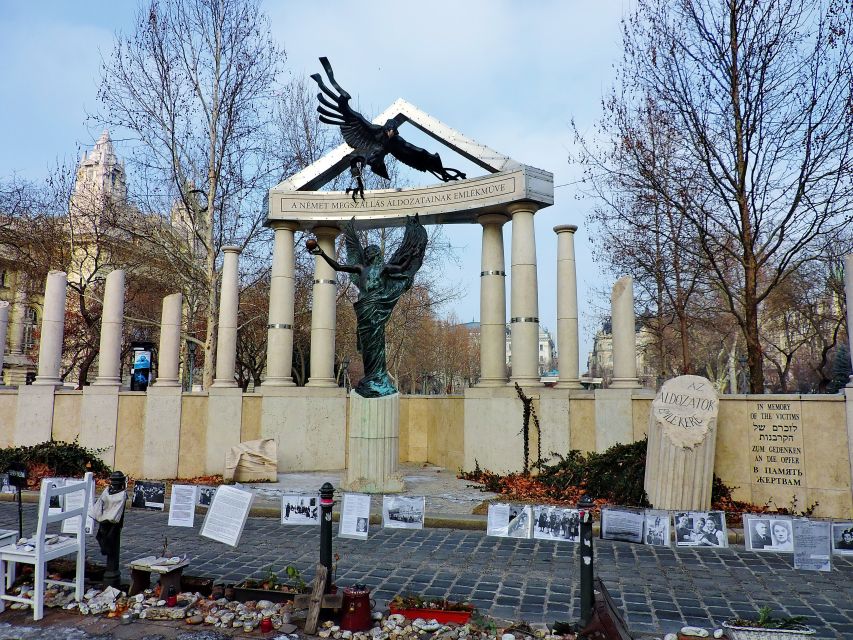
The core of the tour is a guided walk through Pest where you’ll spot reminders of the period. The guide shows you where the Communists took hold, how rule played out, and what Hungary carried forward after the system began to unravel.
You’re not just told what happened. You’re shown how ideology and power shape public space. That can include monuments and central squares, plus smaller street details the city keeps in plain sight. It’s also where the guide’s family storytelling becomes most powerful, because you hear how people described everyday life under the system.
This is also where the time jumps make sense. The tour links WW2 to the post-war transition, then brings you through 1956, and onward to 1989 and the early 90s. That sequence is important because it prevents the classic mistake of treating Communism like a single block of time, instead of something that changed in practice.
If you’re sensitive to political topics, you might still appreciate the tone. Several guides on this route are known for inviting discussion and answering questions, so you can steer your curiosity without feeling lectured.
The Guide Matters: Stories from Guides Like Judith, Greg, and Zsuzsanna
This tour’s biggest strength is the guide, and you’ll feel it quickly. People often point to a style that mixes calm explanation with real personal perspective. Names that come up in past tours include Judith, Zsuzsanna, Greg, Monica, Gergely, Virág, and Dániel, each bringing their own way of telling the story.
For example, some guides focus on giving Communist-era context so you can decode what you’re seeing. Others add a personal lens, including memories shared by family and friends, or experiences from their own upbringing. One guide even worked history into the present with discussion about how symbols and statues still get interpreted differently today.
That variety is a plus. It means you’re not getting a scripted slideshow that sounds the same in every city block. You get a narrative shaped by how a Hungarian guide understands the topic.
Practical tip: bring your questions. The tour is designed to welcome them, so if something feels confusing, ask right away while you’re standing next to the clue.
More Walking Tours in Budapest:
- Budapest: Buda Castle Walk with Saint Stephen’s Hall
★ 4.5 · 3,012 reviews - Big Bus Budapest Hop-On Hop-Off Bus and Walking Tour
★ 3.5 · 2,206 reviews - Budapest: Buda Castle District Walking Tour
★ 4.6 · 2,108 reviews - Budapest City Landmarks Walking Tour in 2 Hours
★ 5.0 · 2,048 reviews
Riding the Red M2 Subway, and Why That Stop Feels Smart
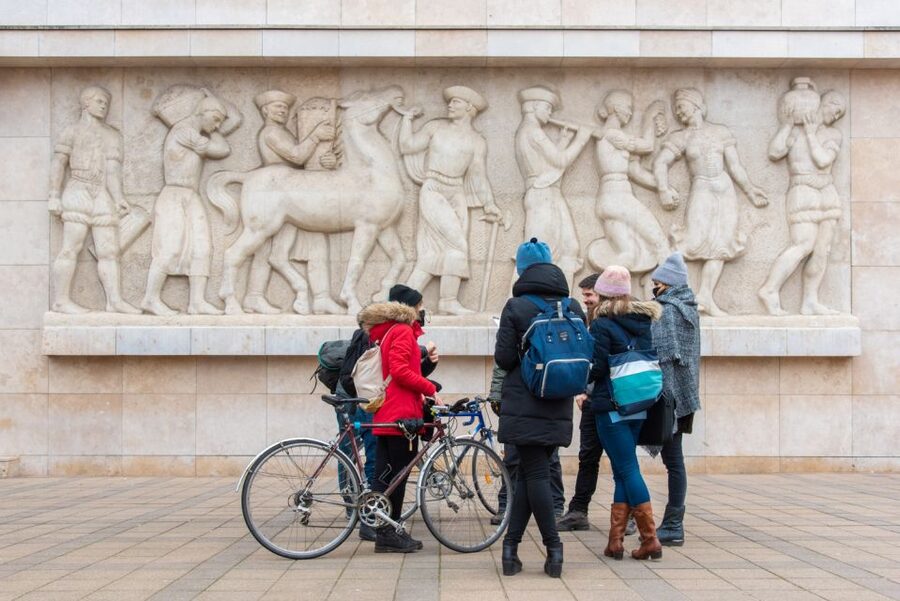
One of the more memorable parts is the included ride on the red subway, line M2. It’s not just transportation. It acts like a moving classroom, cutting across the city while the guide continues the story.
This matters because Communism was not just political policy. It was also about how people moved, where they lived, what systems controlled daily rhythm, and what the state emphasized. Taking the subway while you learn gives you a physical sense of how public life functions.
From a logistics standpoint, it also breaks up a walking-heavy 3-hour experience. Even if you’re comfortable on foot, you’ll probably welcome a short ride where you can pause, listen, and look out through subway windows.
If you don’t like public transit, you might still be fine here since the subway time is part of the tour design, not an extra chore you must plan yourself.
The 1961 Café Stop: Retro Atmosphere and Real Talk
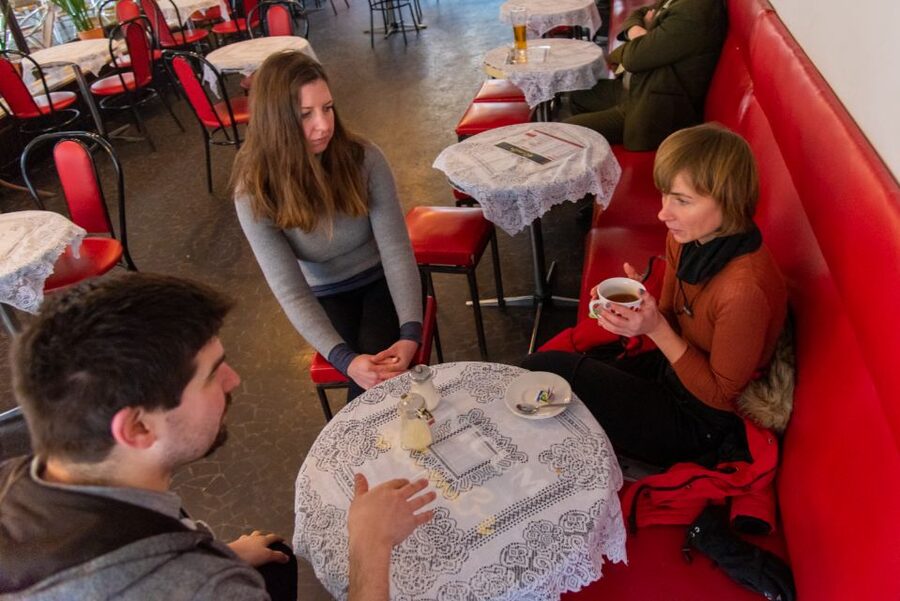
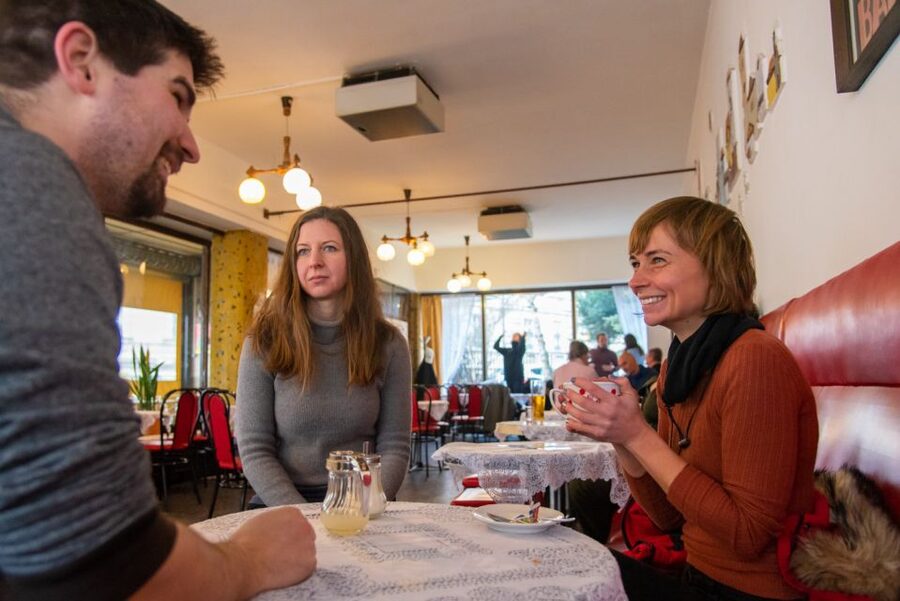
The tour ends with a drink in a retro café that has changed very little since its opening in 1961. This is one of the highlights for a reason: it shifts the tone from street reminders to personal reflection.
You’re still in the theme. The guide uses the relaxed setting to connect the past to lived experience, often through family anecdotes and small everyday moments from the period. That café break also gives you space to ask follow-up questions you might not want to ask while standing outside in the cold or while walking.
I like this kind of stop because it works on two levels. First, it’s a cultural experience on its own, not just a reward at the end. Second, it matches the tour’s promise: understand Communism through people, not only through ideology.
A minor consideration: café time can be a slower pace than the walking portion. If you prefer non-stop movement, you may want to mentally switch gears once you arrive.
Price and Value: What $57 Gets You in Real Terms
At $57 per person for 3 hours, the value comes from three bundled pieces: a historian-led guide, a drink at a retro café, and a subway ticket.
If you tried to assemble this yourself, you’d likely pay for a guiding hour or two, then still need to figure out route logic and pay for transit separately. Here, the structure is designed for learning, not just sightseeing. You start in a specific meeting area, you walk through the right parts of Pest, and you finish with a themed stop.
The small group size, limited to 10 participants, is also part of the pricing logic. In a larger group, you’d get the same narration but fewer real conversations. With a smaller group, the tour can stay interactive, which is repeatedly reflected in how guides handle questions.
So the real question is fit: if you care about politics, daily life under socialism, and how history is visible on a modern city street, the price feels fair. If you’re here mainly for architecture and river views, you might decide this time could be better spent on a different type of tour.
What You Learn, Beyond the Facts
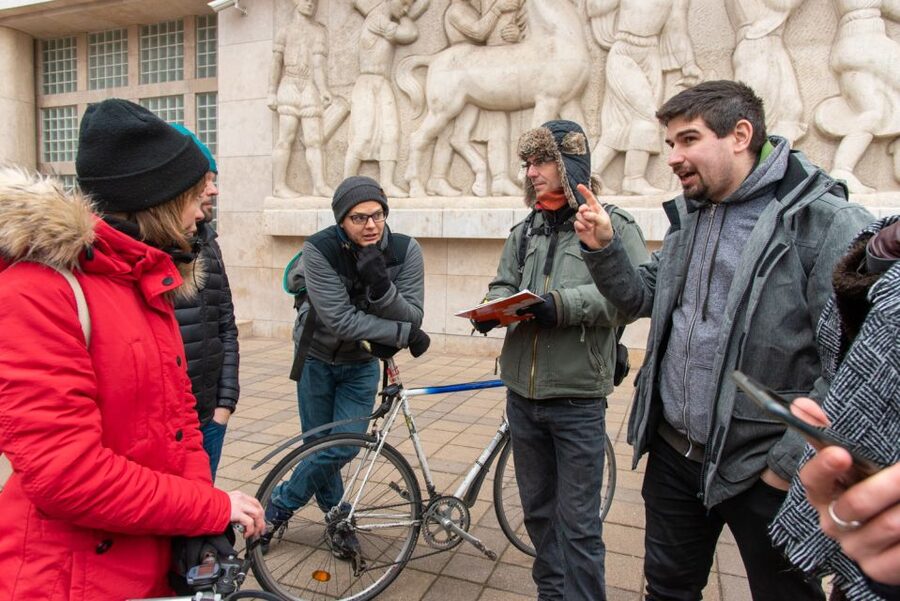
This isn’t only about learning when things happened. It’s about understanding why Communism had staying power and why it left complicated legacies.
You’ll hear the story of Communist arrival and rule, then how Hungary navigated shifts from harsh control toward softer forms of socialism, and finally how change accelerated around 1989 and the early 90s. Along the way, guides bring in real-world topics such as everyday life, politics, and how institutions like church and media fit into the system.
One of the smartest things about the format is that it keeps coming back to context. When you see a symbol, you understand the emotions and meanings behind it. When you pass a remnant, you understand what it represented to people at the time and how it is read now.
That kind of learning is exactly what makes this tour feel different from a standard guided walk. It gives you a lens, so Budapest starts to explain itself as you move around independently later.
Who Should Book This Communism Walking Tour
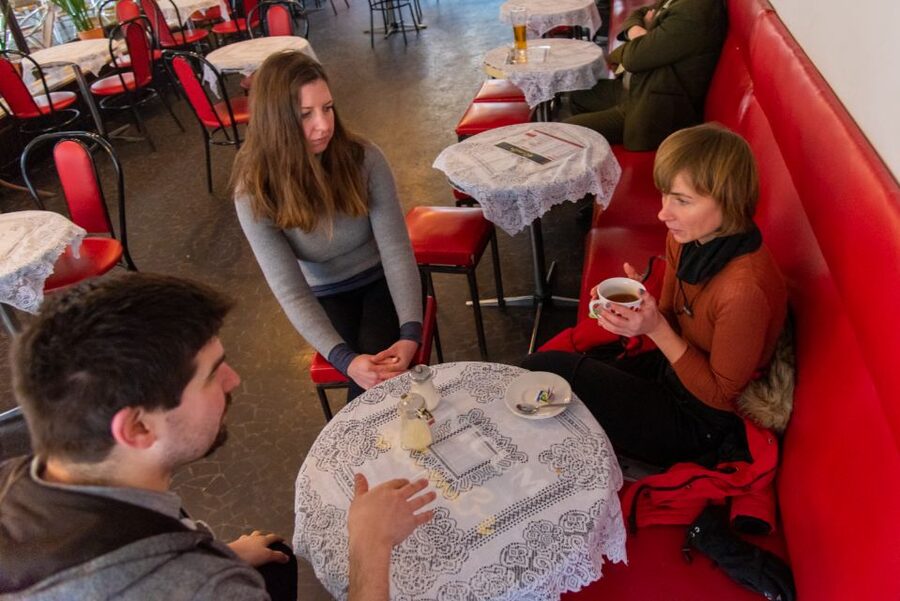
I think this tour is a strong match if you:
- Want a focused topic, Communism in Hungary, explained with context
- Enjoy asking questions and having a dialogue, not just listening
- Like history that shows up in real street details, monuments, and public spaces
- Are the type of traveler who appreciates a guided discussion stop at the end
You might want to skip it if you:
- Want a lighter, purely scenic itinerary
- Dislike political themes and the tensions around war, 1956, and the Cold War
- Expect an all-day museum style deep study, because this is still a 3-hour walk
For most people, though, it hits a sweet spot. It’s long enough to build a full story, but short enough to fit neatly into your Budapest schedule.
Should You Book This Budapest Communism Walking Tour?
If you’re curious about why Hungary feels the way it does today, this tour is an efficient way to get under the surface. The combination of historian-led explanation, family stories, and real city leftovers makes it easier to understand what you see outside the tour window.
I’d book it if you want your Budapest to have a backbone. Not just postcard scenes, but the reasons behind them. And if you care about meaningful discussion, this small-group setup gives you a better chance to actually talk.
If you’re unsure, use this rule of thumb: if the words Communism, 1956, and 1989 make you lean in rather than tune out, you’ll likely enjoy the experience.
FAQ
Where is the meeting point?
You meet in front of Kempinski Hotel Corvinus Budapest, facing the Ferris wheel on Erzsébet square.
Where does the walking part begin?
After meeting, the walk starts through Pest, with the start on the main square of Pest, Deák tér.
How long is the tour?
The tour lasts about 3 hours.
Is this a small group tour?
Yes. It is limited to 10 participants.
What is included in the price?
The tour includes an expert guide, a drink in a retro café, and a transportation ticket for the subway.
Does the tour include public transit?
Yes. You ride the red subway line M2 as part of the experience.
What language is the tour in?
The live tour guide speaks English.
What are the cancellation and payment options?
You can cancel up to 24 hours in advance for a full refund. You can also reserve now and pay later.
Latest to land in Budapest
- Visegrád Hike & Castle Tour with Ferry from Budapest★ 4.6 · 3 reviews
- Budapest: Vacation Photographer to collect great memories★ 5.0 · 49 reviews
- Trash Art Museum: Hungary’s First Scrap Metal Exhibition★ 4.3 · 72 reviews
- True Crime Walking Tour in the Buda Castle district★ 5.0 · 26 reviews
- Budapest: 3-Hour Trabant Sightseeing Tour★ 4.7 · 28 reviews
- Audio visual multi-sensory chefs journey dinner experience★ 5.0 · 3 reviews
- Private Szentendre and Vac Tour from Budapest with Transport★ 5.0 · 3 reviews
- Wine Tasting in the Countryside from Budapest★ 5.0 · 14 reviews
Communist History Tours, compared.
Communist History Tour with House of Terror Option
Read our review →

Memento Park Visit with Private Trabant Transfer
Read our review →
Browse the lists this tour appears in