
Reviewed · HISTORICAL TOURS
Classic Walk in Budapest Historical Center
Two hours, and Pest feels navigable. I like the low price for a guided circuit that pulls you along Váci Street, across the Danube views, and through the key sights of Pest. You also get history context for major Hungarian events, so the landmarks connect fast.
The walk runs as a small group (up to 30), with guides described as keeping the pace comfortable, including shade checks and time for questions. One caution: a previous participant felt the stops were long and the explanations could have been tighter, so if you prefer moving more than lingering, keep that in mind. Still, it is set up to help you get your bearings quickly across central Budapest.
In This Review
- Key highlights at a glance
- Why this Pest walking loop fits first-time Budapest days
- Starting at Molnár’s kürtőskalács and stepping into Váci Street
- Quick tip for this first block
- Pesti Vigadó and the Danube, where the views do the talking
- Why the Danube segment is worth your time
- The pedestrian-street end, pastries and café terrace energy
- If you like food breaks
- Elizabeth Square: a park crossing, Danube Fountain, and the ferris wheel area
- What I like about this stop
- St. Stephen’s Basilica: big views, symbolism, and no ticket pressure
- Who will enjoy this stop most
- Szabadság tér and Kossuth Lajos Square: monuments that make history physical
- A balanced way to handle emotionally heavy stops
- Hungarian Parliament Building: finishing at the symbolic center of Pest
- Price and value: why $3.60 can work as a smart investment
- What is not included, so you are not surprised later
- Group size, pacing, and what to expect from the guide style
- Practical advice for you before you go
- Should you book Classic Walk in Budapest Historical Center?
- FAQ
- How long is the Classic Walk in Budapest Historical Center?
- How much does it cost per person?
- Is the tour offered in English?
- What is the group size limit?
- Where does the tour start?
- Where does the tour end?
- Is a mobile ticket provided?
- Is entry to churches or museums included?
- What is the cancellation policy?
Key highlights at a glance
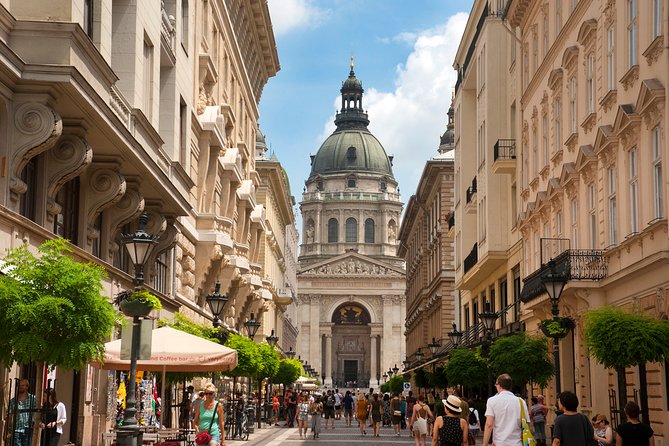
- Váci Street first, so you start in Budapest’s classic pedestrian shopping mood
- Danube views with major landmarks across the water, plus a big-photo payoff
- Pesti Vigadó in Hungarian Romantic style from the 1860s, seen up close along the walk
- Elizabeth Square break with the Danube Fountain monument and the giant ferris wheel area
- Basilica storytelling outside museum entry since church entry is not included
- Political history stops that connect occupation, revolution, and freedom heroes to place
Why this Pest walking loop fits first-time Budapest days
If you only have a morning or afternoon to get oriented, this route makes sense. In about two hours, you cover the Pest-side essentials, from the shopping street to the Danube to the big political symbols at the river’s edge.
What makes it more than just a sightseeing stroll is the mix of practical landmark viewing plus historical framing. Instead of seeing buildings as wallpaper, you hear how major events tie to what you are looking at, especially around the occupation and 1956 revolution.
And yes, the price is low enough that it feels like a smart “starter layer” for your Budapest trip. You are paying for live guiding and context, not for museum tickets.
More History Tours in Budapest:
- Budapest: Historic Cruise with Welcome Drink
★ 4.7 · 6,512 reviews - Budapest Historical Sightseeing – Free Walking Tour
★ 5.0 · 1,302 reviews - Buda Castle District Dark History, Legends and Vampire Night Tour
★ 4.5 · 1,240 reviews
Starting at Molnár’s kürtőskalács and stepping into Váci Street
The tour begins at Molnár’s kürtőskalács, on Váci u 31. That is a fun way to start, because you immediately land on the busy, tourist-recognizable street energy of the Hungarian capital.
From there you head straight into Váci Street, the famous pedestrian shopping stretch. You get atmosphere right away, street views, storefronts, and the sense of place that makes Budapest feel like a city, not a postcard.
The stop is short, about 5 minutes, so it is not a long hangout. It is more like a warm-up, and it helps you orient your walking direction before the riverfront opens up.
Quick tip for this first block
Wear shoes you can do a lot in. Even with an “approx.” two hours, you will cover enough ground that you will be glad your feet are happy.
Pesti Vigadó and the Danube, where the views do the talking
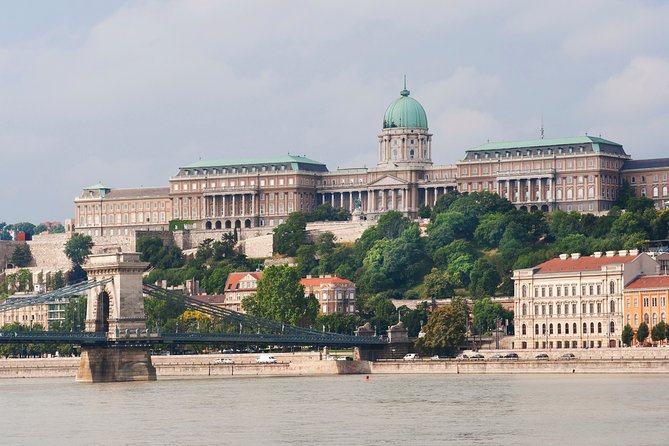
After Váci Street, you reach the Danube area and the famous perspective people chase in Budapest: the Blue Danube with big landmarks across the water. The river view you get is framed by the historical bridges and Buda Castle on the opposite side, and it is exactly the kind of urban panorama that works as a memory anchor for your trip.
Then the walk continues toward Pesti Vigadó, a striking building tied to Hungarian aristocratic culture. It was built in the 1860s in Hungarian Romantic style, and you see it on your way as a key cultural stop along the riverfront.
This is a great moment for a few reasons:
- It breaks up the walking with a dramatic visual pause.
- It gives you a “why this matters” story, not just a name on a map.
- It shows how Pest’s riverfront evolved as a cultural stage.
Admission at this stop is not included, so you are likely looking from the outside as part of the guided loop. Still, the building’s presence is the point.
More Walking Tours in Budapest:
- Budapest: Buda Castle Walk with Saint Stephen’s Hall
★ 4.5 · 3,012 reviews - Big Bus Budapest Hop-On Hop-Off Bus and Walking Tour
★ 3.5 · 2,206 reviews - Budapest: Buda Castle District Walking Tour
★ 4.6 · 2,108 reviews - Budapest City Landmarks Walking Tour in 2 Hours
★ 5.0 · 2,048 reviews
Why the Danube segment is worth your time
A lot of people come to Budapest and focus on one bank or one monument. Here, the route forces both: you look at the riverfront scene and then you keep moving inland toward the political and historical center. That rhythm helps everything click.
The pedestrian-street end, pastries and café terrace energy
As you reach the end of the pedestrian street, you are guided into a more relaxed vibe. This area is known for pastry shops and café terraces, which is a big part of why Váci Street is more than just a shopping corridor.
The tour keeps this part brief, about 5 minutes, so it is not meant to turn into a meal stop. But it is a useful moment to spot where you might want to return later for something sweet or a cold drink.
If you like food breaks
If you want to add a snack, I suggest doing it after you finish the guided walk. That way you get your bearings first, then you pick a café with confidence instead of choosing randomly while hungry.
Elizabeth Square: a park crossing, Danube Fountain, and the ferris wheel area
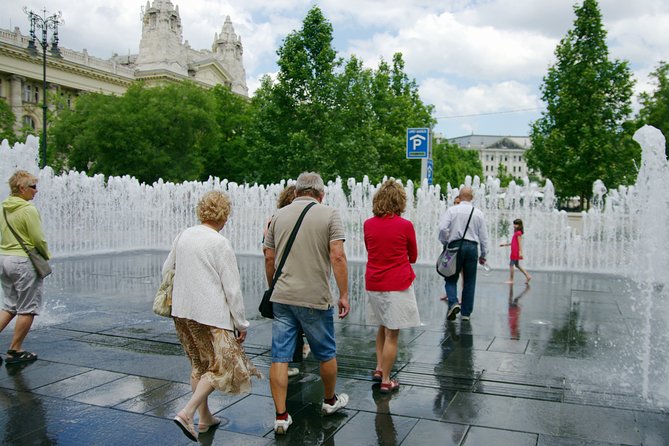
Next comes Elizabeth Square, where you cross a park and move into a wide-open civic space. This is where the route gives your feet a little change in scenery.
You spend about 15 minutes exploring the area around the Danube Fountain monument and the giant ferris wheel nearby. The ferris wheel is one of those landmarks you will notice later even when you are walking other neighborhoods, and seeing it early helps you picture the city layout.
What I like about this stop
It is a change of pace from architecture and monuments. You get a more open, “city square” feel, plus a hint of the entertainment side of Pest without losing the historical tone of the overall walk.
St. Stephen’s Basilica: big views, symbolism, and no ticket pressure
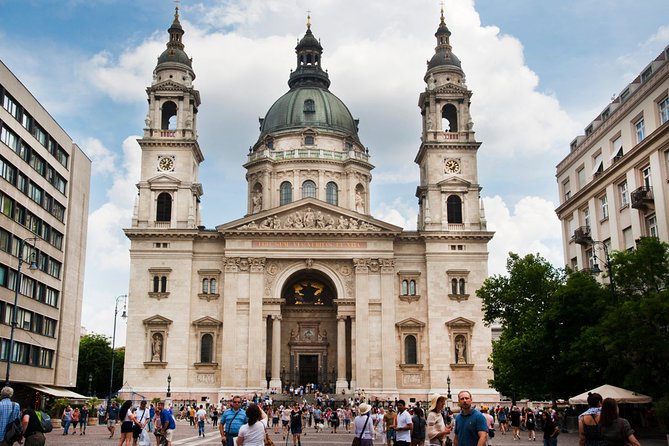
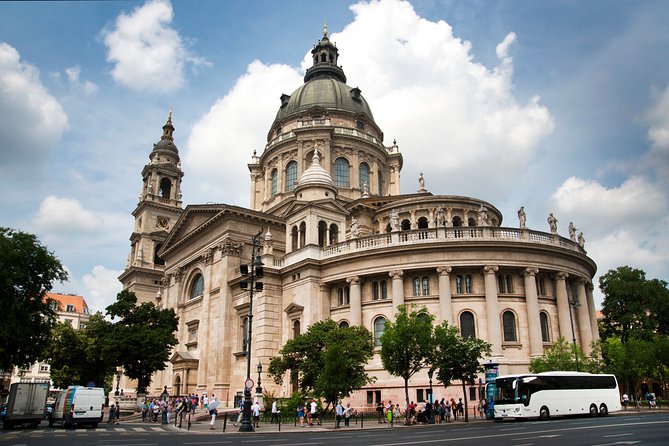
Then you reach St. Stephen’s Basilica (Szent Istvan Bazilika), a sight that practically demands a pause. The stop is about 20 minutes, which is enough time to see the building well and hear how its design and symbolism connect to Hungarian identity.
Here is the key practical point: entry is not included. So you should expect the guide to focus on what you can see from outside and the historical meaning tied to the basilica.
That trade-off can be a plus. If you are short on time, you still get the story and the visual impact without spending extra time dealing with queues and separate tickets. If you do want inside access, plan that as a separate add-on later.
Who will enjoy this stop most
If you like architecture but you hate rushing, this is a sweet spot. The time window supports a calm look, and the guide narrative helps you recognize what you are seeing.
Szabadság tér and Kossuth Lajos Square: monuments that make history physical
Now the tour turns from impressive buildings to hard questions, and it does it in the right order. These stops are about remembering what happened here, not about collecting Instagram angles.
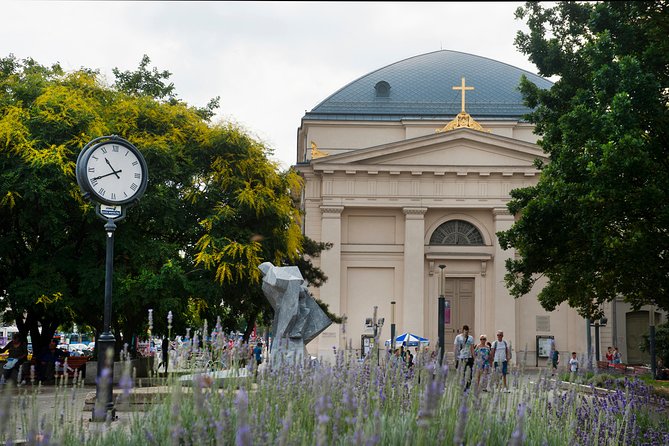
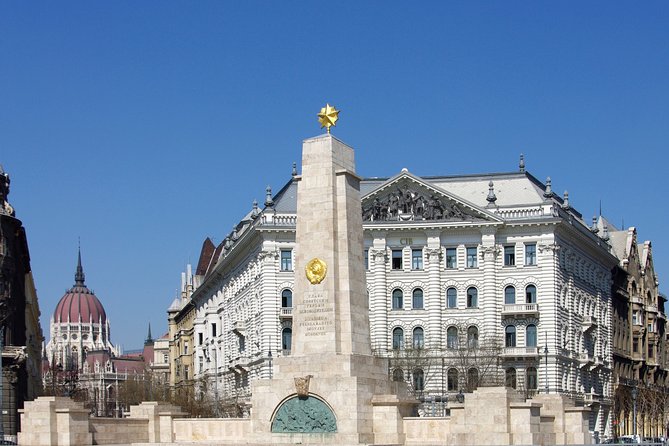
At Szabadsag ter, you see dramatic monuments connected to the Nazi and Soviet occupations and the dictatorships tied to them. During warm season, there is also a miraculous fountain feature nearby, which can add a more lively atmosphere when the weather cooperates.
You spend about 25 minutes here, and that extra time matters. It signals that the guide is not trying to skim over the meaning. This is the area where the historical context becomes more than background.
Then you move to Kossuth Lajos Square, around 15 minutes. This is where the tour spotlights the memories of Hungarian freedom heroes and the 1956 revolution against the Communist dictatorship. This is one of those places where you can feel how political history shaped the streets, not just the textbooks.
A balanced way to handle emotionally heavy stops
If you prefer lighter sightseeing, you might feel these moments more intensely than the earlier riverfront. My advice: let the guide finish the point, then ask one question. A good question turns heavy history into something you can carry.
Also, pace yourself. The route is doable, but it helps to not force your brain to stay in “sprinting mode” through every monument.
Hungarian Parliament Building: finishing at the symbolic center of Pest
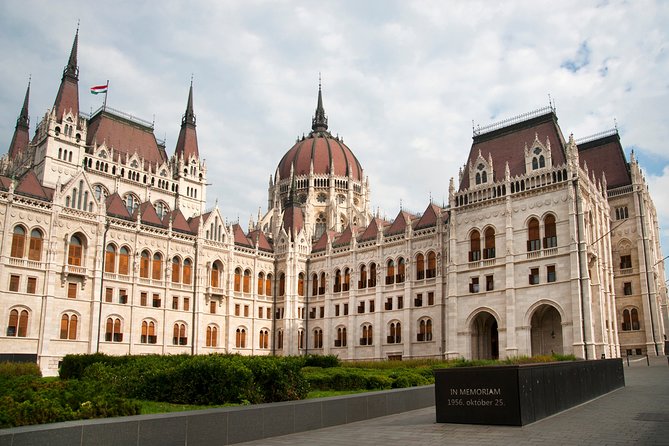
The final big visual is the Hungarian Parliament Building, one of the most recognizable buildings in Budapest. You are shown the grand structure and hear its history and significance, with a short stop around 10 minutes.
As with the basilica, admission at this stop is not included, so you are not relying on entry to make the experience pay off. The building’s exterior and the guide story are the main event.
Ending here makes practical sense. You finish at Kossuth Lajos tér 1-3, right at a major transport and sightseeing hub. That is perfect if you want to keep exploring right away, whether that means crossing to other parts of the city or mapping out your next museum visit.
Price and value: why $3.60 can work as a smart investment
At $3.60 per person for an approx. two-hour live guided walk, the value is unusually strong. You are not buying a ticket to enter multiple paid sites. You are paying for a guide to point out what to notice and to connect the landmarks to Hungarian historical events.
This kind of tour is most worth it when it does two things well:
- It gives you a clear route and timing so you do not waste energy wandering.
- It turns names into meaning so you remember what you saw.
That is exactly the vibe described by guides who adjust to your interests. One guide named Oliver was described as friendly and able to shape the walk around what people care about, including advice on where to eat and drink. That kind of personalization is hard to get with a self-guided audio tour.
What is not included, so you are not surprised later
Church and museum entry are not included. If you want to go inside the basilica or explore any interior areas, you should budget extra time and separate tickets.
Group size, pacing, and what to expect from the guide style
This tour caps at 30 travelers. That size is big enough that the route stays structured, but it is still small enough that you can ask questions without shouting over crowds.
About pacing, you should plan for a walking loop with several photo and explanation stops. A past participant felt the guide could have explained less and walked more, with some stops feeling too long. That is a reasonable caution, especially if you dislike standing still.
On the positive side, guides have been described as careful about comfort, including walking at a pace that works for everyone and checking shade. If you tend to get cranky in hot weather, that detail can matter more than you think.
Practical advice for you before you go
Here are the small things that make this kind of historic center walk smoother.
- Bring water. A two-hour walk can still feel like more if the weather is warm.
- Plan for a mix of sun and shade. The guide style can include shade checks, but the route still goes through open areas.
- Come with one question. History stops can be a lot. Asking one thing keeps you engaged.
- Keep shoes practical. Expect real pavement and some longer stretches between stops.
And if your goal is to “get oriented fast,” this route is designed for that. You leave with a mental map that connects riverfront sights to the political heart of Pest.
Should you book Classic Walk in Budapest Historical Center?
I would book it if you want a value-first way to see Pest highlights and connect them to Hungarian history in a short time. It is especially good for first-timers who want structure, and for anyone who likes guided context without paying for multiple museum entries.
I would think twice if you strongly prefer lots of walking and minimal stop time, because at least one person felt the pace leaned toward longer holding points. If that is you, go in with a strategy: ask questions early at each stop so you are actively participating, not waiting.
If you are deciding between wandering on your own and paying for guidance, this is a rare case where the guide is the main product and the price is low enough that you can try it with confidence. Finish at Parliament, then use the rest of your day to go deeper where you feel most curious.
FAQ
How long is the Classic Walk in Budapest Historical Center?
It runs for approximately 2 hours.
How much does it cost per person?
The price is $3.60 per person.
Is the tour offered in English?
Yes, it is offered in English.
What is the group size limit?
The tour has a maximum of 30 travelers.
Where does the tour start?
The tour starts at Molnár’s kürtőskalács, Váci u 31, 1052 Hungary.
Where does the tour end?
The tour ends at the Hungarian Parliament Building, Kossuth Lajos tér 1-3, 1055 Hungary.
Is a mobile ticket provided?
Yes, it includes a mobile ticket.
Is entry to churches or museums included?
No. Entry to church and museums is not included.
What is the cancellation policy?
You can cancel for a full refund up to 24 hours in advance of the experience start time.
Latest to land in Budapest
- Visegrád Hike & Castle Tour with Ferry from Budapest★ 4.6 · 3 reviews
- Budapest: Vacation Photographer to collect great memories★ 5.0 · 49 reviews
- Trash Art Museum: Hungary’s First Scrap Metal Exhibition★ 4.3 · 72 reviews
- True Crime Walking Tour in the Buda Castle district★ 5.0 · 26 reviews
- Budapest: 3-Hour Trabant Sightseeing Tour★ 4.7 · 28 reviews
- Audio visual multi-sensory chefs journey dinner experience★ 5.0 · 3 reviews
- Private Szentendre and Vac Tour from Budapest with Transport★ 5.0 · 3 reviews
- Wine Tasting in the Countryside from Budapest★ 5.0 · 14 reviews
Historical Tours, compared.

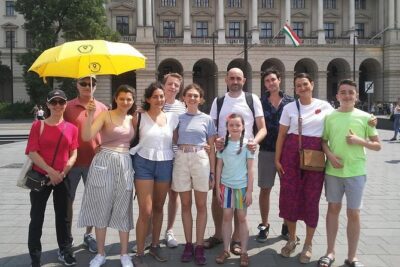
Budapest Historical Sightseeing – Free Walking Tour
Read our review →
Buda Castle District Dark History, Legends and Vampire Night Tour
Read our review →
BloodThirsty Hungary: Walking tour & Dark Historical Stories
Read our review →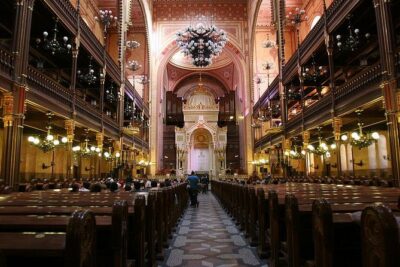
Budapest Jewish Heritage Memorial Walking Tour & Synagogue Entry
Read our review →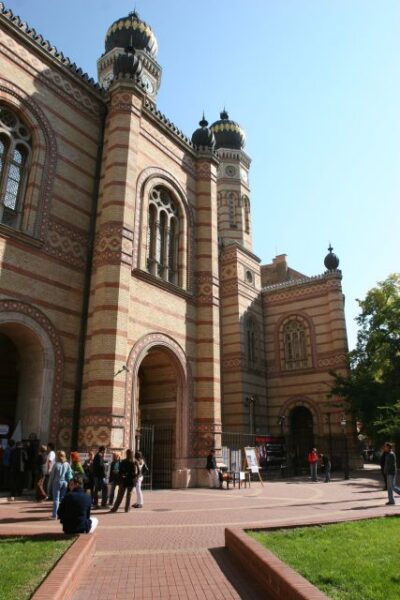
Jewish Heritage Guided Tour with Synagogue Ticket
Read our review →
Budapest Historic Downtown Bicycle Tour in small groups
Read our review →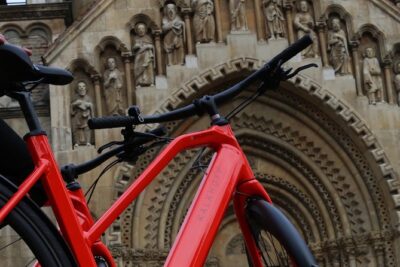
Historic Downtown ride on E-Bicycles Buda & Pest
Read our review →Browse the lists this tour appears in