
Reviewed · JEWISH HERITAGE TOURS
A Journey through Jewish Budapest – Walking Tour
Jewish Budapest hits differently when you walk it. This 3-hour tour connects the Jewish Quarter story to landmark buildings and memorials, from the Great Synagogue complex to the Shoes on the Danube Bank. You get a choice of morning or afternoon departures, and it is built for small groups, so you can actually ask questions instead of whispering them to the next person.
Two things I really like are the expert guidance and the tight route. You are led by a historian guide, and at the Great Synagogue stop you also get help from a Jewish Studies Scholar, which makes the architecture and community story easier to understand. The itinerary also stays focused, so you walk from active sights to sobering memory spots without feeling like a random hop-scotch.
One drawback to plan around: synagogue entry is not included. You will need tickets for the Dohány, Kazinczy, and Rumbach synagogue sites, and you should also come ready for the dress code (shoulders and knees covered at Dohány and Kazinczy).
In This Review
- Key highlights at a glance
- Why this Jewish Budapest walk fits so well into 3 hours
- The Dohány Street Great Synagogue complex, where the guide sets the scene
- Kazinczy Street Synagogue and the Ghetto Wall Memorial, where street-level memory takes over
- Rumbach Street Synagogue, plus the Status Quo Ante thread
- Shoes on the Danube Bank, the WWII memorial that ends the tour
- Price and tickets, what you are actually paying for
- Timing, meeting point, and how to not lose the group
- What to wear and what to bring for synagogue visits
- Who this tour is best for
- Should you book this Jewish Budapest walking tour?
- FAQ
- How long is the Journey through Jewish Budapest walking tour?
- What is the price per person?
- Is the tour offered in English?
- What is included in the tour price?
- Are tickets for the synagogues included?
- Is the Shoes on the Danube Bank admission included?
- Where do I meet the guide?
- Where does the tour end?
- Do I need special clothing for synagogue visits?
- What is the cancellation policy?
Key highlights at a glance
- Three synagogues, one connected story, plus the WWII memorial at the end
- Scholar-level context at the Great Synagogue complex
- Small group size (limited to six, with a maximum of eight)
- Real neighborhood details in the VII and VIII districts, including ghetto-memorial stops
- Shoes on the Danube Bank is free, so you can budget for the rest
Why this Jewish Budapest walk fits so well into 3 hours
Budapest can feel split in two, Buda on one side, Pest on the other. This tour uses that split on purpose. You start at the Great Synagogue area and then move through the Jewish neighborhood zone, often described in terms of the former Pest ghetto and the surrounding districts. In just about three hours, you get the sense of how Jewish life in this city could be both visible and vulnerable.
The route is also designed with pacing in mind. You spend time at each stop, roughly half an hour at the big anchor site and shorter blocks at the others. That matters because synagogues and memorials are not just photo stops. You need a guide to help you read what you are seeing, especially when the story turns from daily life and culture into mass tragedy.
And since this is a small group, you get the benefit of a guided conversation. I like that because Jewish history here is not one single topic. It is architecture, community institutions, shifting eras, and the fact that memory is literally built into the streets and walls you walk past.
More Jewish heritage walks:
- Budapest Jewish Heritage Memorial Walking Tour & Synagogue Entry
★ 5.0 · 568 reviews - Budapest: Jewish Heritage Guided Tour with Synagogue Ticket
★ 4.8 · 533 reviews - German tour in the Budapest city centre & the Jewish quarter
★ 5.0 · 359 reviews
The Dohány Street Great Synagogue complex, where the guide sets the scene
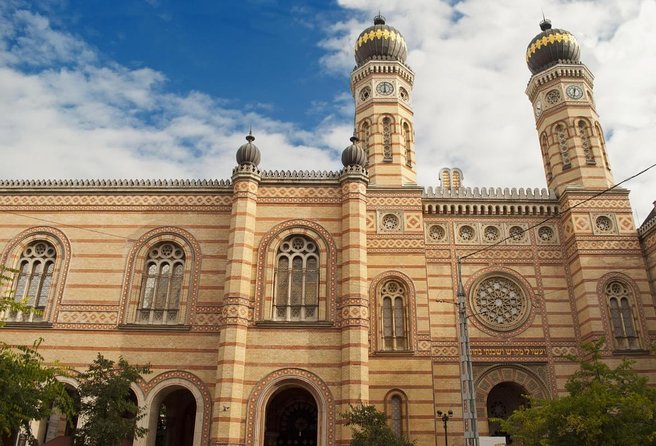
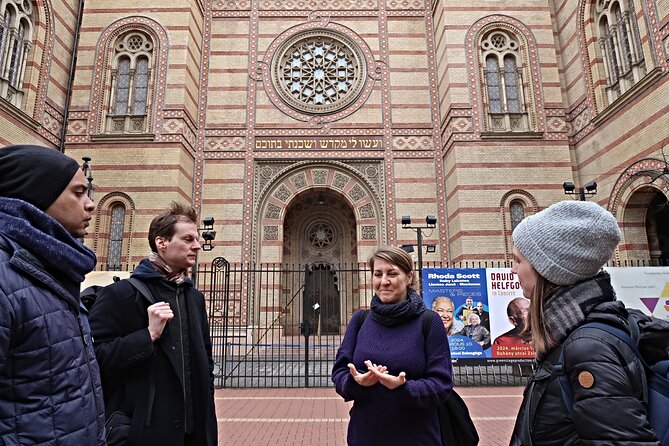
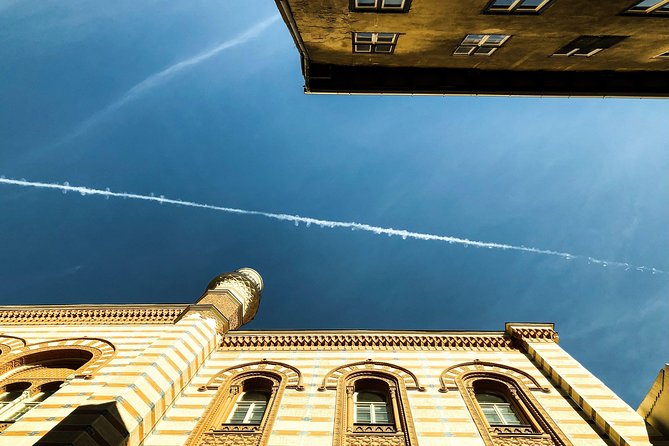
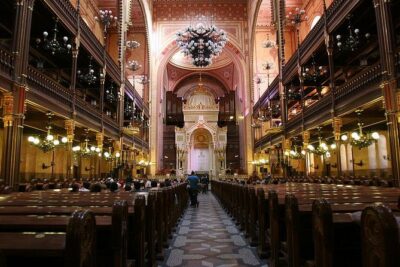
Your first stop is the Great or Central Synagogue, also known as Nagy Zsinagóga, in the Dohány Synagogue complex. This is the kind of place you could rush through, take a few pictures, and walk away with little. The tour is built to prevent that.
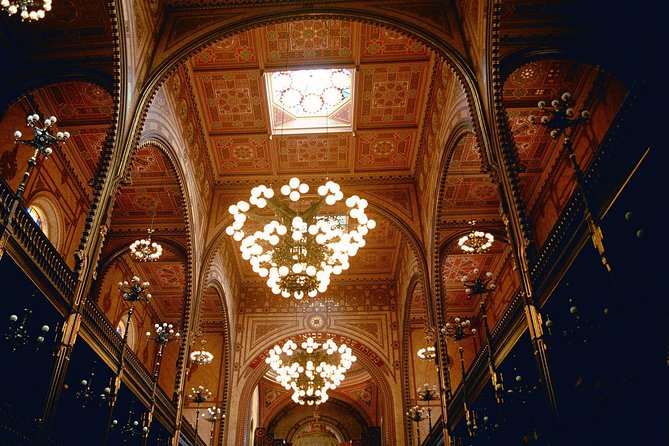
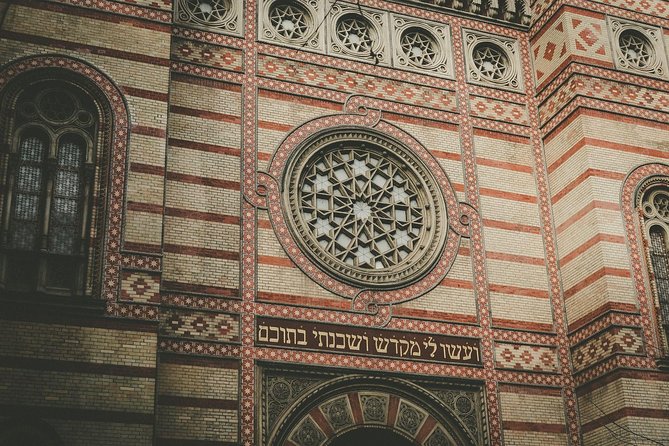
You get help from a Jewish Studies Scholar while you explore the Dohány Street Synagogue, described as the largest temple in Europe and known for its Moorish Revival style. Moorish Revival is not just a label. Your guide should point out what that style is doing here, and how the building communicates identity and presence in the city.
Then you move through key parts of the complex: the Temple of Heroes, the Jewish Museum, and the Memorial Park. Even if you only take in the highlights in one tour window, these sections help you understand that the synagogue is more than a prayer space. It is also a cultural and historical hub.
One practical note: the tour includes the experience of being there, but admission tickets are not included. Plan to buy or handle entry separately for this complex area. In exchange, you are not wasting time trying to figure out what is worth your ticket and what is just scenery.
If you like this kind of structured start, you are in the right place. One of the strongest recurring themes in real-world feedback is that the best part is exactly this combination: the synagogue setting plus a guide who knows how to explain what it means.
Kazinczy Street Synagogue and the Ghetto Wall Memorial, where street-level memory takes over
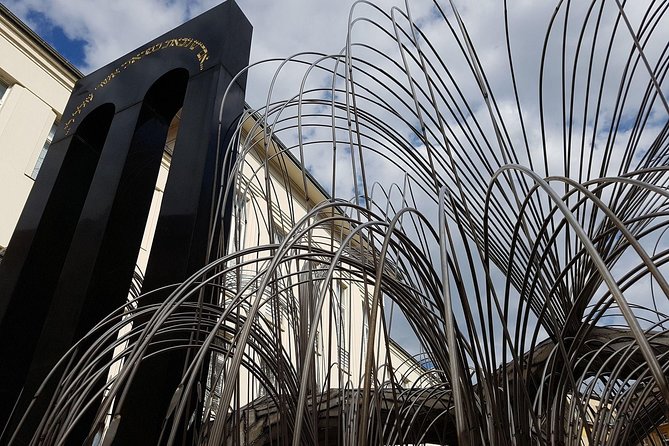
After the Great Synagogue complex, you keep walking into the Jewish neighborhood area. Stop two is the Kazinczy Street Synagogue, and the approach is part of the lesson. You walk to the Ghetto Wall Memorial, erected in 2014, before you reach the synagogue itself.
I like this segment because it turns history into something physical. You are not just hearing about the past in the abstract. You are seeing memorial design choices placed right where you can reach them on foot. That makes the story easier to hold in your head as you continue.
You will also pass a luxurious Mikve, meaning a Jewish ritual bath. That is a small detail that helps the tour feel grounded in daily life. It is easy to think of Jewish history only in terms of major events. This stop nudges you back toward practice, community spaces, and how people marked life through ritual.
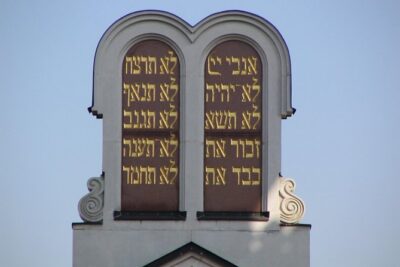
Then you reach an Art Nouveau orthodox synagogue on Kazinczy Street. When it is open to the public, the tour visits the interior. That open-to-the-public detail is important. If you are the kind of person who hates uncertainty, this is the one part where you might feel a little dependent on timing and opening hours.
Still, this is the sweet spot for understanding how architecture and community meet. One thing I appreciated from the guide-driven experiences people described is that the tour does not treat these places as standalone monuments. It connects them to the VII and VIII districts and to the former ghetto area you are walking through.
Rumbach Street Synagogue, plus the Status Quo Ante thread
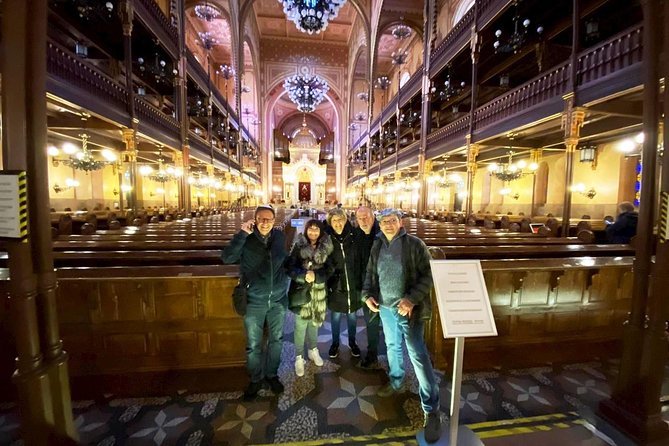
Stop three is the Rumbach Street Synagogue. Here the tour shifts focus a bit, from landmark scale to a more specific religious tradition thread. Your guide explains the history of the Status Quo Ante stream of Judaism while you observe the synagogue.
That might sound like a niche term, but you do not need to know it ahead of time. This stop works best because it gives you a lens for how different communities and traditions can exist side by side, even when they share a neighborhood. It is another reminder that Jewish life was not monolithic, and Budapest’s Jewish community had internal variety.
As with Kazinczy, you visit the interior only when the synagogue is open to the public. Admission tickets are not included for this stop either, so you should expect separate entry handling.
The practical value of this stop is that it fills in the “people and ideas” side of the story. If you only saw one style of synagogue and one story of community, you would miss the full picture. This part gives you more texture, especially if you care about religious history and how communities organize.
More Walking Tours in Budapest:
- Budapest: Buda Castle Walk with Saint Stephen’s Hall
★ 4.5 · 3,012 reviews - Big Bus Budapest Hop-On Hop-Off Bus and Walking Tour
★ 3.5 · 2,206 reviews - Budapest: Buda Castle District Walking Tour
★ 4.6 · 2,108 reviews - Budapest City Landmarks Walking Tour in 2 Hours
★ 5.0 · 2,048 reviews
Shoes on the Danube Bank, the WWII memorial that ends the tour
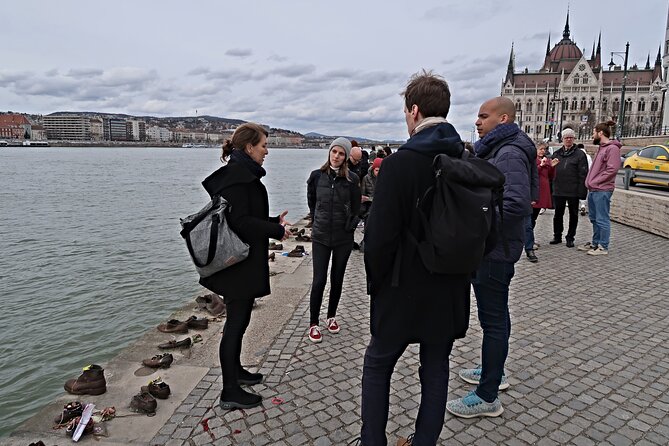
The tour ends at the Shoes on the Danube Bank memorial, which is free. This is stop four, and it is intentionally the last word on the emotional scale of the walk.
The memorial, erected on April 16, 2005, honors Jews massacred there during WWII. The story presented here is that people were ordered to take off their shoes, then were shot at the edge of the water so their bodies fell into the river. The installation represents their shoes left behind on the bank.
This part is not about sightseeing. It is about witnessing and remembrance. I recommend giving yourself a few minutes of real attention, not just a quick look for photos. The guide’s job here is especially important because you need context to understand what you are seeing, and where the memory lands.
Since the memorial is at the end, you also finish with a moment that makes the previous stops feel heavier. You have already walked through places of worship, education, and community space. Then you land at a memorial tied to persecution. It is a hard arc, but it helps the whole route make sense.
Price and tickets, what you are actually paying for
At $126.16 per person, this is not a “cheap and cheerful” stroll. You are paying for a 3-hour guided walking tour with a historian guide, plus access to the guided experience across multiple key stops.
Here is the value equation I see. You are getting a guide who can connect architecture, community institutions, and neighborhood geography into one timeline you can track while you walk. You are also getting a small-group format, and at the first synagogue you get extra scholarly support. That is the kind of labor that usually costs more when you try to do it on your own through random audio guides.
But you must budget for tickets. Admission is not included for the Dohány, Rumbach Street, and Kazinczy Street synagogues, and the shoes memorial is free. This means your final cost may be higher than the headline price once you add entry.
If you want to make it easy on yourself, plan this way:
- Assume you will pay for synagogue entry separately
- Wear clothing that meets the dress code (shoulders and knees covered for Dohány and Kazinczy)
- Bring some cash or card you can use for ticketing at the sites, depending on how entry is handled on the day
Also consider demand. The tour is commonly booked in advance, averaging about 49 days ahead. If you are traveling during peak season, it makes sense to reserve early so you do not get stuck with an awkward schedule.
Timing, meeting point, and how to not lose the group
Meet-up is at Kamara Café in Budapest, at Dohány u. 1b (the pickup note places you at Dohány u. 1a). The cafe is right opposite the Great Synagogue, which is a huge help for orientation. Start time is listed at 10:00 am for the provided schedule, and you should have an option for morning or afternoon departures.
After booking, you should receive your guide’s photo, phone number, and bio. I like this detail because in a foreign city, the fastest way to stress less is simple identification. You can find the right person quickly and get moving.
The tour is near public transportation, which makes it easier to combine with other sightseeing plans. And because the route is walking-based, you should come ready for a steady pace for a few hours. It is not described as an all-day outing, so you should treat it as a main activity block in your itinerary.
One small logistical point: the tour is limited to a maximum of eight travelers, and the highlight says it is limited to six people. Either way, it stays intimate. That is good for questions and group attention, but it also means you should show up on time so the whole schedule stays smooth.
What to wear and what to bring for synagogue visits
You have one clear dress requirement: visitors to the Dohány and Kazinczy synagogues are requested to have their shoulders and knees covered. That affects what you pack, especially in warm weather.
For footwear, you are on a walking tour for about three hours, ending at the riverbank memorial. Choose comfortable shoes you would wear for a city walk, not a day-trip sprint. If your feet usually complain after an hour, swap your plan. Trust me on this one.
Also bring your mobile ticket. It is listed as a mobile ticket experience, and that tends to reduce friction at check-in points.
Food and drinks are not included. You can grab something before you start, or plan a post-tour snack nearby. One of the memorable things people have described is that their guide shared culinary recommendations, including the flodni cake. That is the kind of tip you will only get when a guide is paying attention to the neighborhood, not just reciting facts.
Who this tour is best for
This is a great fit if you want Jewish Budapest with real structure. If you are the type who likes to connect buildings to stories, this works well because each stop is a specific place with a specific meaning, not just a “look around” loop.
It is also a good choice if you like small-group learning. With a maximum of eight people, you get a more personal experience than the large-bus style tours.
You should consider something else if you hate emotionally heavy sites. Shoes on the Danube Bank is free, but it is also confronting. The tour includes WWII massacre remembrance, and it is not sanitized.
If you want a guide who can handle sensitive topics with care and clarity, this tour has strong evidence from guide feedback. Named guides included Orsolya, Veronika, Agi, and Endre in past experiences, and multiple people emphasized that the guides brought the stories to life and were highly intelligent and attentive.
Should you book this Jewish Budapest walking tour?
I think you should book it if you want a guided route through key Jewish landmarks in Budapest’s center, and you do not want to spend your time piecing together what to see and why it matters. The small-group format, the historian guidance, and the scholar support at the Great Synagogue complex give you a solid payoff for the time spent.
I would only hesitate if you:
- Are not willing to follow synagogue dress guidance
- Do not want to manage separate admission tickets
- Prefer a lighter sightseeing pace and would rather avoid WWII-linked memorial context
If those are not deal-breakers, this is one of the most efficient ways to understand Jewish Budapest in a single half-day block, while still ending at the Shoes on the Danube Bank where the walk turns into memory.
FAQ
How long is the Journey through Jewish Budapest walking tour?
It runs for about 3 hours.
What is the price per person?
The price is $126.16 per person.
Is the tour offered in English?
Yes, the tour is offered in English.
What is included in the tour price?
You get a 3-hour guided walking tour and a historian guide.
Are tickets for the synagogues included?
No. Tickets for the Dohány Synagogue, Rumbach Street Synagogue, and Kazinczy Street Synagogue are not included.
Is the Shoes on the Danube Bank admission included?
Yes, the memorial stop is free.
Where do I meet the guide?
You meet at Kamara Café, Dohány u. 1b (pickup is noted at Dohány u. 1a). It is opposite the Great Synagogue.
Where does the tour end?
The tour ends at the Shoes on the Danube Bank in Budapest (1054).
Do I need special clothing for synagogue visits?
Yes. Visitors to the Dohány and Kazinczy synagogues are requested to have their shoulders and knees covered.
What is the cancellation policy?
You can cancel for a full refund if you cancel at least 24 hours before the experience’s start time. Cancellation within 24 hours of the start time is not refunded.
Latest to land in Budapest
- Visegrád Hike & Castle Tour with Ferry from Budapest★ 4.6 · 3 reviews
- Budapest: Vacation Photographer to collect great memories★ 5.0 · 49 reviews
- Trash Art Museum: Hungary’s First Scrap Metal Exhibition★ 4.3 · 72 reviews
- True Crime Walking Tour in the Buda Castle district★ 5.0 · 26 reviews
- Budapest: 3-Hour Trabant Sightseeing Tour★ 4.7 · 28 reviews
- Audio visual multi-sensory chefs journey dinner experience★ 5.0 · 3 reviews
- Private Szentendre and Vac Tour from Budapest with Transport★ 5.0 · 3 reviews
- Wine Tasting in the Countryside from Budapest★ 5.0 · 14 reviews
Jewish Heritage Tours, compared.
Budapest Jewish Heritage Memorial Walking Tour & Synagogue Entry
Read our review →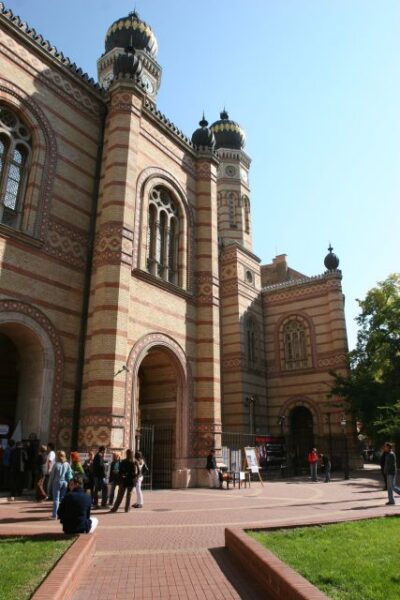
Jewish Heritage Guided Tour with Synagogue Ticket
Read our review →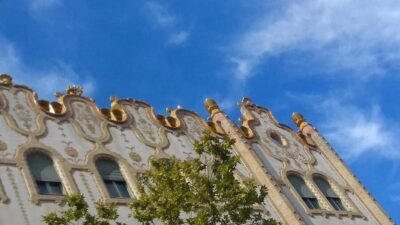
German tour in the Budapest city centre & the Jewish quarter
Read our review →
Past and Present of Budapest Jewish District Tour
Read our review →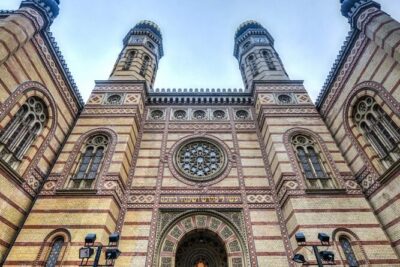
Budapest Dohany Synagogue & Hungarian Jewish Museum & free extras
Read our review →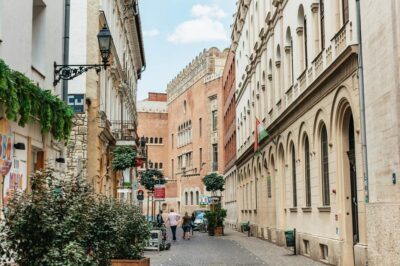
Jewish History Guided Walking Tour with Historian
Read our review →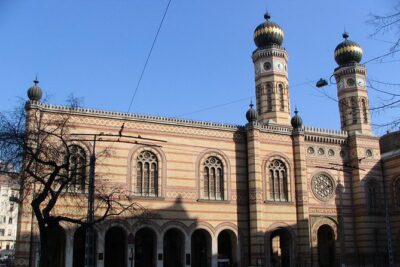
Budapest Dohany, Heroes’, Rumbach synagogues & Jewish Ghetto Tour
Read our review →Browse the lists this tour appears in