
Reviewed · COMMUNIST HISTORY TOURS
Born Under The Red Star – Communist tour with Coffee in a Retro Bar
Political monuments in Budapest can feel cold. This tour gives them a human-sized explanation, so you know what you are looking at and why it matters. I like that it pairs guided commentary with quick street-level stops at places many visitors skip. The icing is a break for a retro soda in a Communist-themed bar.
I also like the focus on momentum, not lectures. You hit key sites across Budapest’s WWII and postwar memory, then end at Liberty Square so you can keep your own exploring going right after the walk. A possible drawback is that the time at each stop is short, so if you want long museum time inside buildings like St. Stephen’s Basilica or Parliament, you will likely need a separate plan.
In This Review
- Key highlights to look for
- How Born Under The Red Star changes the way you read Budapest
- Price and logistics, without the head-spinning
- Meeting at the Hungarian State Opera, then walking into the story
- Stop 1: Soviet Heroic Memorial, the WWII message in stone
- Stop 2: House of Terror on Andrássy út 60
- Stop 3: St. Stephen’s Basilica, and how religion fits the political picture
- The Freedom Statue on Gellért Hill: independence in iron and stone
- Szabadság tér: Liberty Square and the two memorial stories
- Memorial to the 1956 Hungarian Revolution: learning why it still echoes
- Hungarian Parliament Building: a stop for what you notice, not what you finish
- The retro soda break: why the pause is part of the experience
- Tips to make the 3 hours feel longer (in a good way)
- Who this tour fits best, and who might want a different approach
- Should you book Born Under The Red Star?
- FAQ
- How long is Born Under The Red Star in Budapest?
- What does the tour cost?
- What is included in the price?
- What is not included?
- Is House of Terror admission included?
- Where does the tour start and end?
- What language is the tour offered in?
- How big is the group?
- Do I need good weather for the tour?
- What is the cancellation policy?
Key highlights to look for
- A guide who turns politics into what you can see nearby
- House of Terror stop with free entry included
- Short, efficient 15-minute stops that help you orient quickly
- Freedom Statue and Liberty Square ties that connect the story
- A classic soda break in a Communist-themed bar
- Maps and further recommendations for independent follow-up
How Born Under The Red Star changes the way you read Budapest
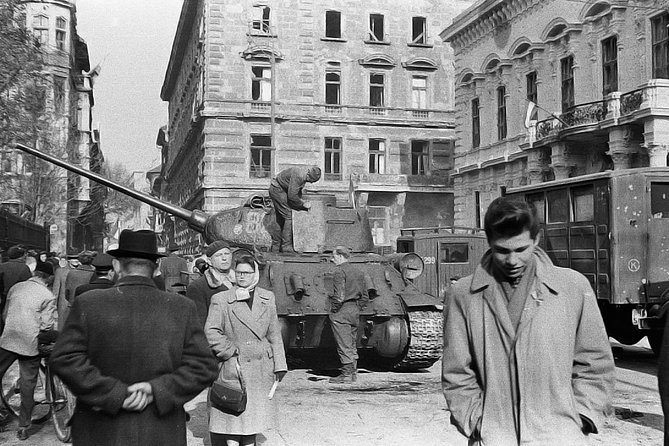
This is not a standard sightseeing loop where you mostly take photos and move on. You walk with a guide who connects monuments, buildings, and memorials to the 20th-century political pressure that shaped everyday life. The effect is practical: after a few stops, you start noticing symbols on facades and the way public spaces were designed to steer public memory.
What makes this tour especially useful is the balance between the heavy and the readable. You go from a WWII commemoration to the House of Terror, then out to religious and civic landmarks, and finally to memorials tied to independence and 1956. That sequence helps you see how different regimes tried to control the narrative of who the nation was, and who counted.
The other good part is the structure. At roughly three hours with a maximum group size of 15, you get a guided storyline without burning a whole day. If you are only in Budapest briefly, this is a smart way to get context fast.
More communist-era tours:
- Budapest: Communist History Tour with House of Terror Option
★ 4.8 · 182 reviews - Budapest: 3-Hour Walking Tour About Communism (Small Group)
★ 4.7 · 70 reviews - Communism in Hungary with a Historian
★ 5.0 · 70 reviews
Price and logistics, without the head-spinning
The price is $90.31 per person for about 3 hours. That may sound steep compared to a free walking tour, but you are paying for guided interpretation plus a few added perks: a retro soda at a Communist-themed bar, and coffee and/or tea. You also get a mobile ticket and maps with further recommendations, which is real value if you like to plan your next steps right away.
The group size matters too. With a maximum of 15, the guide can actually keep an eye on questions and keep the pace humane. And because the tour is offered in English and is designed for most travelers, you do not have to worry that you are missing the meaning because of language.
Only note the drawback of the schedule: each stop is around 15 minutes. So plan to use this as orientation and framing, not as an all-access museum day.
Meeting at the Hungarian State Opera, then walking into the story
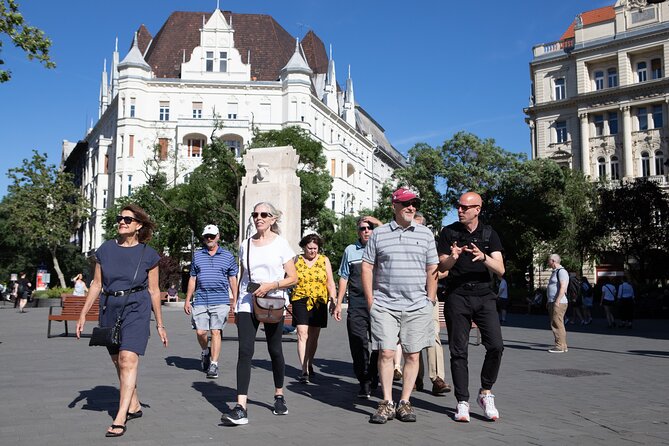
You start at the Hungarian State Opera area on Andrássy út 22 (1061). Ending at Liberty Square (Szabadság tér) is a clever choice. It drops you into one of the most important public memory zones in Budapest, and from there you can build your next day around nearby landmarks.
Because the tour is a walking format with near public transportation access, it works well even if you are mixing it with other plans. Wear shoes you can handle for a few hours of walking, and bring a jacket if the weather looks questionable. The tour also says good weather is needed, so if conditions are rough, they will offer another date or a full refund.
Stop 1: Soviet Heroic Memorial, the WWII message in stone
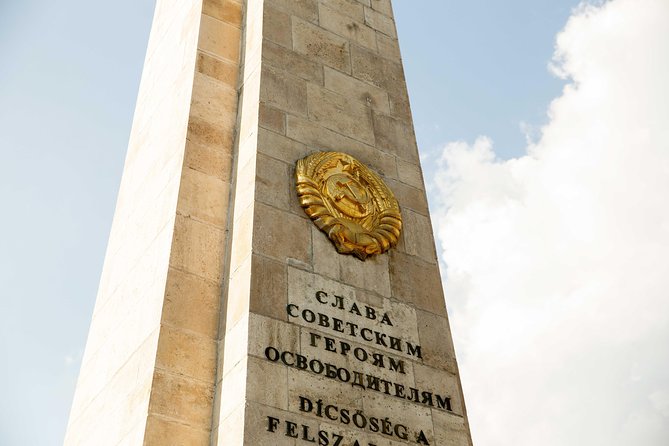
Your first major stop is the Soviet Heroic Memorial, a white obelisk in a landscaped park. Even if you have seen lots of war monuments, this one is interesting because it is straightforward: it commemorates Russian military who served in WWII. The key is that the guide uses it as an entry point to explain how Soviet presence and WWII memory were used after the war.
In a quick stop like this, you are not trying to read every inscription. Instead, you are learning how the symbol works in public space. Obelisks like this are designed to project permanence and official recognition. That helps you understand why later memorials, including ones tied to liberation and resistance, feel so intense and contested.
What to watch for: how the memorial’s placement in a formal park setting gives it a “state-approved” feel. That matters, because it sets up the contrast you will see as the tour moves into places where the narrative is less comfortable.
A few more Budapest outings worth comparing
- Budapest: Unlimited Prosecco, Beer and Aperol Spritz Cruise
★ 4.8 · 37,304 reviews - Budapest: Unlimited Prosecco, Beer & Aperol Spritz Cruise
★ 4.5 · 3,371 reviews - Budapest: Guided Pub Tour to Ruin Bars with Games & 6 Shots
★ 4.7 · 1,641 reviews - Budapest: Ruin Bar Pub Crawl with Entry Tickets
★ 4.7 · 1,028 reviews
Stop 2: House of Terror on Andrássy út 60
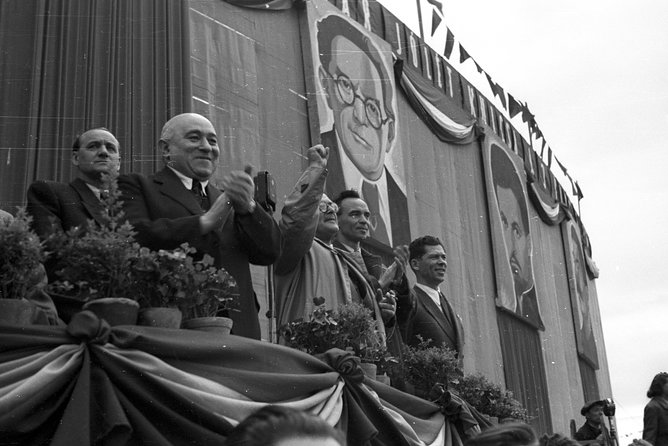
Next comes House of Terror, located at Andrássy út 60. This is where the tour gets real. The museum focuses on exhibits connected to fascist and communist regimes in 20th-century Hungary and also serves as a memorial to victims. That includes people who were detained, interrogated, tortured, or killed in the building.
The practical value here is knowing what you are walking into. A museum like this can feel emotionally heavy even before you read a single exhibit label. A guided introduction helps you organize what you see. You are not guessing which regime did what, or why the building itself became a symbol.
Admission is listed as free for this stop, and you spend about 15 minutes there. That time is usually not enough for a full museum experience, but it can be enough to orient you so you know what to revisit later on your own. If you want more time, this is the stop to plan an extra visit around.
Stop 3: St. Stephen’s Basilica, and how religion fits the political picture
You then head to St. Stephen’s Basilica (Szent Istvan Bazilika). This is Roman Catholic and named for Stephen, the first King of Hungary. The tour framing helps you see why such a figure is politically useful across different eras, not just spiritually important.
Two details from the site itself make it stand out: the tour notes Stephen’s right hand is housed in a reliquary, and it also reminds you that the basilica was once one of the largest church buildings in Hungary before 1920. Those facts are not trivia. They are clues about how institutions of faith connect to ideas of national identity.
Admission is not included here, and your time is about 15 minutes. So treat the basilica stop as orientation. If you decide to go inside, budget extra time and plan for ticketing on your own. If you skip the interior, you can still get value from the exterior and the guide’s explanation of how national stories are layered.
The Freedom Statue on Gellért Hill: independence in iron and stone
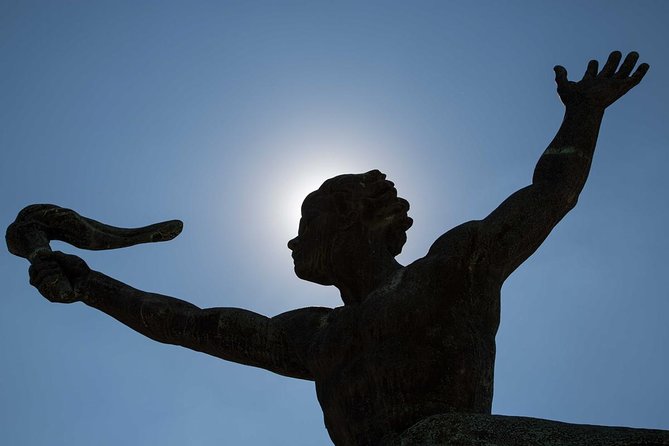
The tour includes the Liberty or Freedom Statue (Szabadság-szobor) on Gellért Hill. This monument commemorates those who sacrificed their lives for Hungary’s independence, freedom, and prosperity.
This stop matters because it connects the “who” to the “why.” Earlier you have Soviet and regime-related memory. Now you see a monument whose message is explicitly about national independence and the cost of freedom. That shift helps you understand why memorials can feel like arguments in public space rather than calm reminders.
Because your time at each stop is short, you will not get a full sweep of the hill from every angle. Still, it is worth arriving ready to look. Watch the monument’s placement on a prominent rise, because height is a classic way to signal importance in city design.
Szabadság tér: Liberty Square and the two memorial stories
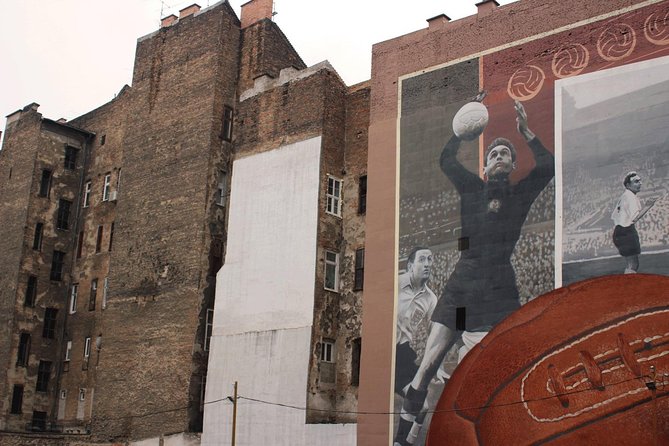
The tour lands you at Szabadság tér (Liberty Square). It is famous for two controversial memorials, one tied to Hungarian Jewish victims of the Holocaust and another tied to Soviet soldiers who liberated Budapest in 1945. That pairing alone tells you why this square is complicated.
The tour also points out key buildings on the west side of the square, including the United States Embassy in Hungary and the historicist style headquarters of the Hungarian National Bank. That mix of diplomacy, finance, and memory makes the space feel like a living political map, not a static postcard.
What you get from a guided stop here is context. Without it, you might simply read the square as “a big place with monuments.” With it, you start understanding how different groups and governments wanted their version of the story to remain visible.
You also spend about 15 minutes here, and entry is free. This is the kind of stop where a short guided window works because it gives you the questions to ask yourself after.
Memorial to the 1956 Hungarian Revolution: learning why it still echoes
Next is the Memorial to the 1956 Hungarian Revolution and War of Independence. This is specifically a memorial to heroes of the uprising against the communist regime.
This stop is emotionally loaded, but the tour’s approach keeps it grounded. Instead of treating 1956 as a distant history lesson, it frames it as a clear break from imposed control. It also connects back to the theme of the tour: power shapes memory, and memory shapes politics.
Because this stop is only around 15 minutes, treat it as a quick orientation to the monument’s meaning. If you want to go deeper, this is also a great signal that Budapest is full of places where 1956 shows up in street names, plaques, and neighborhood stories.
Hungarian Parliament Building: a stop for what you notice, not what you finish
The tour includes the Hungarian Parliament Building (Országház), also known as the Parliament of Budapest after its location. The site is the seat of the National Assembly of Hungary and a major landmark.
Admission is not included and your time is short, so this is more about learning what to look for outside and understanding its role. Parliament buildings have a double identity. They are both functional government space and symbolic architecture. The guide helps you read that symbolism in the context of a country that has repeatedly rewritten its political order.
In a short visit, you are not trying to complete a museum-level survey. You are building a mental frame. Once you connect the building to the narrative of national governance and contested memory, it becomes easier to make sense of why nearby squares and memorials feel so charged.
The retro soda break: why the pause is part of the experience
Between heavy stops, you get a break at a Communist-themed retro bar for a classic soda. You also get coffee and/or tea, which is a practical win if you are walking around and want a real reset.
This kind of stop is not only about the drink. It is about learning how political themes get translated into everyday settings, even as a themed bar experience. It gives your brain a moment to settle so the next memorial stop lands with more clarity, not just more emotion.
It also gives you a social reset. If you have questions, this is usually the easiest time to ask them before the group moves on. Even without a long sit-down, it makes the three-hour walk feel balanced.
Tips to make the 3 hours feel longer (in a good way)
A few practical moves can help you get more from this kind of political walking tour:
- Take notes on names and places. The tour includes specific sites like House of Terror on Andrássy út 60 and St. Stephen’s Basilica. Jot them down so you can search or revisit later.
- Plan one follow-up visit. The tour time at museums and major interiors is short. Decide now whether you want to spend extra time at House of Terror, or if you prefer to return to the basilica or Parliament when it fits your schedule.
- Use the maps and recommendations immediately. The tour includes maps and further suggestions. Do not toss them in your bag. Look at them the same day while the story is fresh.
- Bring patience. Some stops are emotionally intense. Give the guide a chance to frame the meaning, then let the monuments do the rest.
Who this tour fits best, and who might want a different approach
This is a great fit if you want Budapest’s “what happened here” explained with a clear walking route. If you like political context, memorials, and the way history shows up in streets, you will probably enjoy the structure.
It is also a solid choice for couples and small groups. One review shared that a booking ended up as just two people with guide Ferenc, which is a reminder that your experience may feel more personal than you expect.
A possible mismatch: if you mainly want long museum time or detailed interiors during the same visit, the short stop length may feel limiting. In that case, pair this tour with a second trip to whichever interior you care about most.
Should you book Born Under The Red Star?
I think it is worth booking if you are the type who wants more than postcard facts. The value is in guided interpretation across major memory sites, plus practical extras like the retro soda and maps for what to do next.
Book it if:
- You want a guided explanation of communist-era and WWII-related memory points.
- You like efficient, high-information walks over slow museum marathons.
- You will use the maps to plan independent follow-up right after.
Skip or choose something else if:
- You want lots of time inside major buildings during the same half-day window.
- You dislike tours that include emotionally heavy subject matter and memorial sites.
If your goal is to understand Budapest beyond the typical viewpoints, this walk is a strong way to get there quickly and with a few thoughtful comforts along the way.
FAQ
How long is Born Under The Red Star in Budapest?
It runs for about 3 hours.
What does the tour cost?
The price is $90.31 per person.
What is included in the price?
You get a retro soda in a Communist-themed bar, coffee and/or tea, and maps plus further recommendations. You also get a mobile ticket.
What is not included?
Food and drinks are not included unless specified. Admission tickets for St. Stephen’s Basilica and the Hungarian Parliament Building are not included.
Is House of Terror admission included?
Yes, House of Terror is listed with admission ticket free.
Where does the tour start and end?
It starts at the Hungarian State Opera, Andrássy út 22, 1061 Budapest, and ends at Liberty Square, Szabadság tér.
What language is the tour offered in?
It is offered in English.
How big is the group?
The maximum group size is 15 travelers.
Do I need good weather for the tour?
Yes, it requires good weather. If it is canceled due to poor weather, you will be offered a different date or a full refund.
What is the cancellation policy?
You can cancel for a full refund up to 24 hours in advance. If you cancel less than 24 hours before the start time, the amount paid is not refunded.
More Coffee Experiences in Budapest
- Grand Segway Tour of Budapest – Private Tour with Coffee Stop
★ 5.0 · 163 reviews - Castle District tour with Matthias Church Ticket & Cake & Coffee
★ 5.0 · 31 reviews - Castle District tour with Matthias Church Ticket & Cake & Coffee
★ 5.0 · 22 reviews - Buda Castle Walking Tour with Matthias church entry, Cake&Coffee
★ 4.5 · 21 reviews
Latest to land in Budapest
- Visegrád Hike & Castle Tour with Ferry from Budapest★ 4.6 · 3 reviews
- Budapest: Vacation Photographer to collect great memories★ 5.0 · 49 reviews
- Trash Art Museum: Hungary’s First Scrap Metal Exhibition★ 4.3 · 72 reviews
- True Crime Walking Tour in the Buda Castle district★ 5.0 · 26 reviews
- Budapest: 3-Hour Trabant Sightseeing Tour★ 4.7 · 28 reviews
- Audio visual multi-sensory chefs journey dinner experience★ 5.0 · 3 reviews
- Private Szentendre and Vac Tour from Budapest with Transport★ 5.0 · 3 reviews
- Wine Tasting in the Countryside from Budapest★ 5.0 · 14 reviews
Communist History Tours, compared.
Communist History Tour with House of Terror Option
Read our review →
3-Hour Walking Tour About Communism (Small Group)
Read our review →
Memento Park Visit with Private Trabant Transfer
Read our review →
Browse the lists this tour appears in