
Reviewed · JEWISH HERITAGE TOURS
Budapest Jewish Heritage: Synagogues, Shoes, Secrets & Flódni
Budapest tells its Jewish story on your feet. This Budapest Jewish Heritage tour strings together the Great Synagogue area, WWII ghetto landmarks, and memorial stops, then ends with a traditional flódni pastry.
I particularly like the way you get three very different synagogues in one morning feel, each with its own architecture and Jewish community flavor. I also like that the tour does not end at a monument. You finish with food, and the snack is part of the cultural meaning, not an afterthought.
One thing to consider: entrance fees are not included for several synagogue stops, so your total cost may be a bit higher than the tour price once you factor in tickets.
In This Review
- Key highlights I’d pencil into your plan
- A Jewish Quarter walk that connects buildings to people
- Dohány Street Synagogue: why it is the main stage
- Rumbach Street Synagogue: Otto Wagner’s Moorish surprise
- Carl Lutz Memorial: rescue work you can name
- Kazinczy Street Orthodox Synagogue: color, modern design, and stained glass
- Shoes on the Danube Bank: a memorial built for remembering
- The ghetto wall and the Jewish Quarter you can still picture
- Flódni at the end: eating your way into tradition
- Value for your money, and what you might add on
- Who this tour fits best
- Should you book Budapest Jewish Heritage: Synagogues, Shoes, Secrets & Flódni?
- FAQ
- What is the duration of the tour?
- Is hotel pickup included?
- Are entrance tickets included for the synagogues?
- Is public transportation required?
- Where does the tour start and end?
- Is this a private tour?
Key highlights I’d pencil into your plan
- Great Synagogue scale and story: why Dohány Street matters, architecturally and historically
- Otto Wagner’s Rumbach Street synagogue: Moorish style plus a “moderate Conservative” community backdrop
- Carl Lutz Memorial: a clear reminder of rescue work in a time of deportations
- Kazinczy Street Orthodox Synagogue: 1913 modern design with late art nouveau touches and stained-glass ceiling work
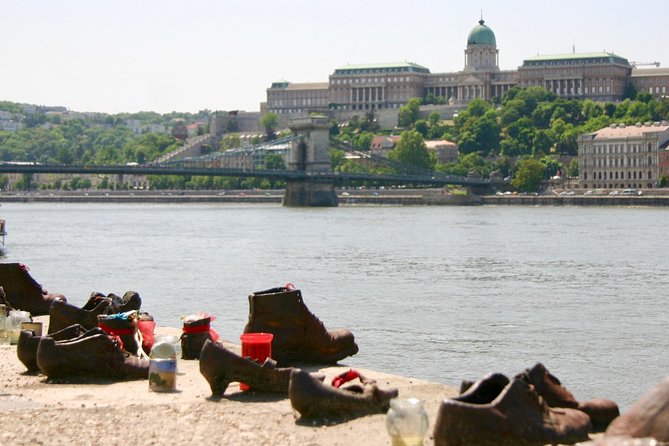
- Shoes on the Danube Bank: the memorial’s details make it hit hard, fast
- Flódni at the end: a sweet finish that keeps the heritage part of the experience
A Jewish Quarter walk that connects buildings to people
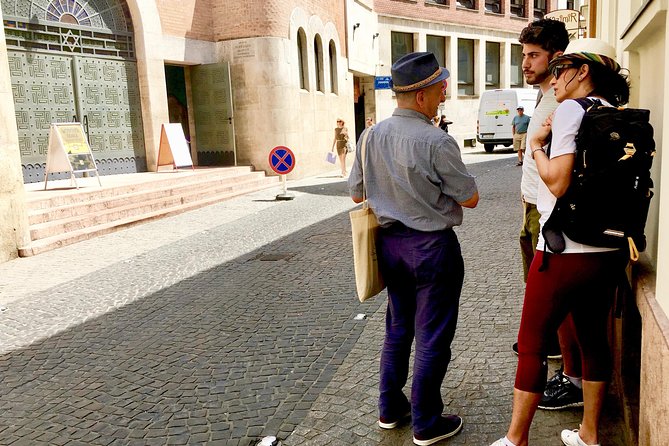
This is the kind of tour where the route matters almost as much as the sights. You start near Herzl Square and the Dohány Street area, then you move through the Jewish Quarter and WWII ghetto territory on foot. Along the way, the guide ties together architecture, community life, and what happened during the Second World War in a way that feels organized, not like a random photo walk.
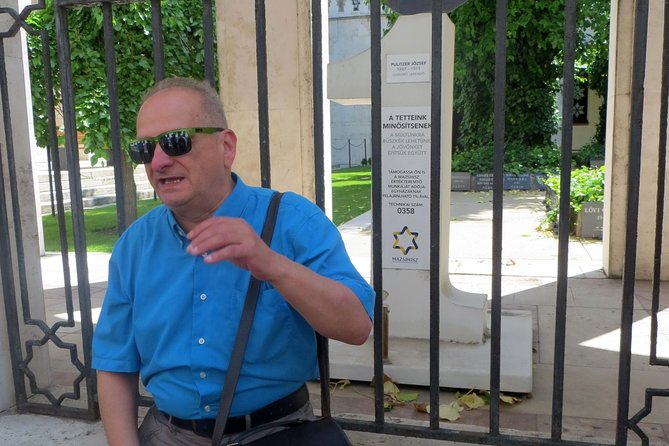
The best part is the guide setup. This is led by a Jewish guide and described as a historian guide, so you get context rather than just names and dates. That matters in Budapest because the city layers its stories. A synagogue is never just a building here. It is a window into religious movements, local politics, and how a community survived, or did not survive, the changes around it.
You also get practical pacing. It is long enough to see multiple sites, but it is short enough to stay focused. You are not stuck running between far-flung neighborhoods. Instead, the tour sticks to the 7th district Jewish heritage zone and makes each stop matter.
The finish is a smart touch. Flódni is not just dessert. It is a quick way to end on something warm, local, and specific to Jewish food culture in Hungary.
More Jewish heritage walks:
- Budapest Jewish Heritage Memorial Walking Tour & Synagogue Entry
★ 5.0 · 568 reviews - Budapest: Jewish Heritage Guided Tour with Synagogue Ticket
★ 4.8 · 533 reviews - German tour in the Budapest city centre & the Jewish quarter
★ 5.0 · 359 reviews
Dohány Street Synagogue: why it is the main stage
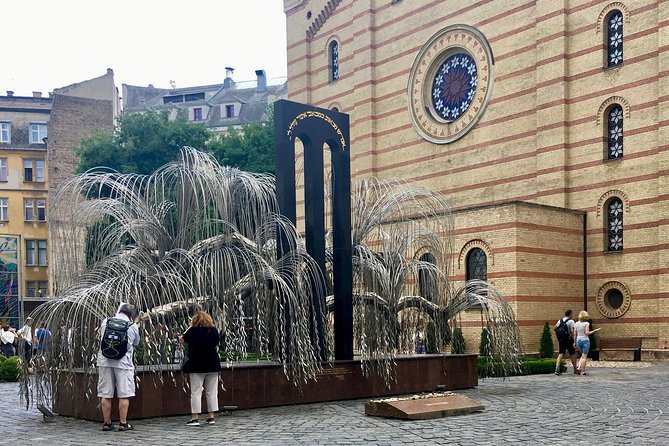
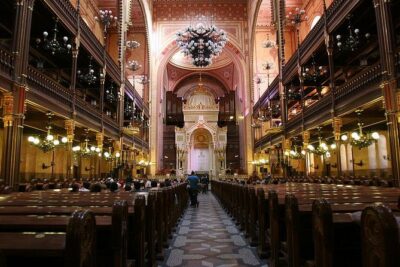
Your first big anchor is the Great or Central Synagogue, also called the Dohány Street Synagogue (Nagy Zsinagóga). This is the largest synagogue in Europe, seating about 3,000 people. The tour spends time on why that scale is significant, both in terms of design and the role of the synagogue as a centre of Neolog Judaism.
What I like about this stop is the mix of angles. You are not only looking at ornament and shape. You are also hearing how the building connects to the fate of Hungarian Jewry during the Second World War. The guide also points out how many internationally famous figures were Hungarian Jews. That kind of detail helps you connect this story to real names, not only memorial plaques.
One practical note: admission tickets are not included for the Great Synagogue stop. If you want to see inside, plan for that cost up front so it does not surprise you later.
If you are someone who loves architecture, this is where your attention will naturally stick. If you are more history-focused, you will still get useful material because the tour frames the building as part of a lived community, then as part of what the community lost.
Rumbach Street Synagogue: Otto Wagner’s Moorish surprise
Next comes the Rumbach Street Synagogue, built in 1872 by the Austrian Secessionist architect Otto Wagner for the “moderate Conservative” community. This synagogue is described as Moorish, and that style choice is a big part of why it feels different from the Great Synagogue you just saw.
In plain terms, the interior can be a “wait, wow” moment. The stop includes time to notice how the decorations catch the light, especially after the building has had a long overdue facelift. That is one of those details that makes the tour feel current. You are not only learning about the past. You are also seeing how heritage buildings survive, repair, and get cared for.
Admission tickets are not included here either. So again, you should be ready to pay an entrance fee if you plan to go inside.
This stop is also a nice course correction for your brain. Budapest’s Jewish heritage is not one single story. It includes different branches and different ways people practiced. By placing Rumbach after the Great Synagogue, the tour gives you an immediate comparison point without needing extra research.
Carl Lutz Memorial: rescue work you can name
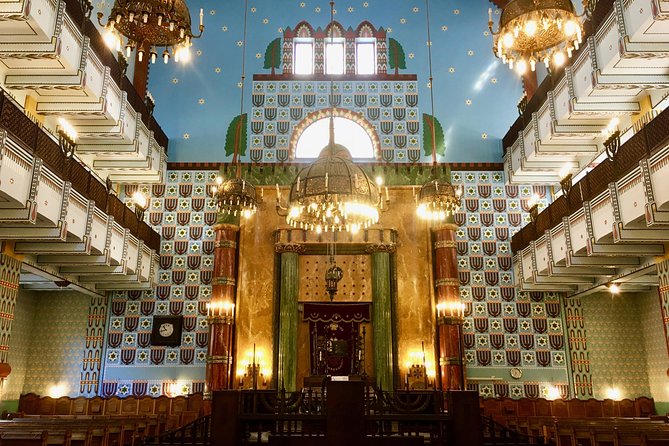
Then you slow down at the Carl Lutz Memorial. Carl Lutz was a Swiss diplomat who helped save tens of thousands of Jews in Budapest from persecution and deportation. The tour places this monument in the area of the former Budapest ghetto and frames it as a dedicated memory to his actions.
This is one of the most practical stops for understanding cause and effect. It is easy to get stuck in “then tragedy happened” mode when you tour Holocaust sites. This memorial adds another layer: even during overwhelming danger, there were people who acted, negotiated, sheltered, and tried to change outcomes.
Admission is free for this stop, so you can treat it as a pause break as well. It is short, but it is the kind of stop that sticks in your head because the name is specific and the mission is clear.
If you want a tour that does not only point to loss but also points to human decisions, this memorial helps balance the day.
More History Tours in Budapest:
- Budapest: Historic Cruise with Welcome Drink
★ 4.7 · 6,512 reviews - Budapest Historical Sightseeing – Free Walking Tour
★ 5.0 · 1,302 reviews - Buda Castle District Dark History, Legends and Vampire Night Tour
★ 4.5 · 1,240 reviews - BloodThirsty Hungary: Walking tour & Dark Historical Stories
★ 4.9 · 633 reviews
Kazinczy Street Orthodox Synagogue: color, modern design, and stained glass
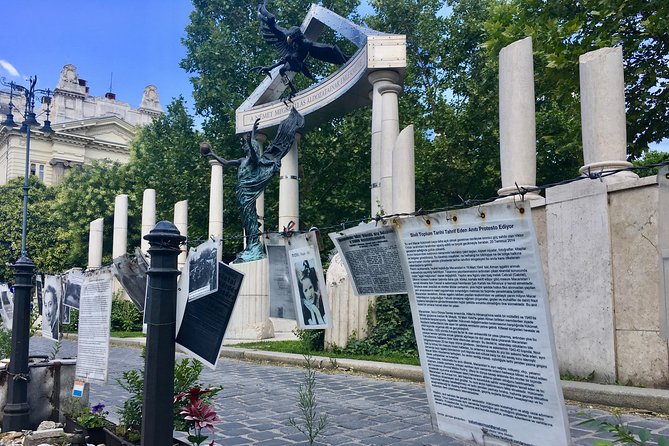
Your next synagogue stop is the Kazinczy Street Orthodox Synagogue, built in 1913 in what was described as a very modern design for the time. Even from the outside planning perspective, this should interest you because the tour makes a point of noting late art nouveau touches and bright colors throughout.
Inside details matter here too. The stained-glass windows in the ceiling were designed by Miksa Róth. That name is worth filing away because it gives you something concrete to look for while you stand in place. You are not just watching for general prettiness. You are trying to spot a specific artistic contribution.
Admission tickets are not included at this stop. If you care about interior decoration and the ceiling windows, I’d plan the budget accordingly.
What this stop does well is remind you that Jewish heritage in Budapest is not frozen in one style. The Orthodox community expressed itself through design choices, and the building reflects the aesthetics of its era. If you like seeing history as a living thing, this is a good moment.
Shoes on the Danube Bank: a memorial built for remembering
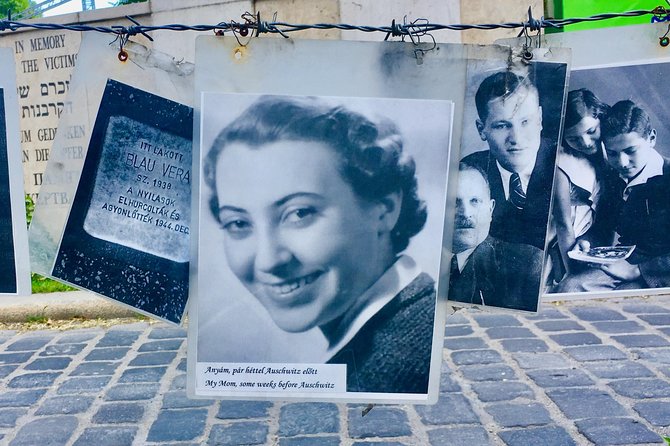
Then you reach the Shoes on the Danube Bank memorial. This is one of those sites that does not need dramatic explanations, because the message is already built into what you see. The memorial was unveiled on April 16, 2005, and it honors Jewish victims murdered at this riverbank during World War II.
The tour explains what happened there in a direct way: victims were forced to remove their shoes before being shot, and their bodies were carried away by the Danube. The sculpture shows shoes left behind, and that single image turns the area into a reminder of individual loss rather than only an abstract statistic.
Here is the practical advantage of visiting as part of this tour. The guide’s framing helps you avoid numbness. You are not just photographing. You are reading the site in context, and then you move on with the rest of the story.
Admission is included for this stop. It is outdoors, so you also do not have to worry about lining up for an interior ticket.
Wear shoes you can stand in comfortably. Even if the stop is brief, your body will remember it.
The ghetto wall and the Jewish Quarter you can still picture
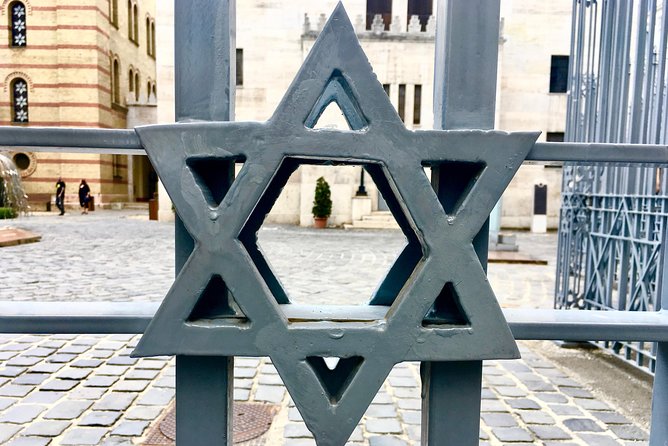
After the memorial, the tour heads into the Jewish Quarter. This is where the story turns from specific sites to the geography of confinement. Towards the end of World War II, Jews of Budapest were herded into a ghetto. A small section of the ghetto wall still stands in the heart of Budapest, and the tour uses that to bring the space to life.
I like this segment because it is about imagination with discipline. You cannot always see the old layouts today, but the guide helps you “see” how life might have been structured, how people moved, and what the eventual fate was. The key word here is secrets. The tour presents the ghetto as a place that had daily reality, not only paperwork and borders.
This stop is also free. That means you can spend your mental energy on the meaning instead of worrying about admissions.
If you are visiting Budapest for synagogues plus WWII history, this is the pivot point where the tour stops being architecture and becomes place-based human history. It also helps if you want something more than one monument. You get a sense of the area’s structure and why that structure mattered.
Flódni at the end: eating your way into tradition
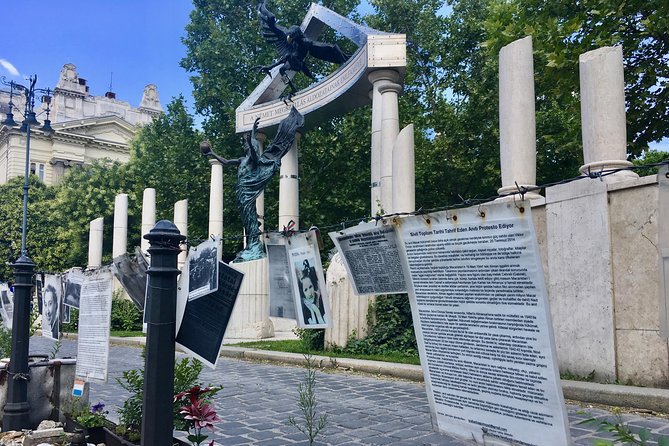
The tour closes on a simple but effective note: flódni at the finish. Flódni is a traditional Jewish pastry, and the tour frames it as a heritage of flavors. You spend about 20 minutes here.
I like food endings on history tours because they reset you. You are not leaving on a hard landing after the hardest memorial moment. You get something warm, sweet, and familiar to many people who enjoy Jewish cuisine. Even if pastries are not your main love, it is a low-pressure way to end in a Hungarian Jewish flavor profile.
This stop is free and includes the dessert as part of the tour experience. So it is one less add-on you have to budget for.
If you have dietary restrictions, you should plan to ask ahead. The tour description confirms the pastry is included, but it does not spell out substitutions.
Value for your money, and what you might add on
At about $102.95 per person for roughly 2 hours and 45 minutes, you are paying for a guided, historically framed walking route plus a guide who brings a Jewish perspective. The tour also offers hotel pickup, a historian-led approach, and group discounts.
Where value gets especially good is in what you get per time. Multiple synagogue exteriors and interiors happen in a tight area. You are not bouncing across the city spending time commuting. The Shoes memorial and the ghetto wall add emotional weight without taking you off route.
Where you should budget carefully is entrances. Admission tickets are not included for the Great Synagogue, Rumbach Street Synagogue, and Kazinczy Street Orthodox Synagogue. The Shoes memorial is included, and the ghetto wall stop is free. So your final cost depends on how many synagogue entrances you want to do inside.
If you want a “best of Jewish Budapest” sampler with an expert voice, this is a strong value play. If your priority is only one or two main interiors, you might spend less on a narrower plan. But if you like comparisons, architecture changes, and a coherent WWII narrative thread, the structure justifies the price.
Who this tour fits best
This tour is a great match if you want Jewish heritage in Budapest explained with a human voice and not just a list of places. It also works well if you like discussion. Several guides associated with this tour are described as warm and question-friendly, and at least one guide, Miklos, is described as weaving in personal and family experience alongside Hungarian Jewish history. Another guide, Kata, is described with personal experience of Hungarian Jewish life and how culture continues. Guides like Gabriella and Edith are described as knowledgeable and personable, with a style that makes the stops feel connected.
It is also a good fit if you are traveling with limited time. In under three hours you can cover the Great Synagogue area, multiple synagogues, key memorial moments, and flódni.
You might pick a different style of tour if you want a very long, site-by-site Holocaust defense narrative. One concern raised is that the experience focuses on heritage and context, not only detailed accounts of specific resistance methods at every stop. In other words, you will likely leave informed, but you may want to add another source if resistance stories are your main topic.
Should you book Budapest Jewish Heritage: Synagogues, Shoes, Secrets & Flódni?
Yes, if you want a focused route that balances architecture, WWII memory, and a real sense of what the Jewish Quarter meant. You get the Great Synagogue scale, the Otto Wagner surprise at Rumbach, a clear Carl Lutz rescue story, and the heavy visual impact of the Shoes memorial, then you finish with flódni.
Book it especially if you value a guide who can explain differences between Jewish communities, not just repeat general facts. The tour is also private, so if you want to ask questions or adjust pace, you have that flexibility.
Just go in with two expectations set: entrance tickets are extra for several synagogue stops, and the ghetto story is guided through place and context rather than as an endless, minute-by-minute disaster timeline. If that fits your style, this is one of the better ways to experience Jewish Budapest in a single sitting.
FAQ
What is the duration of the tour?
The tour runs about 2 hours 45 minutes.
Is hotel pickup included?
Yes. Hotel pickup is included, and pickup is offered.
Are entrance tickets included for the synagogues?
No. Entrance tickets are not included. Some stops note admission ticket not included, while other memorial or ghetto-area stops are marked as free or included.
Is public transportation required?
The tour does not include a public transportation ticket. It is near public transportation, and pickup is offered.
Where does the tour start and end?
It starts at Budapest, Dohány u. 1, 1074 Hungary and ends back at the same meeting point.
Is this a private tour?
Yes. It is private, so only your group participates.
Latest to land in Budapest
- Visegrád Hike & Castle Tour with Ferry from Budapest★ 4.6 · 3 reviews
- Budapest: Vacation Photographer to collect great memories★ 5.0 · 49 reviews
- Trash Art Museum: Hungary’s First Scrap Metal Exhibition★ 4.3 · 72 reviews
- True Crime Walking Tour in the Buda Castle district★ 5.0 · 26 reviews
- Budapest: 3-Hour Trabant Sightseeing Tour★ 4.7 · 28 reviews
- Audio visual multi-sensory chefs journey dinner experience★ 5.0 · 3 reviews
- Private Szentendre and Vac Tour from Budapest with Transport★ 5.0 · 3 reviews
- Wine Tasting in the Countryside from Budapest★ 5.0 · 14 reviews
Jewish Heritage Tours, compared.
Budapest Jewish Heritage Memorial Walking Tour & Synagogue Entry
Read our review →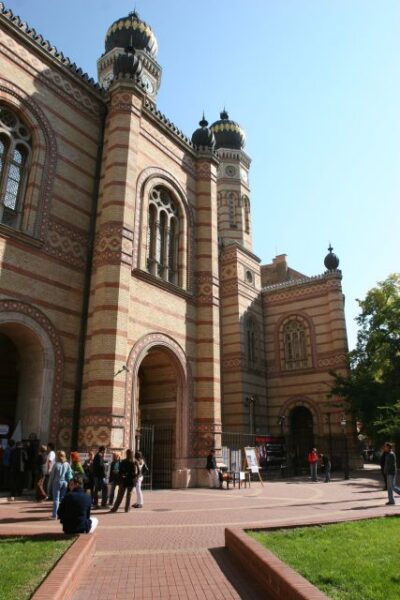
Jewish Heritage Guided Tour with Synagogue Ticket
Read our review →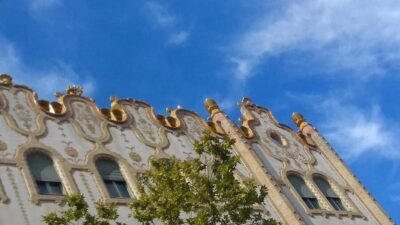
German tour in the Budapest city centre & the Jewish quarter
Read our review →
Past and Present of Budapest Jewish District Tour
Read our review →
Budapest Dohany Synagogue & Hungarian Jewish Museum & free extras
Read our review →
Jewish History Guided Walking Tour with Historian
Read our review →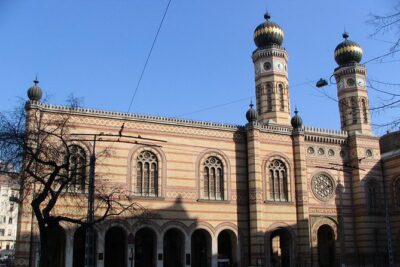
Budapest Dohany, Heroes’, Rumbach synagogues & Jewish Ghetto Tour
Read our review →Browse the lists this tour appears in