
Reviewed · JEWISH HERITAGE TOURS
Budapest Jewish Heritage Tour
Budapest’s Jewish sites are unforgettable. This half-day, private walk ties together synagogues and memorials with clear explanations, so you know what you are looking at and why it matters. I love the private-tour format, with time to ask questions, and I also love how the route connects sacred places, daily community life, and the Danube memorial into one story you can actually follow.
One heads-up: several key sites have entry fees not included, so you will want to budget a bit extra. I also suggest you keep expectations flexible around Rumbach Street Synagogue, since it is listed as under reconstruction.
In This Review
- Key things you will notice on this tour
- Why Budapest’s Jewish Quarter Makes This Half-Day Special
- Meeting Up At 2:30, Hotel Pickup, and Moving by Walk and Metro
- Stop 1: Dohány Street Great Synagogue and Memorial Areas You Can Actually Read
- Stop 2: Hungarian Jewish Museum and Archives, Including an Old Torah Finial
- District VII Walking Tour: Ruin Bars, Boutiques, and the World Heritage Setting
- Kazinczy Street Synagogue: Orthodox Customs in a Small, Peaceful Space
- Rumbach Street Synagogue: A Short Stop With an Important Note
- Shoes on the Danube Bank: Short Time, Heavy Weight
- How the Ticketing Works, and Why the Price Can Still Be Good Value
- Who This Tour Fits Best (and Who Might Want a Different Style)
- Should You Book the Budapest Jewish Heritage Tour?
- FAQ
- What time does the Budapest Jewish Heritage Tour start?
- How long is the tour?
- Is this tour private?
- Does the tour include hotel pickup?
- What does the tour price include?
- Are entry fees included for the synagogues and museum?
- Do you need a ticket for Shoes on the Danube Bank?
- What language is the tour offered in?
- What is the cancellation deadline for a full refund?
- Is food included?
Key things you will notice on this tour
- Dohány Street Great Synagogue first, with memorial areas you can visit on your own ticket
- Museum time that focuses on artifacts, including a Torah finial with a long backstory
- A District VII walking segment, set in a World Heritage Jewish quarter with modern street life
- Two smaller orthodox synagogue stops, showing daily customs rather than just big monuments
- Shoes on the Danube Bank, a short stop that lands hard because of the story behind it
Why Budapest’s Jewish Quarter Makes This Half-Day Special
This tour works because it does not treat Jewish history as a single museum room. You move between big landmark space and smaller religious spaces, then you step into a real neighborhood where commerce, culture, and memory exist side by side. That is the part you will appreciate most: you get the context to understand what you are seeing, instead of just ticking off sights.
I also like the pacing on a practical level. The walk is long enough to feel like a proper neighborhood experience, but it stays short enough to keep the emotional content manageable. You are not forced to race, and the route includes both solemn moments and lighter breaks of local color along the way.
Finally, the guide approach matters. You can expect a serious, fact-forward tone at the memorial sites, paired with human moments during walking segments. In the guide style you will likely encounter, there is room for small talk and practical direction, which helps when the subject matter gets heavy.
More Jewish heritage walks:
- Budapest Jewish Heritage Memorial Walking Tour & Synagogue Entry
★ 5.0 · 568 reviews - Budapest: Jewish Heritage Guided Tour with Synagogue Ticket
★ 4.8 · 533 reviews - German tour in the Budapest city centre & the Jewish quarter
★ 5.0 · 359 reviews
Meeting Up At 2:30, Hotel Pickup, and Moving by Walk and Metro
Starting at 2:30 pm is a smart choice if you are juggling a busy Budapest schedule. The tour lasts about four hours, and it is built for easy logistics: hotel pickup is offered, and transportation tickets are included. After that, you will go by a mix of walking and public transport, which keeps you from wasting time trapped in long cab rides.
You will also want to plan for moderate physical fitness. This is not framed as an all-day trek, but you should still wear comfortable shoes, since you are spending multiple segments on your feet.
If you are staying central and have a hotel lobby option, pickup reduces stress fast. And because it is a private activity, it is only your group, not a shared cattle-car experience. That matters when you want the guide to adjust the route slightly to your interests, or when your group needs a moment to regroup.
Stop 1: Dohány Street Great Synagogue and Memorial Areas You Can Actually Read
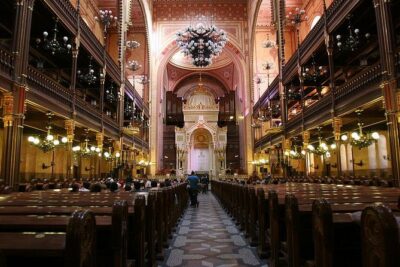
The tour begins at the Great / Central Synagogue, known as Nagy Zsinagóga, also associated with Dohány Street Synagogue. This is the world’s second-largest synagogue, so even before you understand the history, you will feel the scale. The building is not just architectural. It is also a container for memory.
Plan about one hour here, but note the key detail: admission tickets are not included for this stop. That means you should expect to pay separately at the site, and you should give yourself enough buffer time to handle entry smoothly.
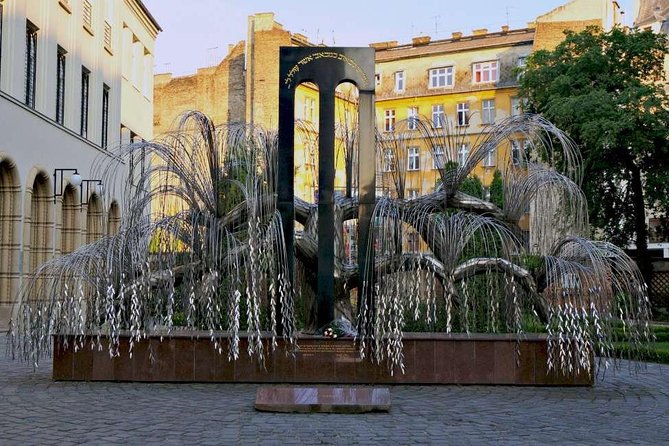
What makes this stop especially meaningful is that it includes memorial layers you can explore: the Holocaust Memorial, the Cemetery of Heroes, and the Tree of Life with the Wallenberg Memorial Park. The way these areas connect helps you see how Hungarian Jewish history moved through worship, community institutions, persecution, survival, and remembrance.
A drawback to consider: since entry is not included, you will want to budget extra and keep an eye on the timing so you do not feel rushed. If you prefer to spend longer inside exhibition spaces, you might want to arrive with that mindset, since the stop has a set time window.
Stop 2: Hungarian Jewish Museum and Archives, Including an Old Torah Finial
Next up is the Hungarian Jewish Museum and Archives for about 30 minutes. Again, admission is not included, so treat this as a ticketed stop you will pay for separately.
This part is valuable because it shifts from landmark emotion to object-based storytelling. The museum includes a unique collection of Jewish artifacts, with examples like the world’s oldest Torah finial. That kind of detail matters because it anchors the story in real objects you can look at, not just sweeping dates.
In a short stop like this, you are not meant to become a scholar. Instead, the goal is to give you a few strong references you can carry with you for the rest of the walk. When you later see the neighborhood streets of the Jewish quarter, you will understand them differently, because you have already picked up some institutional and cultural context.
If you have little interest in museum artifacts, you might find this stop light. But if you like that slow, evidence-based approach, the museum segment is one of the best uses of your time.
More History Tours in Budapest:
- Budapest: Historic Cruise with Welcome Drink
★ 4.7 · 6,512 reviews - Budapest Historical Sightseeing – Free Walking Tour
★ 5.0 · 1,302 reviews - Buda Castle District Dark History, Legends and Vampire Night Tour
★ 4.5 · 1,240 reviews - BloodThirsty Hungary: Walking tour & Dark Historical Stories
★ 4.9 · 633 reviews
District VII Walking Tour: Ruin Bars, Boutiques, and the World Heritage Setting
After the museum, you shift into District VII and the Jewish Quarter for about one hour. Here, the tour becomes both history and street-level observation, and it is framed as a World Heritage site.
This is also where you will feel the contrast that Budapest does so well. You are not only walking near old buildings, you are walking through a lived-in neighborhood. The route passes areas known for ruin bars, eclectic boutiques, avant-garde galleries, and places to eat. That modern scene is not a distraction. It is part of the point: community life did not end, even when it was brutally interrupted.
On the walking segment, the guide covers the long history of the Hungarian Jewish community and points out highlights plus smaller things you could easily miss alone. I especially like that this part is listed as admission free. You are not stuck juggling tickets while trying to orient yourself in a neighborhood.
Possible consideration: this segment is more about atmosphere and orientation than about seeing additional indoor sites. If you want maximum time inside buildings, you will still get that at the synagogues, but the neighborhood walk is meant to keep the story connected to everyday Budapest.
Kazinczy Street Synagogue: Orthodox Customs in a Small, Peaceful Space
Stop four is the Kazinczy Street Synagogue, with about 20 minutes set aside. Like the other indoor stops, admission is not included.
This is a smaller, more intimate experience than the main Great Synagogue. The focus here is on the small orthodox community and their daily life habits and customs. Visiting a small, peaceful synagogue like this helps you understand that Jewish heritage is not only about big public events. It is also about regular practice, community rhythm, and traditions carried through generations.
Because time is limited, you will not get a deep immersion experience. But you will get something useful: a contrast in scale and tone. The guide style here is likely to help you translate what you notice into meaning, so you leave the stop with better clarity instead of just a photo and a quick glance.
Rumbach Street Synagogue: A Short Stop With an Important Note
The final synagogue stop is the Rumbach Street Synagogue for about 15 minutes. Admission is not included, and there is an important practical note: it is under reconstruction at the moment.
Because it is short, you should expect a quick orientation and a few story points rather than a long visit. The reconstruction detail also means you may not see everything as it would look in full open condition. Still, it can be worth including, because the guide can explain why this part of the Jewish Triangle matters and how synagogues fit into the neighborhood’s evolving history.
If you strongly prefer fully open, fully accessible buildings, you might treat this as a bonus stop rather than a make-or-break. The Danube memorial stop later is still the tour’s emotional anchor.
Shoes on the Danube Bank: Short Time, Heavy Weight
Then you end at the Shoes on the Danube Bank memorial for about 15 minutes. This stop is free, and it is one of the most direct ways to confront the human cost of persecution.
The landmark is famous for a reason, but what makes it hit harder is the story behind it, explained in plain language by the guide. The memorial is built to represent victims, and the emotional force comes from the symbolic detail of empty shoes placed along the riverbank.
On the route to the river, you may get glimpses of the Parliament building as part of the metro transfer. That does not change the mood. It just gives your eyes a change of focus before you step back into the memorial space.
This is the kind of stop where it helps to slow down and let the facts land. The tour does not try to cheer you up. It gives you structure and context, and that makes the experience feel respectful rather than rushed.
How the Ticketing Works, and Why the Price Can Still Be Good Value
The price is $272.20 per group, up to 10 people. That makes the tour unusually reasonable if you are traveling with others who will share the cost. Even if you have a small group, private guiding plus hotel pickup plus transportation tickets can add up fast in a city like Budapest.
But here is the key value math: the tour price covers the guides and logistics, not the entrance fees. Great Synagogue, the Jewish Museum and Archives, Kazinczy Street Synagogue, and Rumbach Street Synagogue all list admission as not included. That means you should budget extra for tickets at several stops.
District VII walking and Shoes on the Danube are free, which is helpful. You still get meaningful content without paying again. The structure is fair: you pay for the ticketed sites because those are the ones with controlled entry, and you pay for the guiding because that is what turns separate locations into one coherent story.
My practical advice: if you are the kind of person who likes to linger inside big places, you might feel constrained by the stop times. If you are comfortable moving at a steady pace, you will likely feel satisfied with what you cover.
Also note that food and drinks are not included. So plan a snack or meal either before you start or after you finish. The guide style you may encounter can include small practical local suggestions, and you will have time to handle food on your own.
Who This Tour Fits Best (and Who Might Want a Different Style)
This tour is a strong match for you if you want a focused half-day with clear context across multiple stops. It suits history-minded visitors who want both major sites like the Great Synagogue and smaller religious spaces like Kazinczy, plus a memorial stop with serious guidance.
It also fits solo travelers who prefer someone to set the sequence for them. With a private group format, the guide can adjust the pace and offer options. Even when the route is set, the explanation can flex so it meets your interests.
Where it may not fit as well is if you want a purely casual stroll with no solemn content. The memorial material is part of the experience, and the tone around Shoes on the Danube can be emotionally intense. This is not a quick photo tour.
If you dislike ticketed entries and prefer everything to be included, you might feel the extra cost more. The good news is that the free segments are still valuable, and you are paying for the guided narrative where it matters most.
Should You Book the Budapest Jewish Heritage Tour?
I think you should book it if you want one structured route through the Jewish quarter that connects sacred places, museum artifacts, neighborhood life, and the Danube memorial into a single story. The combination of hotel pickup, transportation tickets, and a private group format makes the experience feel efficient and personal.
You should also book it if you appreciate guides who can handle difficult history responsibly, with a balance of serious explanation and real-world help as you walk. Meeting points and the start time at 2:30 pm keep it doable even if you plan other activities in Budapest.
Skip it or reconsider only if you strongly dislike paying separate entry fees for multiple stops, or if the idea of Rumbach Street Synagogue being under reconstruction would annoy you. Everything else is built to give you clear value for a half-day in a meaningful part of the city.
FAQ
What time does the Budapest Jewish Heritage Tour start?
It starts at 2:30 pm.
How long is the tour?
The duration is about 4 hours.
Is this tour private?
Yes. Only your group participates.
Does the tour include hotel pickup?
Yes, hotel pickup is offered.
What does the tour price include?
The price includes a local guide, a professional guide, hotel pickup, and transportation tickets. It also includes mobile tickets.
Are entry fees included for the synagogues and museum?
No. Admission tickets are not included for the Great / Central Synagogue, Hungarian Jewish Museum and Archives, Kazinczy Street Synagogue, and Rumbach Street Synagogue. Shoes on the Danube Bank and the walking segment in District VII are free.
Do you need a ticket for Shoes on the Danube Bank?
No. The Shoes on the Danube Bank memorial is listed as free.
What language is the tour offered in?
It is offered in English.
What is the cancellation deadline for a full refund?
Free cancellation is available up to 24 hours in advance of the experience start time, with a full refund if you cancel at least 24 hours before.
Is food included?
No. Food and drinks are not included.
Latest to land in Budapest
- Visegrád Hike & Castle Tour with Ferry from Budapest★ 4.6 · 3 reviews
- Budapest: Vacation Photographer to collect great memories★ 5.0 · 49 reviews
- Trash Art Museum: Hungary’s First Scrap Metal Exhibition★ 4.3 · 72 reviews
- True Crime Walking Tour in the Buda Castle district★ 5.0 · 26 reviews
- Budapest: 3-Hour Trabant Sightseeing Tour★ 4.7 · 28 reviews
- Audio visual multi-sensory chefs journey dinner experience★ 5.0 · 3 reviews
- Private Szentendre and Vac Tour from Budapest with Transport★ 5.0 · 3 reviews
- Wine Tasting in the Countryside from Budapest★ 5.0 · 14 reviews
Jewish Heritage Tours, compared.
Budapest Jewish Heritage Memorial Walking Tour & Synagogue Entry
Read our review →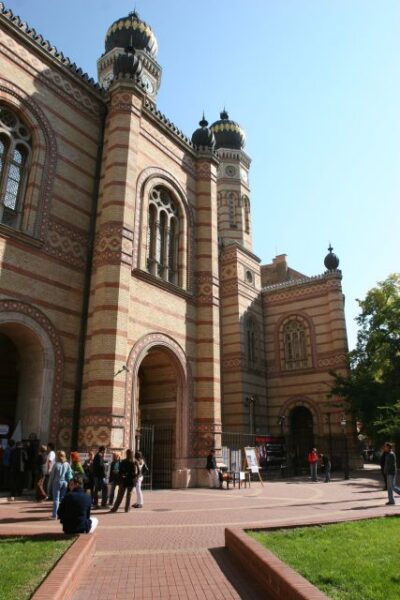
Jewish Heritage Guided Tour with Synagogue Ticket
Read our review →
German tour in the Budapest city centre & the Jewish quarter
Read our review →
Past and Present of Budapest Jewish District Tour
Read our review →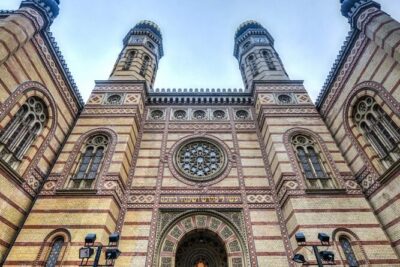
Budapest Dohany Synagogue & Hungarian Jewish Museum & free extras
Read our review →
Jewish History Guided Walking Tour with Historian
Read our review →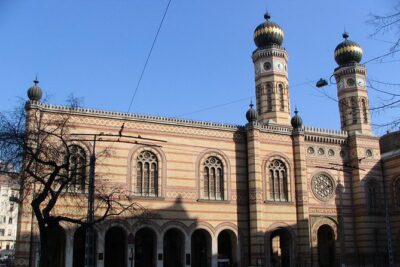
Budapest Dohany, Heroes’, Rumbach synagogues & Jewish Ghetto Tour
Read our review →Browse the lists this tour appears in