
Reviewed · COMMUNIST HISTORY TOURS
Life Under Communism” with optional visit to the House of Terror
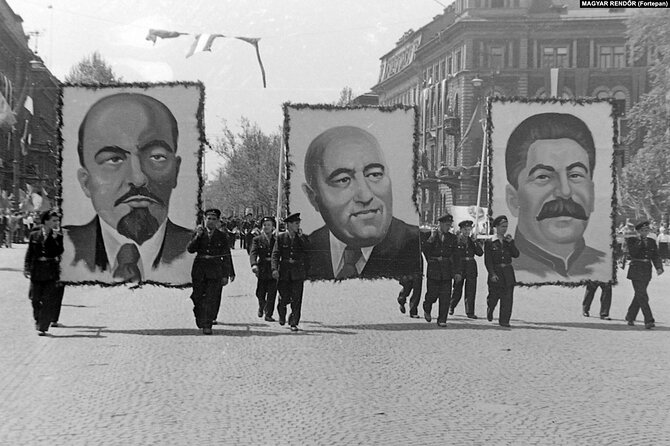
Communist Budapest is still under your feet. This 3-hour, English-language walk is built around firsthand, human-scale stories from guides like Miklós or Balázs, and you get a real break at Bambi Presszó as you connect ideology to everyday life. One thing to watch: House of Terror and Memento Park are optional add-ons, so double-check you selected the right choice.
I like how the route isn’t just plaques and dates. You walk through major public squares tied to the Siege of Budapest, the 1956 uprising, and Soviet symbolism that still shapes how the city feels.
If you prefer a lighter, casual sightseeing route, this one may hit heavier themes. But if you want context, it is very worth your time.
In This Review
- Key things I’d focus on before you go
- Liberty Square and the Siege of Budapest Memorial
- Szabadság tér, Habsburg leftovers, and why squares feel political
- Kossuth Square and Parliament, where 1956 turned into gunfire
- Petőfi Statue at Március 15 Square, plus a real-life meeting point
- Corvin köz: the 1956 resistance center, close to the action
- A bridge crossing and a viewpoint built for perspective
- St Gellért Square and the Liberty Statue framing your view
- Coffee at Bambi Presszó, ideology in a cup
- Option 1: Memento Park and what Budapest chose to preserve
- Option 2: House of Terror Museum and the shock of design
- Price and value for a private up to 5 group
- How to get the most from this walk (and not miss the point)
- Should you book this Budapest communist-era tour?
- FAQ
- How long is the tour?
- Is this tour private, and what group size can I expect?
- What language is the tour offered in, and do I get a ticket on my phone?
- What optional visits are available, and are admission tickets included?
- Is pickup included, and do I need to pay for coffee?
- Can I cancel for free?
Key things I’d focus on before you go
- Street-level Soviet and communist reminders in real city squares, not just in textbooks
- A planned coffee stop at Bambi Presszó, framed as a last stronghold of communist culture
- 1956 Revolution landmarks, including Kossuth Square and Corvin köz
- A private group of up to 5, so questions can actually get answered
- Optional add-ons with included admission: Memento Park or the House of Terror Museum
- A practical 3-hour pace with stops spaced for walking and views
Liberty Square and the Siege of Budapest Memorial
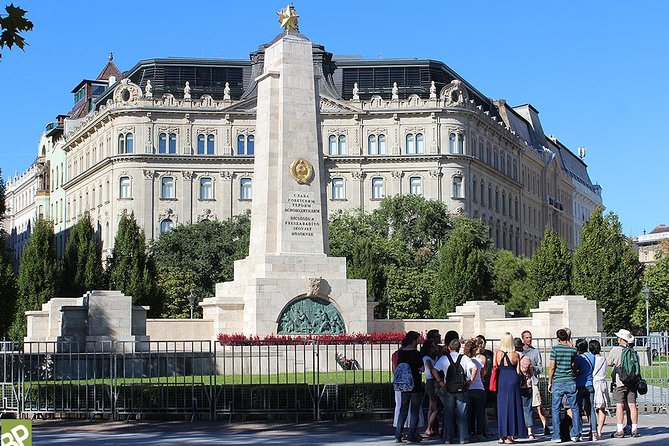
Your tour starts at Liberty Square, a fitting place to begin because it is all about power made visible. You’ll look at the memorial to the Soviet army, tied to the Siege of Budapest near the end of World War II. The guide’s job here is not only to point out what you’re seeing, but to help you understand why this kind of monument mattered, and why it still matters in Budapest today.
What I like about this opening is that it sets the timeline in front of you fast. You are not starting with ideology first, you are starting with the aftermath of war, then watching how that shifts into control, propaganda, and public life. It’s a smart way to get your bearings without drowning in dates.
More communist-era tours:
- Budapest: Communist History Tour with House of Terror Option
★ 4.8 · 182 reviews - Budapest: 3-Hour Walking Tour About Communism (Small Group)
★ 4.7 · 70 reviews - Communism in Hungary with a Historian
★ 5.0 · 70 reviews
Szabadság tér, Habsburg leftovers, and why squares feel political
Next comes Szabadság tér, one of the city center’s grand, generous squares. The point of the stop is to show how Budapest layering works. Even when you’re discussing communist-era themes, the spatial feel of the city can come from earlier eras, too.
Here you’ll hear how the huge dimensions trace back to the Habsburg period, when a Bastille-like building called Újépület once stood on the site. The square itself is calm and open, which matters because it gives you contrast. A peaceful green space next to big civic architecture helps you understand something crucial: power does not only appear in dramatic speeches. It also appears in the way cities are planned, the way space is controlled, and the way people move through it.
Kossuth Square and Parliament, where 1956 turned into gunfire
At Kossuth Square, you face the Hungarian Parliament building, with the ethnography museum and the Ministry of Agriculture nearby. This stop is key because it connects public institutions to real political risk.
In the 1956 revolution, fighting is described as starting in front of the Parliament building, and the tragedy around that day is still hard to pin down precisely. The crowd was not some single-note group. It included men, women, children, and the elderly. That detail matters, because it underlines what the guide is likely to stress throughout: revolutions are often made of ordinary people suddenly realizing their safety and freedom are on the line.
If you are the kind of traveler who wants the human scale behind big historical moments, this is one of the stops that usually delivers.
Petőfi Statue at Március 15 Square, plus a real-life meeting point
From there you head toward Március 15 Square and the Petőfi Statue area, down near the foot of Erzsébet Bridge. You’ll also be in front of Budapest’s oldest church, which gives this section a lived-in feel.
This is one of those spots where the story and the city overlap. After renovations, the square became a popular scene for social life, so you can stand in a place tied to national memory and still watch how people hang out like it is any other day. The contrast is useful for a tour like this, because communism was not just built from fear. It was also built in the space between what people were told and what they still wanted for daily life.
A different sort of day out in Hungary:
- Budapest: City Highlights Sightseeing Cruise
★ 4.6 · 43,981 reviews - Budapest: Unlimited Prosecco, Beer and Aperol Spritz Cruise
★ 4.8 · 37,304 reviews - Budapest: Széchenyi Spa Day Ticket with Optional Upgrades
★ 4.3 · 23,911 reviews - Budapest: Nighttime or Daytime Sightseeing Cruise
★ 4.2 · 21,062 reviews
Corvin köz: the 1956 resistance center, close to the action
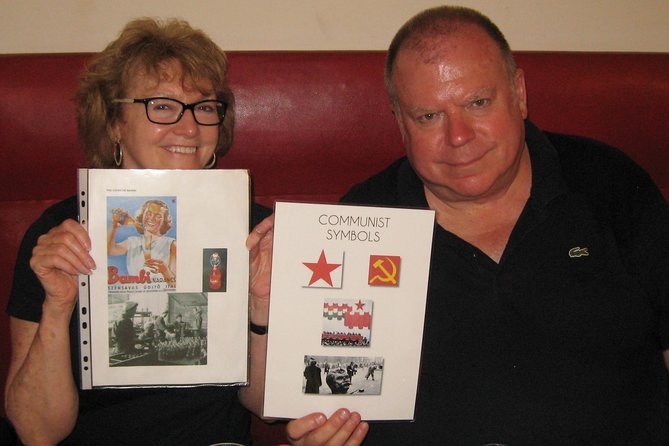
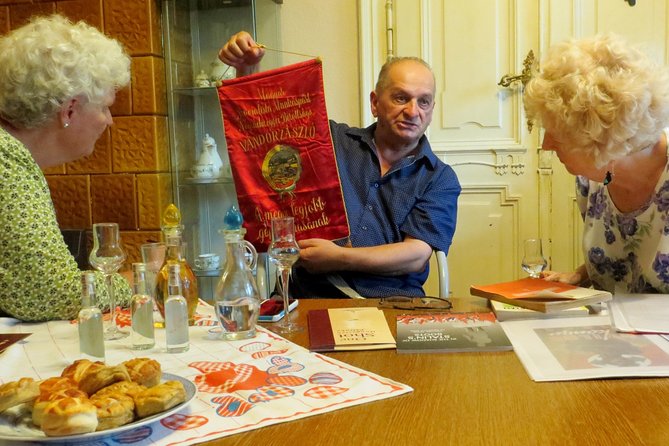
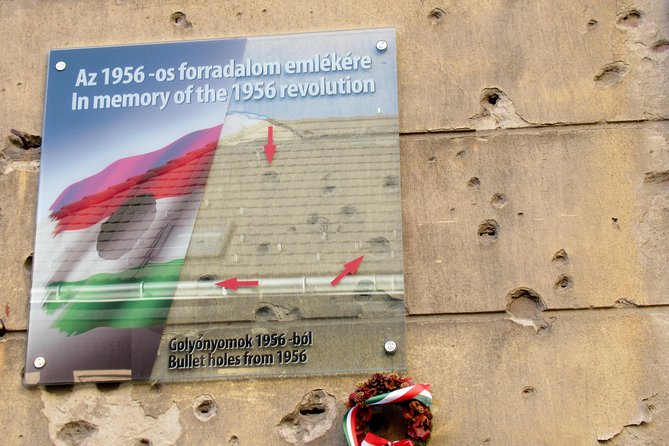
Now you move to Corvin köz, described as a major resistance center during the 1956 uprising. This is where the tone can shift, because the story is more confrontational.
You’ll hear about local youngsters fighting the invading Russians with Molotov cocktails and guns they stole from soldiers to fight against Soviet tanks. After that, you look at reminders of those battles and talk about what followed, including the invasion’s aftermath.
I like Corvin köz because it resists the common tourist habit of making history distant. Even with modern streets and present-day foot traffic, the guide can help you picture the speed and desperation of those decisions. If you want your walk to explain the why, not just the what, this is a strong stop for that.
A bridge crossing and a viewpoint built for perspective
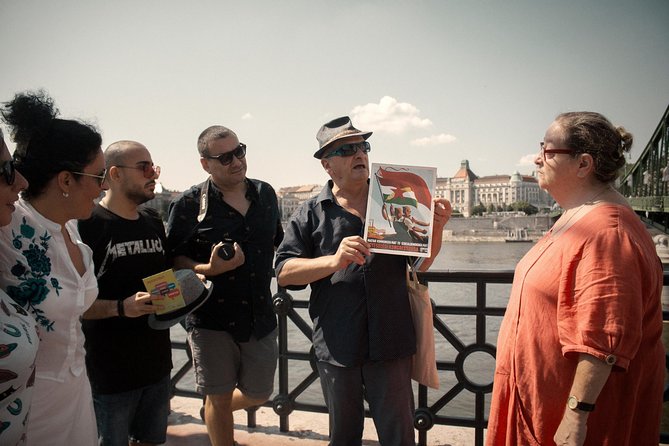
Part of the route is walking across one of Budapest’s most beautiful bridges, then arriving near Gellért Hill. You’re moving from street-level story to viewpoint-level symbolism.
This matters because a lot of communist-era power was about visibility: statues, sightlines, and what you could see from official spaces. A bridge and a hill are perfect tools for that. You feel the city’s geography while the guide keeps tying it back to how people experienced control and propaganda.
St Gellért Square and the Liberty Statue framing your view
At St Gellért Square, the guide puts you in a spot designed for looking out. The square is named after Bishop St Gellért, also called the Martyr for Hungarian Christendom, so it carries religious and national meaning, not only political meaning.
From here, you have an excellent view of the Liberty statue, erected in 1947 to commemorate Soviet liberation of Hungary. That phrasing is exactly the kind of detail a strong guide will unpack, because the same event can be remembered in different ways depending on who tells the story and what they want the public to believe.
Even if you do not memorize every fact, you’ll likely remember the view. That helps the tour stick, because your brain stores emotion and geography better than it stores a list of dates.
Coffee at Bambi Presszó, ideology in a cup
One of the highlights is the stop for coffee at Bambi Presszó, described as the last stronghold of communist culture. This isn’t a random break. The tour uses it as a bridge between politics and everyday habits.
This is also where questions can turn personal. If your guide is the type to answer patiently, you’ll often get practical insight here: how locals talk about the era now, how memories have shifted over time, and why certain symbols survive when institutions do not. For a lot of people, this is the moment the tour becomes less about history in the past and more about how Budapest still thinks in the present.
Practical note: the tour includes the experience components and option admissions, but additional food and drink are not listed as included. So plan to pay for your coffee unless your exact package confirms otherwise.
Option 1: Memento Park and what Budapest chose to preserve
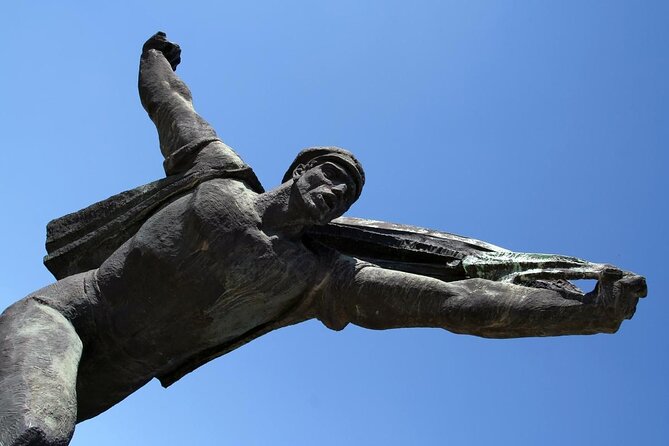
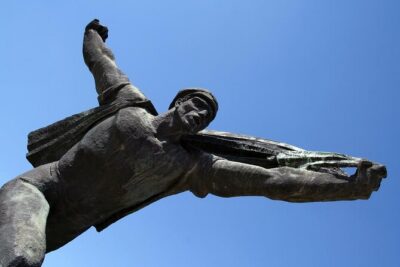
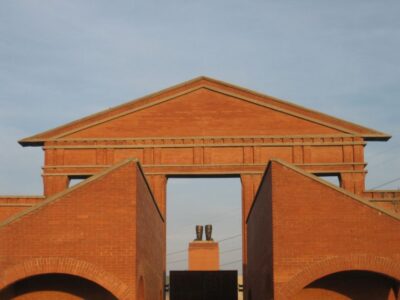
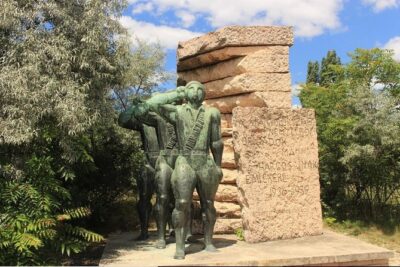
If you pick the Memento Park option, you’ll spend about an extra hour visiting. The idea of Memento Park grew after communism collapsed in Hungary in 1989, when Budapest was left with many public works of art that celebrated the era.
In 1993, the city government decided to save the statues rather than destroy them, and that decision became the foundation for Memento Park. So you’re not only seeing statues. You’re seeing a civic choice about how to deal with a painful past: keep it, relocate it, and turn it into a place where visitors can learn.
If you like your history visual and tangible, this option is a strong pairing with the walking route, because you go from street symbolism to a collected outdoor “archive” of that symbolism.
Option 2: House of Terror Museum and the shock of design
If you choose the House of Terror Museum option, you also get about an extra hour, with admission included.
This museum is housed in a building that underwent year-long construction work and a full renovation inside and out. The exterior is deliberately stark, with black elements described as forming a frame around the museum against the other buildings on Andrássy Avenue. Inside, there is a T-54 tank on display, which immediately signals that this is not a gentle, neutral history stop.
You’ll also hear about the reconstruction plans by architects János Sándor and Kálmán Újszászy. The point of naming them is to show you that the building itself is part of the message. It looks like a monument, and then it turns into a museum that makes you sit with what the system did to people.
Consideration before you book: this is heavier subject matter. If you know you get overwhelmed by political violence and oppression stories, plan for it. You can still do it. Just give it the time and mental space it deserves.
Price and value for a private up to 5 group
The price is $280.33 per group, for up to 5 people. That is where the value math starts, because the tour is private, not a big shared bus model. If you spread it across a full group, it can feel reasonable for a guided, English-language deep context walk plus optional admissions.
Two things push the value higher than a standard street tour. First, your tour includes informative handouts and entrance tickets for the options you choose. Second, the format is designed to answer questions, not just read them off a route plan.
At the same time, you should treat the tour price as “experience and admission,” not “food and extras.” Drinks, any additional snacks, and any costs beyond what’s stated are your responsibility. Also, because the House of Terror and Memento Park visits are optional, you need to confirm you selected the option you actually want, and that your admission is included for that specific choice.
How to get the most from this walk (and not miss the point)
This tour is described as moderate physical fitness, and it is a walking route through central Budapest with bridges and multiple squares. Wear comfortable shoes and plan to move.
Then, bring a simple attitude: ask questions. The best reviews highlight guides who answered freely and adapted to what people wanted to focus on. If you care about 1956, flag that early. If you care more about symbolism and monuments, ask about that, too. A private group format usually makes it easier for the guide to adjust.
Finally, remember that communist history is not one story. It overlaps with wartime events, revolutions, propaganda, and how a city decided what to keep and what to change. This tour’s strength is that it lets you see that overlap while you walk through the actual places where those stories still live.
Should you book this Budapest communist-era tour?
Book it if you want a structured, guided walk through major squares tied to the Soviet era and the 1956 uprising, and you like history that connects to street life. It is especially good for small groups who want real Q and A time.
Choose the Memento Park add-on if you prefer a visual, outdoor way to see how monuments were handled after communism ended. Choose the House of Terror add-on if you want a museum experience that is more intense and visually forceful.
Skip or rethink it if you dislike heavy political topics, or if you have limited time and hate any chance of option confusion. If you book, double-check which option you selected so you get the exact experience you’re aiming for. That one step avoids most headaches.
FAQ
How long is the tour?
The walking tour runs about 3 hours. If you choose an option, you add an included visit with about 1 hour for either Memento Park or the House of Terror Museum.
Is this tour private, and what group size can I expect?
Yes, it is a private tour or activity, and only your group participates. The group size is up to 5 people.
What language is the tour offered in, and do I get a ticket on my phone?
The tour is offered in English, and you receive a mobile ticket.
What optional visits are available, and are admission tickets included?
You can add Memento Park or the House of Terror Museum. Admission tickets are included for the visit options you select.
Is pickup included, and do I need to pay for coffee?
Pickup is offered, but hotel pickup and drop-off are listed as not included. There is a coffee stop at Bambi Presszó, but additional food and drink are listed as not included, so plan for you to pay for your own drink unless your specific option confirms otherwise.
Can I cancel for free?
Yes. You can cancel up to 24 hours in advance for a full refund.
Latest to land in Budapest
- Visegrád Hike & Castle Tour with Ferry from Budapest★ 4.6 · 3 reviews
- Budapest: Vacation Photographer to collect great memories★ 5.0 · 49 reviews
- Trash Art Museum: Hungary’s First Scrap Metal Exhibition★ 4.3 · 72 reviews
- True Crime Walking Tour in the Buda Castle district★ 5.0 · 26 reviews
- Budapest: 3-Hour Trabant Sightseeing Tour★ 4.7 · 28 reviews
- Audio visual multi-sensory chefs journey dinner experience★ 5.0 · 3 reviews
- Private Szentendre and Vac Tour from Budapest with Transport★ 5.0 · 3 reviews
- Wine Tasting in the Countryside from Budapest★ 5.0 · 14 reviews
Communist History Tours, compared.
Communist History Tour with House of Terror Option
Read our review →
3-Hour Walking Tour About Communism (Small Group)
Read our review →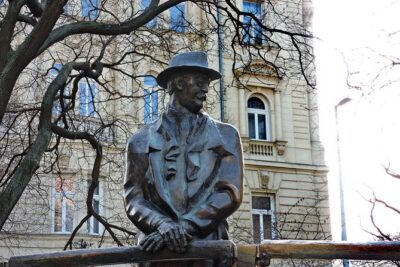
Memento Park Visit with Private Trabant Transfer
Read our review →
Browse the lists this tour appears in