
Reviewed · JEWISH HERITAGE TOURS
Private Jewish Quarter Walking Tour with Synagogue entry
Budapest’s Jewish streets tell stories fast. This private 3-hour walk connects architecture, memorials, and synagogue visits, with skip-the-line help for the Great Synagogue area and an English guide (many people go with Klaudia). You’re not just checking boxes, you’re getting the thread that ties the neighborhoods and buildings together.
I especially like two parts. First, you get a proper Dohány Street Synagogue visit with meaningful context, not a rushed look from the sidewalk. Second, the walk to the Ghetto Memorial Wall and surrounding memorial points turns the history into something you can actually stand in front of.
One drawback to plan around: the route includes time near synagogues like Rumbach and Kazinczy, but the exact “inside time” can feel short in a 3-hour format, so it helps to confirm what you’ll enter versus pass by when you book.
In This Review
- Key highlights at a glance
- Start at Budapest Eye, then walk into the Jewish Quarter
- Rumbach Street and Kazinczy Street: architecture you can see from the curb
- Király Street and Gozsdu Udvar: the neighborhood between past and present
- The ghetto wall: stone remnants and the weight of a boundary
- Emanuel Tree Budapest and memorial art at street level
- Entering the Great Synagogue complex at Dohány Street
- How a private guide changes a 3-hour Jewish Quarter walk
- Price and value: what $129 buys you in real time
- What to bring and what to avoid
- Who should book this Jewish Quarter tour, and who should pass
- Should you book this tour?
Key highlights at a glance
- Skip-the-line Great Synagogue entry so you spend more time inside and less time stuck in queues
- About an hour at Dohány Street Synagogue including its role as a religious site, cemetery, museum, and Holocaust memorial
- Ghetto Wall Fragment + Ghetto Memorial Wall where you can see physical remnants of the WWII-era ghetto boundary
- Street memorial stops like the Raoul Wallenberg Suitcase Memorial and the Emanuel Tree area moments
- Stops tied to Jewish life and architecture including Rumbach Street and Kazinczy Street synagogues
- A focused 3-hour private pacing with an English guide and time for photos where allowed
Start at Budapest Eye, then walk into the Jewish Quarter
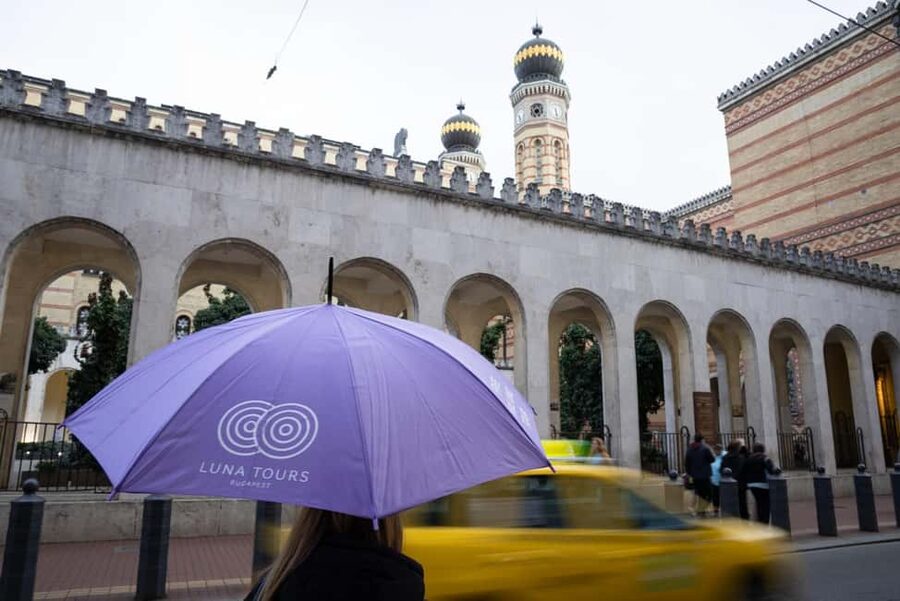
Your tour begins at Erzsébet tér, by Budapest Eye. It’s a smart meeting point because it’s central, easy to spot, and you can orient quickly before the walking starts. Look for the PURPLE umbrella and a guide ready to get the day moving.
From there, you’ll pass through squares and streets that help set the emotional and historical tone. Two standouts early on are the Raoul Wallenberg Suitcase Memorial, which honors the Swedish diplomat who saved thousands of Hungarian Jews during World War II, and the bronze suitcase symbol that marks his courage and the mystery around his disappearance. Another quick stop frames the gateway feeling of Madách Imre Square, with its archway pointing toward the former Madách housing complex and the start of the Jewish Quarter’s web of streets and stories.
Why this matters: when you start with memorial landmarks in the open air, the rest of the tour stops feel less like sightseeing and more like understanding. You’ll also get your bearings fast, since the route is built for easy movement on foot and doesn’t bury you in complicated transit logistics.
More Jewish heritage walks:
- Budapest Jewish Heritage Memorial Walking Tour & Synagogue Entry
★ 5.0 · 568 reviews - Budapest: Jewish Heritage Guided Tour with Synagogue Ticket
★ 4.8 · 533 reviews - German tour in the Budapest city centre & the Jewish quarter
★ 5.0 · 359 reviews
Rumbach Street and Kazinczy Street: architecture you can see from the curb
The tour spends time around both Rumbach Street Synagogue and Kazinczy Street Orthodox Synagogue. Even when the timing is tight, these stops help you learn how Budapest’s Jewish community expressed faith, community, and identity through design.
Rumbach Street Synagogue is especially striking. It’s known for its Moorish-style look and was designed by Austrian architect Otto Wagner in 1872. The tour also notes that it has been recently restored and now functions as a cultural space and memorial. Expect your guide to connect the building to the story of continuity after disruption, since this is exactly the kind of place where history shows up in physical form.
Kazinczy Street Orthodox Synagogue brings a different feel. Built in the 1910s, it’s described as Art Nouveau with stained glass and intricate woodwork. It’s also a religious center for Budapest’s Orthodox Jewish community, so it gives you a look at traditional Jewish life in the present, not only as a memory of the past.
Practical consideration: depending on the day’s flow, you may get more exterior time than interior time at Rumbach and Kazinczy. The tour description includes synagogue admission among the included items, so it’s worth confirming how much time inside is planned for each. In a short 3-hour tour, that allocation can make a big difference.
Király Street and Gozsdu Udvar: the neighborhood between past and present
After the synagogue-adjacent stops, the walk crosses into Király Street and toward Gozsdu Udvar, one of the area’s most well-known sections. Historically tied to Jewish Quarter commercial life, it now mixes older buildings with cafes and ruin bars, so it’s a useful place to see how neighborhoods evolve instead of freezing in time.
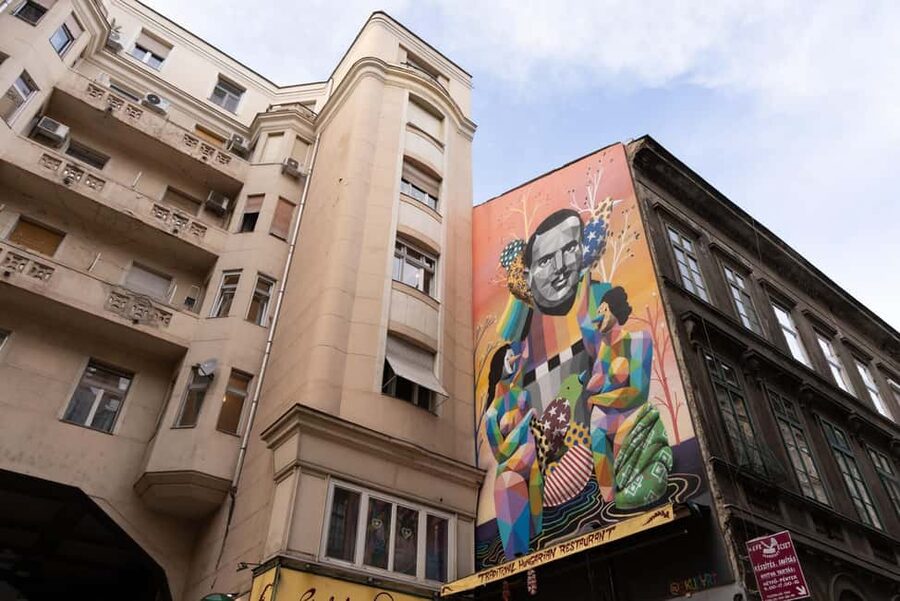
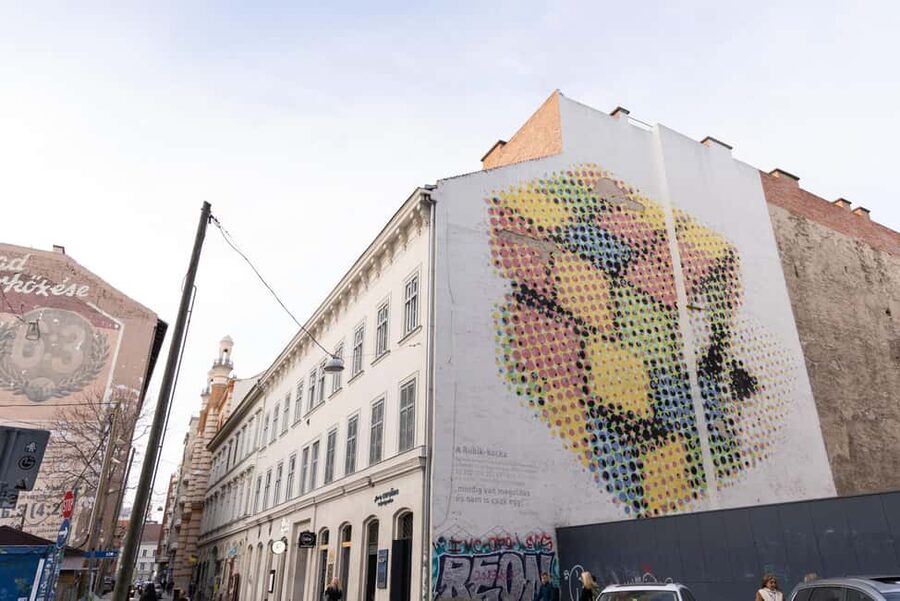
This is also where street-level details make the story feel specific. You’ll come across the 6:3 Street Painting, which commemorates Hungary’s legendary 6:3 football victory over England in 1953. Nearby, there’s the Rubik’s Cube sculpture honoring Ernő Rubik, the Hungarian inventor of the world-famous puzzle.
Why I like this part for planning: it breaks the emotional intensity just enough to keep the rest of the tour readable. You’re still in the Jewish Quarter, but the message shifts from WWII memorials to everyday identity, culture, and national pride that grew around Jewish and Hungarian life.
The ghetto wall: stone remnants and the weight of a boundary
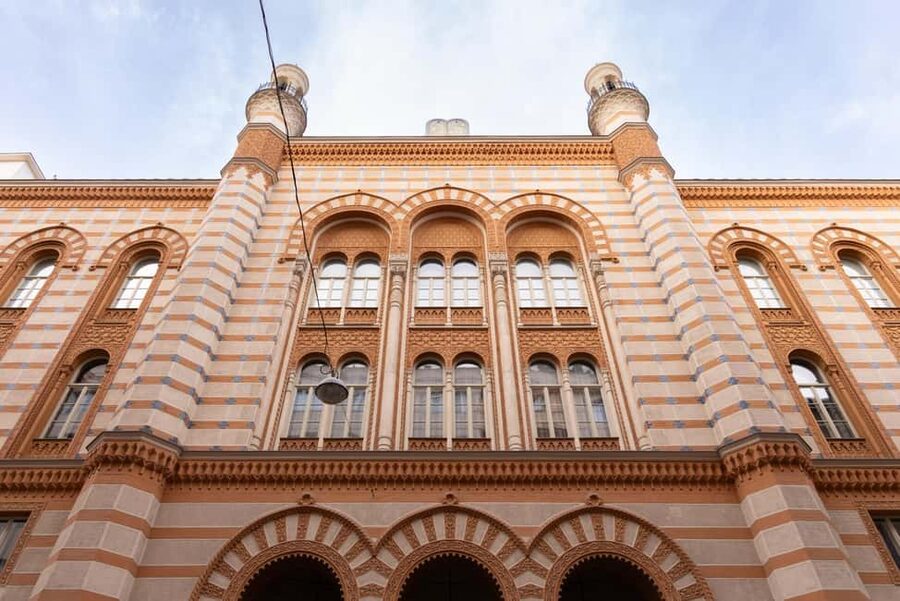
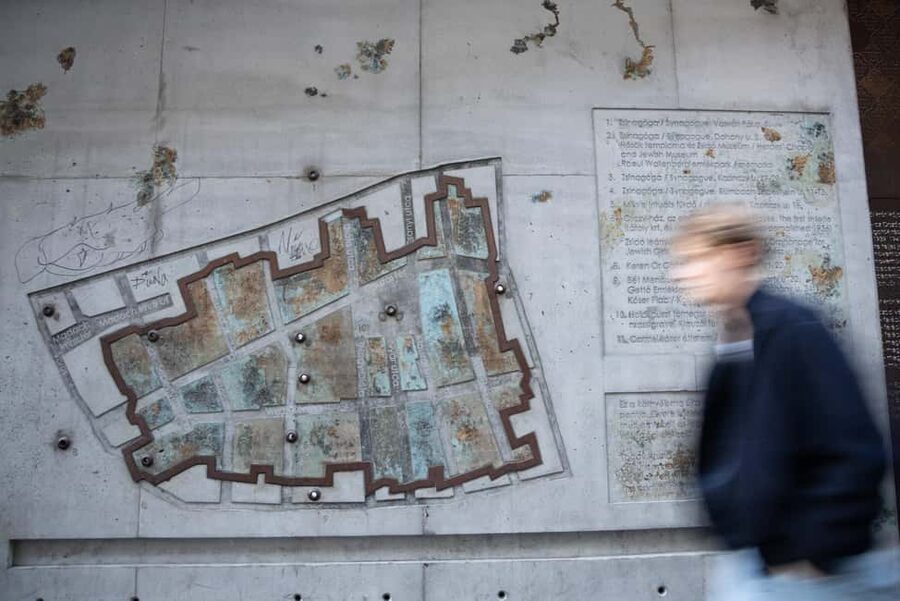
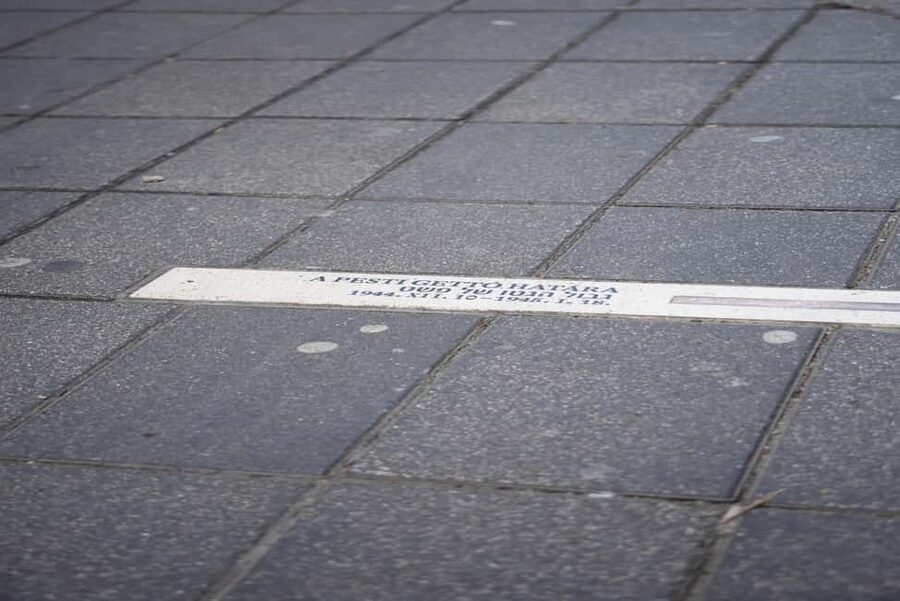
One of the most powerful segments is the stop at the Jewish Ghetto Wall Fragment. This is one of the last remaining pieces of the wall that enclosed the Jewish ghetto during World War II. Even if you only spend about 15 minutes here, standing in the vicinity of a physical boundary like this changes the way you understand every other memorial stop that came before it.
The tour also points to the nearby Ghetto Wall Exhibition, with photos, documents, and personal stories. While you might not have hours here, the intent is clear: you’re not just seeing a landmark, you’re getting the historical framing so the landmark doesn’t become an isolated image.
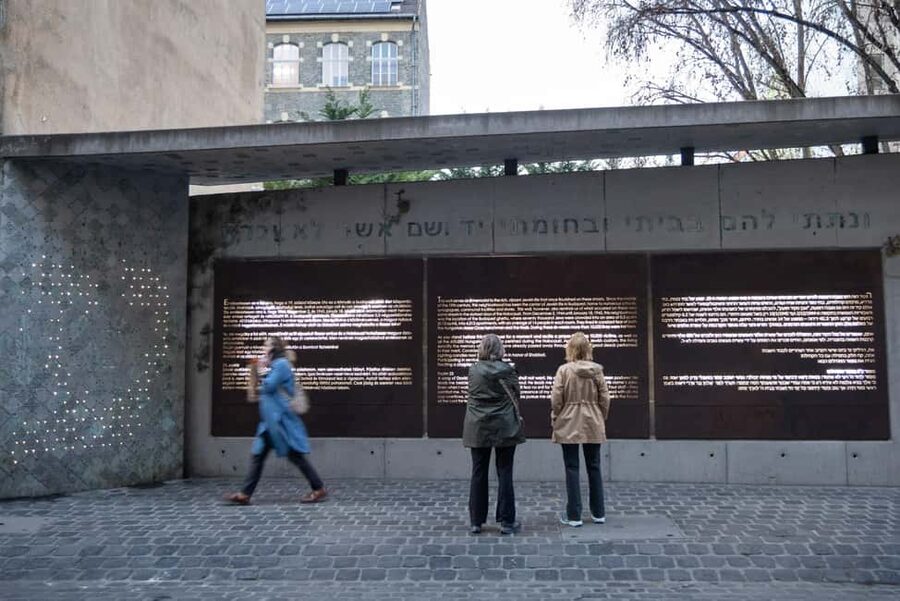
Then you’ll walk to the Ghetto Memorial Wall, a solemn tribute that preserves another section of the original ghetto wall near the Dohány Street Synagogue. This is close to where the tour spends its largest block of time, so the emotional pacing works. You move from fragments and context to the large institutional memorial and museum experience.
What to do in this section: give yourself a slow moment when you’re near the wall. In memorial places, the difference between 30 seconds and 3 minutes is huge. Wear comfortable shoes and keep water handy, since the walking does add up over the full route.
More Walking Tours in Budapest:
- Budapest: Buda Castle Walk with Saint Stephen’s Hall
★ 4.5 · 3,012 reviews - Big Bus Budapest Hop-On Hop-Off Bus and Walking Tour
★ 3.5 · 2,206 reviews - Budapest: Buda Castle District Walking Tour
★ 4.6 · 2,108 reviews - Budapest City Landmarks Walking Tour in 2 Hours
★ 5.0 · 2,048 reviews
Emanuel Tree Budapest and memorial art at street level
Between the ghetto-wall sites and the final synagogue complex, there’s a short visit around Emanuel Tree Budapest. The tour includes it as a scheduled stop, so it isn’t just a photo opportunity. It’s the kind of point where memorial culture shows up not only in museums but also in street-level art and symbolism.
If you like when a tour gives you more than one way to process the past, this stop helps. It bridges the gap between hard history tied to a wall fragment and the more museum-driven storytelling you’ll see later at Dohány Street Synagogue.
Entering the Great Synagogue complex at Dohány Street
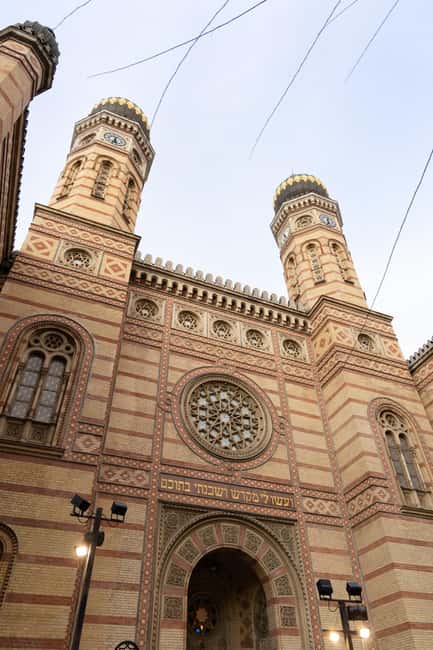
The center of the tour is the visit to Dohány Street Synagogue, listed as the largest synagogue in Europe and described as a Moorish Revival masterpiece. Built in 1859, it serves multiple roles at once: a religious center, a Holocaust memorial, a cemetery, and a museum.
That combination is exactly why this stop is worth a full hour in a guided format. You’re not only learning architectural details, you’re also learning how the building carries community life and memorial responsibilities at the same time. The tour is designed to make this area feel connected to everything you saw earlier, especially the ghetto-wall remnants and memorial points.
Access advantage: the tour includes a skip-the-line ticket for the Great Synagogue experience. In practical terms, that can be the difference between a satisfying visit and one where you spend precious time waiting. The description also includes a private guide in the Great Synagogue, which is helpful because large sites can feel overwhelming without context.
A note on rules: flash photography is not allowed, and smoking is not permitted. If you’re sensitive about audio or crowd flow, the best plan is to keep your expectations flexible once you enter the building areas, since memorial sites often have their own pace and protocols.
When the time wraps up, you finish near Herzl Tivadar Park. That location is a nice bookend, since Theodor Herzl is strongly tied to Jewish history and Zionist thought, and it keeps the day’s theme anchored as you head out on your own.
How a private guide changes a 3-hour Jewish Quarter walk
This is built as a private tour with an English live guide. That matters because the area can be confusing at street level, especially when you’re trying to match names, buildings, and memorials to the bigger timeline.
In multiple accounts of the experience, Klaudia is mentioned as friendly and effective, with lots of interesting facts about Jewish life in Hungary and the broader story behind what you’re seeing. I like that kind of guide match because the tour isn’t only architectural commentary. It’s also about why certain spots exist where they do, and how the Jewish Quarter tells its story across very different kinds of sites.
That said, there’s one practical consideration. The itinerary time blocks and the included items can be slightly confusing around how much you go inside smaller synagogues like Rumbach and Kazinczy. To avoid disappointment, I’d ask a clear question before you arrive: which synagogues will I enter, and for how long?
Price and value: what $129 buys you in real time
At $129 per person for about three hours, this isn’t a “cheap and casual” walking tour. But the value is not just the route. It’s the access and time saved.
Here’s what you’re effectively paying for:
- Skip-the-line Great Synagogue entry
- A private guide inside the Great Synagogue area
- Admission connected to major synagogues (Rumbach, Kazinczy, Dohány) in the tour information
- A visit that includes the Jewish cemetery and Memorial Park
- Entrance to the ghetto wall area
- Time spent at street memorials and artworks
If you’re the type of traveler who hates wasting half your trip standing in queues, the skip-the-line piece can be worth a lot. And if you want a guided narrative through memorial sites, the private guide inside the big synagogue complex is where your money starts to feel justified, because context is often the difference between seeing a building and understanding what the site is for.
If you’re traveling on a tighter budget, you could choose self-guided walking plus separate entry tickets. But if you want fewer logistics headaches and a smoother flow through memorial sites, this package is priced like a “time saver plus interpretation.”
What to bring and what to avoid
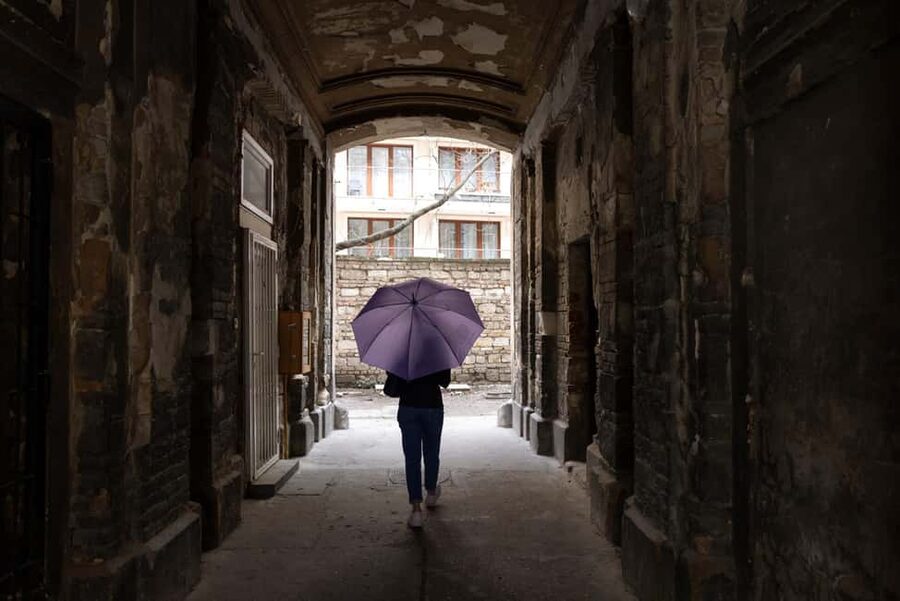
The tour asks for some basic but important items. Bring comfortable walking shoes, water, and sunscreen, since you’ll be walking between several stops in central Budapest.
For site rules, plan on no flash photography and no smoking. Flash can be an issue in memorial and religious spaces, so save that camera setting and keep your phone ready for steady photos without it.
Who should book this Jewish Quarter tour, and who should pass
This tour makes the most sense if you want:
- A focused Budapest Jewish Quarter walk in just three hours
- Synagogue time paired with memorial context
- A guide who can connect architecture and history to what you’re standing near
It may not be a good fit if you:
- Need a tour designed for very young children, since it’s listed as not suitable for children under 10
- Are pregnant, since it’s listed as not suitable for pregnant women
- Have mobility limitations, since it’s listed as not suitable for people with mobility impairments and wheelchair users, even though wheelchair accessibility is also listed in the tour details
That last point is worth taking seriously. If mobility is a concern for you, message the provider before booking and ask how the route will be handled on the day you travel.
Should you book this tour?
I’d book it if you want a guided, meaningful walk through Budapest’s Jewish Quarter that includes the big, emotionally heavy anchor sites, with help avoiding lines at the Great Synagogue complex. The combination of ghetto wall remnants, memorial landmarks, and time at Dohány Street Synagogue is a strong match for travelers who like context, not just locations.
I’d be cautious if your top priority is lengthy indoor time at every named synagogue on the route. Because the tour is short, I’d confirm how much time you’ll get inside Rumbach and Kazinczy versus exterior views, and then decide based on whether the Dohány Street Synagogue visit is the heart of your trip.
If you want, tell me your travel dates and what you care about most, architecture, WWII memorials, or religious sites, and I’ll help you judge whether this pacing fits your Budapest plan.
Latest to land in Budapest
- Visegrád Hike & Castle Tour with Ferry from Budapest★ 4.6 · 3 reviews
- Budapest: Vacation Photographer to collect great memories★ 5.0 · 49 reviews
- Trash Art Museum: Hungary’s First Scrap Metal Exhibition★ 4.3 · 72 reviews
- True Crime Walking Tour in the Buda Castle district★ 5.0 · 26 reviews
- Budapest: 3-Hour Trabant Sightseeing Tour★ 4.7 · 28 reviews
- Audio visual multi-sensory chefs journey dinner experience★ 5.0 · 3 reviews
- Private Szentendre and Vac Tour from Budapest with Transport★ 5.0 · 3 reviews
- Wine Tasting in the Countryside from Budapest★ 5.0 · 14 reviews
Jewish Heritage Tours, compared.
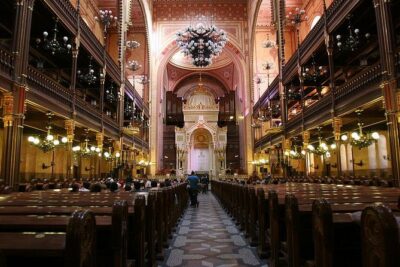
Budapest Jewish Heritage Memorial Walking Tour & Synagogue Entry
Read our review →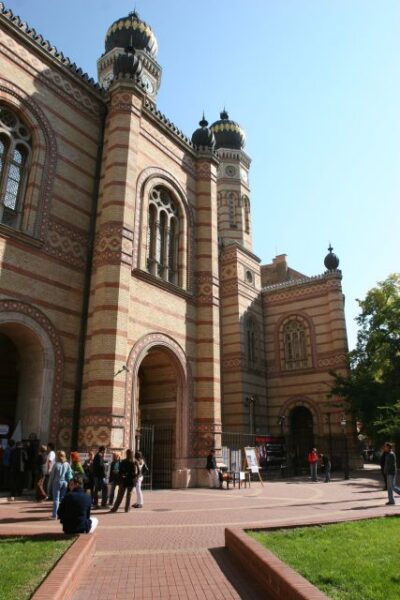
Jewish Heritage Guided Tour with Synagogue Ticket
Read our review →
German tour in the Budapest city centre & the Jewish quarter
Read our review →
Past and Present of Budapest Jewish District Tour
Read our review →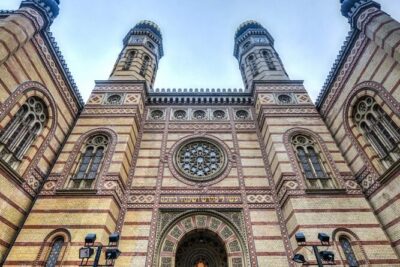
Budapest Dohany Synagogue & Hungarian Jewish Museum & free extras
Read our review →
Jewish History Guided Walking Tour with Historian
Read our review →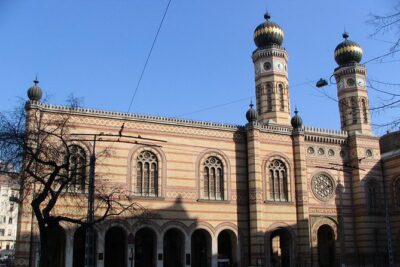
Budapest Dohany, Heroes’, Rumbach synagogues & Jewish Ghetto Tour
Read our review →Browse the lists this tour appears in