
Reviewed · COMMUNIST HISTORY TOURS
Private Tour of Communist Era Budapest
Communist Budapest is not what you expect. This private outing strings together 20th-century landmarks you usually see separately, then explains how the ideas shaped daily life and the city’s look. I especially liked the tight stop-by-stop storytelling and the personal memories that turn the big political story into something human, from Szabadság Square to tower blocks and Csepel’s factories.
One thing you should know up front is that it’s a long, full day. Plan for 7 to 10 hours with plenty of moving around, plus extra walking at viewpoints and museums.
In This Review
- Key Points You Should Know Before You Go
- Price and What You Get for $245
- Getting Picked Up and Ready for a Full-Day Circuit
- Szabadság Square: Memorials, Stalin Baroque, and the First Big Backstory
- House of Terror Without Going Inside
- Bem Square and the Spark of 1956
- A Real Communist-Era Presszó: Bambi Café
- Youth, Supervision, and Concrete: Marczibányi Square Culture Centre
- Hotel Budapest and Gellért Hill: Skyscrapers, Liberation, and Renaming
- Socialist Realist Campus Buildings: Budapest University of Technology and Economics
- Fehérvári Street Market Hall: Brutalism, a White Overcoat, and Shopping Time
- Lunch at Restaurant Alba Regia: Simple, Local, and Helped Through the Menu
- A Communist-Era Church and Tower Block Estates You Would Miss on Your Own
- Memento Park: The Emotional Weight of Decaying Statues
- Experimental Housing Estate and Childhood Memories: The Children’s Dentistry Stop
- Csepel Island, Red Csepel, and the Iron Works That Held Out
- Gubacsi Road Housing Estate: From Socialist Realism to Modernism
- Budapest Retro Interactive Museum: A Fun Option With Extra Admission
- Should You Book This Communist Era Budapest Tour?
- FAQ
- How long is the Private Tour of Communist Era Budapest?
- Is this tour private, and is it offered in English?
- Do you get hotel pickup?
- What is included in the tour price?
- What admission fees are not included?
- Is lunch included?
- Can you still visit the Liberty Statue during renovation?
- Is the tour suitable for most people, and can service animals join?
Key Points You Should Know Before You Go
- Pickup door-to-door so you spend less time figuring out logistics and more time looking at details
- A dense itinerary that covers architecture, memorials, everyday venues, and major sites like Memento Park
- Real everyday stops, including a preserved communist-era presszó (Bambi Café) and time-period architecture at youth spaces
- Fast, readable context at major monuments like Szabadság Square, Bem Square, and Gellért Hill
- Optional paid add-ons you can skip if the day runs long, especially the Retro Interactive Museum
Price and What You Get for $245
At $245 per person, this isn’t a casual stroll. You are paying for a private, guided route that spans multiple neighborhoods, plus comfortable transport in an air-conditioned vehicle with a licensed driver/guide. You also get soda/pop, bottled water, and snacks, which is a real perk on a day with so many stops.
Value comes from two places. First, the itinerary is built to be hard to replicate on your own, because you are hopping across districts and still getting context as you go. Second, the guide brings personal perspective, including family and childhood memories, which helps you connect what you are seeing to what life felt like under communist rule.
The one caution on value is timing. With a day this packed, you will feel rushed if you’re hoping to linger at every photo spot for a long time. If you prefer slow travel, consider saving the sites that feel most meaningful to you for a later return trip.
More communist-era tours:
- Budapest: Communist History Tour with House of Terror Option
★ 4.8 · 182 reviews - Budapest: 3-Hour Walking Tour About Communism (Small Group)
★ 4.7 · 70 reviews - Communism in Hungary with a Historian
★ 5.0 · 70 reviews
Getting Picked Up and Ready for a Full-Day Circuit
The tour is private, meaning it’s only your group. That matters because the pace stays tuned to what you want, not what the loudest people on a group bus want. Pickup is offered at your hotel or another agreed meeting location in Budapest, and the tour runs Monday through Sunday, 9:00 AM to 6:00 PM over a long seasonal window.
It also helps that the tour is in English, and you get a mobile ticket. Translation is never the issue here, since the guide is focused on explaining architecture, monuments, and the political shifts that shaped them.
Bring a practical mindset. You are outdoors for some stretches, and you’ll do several short walks and viewpoint climbs. Wear shoes you trust, and plan your day around the idea that you are seeing a lot, not stretching one neighborhood for hours.
Szabadság Square: Memorials, Stalin Baroque, and the First Big Backstory
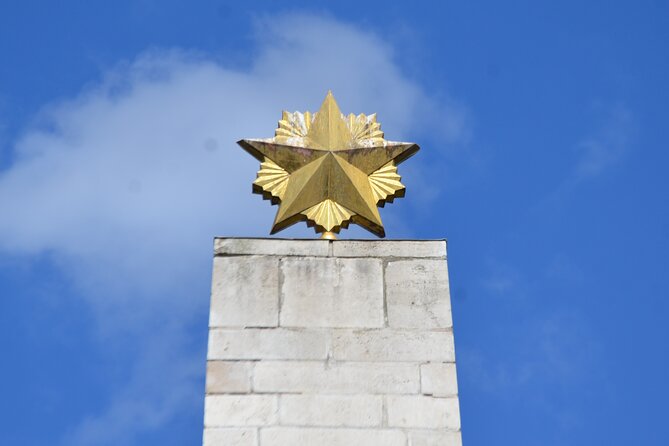
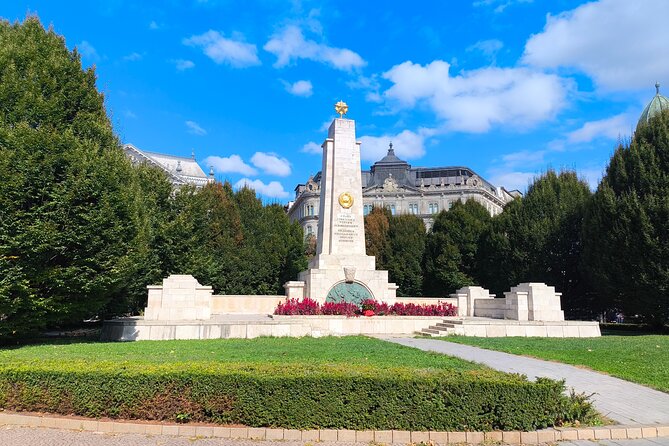
The day kicks off on Szabadság Square in downtown Budapest. You start at the Memorial for Victims of the German Occupation, where the guide sets the historical stage for how Hungary got pulled into the larger conflict that later fed communist power. You then move toward the Memorial for the Soviet liberation of Hungary in World War II from Nazi German occupation, which leads into the start of the communist era and the Stalinist dictatorship of the late 1940s and early 1950s.
What I like here is the balance. This is not presented as propaganda, and it isn’t glossed over as a distant political theory. The guide connects the monuments to the choices and pressures that came after the war.
Then comes a visual left turn that makes the tour memorable. Nearby, you see some of the few surviving examples of Socialist Realism, also called Stalin Baroque. The inner courtyard reliefs and even a statue of a bear riding a scooter are the kind of details that make you look twice at what you thought was just grim architecture. The point is clear: the regime shaped taste, building style, and public symbolism, not only laws.
House of Terror Without Going Inside
Next you pause at the House of Terror Museum on Andrássy Avenue. This building has been tied to both fascist and communist repression, including the headquarters of the Arrow Cross Party during World War II and later the central office of the communist secret police (ÁVH).
The tour does not go in during this stop, so you get the impact of the location without turning the day into a single museum marathon. That said, the guide flags that you can visit independently later if you want a deeper dive.
If you’re the type who wants to spend time inside every major site, you might feel this stop is too quick. If you want the day to stay moving and keep the historical thread broad, this works well.
A few more Budapest outings worth comparing
- Private Budapest TukTuk Tour: Custom Route, Hotel Pickup
★ 5.0 · 1,307 reviews - Budapest Essentials Private Tour Highlights and Hidden Gems
★ 5.0 · 861 reviews - Budapest Private Tuk Tuk Half-Day Tour
★ 5.0 · 606 reviews - Budapest One Way Private Transfer to or from Airport
★ 4.5 · 548 reviews
Bem Square and the Spark of 1956
At Bem Square on the Buda side, the focus shifts from the early dictatorship to the Hungarian revolution of 1956. The guide explains how the protests began here, then spread across the city.
This stop is short, but it’s powerful because it turns the idea of revolution into a map in your head. You’ll start noticing that Budapest’s major squares aren’t just pretty plazas. They are stages where history happened, and Bem Square is treated like a starting gun.
If you want to get the most from this moment, don’t speed through the photos. Take 30 seconds and look at the space. The guide’s explanation helps you imagine crowds moving through it.
A Real Communist-Era Presszó: Bambi Café
Then you take a breather at Bambi Café, a preserved communist-era presszó. This is one of those stops that changes how the whole day feels. You go from memorial stones and political buildings to something ordinary: sitting, drinking, and watching life go by in a room that stayed frozen in time.
It’s also a practical reset. You get about 30 minutes, and the stop adds variety to a schedule that otherwise tilts heavily toward architecture and monuments. Even if you don’t care about cafés much, this is a useful contrast point.
You’ll get more out of this stop if you slow down. Look at the décor, notice what feels old, and think about what kind of comfort or routine this kind of place provided.
Youth, Supervision, and Concrete: Marczibányi Square Culture Centre
The Marczibányi Square Culture Centre is a cultural space built in 1972, designed with young people in mind. The guide explains that the purpose was to offer meaningful, carefully supervised ways for youth to spend their free time instead of joining beat concerts or other gatherings labeled as questionable.
You get a brief look inside, including the reception hall, where the architecture and atmosphere reflect the era’s intentions. This stop matters because it shows the soft power side of communist systems. Not everything was built for terror or control. A lot of it was built to shape behavior, including leisure.
This is also a nice stop for people who like to see how policies filtered into everyday spaces, not just famous protests and monuments.
Hotel Budapest and Gellért Hill: Skyscrapers, Liberation, and Renaming
The tour then moves to Hotel Budapest, a circular building completed in 1967. It’s often missed because it’s unusual among the hills of Buda, but it’s visible even from planes. The guide frames it as a message: socialist countries could build big city symbols too, including skyscraper-scale ambition.
You also learn about the period after 1956, often called Goulash Communism, when Hungary was portrayed as the Communist Block’s happiest barrack. Even if you disagree with that nickname, you can see why it stuck. The architecture and tone of the era are part of how governments sell themselves.
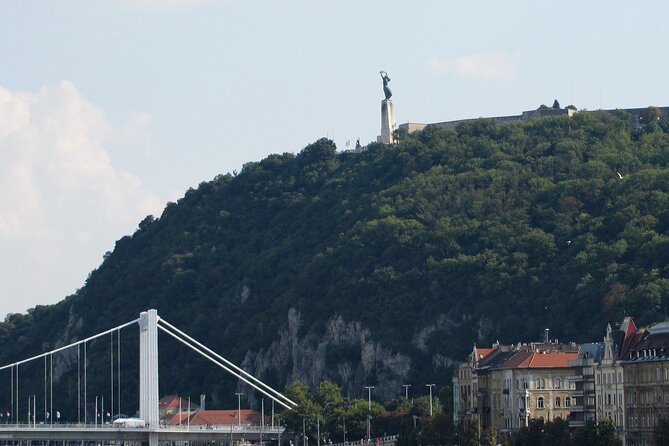
After that, it’s on to Gellért Hill and the Liberty Statue, which has stood for 78 years and was unveiled on April 5, 1947. The guide covers the statue’s original naming as the Liberation Monument, including the inscription that referenced memory of liberating Soviet heroes. The statue holds a palm branch and was modeled after Erzsébet Gaál, described as the living Liberty Statue, a role that became both a blessing and a curse.
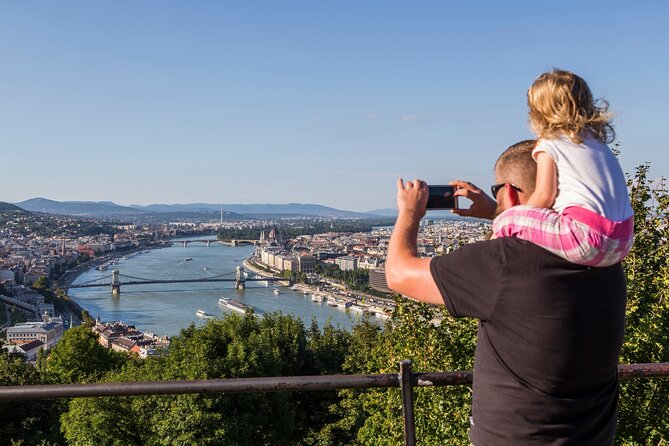
Important practical note: the statue and Citadel area are under renovation and expected to reopen in December 2025. You can still walk around the site and climb the steps to the monument, and you’ll find lookout points for photos.
This is one of the best stops to savor. The views help you understand the city’s geography, which makes later housing estates and industrial districts easier to picture.
Socialist Realist Campus Buildings: Budapest University of Technology and Economics
At the Budapest University of Technology and Economics, you see the H, T, and R buildings, described as among the largest remaining examples of Socialist Realist buildings in Hungary. The guide points out the facade of the R building, then notes that on weekdays you can also enter the building, where the interior atmosphere feels like you step into an Eastern-influenced version of the world.
Even if you only get a quick look, this stop reinforces a key theme: the communist era left a design footprint that is still part of the city’s functional present day.
If you’re planning this tour for a weekday, ask your guide whether entry is likely for the specific day. The tour timing and access can affect what you get.
Fehérvári Street Market Hall: Brutalism, a White Overcoat, and Shopping Time
Next comes a very practical stop at the market hall on Fehérvári Street (Gubacsi Way comes later, so keep the addresses in your mind). The building was originally a distinctive 1977 brutalist structure, later covered with a bland white box-like exterior. The guide uses this as a metaphor for how Hungarian architecture sometimes rejected brutalism after the fact.
Inside, you get to look at characteristic concrete surfaces and ramps. Then you have the choice to browse and shop for original Hungarian goods if you want.
This stop is great for two reasons. First, it’s a local errand that doesn’t feel like a tourist trap. Second, it reminds you that communist-era design is not only in monuments. It’s also in places where you buy groceries and live your daily life.
Lunch at Restaurant Alba Regia: Simple, Local, and Helped Through the Menu
For lunch, you go to Restaurant Alba Regia, described as a hidden local favorite away from tourist crowds. The menu is only in Hungarian, but the guide helps you choose something you’ll like.
This is the kind of support that changes the whole day. Even basic ordering can feel like a hurdle on a long tour day. Having someone translate choices into sensible meals lets you focus on relaxing.
You get about one hour here, which is enough to eat without feeling like you’re racing the clock. If you’re picky about pacing, tell the guide early in the day. They can often adjust how fast you eat and where you linger later.
A Communist-Era Church and Tower Block Estates You Would Miss on Your Own
Two stops in the middle of the day are built for people who enjoy urban form. First, you see a hidden communist-era church-like space built mostly from metal in a brutalist style, tucked at the base of stark residential towers. You would likely never stumble on it unless you knew where to look.
Then you get a brief look at a typical communist tower block estate with its urban center. The guide explains how prefabricated housing estates were constructed and what it’s like to live in them. There’s also a statue of three bulls, which is an easy photo target and a good reason to take five extra seconds and frame your shot.
These stops don’t just show buildings. They show how an entire lifestyle was designed and standardized.
Memento Park: The Emotional Weight of Decaying Statues
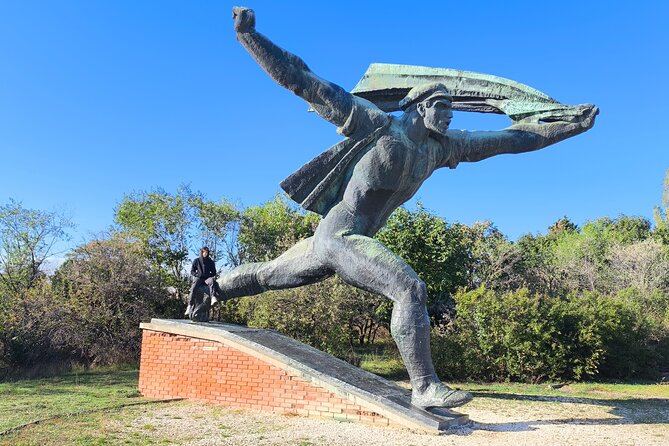
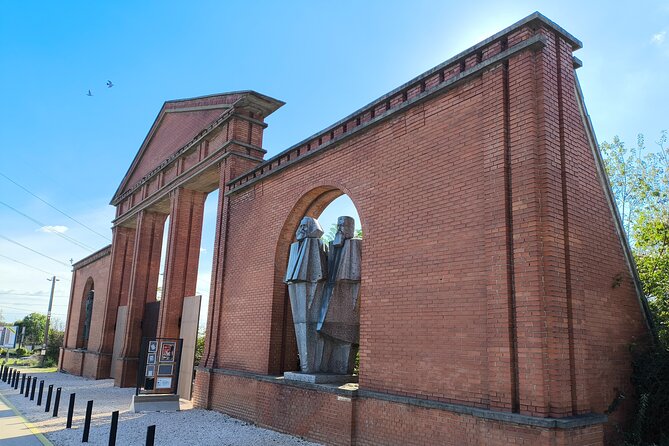
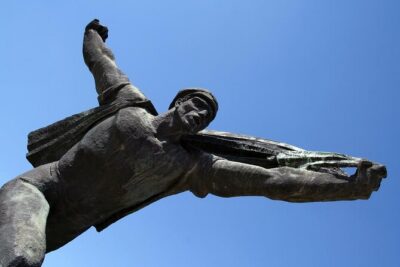
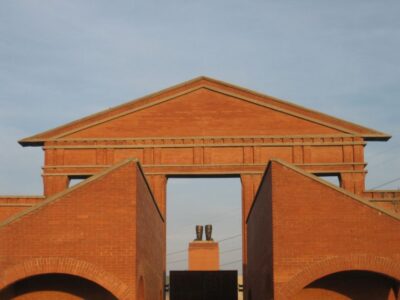
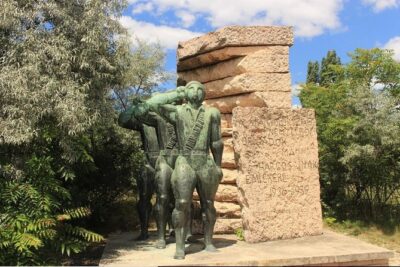
If you want the sharpest symbolic moment of the day, it’s Memento Park. This open-air museum preserves the imposing statues and monuments that once stood as symbols of the regime around Budapest.
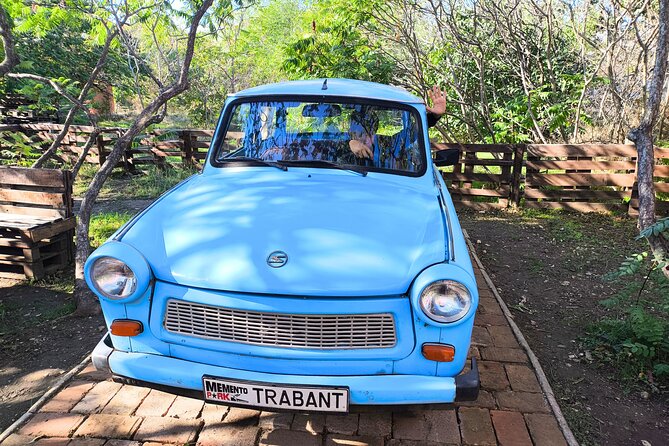
The guide explains what you’re seeing beyond surface-level aesthetics. You’ll notice the symbolism encoded within artworks, then the visceral effect of seeing these colossal relics decaying under the elements. It’s not a perfect mood lift, but it’s a memorable one. You also get a chance to sit into a real East German Trabant, described as probably the worst communist car ever made.
Timing is about one hour 30 minutes. The admission fee is not included, listed at $9 per person, so budget that in.
This stop is a strong match if you want a place where history is visible at human scale. The statues are big enough to feel like you’re standing in the past.
Experimental Housing Estate and Childhood Memories: The Children’s Dentistry Stop
After that, you make a brief stop at Experimental Housing Estate, noted as one of the more successful examples of communist-era housing in Budapest. The guide also shares that this is where they lived until the age of six.
Then you stop for a moment at Children’s Dentistry, likely connected to this housing area. It’s a short five minutes, so it won’t dominate the day, but the emotional connection adds weight to what otherwise could feel like another housing snapshot.
This is where personal context really shines. Architecture becomes more than style when you remember that people grew up inside it.
Csepel Island, Red Csepel, and the Iron Works That Held Out
The tour crosses to Csepel Island in the Danube, known during the communist era as Red Csepel because of its industrial hub status and working-class strength in Hungary. The guide takes you to Csepel Iron Works, a massive industrial complex tied to Soviet-style industrialization.
You learn that the factory employed tens of thousands of workers and produced a range of products, including steel, machinery, and vehicles. The tour also highlights an important link to 1956, noting that workers of Csepel played a crucial role in the revolution and held out even when everything else had fallen.
Around the site, you see large communist-style tower block housing estates and you pass while looking at surviving examples of socialist realist art and architecture. Even if you are not an industrial history fan, this helps you understand how the regime organized labor, production, and neighborhood life together.
Gubacsi Road Housing Estate: From Socialist Realism to Modernism
On Gubacsi Road Housing Estate, the tone shifts again. It’s described as a hidden time capsule from the post-war era, along the Ráckevei-Danube riverfront. Here you see architectural and social transition from socialist realism to modernism during the 1950s.
You also get a visual treat: rare, intricate, colorful ceramic reliefs that evoke the area’s industrial and communist past.
This stop is about 15 minutes, so you’re not overwhelmed. It’s a good finish for people who want the city’s history to include design evolution, not only political events.
Budapest Retro Interactive Museum: A Fun Option With Extra Admission
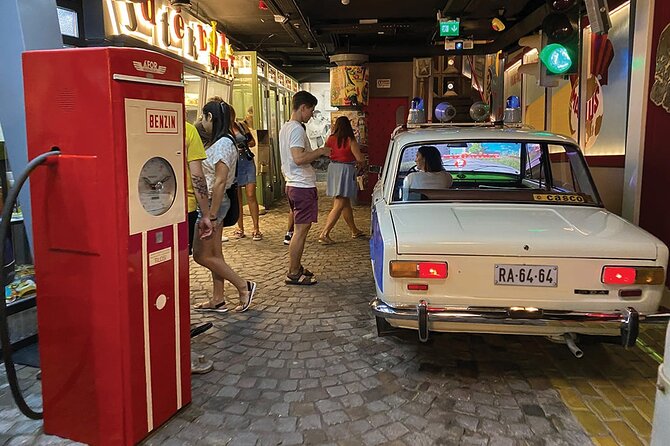
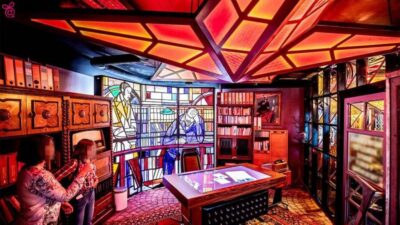
Finally, there’s the Budapest Retro Interactive Museum. This is where the day turns playful. You can experience interactive exhibits about Hungary’s history across eras, including communist-era life and everyday objects. The guide says you can try things like being a broadcaster or driving a communist-era police car.
This museum is designed to feel warm and engaging rather than strictly formal. There’s also a communist-era bistro you can enjoy after your nostalgic trip, plus plenty of photo moments.
Time on this stop is about one hour 20 minutes, and the admission fee is not included. The weekend price is listed at $19.5, and your tour price shows $16.50 per person, so expect to pay the museum directly.
One practical tip: if the day gets late or traffic slows you, this is the kind of stop that you might have to postpone. The museum is best when you have energy to enjoy the interactive side.
Should You Book This Communist Era Budapest Tour?
Yes, if you want a guided, coherent storyline across communist-era Budapest instead of picking through sites one by one. This tour is strongest for people who like architecture, memorials, and the way politics shows up in everyday spaces, from a preserved presszó to housing estates and industrial works.
You should think twice if you prefer a relaxed pace or you get tired from long days with lots of short stops. The itinerary is dense, and the city can throw delays at you. If you love history but want breathing room, you may feel better choosing a shorter focus tour or returning for museums on a second visit.
If you do book, bring good walking shoes, keep an open mind about architecture that can feel strange or uncomfortable, and ask the guide questions early. This day works best when you help shape how deep you go.
FAQ
How long is the Private Tour of Communist Era Budapest?
The tour runs about 7 to 10 hours, depending on the day and how the stops work out.
Is this tour private, and is it offered in English?
Yes, it’s private, and it’s offered in English.
Do you get hotel pickup?
Yes. Pickup is available at your hotel or another agreed location in Budapest at the departure time.
What is included in the tour price?
Included items are soda/pop, bottled water, snacks, and travel in an air-conditioned vehicle with a licensed professional driver/guide.
What admission fees are not included?
Memento Park costs $9.00 per person, and the Budapest Retro Interactive Museum admission is not included (listed as $16.50 per person for the weekend price option shown). Lunch is also not included.
Is lunch included?
No. Lunch is not included, but the tour does stop at a restaurant where the guide can help you choose from a menu that is only in Hungarian.
Can you still visit the Liberty Statue during renovation?
Yes. The statue and Citadel are under renovation until expected reopening in December 2025, but you can still walk around the site and climb the steps up to the monument.
Is the tour suitable for most people, and can service animals join?
Most travelers can participate, and service animals are allowed.
Latest to land in Budapest
- Visegrád Hike & Castle Tour with Ferry from Budapest★ 4.6 · 3 reviews
- Budapest: Vacation Photographer to collect great memories★ 5.0 · 49 reviews
- Trash Art Museum: Hungary’s First Scrap Metal Exhibition★ 4.3 · 72 reviews
- True Crime Walking Tour in the Buda Castle district★ 5.0 · 26 reviews
- Budapest: 3-Hour Trabant Sightseeing Tour★ 4.7 · 28 reviews
- Audio visual multi-sensory chefs journey dinner experience★ 5.0 · 3 reviews
- Private Szentendre and Vac Tour from Budapest with Transport★ 5.0 · 3 reviews
- Wine Tasting in the Countryside from Budapest★ 5.0 · 14 reviews
Communist History Tours, compared.
Communist History Tour with House of Terror Option
Read our review →
3-Hour Walking Tour About Communism (Small Group)
Read our review →
Memento Park Visit with Private Trabant Transfer
Read our review →
Browse the lists this tour appears in