
Reviewed · COMMUNIST HISTORY TOURS
Rise Against the Soviet: The 1956 Revolution – Private Tour
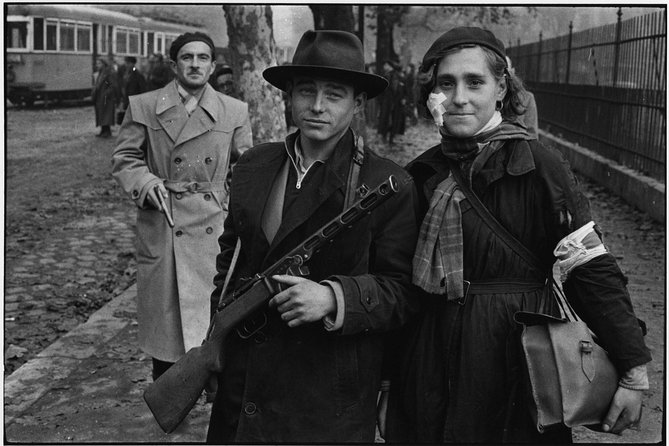
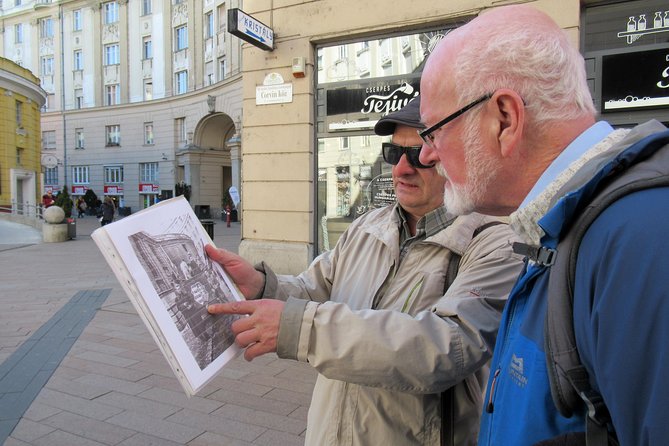
Budapest tells 1956 in real street corners. This private 3-hour walk around communist-era Budapest is a sharp way to understand why the uprising started and how it ended, with personal testimonies guided by people like Peter or Miklos and stops at major 1956 landmarks such as Kossuth Square, Radio Budapest, and Corvin köz. The only real catch is time, at three hours the story can feel packed if you want every last detail.
I like that the tour is built for “on-foot understanding,” not just sightseeing. You also get educational handouts, a communism-related souvenir, English narration, and hotel pickup options, plus the key sites have free admission so you are not budgeting for entrances.
In This Review
- Key highlights worth caring about
- A 1956 revolution tour that actually follows the story
- Kossuth Lajos Square, where the demonstration turns deadly
- Margaret Bridge and the so-called White House, plus Imre Nagy
- Bem Square protest grounds, student courage, and Bambi Eszpresszó
- Petőfi Statue, a meeting point for protest even today
- Radio Budapest, revolutionaries asking for help
- Corvin Cinema and Corvin köz, where resistance met tanks
- Handouts, a communism-themed souvenir, and the stops that deepen the story
- What the pace and logistics mean for your day in Budapest
- Price and value, what you really get for $228.66 per group
- Who this tour suits best
- Should you book the Rise Against the Soviet: The 1956 Revolution private tour?
- FAQ
- Is this a private tour?
- How many people can be in the group?
- Where does pickup happen?
- How long is the tour, and is it walk-heavy?
- What is included in the price?
- What is the cancellation policy?
Key highlights worth caring about
- A private group format for up to 5, so questions do not get lost
- Guides with lived perspective, including guides such as Peter and Miklos from the Communist era
- A route through the 1956 decision points, from Kossuth Square to Radio Budapest and Corvin Cinema
- Handouts plus a souvenir, useful for remembering details after your walk
- Practical pacing that can adapt, including slowing down for an older family member
- Extra meaning beyond monuments, including stops tied to victims and a 1956 underground memorial
A 1956 revolution tour that actually follows the story
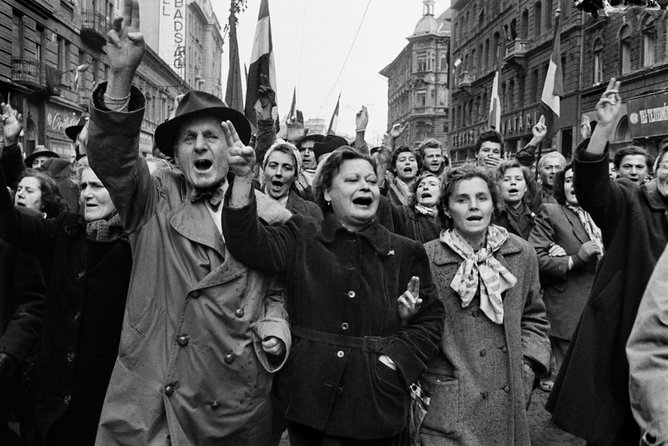
Budapest is full of plaques and statues, but this kind of tour helps you connect them. The point is not to memorize dates. The point is to watch how power, fear, and hope played out in specific places during 1956, then see what came after.
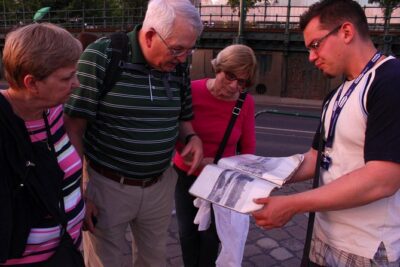
This is a private tour, run in English, timed at about 3 hours, and designed for a moderate walking level. If you enjoy history, you will probably like the way the guide turns each location into a mini story, with names, tensions, and consequences. If you are visiting with someone older, you may also appreciate the way the pace can be adjusted, as shown by a past experience where the guide slowed down so an elderly father could keep up.
More communist-era tours:
- Budapest: Communist History Tour with House of Terror Option
★ 4.8 · 182 reviews - Budapest: 3-Hour Walking Tour About Communism (Small Group)
★ 4.7 · 70 reviews - Communism in Hungary with a Historian
★ 5.0 · 70 reviews
Kossuth Lajos Square, where the demonstration turns deadly
Your first stop is Kossuth Lajos Square, where the Hungarian Parliament stands. This matters because the square is tied to the moment in 1956 when mass public action met the hard edge of state violence. The tour focuses on the tragedy after a large demonstration, when dozens were massacred by the government.
What I like about starting here is the geography of power. Parliament is not just an impressive building, it is the symbol people were confronting. In a short span, you get the sense that 1956 was not an abstract ideological fight, it was a confrontation between ordinary people and a regime with force.
Practical note: the stop is listed at about 25 minutes, and admission here is free. You will want to listen closely, because the square can look “grand” in photos but feel much darker once the guide sets the context.
Margaret Bridge and the so-called White House, plus Imre Nagy
Next comes the Margaret Bridge area, on the Danube. Nearby is a building that communist authorities nicknamed the White House, and it functioned as the Party headquarters of the Hungarian communist government. This is one of those locations where the physical setting adds weight, because it shows how close political control sat to everyday life along the river.
The tour also points you toward the statue of Imre Nagy, who was Prime Minister during 1956 and was later murdered. That combination, Party HQ and Nagy’s public memory, is the emotional logic of the tour. You are seeing both the machinery of rule and the fate of the leaders caught in the upheaval.
This stop is brief, around 20 minutes, and also free for admissions. Still, it is the kind of stop where you get more from a good guide than from simply looking.
Bem Square protest grounds, student courage, and Bambi Eszpresszó
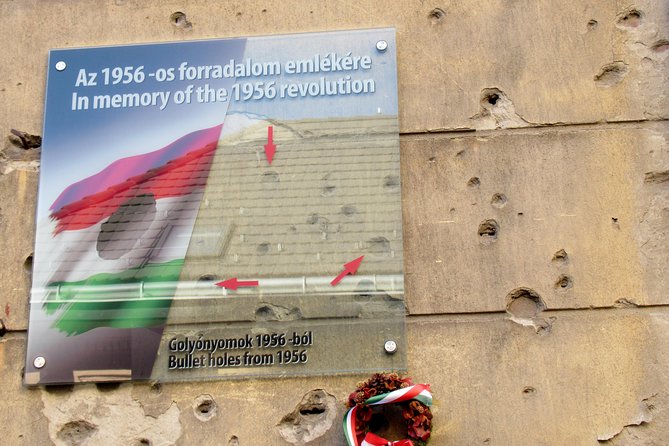
Then you head to Bem Square, a site tied to a major wave of protest. In 1956, around 200,000 Hungarian students demonstrated against Soviet rule there, and the rally had been originally organized to support Polish workers. That detail helps you see the uprising as part of a wider regional moment, not only a Hungarian story.
The tour also includes time at Bambi Eszpresszó on Frankel Leó utca. The place is described as a shelter for Buda-side intellectuals, with a steady atmosphere and the same interior design since the 1960s. This is not just a coffee stop. It gives you a sense of what “thinking space” looked like during and after the Communist era in Buda.
The stop is listed at about 30 minutes, and admissions are free. If you want to add a little comfort, plan your walk so you can sit for a short moment if the mood strikes you. Even if you do not buy anything, the point is the lived-in feel, not the drink.
A few more Budapest outings worth comparing
- Private Budapest TukTuk Tour: Custom Route, Hotel Pickup
★ 5.0 · 1,307 reviews - Budapest Essentials Private Tour Highlights and Hidden Gems
★ 5.0 · 861 reviews - Budapest Private Tuk Tuk Half-Day Tour
★ 5.0 · 606 reviews - Budapest One Way Private Transfer to or from Airport
★ 4.5 · 548 reviews
Petőfi Statue, a meeting point for protest even today
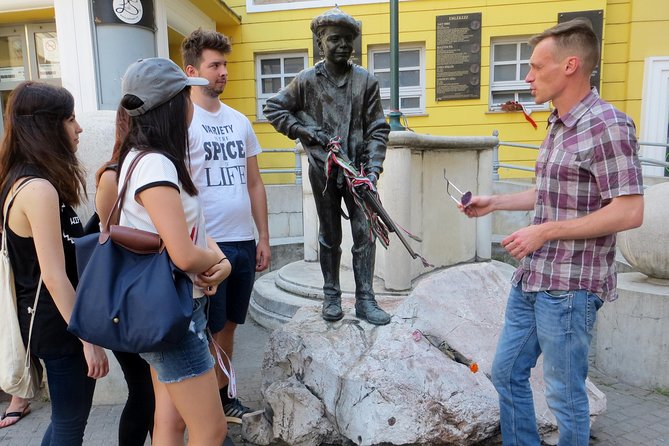
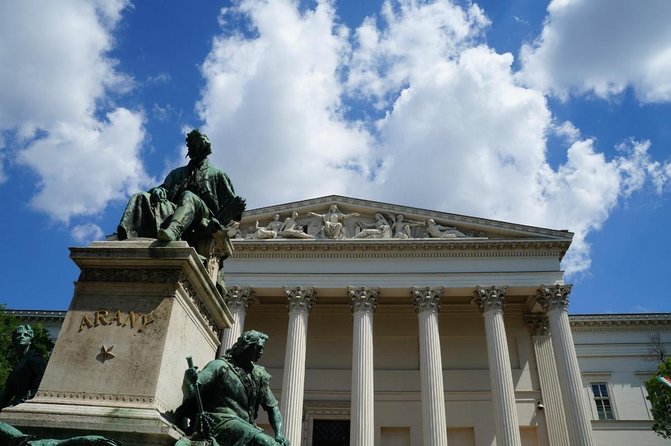
Your next landmark is the Sándor Petőfi Statue. Petőfi is a key figure from Hungary’s 1948 revolution, so in 1956 he became a symbol for resistance against government.
What the tour does well here is show how public space becomes a stage. The statue still functions as a meeting point for political events and protesters. That continuity makes 1956 feel less like a museum topic and more like a lesson about how symbols get reused in new struggles.
There is also a dramatic connection to 1956 performance and punishment. The actor Sinkovits Imre recited words associated with Petőfi in 1956 at this spot, and he was later arrested and imprisoned. That story adds human stakes to the statue, turning it from a landmark into a moment of action and risk.
This stop is shorter, about 15 minutes, and free to enter. It is fast, but it carries a lot of meaning per minute.
Radio Budapest, revolutionaries asking for help
Stop five centers on the Magyar Rádió Building, also known as Radio Budapest, tucked along the tiny, one-way Sándor Bródy Street. The setting is more tucked-away than the big squares, which makes it feel like a behind-the-scenes power node.
In 1956, this radio building is described as one of the epicenters of fighting. From there, revolutionaries reportedly begged for help from the world at large. That detail is important, because it reframes “broadcasting” as a survival tool, not a modern media soundbite. You get a sense of desperate urgency: if you can speak out, you can recruit attention, pressure allies, and keep the story from being buried.
The time here is about 20 minutes, with free admission. If you are the type who likes to understand how communications and control worked, this will likely be one of your favorite stops.
Corvin Cinema and Corvin köz, where resistance met tanks
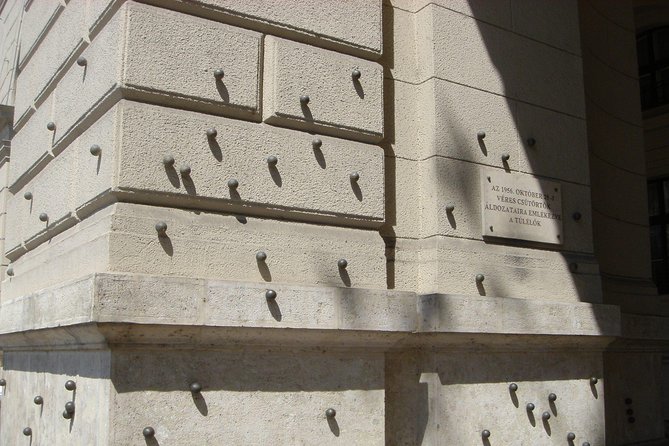
Finally, you go to Corvin Cinema in Corvin köz, in the southeast part of Budapest. This is the resistance center described for 1956, where local youngsters fought invading Russians with Molotov cocktails and guns stolen from soldiers, aimed at Soviet tanks.
Even if you are not someone who loves military history, this stop works because it tells you what “resistance” meant on the ground. It was not theoretical. It was hands, weapons, and improvisation, under pressure.
The tour spends about 30 minutes here, free to enter. The time window matters because it gives you enough space to look around, absorb reminders of battle, and talk through the invasion and the aftermath. If you are short on time in Budapest, this is a strong “ending chapter,” because it ties the uprising to what came next.
Handouts, a communism-themed souvenir, and the stops that deepen the story
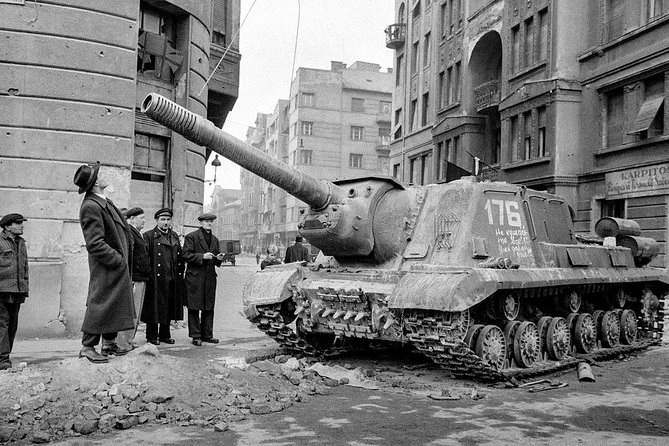
This tour does more than point at monuments. You get handouts and a complimentary communism-related souvenir, which helps you carry the context home. In my view, that makes a difference with 1956, because the story layers political shifts, public protests, and Soviet involvement. Without something to anchor the names and places, it is easy for the details to blend together after a busy day.
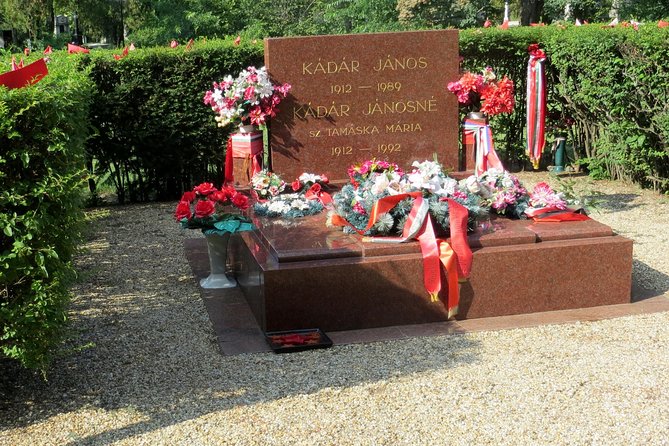
The guide also tends to include extra context beyond what you might expect from a simple route. Past experiences with this tour included mentions of an underground 1956 memorial and a cemetery stop tied to people killed in the revolution. Those kinds of stops matter because they shift the focus from politics to costs, and you remember that better than any single viewpoint.
What the pace and logistics mean for your day in Budapest
The tour is designed to be a focused half-block of your schedule, but you will still feel that Budapest is a real city, not a theme park. You should expect a mix of walking and short transit segments, since the route covers multiple sides of town, and past experiences note both walking and tram rides.
Hotel pickup is offered, with a meeting point at your hotel or another central place you agree on. That reduces friction, especially if you are staying in a neighborhood that is not convenient for central departures. It also means you can start your day without doing guesswork.
You will want moderate physical fitness, mainly because you are outdoors and moving between sites. If you have mobility issues, it is worth thinking about whether three hours of stops and walking fits your comfort level. The good news is that the guide can often adjust pace, at least for older participants, based on past experiences.
Price and value, what you really get for $228.66 per group
The price is $228.66 per group, up to 5 people, for about 3 hours. That is not cheap in “per person” terms if you come solo. But if you are a pair, a small family, or a group of friends, the cost spreads out quickly.
This is where the included value matters:
- Private format for your group only
- Pickup offered
- Mobile ticket
- English narration
- Handouts
- A communism-related souvenir
- Site admissions are listed as free for the stops
If you price it mentally against a self-guided day plus transportation plus admission plus the cost of a guide, it is easier to see why history-minded visitors choose it. You are paying for interpretation. And for 1956, interpretation is the difference between a pleasant walk and a meaningful one.
Still, one caution: a few past experiences suggested the tour can feel tight if you want a longer, more detailed treatment of 1956 specifically. So if your goal is total coverage, you might consider pairing this tour with additional reading or a second, shorter follow-up activity on your own.
Who this tour suits best
I think this is a great fit if:
- You like mid-20th-century history and want it connected to real street locations
- You care about the Communist legacy in Hungary, not just the uprising day itself
- You want a guide who can explain how events connect, including the aftermath
It might be less ideal if:
- You want a long, slow lecture style tour, because three hours is a sprint through key sites
- You prefer a lighter sightseeing day with minimal political context
Should you book the Rise Against the Soviet: The 1956 Revolution private tour?
Yes, if you want your Budapest history with names, stakes, and place-based context. The route hits the kinds of points that make 1956 feel real, from Kossuth Lajos Square and Imre Nagy’s memory to Radio Budapest and Corvin köz. The private setup, English language, handouts, and the fact that admission is free at the listed stops add real value.
I would book it especially if you are traveling as a small group (up to 5) and you want a guide to answer questions as you walk. If you are the type who wants every detail about the revolution, plan to supplement with your own reading or another activity, because this format is designed to cover the essential story in a limited time.
FAQ
Is this a private tour?
Yes. It is a private tour/activity, and only your group participates.
How many people can be in the group?
The price is per group, up to 5 people.
Where does pickup happen?
Pickup is offered, either from your hotel in Budapest or from a central meeting point you agree upon.
How long is the tour, and is it walk-heavy?
It lasts about 3 hours. Travelers should have a moderate physical fitness level, and you will be walking between multiple sites.
What is included in the price?
Handouts and a communism-related souvenir are included. Admission tickets for the listed stops are free. Drinks or food and public transportation tickets are not included.
What is the cancellation policy?
Free cancellation is available. You can cancel up to 24 hours in advance for a full refund, and you must cancel at least 24 hours before the experience’s start time to get your money back.
Latest to land in Budapest
- Visegrád Hike & Castle Tour with Ferry from Budapest★ 4.6 · 3 reviews
- Budapest: Vacation Photographer to collect great memories★ 5.0 · 49 reviews
- Trash Art Museum: Hungary’s First Scrap Metal Exhibition★ 4.3 · 72 reviews
- True Crime Walking Tour in the Buda Castle district★ 5.0 · 26 reviews
- Budapest: 3-Hour Trabant Sightseeing Tour★ 4.7 · 28 reviews
- Audio visual multi-sensory chefs journey dinner experience★ 5.0 · 3 reviews
- Wine Tasting in the Countryside from Budapest★ 5.0 · 14 reviews
- Private Walking Tour in The Jewish District Budapest★ 4.5 · 16 reviews
Communist History Tours, compared.
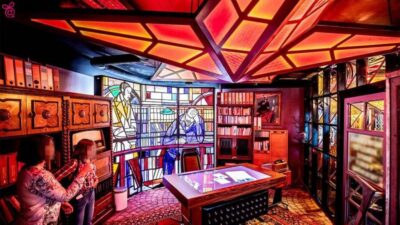
Communist History Tour with House of Terror Option
Read our review →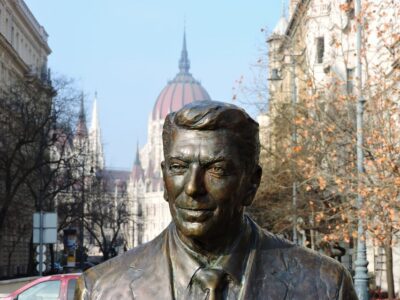
3-Hour Walking Tour About Communism (Small Group)
Read our review →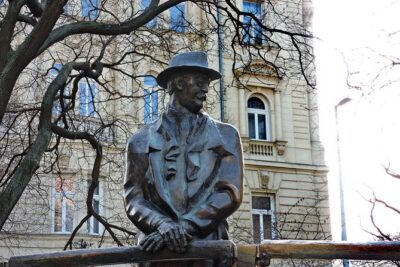
Memento Park Visit with Private Trabant Transfer
Read our review →
Browse the lists this tour appears in