
Reviewed · COMMUNIST HISTORY TOURS
Communist Budapest Walking Tour
Budapest changes fast once you learn the Cold War street names. This Communist Budapest Walking Tour gives you context for the buildings and statues you will otherwise rush past. I love that it is small-group and that your guide keeps the story grounded in real places, not abstract dates. One thing to consider: this is history-forward, so if you want mostly postcard sightseeing, you may feel a bit heavy-handed.
The pace is built for learning on foot, with a mix of walking and short subway hops so you can see more without burning the whole day. You will end outside the House of Terror, which is perfect if you want to continue on your own afterward. Bring good walking shoes and plan on paying attention, because the tour asks you to connect what you see with what was happening.
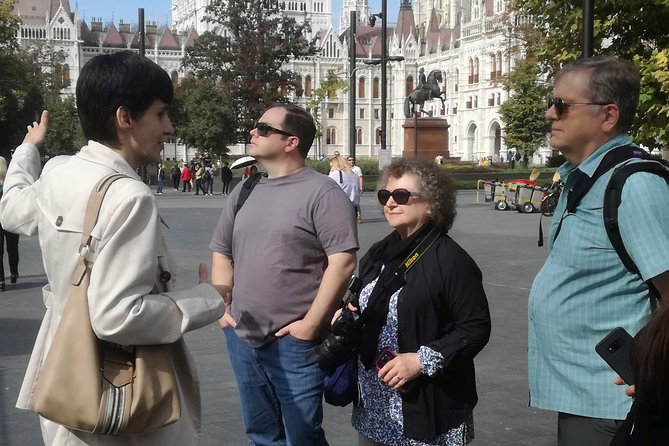
You also get a real human factor. In the best moments, guides like Andras and Kata use questions to pull you into how people lived, and they answer with real depth. That is the trade: you are paying for a historian, not a rapid slideshow.
In This Review
- Key things I’d bet on
- Budapest Under Communism, in Three Hours
- Price and Value for a Historian-Led 3-Hour Walk
- From Parliament to Liberty Square: 1956 and the Cold War Signs
- House of Terror on Your Doorstep, Without the Museum Fee
- Stade Puskas Ferenc: Socialist Realism in a Football Setting
- The Ronald Reagan Stop and the Atomic Shelter Story
- Bem József Square: 1956 Comes Alive in the Streets
- How the Tour Actually Moves: Shoes, Transit, and Timing
- Guides Matter: Discussions That Feel Like a Real Conversation
- Should You Book the Communist Budapest Walking Tour?
Key things I’d bet on
- Small-group feel, capped at 8 (and described as limited to six), so you can ask questions
- Historian-led storytelling that ties statues and squares to what the regime was trying to say
- A smart Cold War route across Liberty Square, Freedom Square, and the surrounding landmarks
- Free outdoor stops for most sights, with only the House of Terror exhibit not included
- A clear ending point outside the House of Terror, so you can choose how much more to see
Budapest Under Communism, in Three Hours
If you want to understand Budapest, you have to look at the layers. This tour does it the efficient way, by focusing on Communist-era power, propaganda, and the Cold War pressure that shaped daily life.
The route is not random. You start near Hungary’s political symbolism, then move through places tied to the 1956 revolution and the later Soviet shadow. Along the way, you will spot how public art, monuments, and even street geography were used to guide behavior. That is why the walk feels different from a standard city tour. You are not just collecting photos, you are building meaning.
The tour also helps you spot the contrast between official messaging and lived reality. One big theme is the gap between what the state wanted you to believe and what people actually experienced. If that sounds a bit intense, it is, but it is handled in a practical, understandable way.
More communist-era tours:
- Budapest: Communist History Tour with House of Terror Option
★ 4.8 · 182 reviews - Budapest: 3-Hour Walking Tour About Communism (Small Group)
★ 4.7 · 70 reviews - Communism in Hungary with a Historian
★ 5.0 · 70 reviews
Price and Value for a Historian-Led 3-Hour Walk
At $126.50 per person for about 3 hours, this is not a budget-only activity. You are paying for two things that matter: a guided walk with a historian and access to the thinking behind the landmarks.
Here is how the math usually works for value on a tour like this. Most of the key sites on this route are free to view, including major squares and outdoor monuments. The cost goes toward interpretation, not entrance fees. Even the “transport piece” is part of the service: the guide can help you buy Budapest tram and Metro tickets if you do not already have a visitor pass.
If you are the type who likes to know why something is here, you will feel the value quickly. The price also makes sense for a small-group format, where the guide can actually respond to your questions instead of talking at you through the crowd.
From Parliament to Liberty Square: 1956 and the Cold War Signs
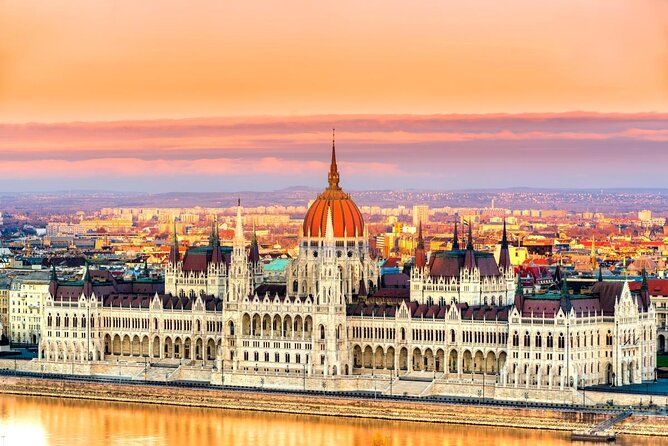
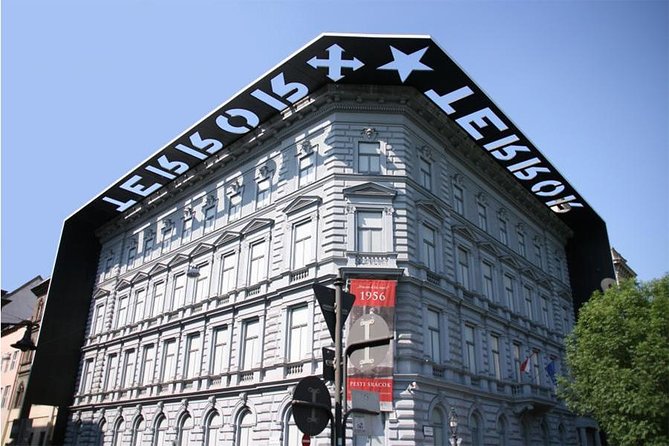
Your tour begins near the Hungarian Parliament Building, with an introduction to the revolutionary energy of 1956. From there, you head toward Kossuth Square and take in the monuments that mark that turning point. This part matters because 1956 becomes the lens for everything after it. It helps you understand why certain symbols are still emotionally charged.
Then you keep moving to Liberty Square, where the Cold War story turns visible. You will discuss how the US and the Soviet Union showed their presence in Budapest, not just through diplomacy but through buildings, monuments, and messaging. The route includes the US Embassy area, a monument to the Soviet Army, and the Soviet War Memorial on Freedom Square as you connect the dots across the city.
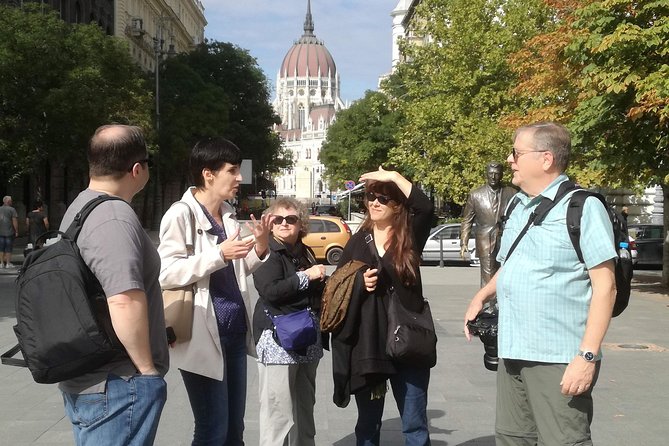
One of the more memorable stops here is the Ronald Reagan statue and the idea of an atomic shelter. It is a sharp example of how Cold War fear and political theater show up in unexpected places. You are not studying a textbook, you are walking past physical reminders of propaganda and deterrence.
You should expect a mix of short transit and walking. The good news is that this keeps the group from getting stuck in long stretches of dead time. The other news is you’ll want to be ready to look up, not just forward. A lot of the story is in what you see at street level.
House of Terror on Your Doorstep, Without the Museum Fee
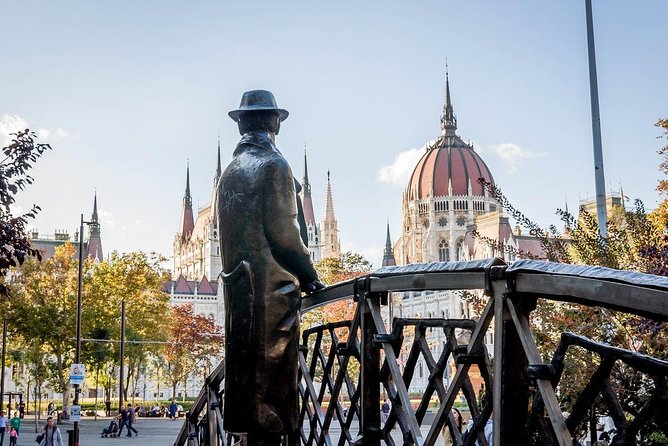
The tour’s end phase is built around the House of Terror. You will reach it from the outside as a closing moment, not as a full inside museum visit.
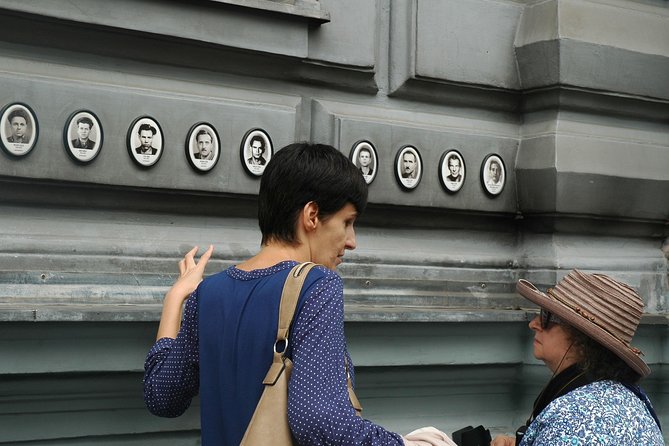
That is an important detail for planning. The House of Terror museum exhibits are not included in the tour. What is included is the setup: you are shown the imposing building’s role as a former headquarters for the communist secret services, and you get a striking visual cue from the Berlin Wall slab placed out front.
Ending here is a smart choice. Even if you do not buy extra tickets, standing at the location forces the themes of the walk to click into place. If you do want more, you can step into the museum afterward under your own pace. For many people, this feels like the right balance: guided context first, then optional depth.
A possible drawback is that if you expected a full inside museum visit as part of the tour, you may feel a little short-changed. The guide’s approach is more like a guided “arrival to the subject,” not a complete museum day.
More Walking Tours in Budapest:
- Budapest: Buda Castle Walk with Saint Stephen’s Hall
★ 4.5 · 3,012 reviews - Big Bus Budapest Hop-On Hop-Off Bus and Walking Tour
★ 3.5 · 2,206 reviews - Budapest: Buda Castle District Walking Tour
★ 4.6 · 2,108 reviews - Budapest City Landmarks Walking Tour in 2 Hours
★ 5.0 · 2,048 reviews
Stade Puskas Ferenc: Socialist Realism in a Football Setting
After the more political squares, the tour shifts gears to Stade Puskas Ferenc, formerly known as People’s Stadium. On the surface, it is a sports landmark. Look again and you see the older meaning.
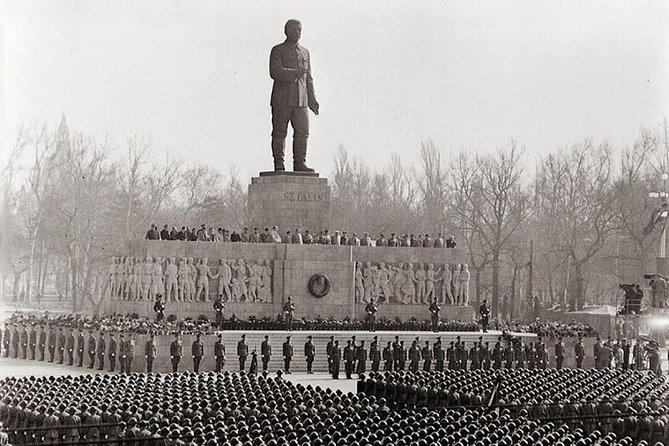
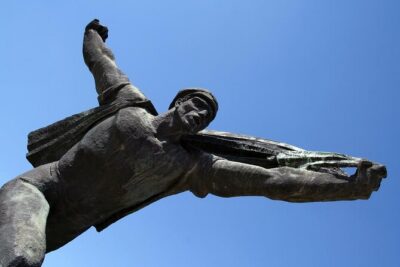
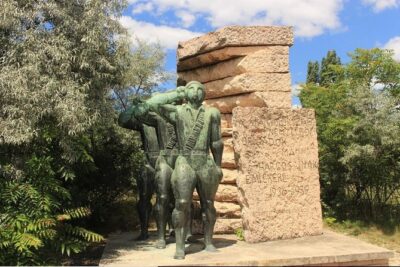
Here you will encounter classic socialist realist statues that were part of the regime’s visual language. This is one reason I like this tour: it prevents you from treating communism as something that only lived in government offices. It also lived in public spaces where people gathered.
The propaganda style is heavy-handed by design. That can feel uncomfortable, but it is also educational. You start to recognize the aesthetic tricks governments use: exaggeration, idealized forms, and messages designed for mass visibility.
This stop stays focused. You do not get trapped in one place for too long. You get a chance to read the statues, then you move on.
The Ronald Reagan Stop and the Atomic Shelter Story
Some tours barely mention foreign policy. This one brings it right into the streets.
You will spend time around the Ronald Reagan statue, with an explanation of the Hungarian sense of obligation to his role in bringing down the Iron Curtain. That detail may sound like a political talking point, but it is actually useful. It gives you a way to interpret why certain foreign figures appear in the cityscape and why their memory is tied to local identity.
Then there is the atomic shelter reference. Even without a deep technical discussion, the idea helps you understand how Cold War anxiety was built into planning and architecture. Budapest becomes more than scenery. It becomes a record of how fear and power were managed.
If you like politics explained through physical landmarks, this section delivers. If you dislike heavy political context, this is the part where you will want to tune in and take it in slowly.
Bem József Square: 1956 Comes Alive in the Streets
Toward the end, the route reaches Kossuth Lajos Square and especially Bem József Square, where the first major demonstration of the 1956 uprising began.
This is where the tour feels most personal, because the story is not just about what leaders said. It is about how people moved through the city when they acted. Bem József Square becomes a stage for understanding how a public moment can shift an entire national narrative.
One extra detail makes this stop feel real rather than purely symbolic. There is a coffeehouse there that has kept its original interior from the 1960s. That kind of preservation matters because it shows how daily life carried on even as public messaging tried to steer culture.
If you want a break from monuments and memorials, this is the part that offers a human pause. It is also a reminder that Communist-era buildings are not all grim. Some are ordinary places where people still talked, drank coffee, and lived their routines.
How the Tour Actually Moves: Shoes, Transit, and Timing
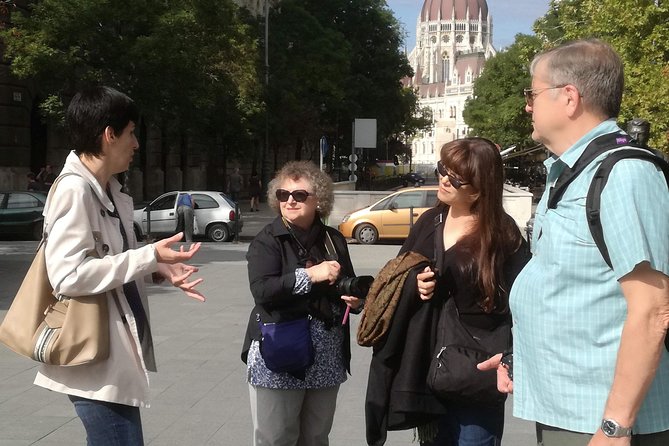
This tour runs about 3 hours and offers a choice of morning or afternoon departure. It is led in English, and the group size is kept small, with a cap of up to 8 travelers. One of the tour descriptions also emphasizes a limit of six, which you can think of as the intended intimate feel. Either way, you should expect a conversation-friendly format.
Most of the route is near public transport, and you will use a subway segment early on to reach key spots. The guide can help you buy tram and Metro tickets if you do not have a visitor pass ready. That is a genuinely practical service, because it removes one more “figure it out” moment while you are trying to focus on the history.
Bring water, and yes, bring walking shoes. Even when the tour is not long, the storytelling makes you stop more often to look and listen. One review point that stuck with me: be ready to learn. This tour does not pretend you can do it half-asleep.
Guides Matter: Discussions That Feel Like a Real Conversation
The biggest reason this tour earns top marks is the way the guides teach. People often talk about guides giving a lot of insight and answering questions with real depth. The best guides also help you feel what it was like, not by dramatizing, but by connecting landmarks to decisions, surveillance, and public pressure.
I especially like that the tour invites conversation over big moments in Hungarian history. If you are curious, you will likely get more than a scripted explanation. Named examples from recent experiences include Andras and Kata, both described as excellent hosts who turned the walk into a discussion.
One more point: if you only want easy sightseeing, this might not match your vibe. The tour is aimed at understanding communism and the Cold War era through Budapest’s physical footprint. That is also why it works so well. You are getting a map with meaning, not just a list of stops.
Should You Book the Communist Budapest Walking Tour?
Book it if you want to understand what you are looking at. Budapest has tons of impressive sights, but this tour helps you decode the symbols tied to power, resistance, and the Soviet-era presence in daily life. It is a smart use of time, especially since most key viewing points are free to access outdoors.
I would also book it if you like guided context, not just photos. The historian-led approach is what you are paying for, and it shows in how questions get answered and how the story links together.
Skip or rethink it if you want a pure sightseeing stroll. This is not just about pretty views or surface-level landmarks. It is about ideology, propaganda, and the emotional weight of historical sites like the House of Terror.
If you decide to go, do two small things: wear shoes that handle city walking, and set aside enough mental space to pay attention. This tour rewards that effort fast.
Latest to land in Budapest
- Visegrád Hike & Castle Tour with Ferry from Budapest★ 4.6 · 3 reviews
- Budapest: Vacation Photographer to collect great memories★ 5.0 · 49 reviews
- Trash Art Museum: Hungary’s First Scrap Metal Exhibition★ 4.3 · 72 reviews
- True Crime Walking Tour in the Buda Castle district★ 5.0 · 26 reviews
- Budapest: 3-Hour Trabant Sightseeing Tour★ 4.7 · 28 reviews
- Audio visual multi-sensory chefs journey dinner experience★ 5.0 · 3 reviews
- Private Szentendre and Vac Tour from Budapest with Transport★ 5.0 · 3 reviews
- Wine Tasting in the Countryside from Budapest★ 5.0 · 14 reviews
Communist History Tours, compared.
Communist History Tour with House of Terror Option
Read our review →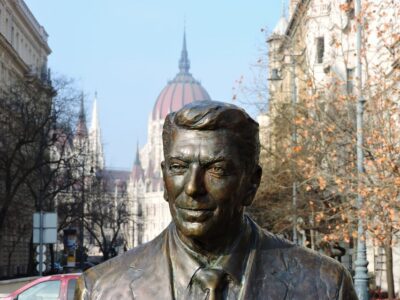
3-Hour Walking Tour About Communism (Small Group)
Read our review →
Memento Park Visit with Private Trabant Transfer
Read our review →
Browse the lists this tour appears in