
Reviewed · COMMUNIST HISTORY TOURS
Communist Budapest Walking Tour
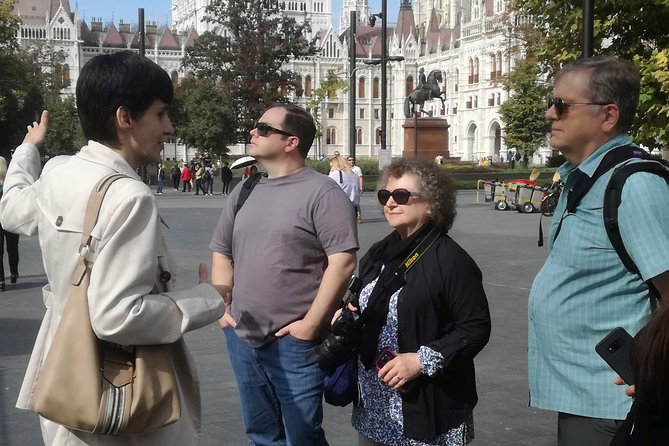
Communism in Budapest hits close to home. I like how this 3-hour Communist Budapest Walking Tour uses real streets and buildings to explain how power worked, and how everyday life fit around it. I also really value the historian-style guiding and the relaxed pace, especially when the guide (like András in one recent review) adjusts to what your group already knows.
One thing to consider: this is a history focused walk, not a casual city stroll, and if you already know the basics, it may feel a bit samey by the end. Also, with constant stops and walking plus plenty of context, you may want sturdy shoes and a slower schedule afterward.
In This Review
- Key takeaways before you go
- Bem József Square to Kossuth Square, where 1956 becomes visible
- Freedom Square and the Cold War, mapped in stone and statues
- 1970s housing estates, drab blocks that once meant a huge upgrade
- Puskas Stadium area and Socialist Realism in public space
- Stalin’s trolley bus to May Day boulevard, and why the guide uses old photos
- House of Terror and the sharp edge of communist crimes
- Price, time, and value of a $123, 3-hour walking tour
- Who should book, and who might want a different tour
- Should you book the Communist Budapest walking tour?
- FAQ
- How long is the Communist Budapest walking tour?
- Where does the tour start?
- What language is the tour offered in?
- Does the price include metro or tram tickets?
- What are the main stops and sites you visit?
- What kind of guides lead the tour?
- Is this tour private or small group?
- What is the cancellation policy?
Key takeaways before you go
- Historian-led, not lecture-y: Guides are professors, doctoral students, historians, journalists, art critics, and published authors.
- A tight route with big themes: 1956 uprising sites, Cold War symbolism, everyday housing life, and Stalin-era memory all connect.
- You’ll walk and ride transit: Metro plus a short trolley bus ride are part of the flow, but tram and metro tickets are not included.
- Concrete visuals do the teaching: You see monuments, statue types, and building reuse, not just photos on a screen.
- Good for first-time Hungary history: If you only have a light background, the structure helps a lot.
- Great for small groups or private tours: Smaller group formats make it easier for the guide to tailor pace and questions.
Bem József Square to Kossuth Square, where 1956 becomes visible
The tour kicks off at Bambi Eszpresszó on Frankel Leó út 2/4, right in Budapest. That start matters because it sets the tone: you’re not rushing straight to the biggest landmarks, you’re easing into the way 20th-century history is layered into normal city life. From the beginning, the guide frames Budapest’s communist decades as a system that traded small daily liberties for obedience on major issues.
The first major stop is Bem József Square, tied to the uprising energy of 1956. You’re there to connect a place name to a specific moment, not just to memorize a date. And then comes a detail I really appreciate: the tour includes a coffeehouse that kept its original interior from the 1960s. Even if you only spend a short time inside or right at the threshold, it gives you a physical feel for how people lived. Furniture, layout, and atmosphere can be more persuasive than any summary.
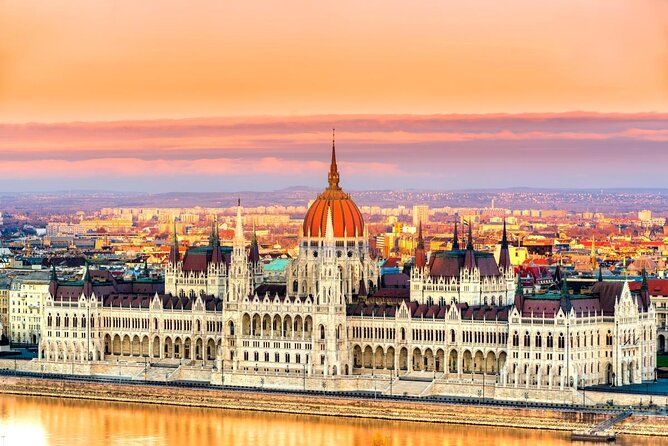
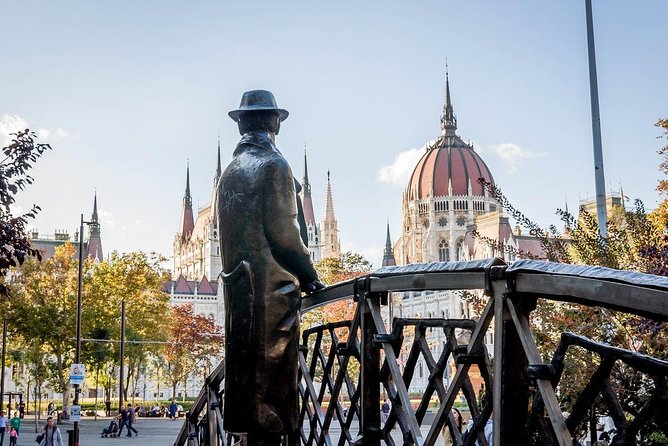
From Bem József Square you go onward to Kossuth Square by metro. This part of the route is built around the idea that public space becomes political theater. In front of Parliament, you look at monuments that reflect the violence and political conflict tied to the 1956 revolution. The square is open enough that you can actually orient yourself, which helps when the guide starts connecting what you’re seeing to what it was meant to communicate at the time.
If you like history that you can point to, this section works well. The stops are short, the context is practical, and you’ll start to notice patterns: what gets honored, what gets erased, and what gets turned into a symbol.
More communist-era tours:
- Budapest: Communist History Tour with House of Terror Option
★ 4.8 · 182 reviews - Budapest: 3-Hour Walking Tour About Communism (Small Group)
★ 4.7 · 70 reviews - Communism in Hungary with a Historian
★ 5.0 · 70 reviews
Freedom Square and the Cold War, mapped in stone and statues
Next comes Freedom Square, where the Cold War shows up in a very Budapest way: through objects placed in public view. The guide points out four stone structures, each tied to a different power story.
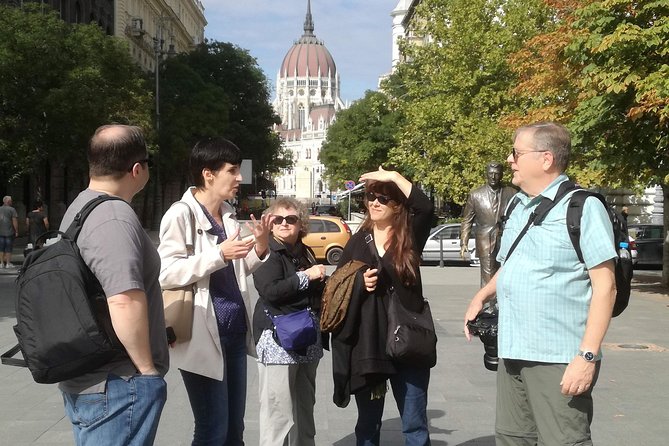
You’ll see the U.S. embassy, a monument to the Soviet army, a statue of President Ronald Reagan, and the entrance to a secret atomic shelter. That mix is the point. This isn’t one message repeated over and over. It’s a city space that holds competing narratives, even when the Cold War is long over.
What I like here is the guide’s emphasis on contrast. The tour helps you understand why those structures sit where they do, and how public memory works when different powers want to control the meaning of the same streets. Even if you already know the Cold War in broad strokes, the stone markers bring it down to scale. You can stand there and feel the geography of fear, diplomacy, and propaganda.
A small practical note: bring a little patience for walking here. The square is a place where you’ll likely pause often so the guide can point things out. If you’re the type who rushes to the next photo, you might miss the “why this place, why this symbol” part.
1970s housing estates, drab blocks that once meant a huge upgrade
The tour then shifts from monuments to daily life. You take the metro to a 1970s housing estate at the edge of the city center. From a modern viewpoint, the housing blocks can look drab and grey. But the tour’s framing does something important: it asks you to judge the buildings as people did at the time.
Here’s the key idea you’ll get while looking at those apartment blocks: many young Hungarian families were thrilled to be awarded an apartment there. The guide explains the practical appeal, like elevators and conveniences that were unknown in older parts of Budapest. In other words, communist life was not only repression. It was also systems of distribution and the promise of “progress” that could genuinely improve household comfort.
This stop is where the tour becomes most useful for readers who want more than slogans. The housing project can be read two ways, and the guide helps you hold both at once. On one side, it’s easy to see uniformity and control. On the other, it’s easy to see why a family might feel optimism when they finally get a functional home with modern services.
If you’re wondering whether this part is too depressing, I’d say it’s balanced. You’re learning how the communist system worked through materials and routines, not just through prisons and courts.
Puskas Stadium area and Socialist Realism in public space
After the housing estates, you move toward the former People’s Stadium, now Puskas Soccer Stadium. This is one of the tour’s best “look closer” moments because you’re in a place people already recognize as sports space, but you’re also looking for a different layer.
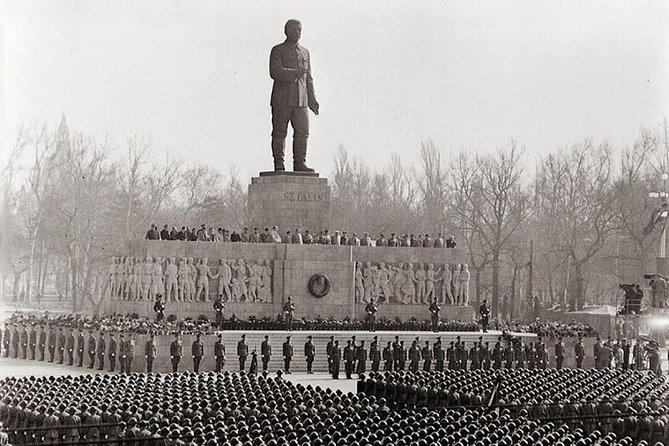
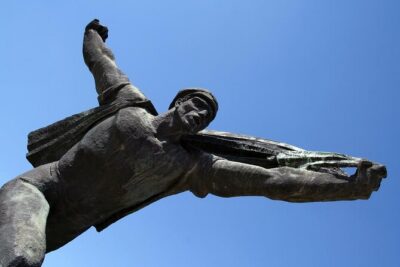
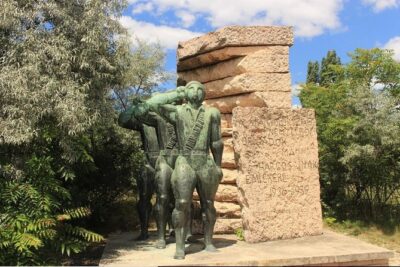
The guide talks about Socialist Realist statues that depict heroic workers, soldiers, and intellectuals, pointing the way toward a bright future. The street art of that era was never only decorative. It trained people how to feel about the state and about their role inside it.
I like how this stop turns politics into something visible. You’re not only hearing about propaganda, you’re seeing the visual language: idealized bodies, confident poses, and the way these figures are placed to guide your attention. Once you’ve spotted the style, you’ll start noticing similar messages across the city long after the tour ends.
One caution: if you’re short on time later that day, don’t schedule anything tight right after this stop. You’ll likely want a moment to look around at the stadium area, even if your main focus is the statues and their symbolism.
More Walking Tours in Budapest:
- Budapest: Buda Castle Walk with Saint Stephen’s Hall
★ 4.5 · 3,012 reviews - Big Bus Budapest Hop-On Hop-Off Bus and Walking Tour
★ 3.5 · 2,206 reviews - Budapest: Buda Castle District Walking Tour
★ 4.6 · 2,108 reviews - Budapest City Landmarks Walking Tour in 2 Hours
★ 5.0 · 2,048 reviews
Stalin’s trolley bus to May Day boulevard, and why the guide uses old photos
Transit is part of the story here. You’ll take a short ride on one of Stalin’s trolley buses to Dozsa György Street, a broad boulevard used for May Day parades.
This stop ties the communist calendar to actual street design. If you’ve never thought about how a parade route shapes daily urban life, the guide’s explanation helps. Broad avenues are made for ceremony, for visibility, and for mass participation. The city itself becomes stage equipment.
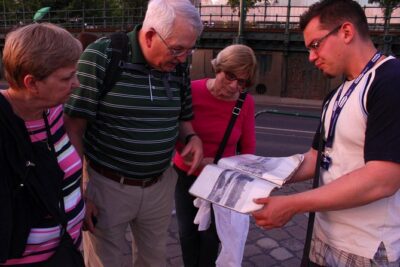
The tour also uses an iPad and old photos, and this is a standout teaching tool. You compare today’s boulevard with how it looked during the time of Stalin. That contrast can be surprisingly effective because it turns “then versus now” into something you can track with your eyes. You’re not relying on memory. You’re building a mental map of change.
A tip if you’re the kind of person who gets distracted by smartphones: give the guide your full attention at the photo comparison moments. Those quick before-and-after visuals are often where the whole tour clicks.
House of Terror and the sharp edge of communist crimes
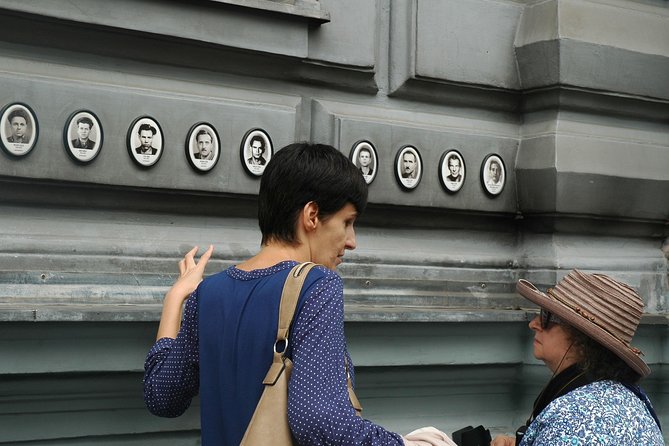
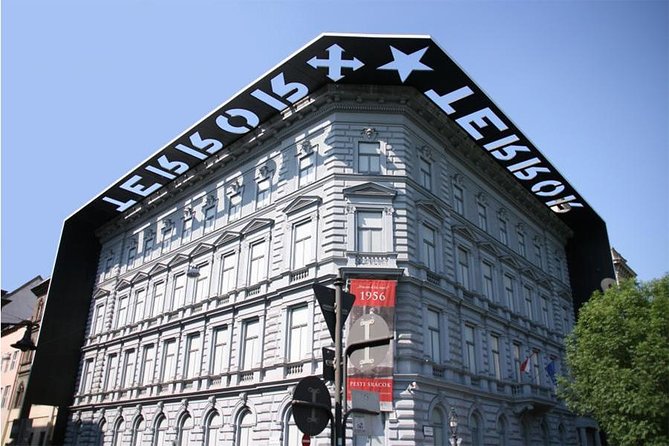
The final major stop is the House of Terror, a museum housed in the former headquarters of the secret services. The museum commemorates the crimes of communism, especially during the Stalinist years.
This is where the tour becomes heavier, and it also becomes more specific. Up to this point, you’ve seen squares, symbols, housing, and art styles. At House of Terror, the story turns to coercion and violence, and you see how secret policing becomes part of the political system.
Outside the building, the tour points out a slab from the Berlin Wall. That detail matters because it ties Budapest’s communist experience to the wider European pattern of fear and control, while still keeping the focus on Hungary.
This is also a good moment to be honest with yourself about what you want. If you prefer gentle, celebratory sightseeing, this part may feel like a hard stop. If you want to understand how political power works when it has real teeth, this is the best place on the route to get that clarity.
Price, time, and value of a $123, 3-hour walking tour
At $123 per person for a 3-hour experience, the value depends on what you want out of Budapest. This isn’t a low-cost “see the sights” walk. You’re paying for structure plus an expert guide type: historian, academic, and specialist backgrounds. The pace is also built for meaning, not for speed.
Here’s where the price feels justified:
- You’re getting a guided route that covers multiple time periods, not just 1956 in isolation.
- You’re seeing specific architecture and symbolism, including the 1960s interior coffeehouse detail.
- You’re getting interpretation that connects public monuments and statue styles to daily life and political control.
- The route includes metro transfers and a trolley bus ride, so you get the city-to-city feeling without managing planning.
Where it can feel less worth it:
- If you already know the topic well, you may find fewer surprises than you expect.
- If you prefer a more leisurely or less interpretive style, the concentration of context may feel like a lot in a short window.
So I’d frame it like this: if you’re in Budapest for a few days and you want the communist-era story delivered in a way that connects the dots, this price can be fair. If you’re already deep in Hungarian 20th-century events, you might treat it as a refresher and skim the parts that repeat what you already know.
Who should book, and who might want a different tour
This tour is a strong fit if:
- You’re new to Hungary between World War II and 1989, and you want a clean path through the major places.
- You like your history anchored in physical details you can stand next to, like squares, statues, and housing blocks.
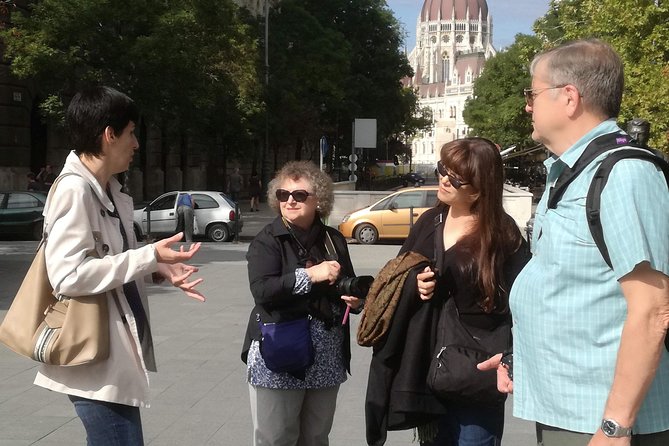
- You want a guide who can shape the pace and include background explanations when needed.
This tour may be less ideal if:
- You already know the basics and are hunting for advanced angles or very granular detail.
- You dislike heavy topics that end with House of Terror.
- You’re traveling with very small energy for walking plus frequent stops.
One more thing I’d highlight from the vibe of the experience: even with a relaxing pace, it can still be tiring because it’s not just a walk, it’s a story that keeps adding layers. Plan a softer evening afterward. Your feet will thank you.
Should you book the Communist Budapest walking tour?
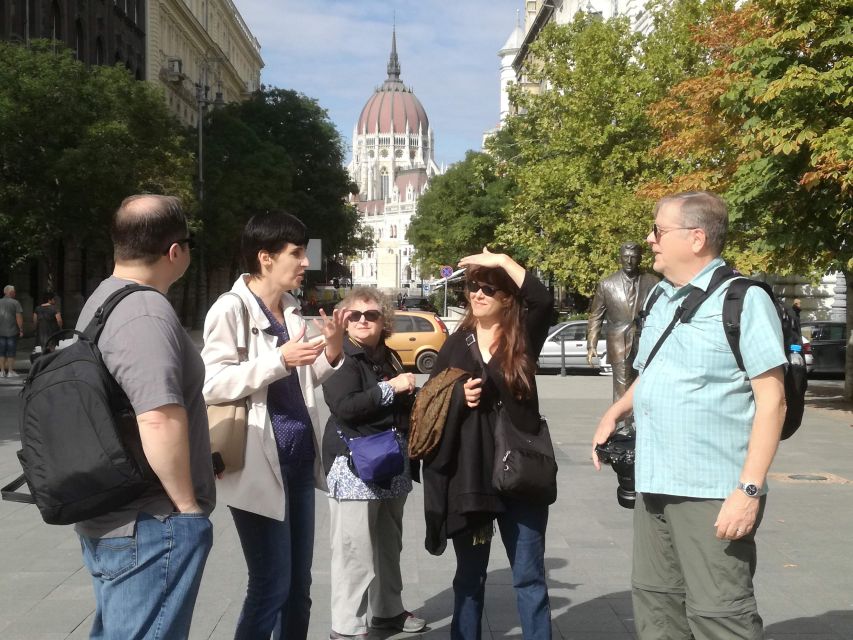
If you want a guided, street-level explanation of how communist power shaped Budapest, I think this is an excellent booking. The route is well designed to move from uprising memory in Kossuth Square, to Cold War symbolism at Freedom Square, to the practical reality of 1970s housing, and then to the blunt end of coercion at the House of Terror.
Book it if you like learning by looking, especially with a guide who can explain and adapt. Skip it or consider pairing it with a lighter sightseeing day if you already know the era deeply and you’re mostly after big photos rather than context.
FAQ
How long is the Communist Budapest walking tour?
The tour lasts 3 hours.
Where does the tour start?
The meeting point is Bambi Eszpresszó, Frankel Leó út 2/4, 1027 Budapest, Hungary.
What language is the tour offered in?
The tour is offered in English with a live guide.
Does the price include metro or tram tickets?
No. Tram and metro tickets are not included, though the itinerary uses the metro and includes a short trolley bus ride.
What are the main stops and sites you visit?
You’ll visit Bem József Square, Kossuth Square, Freedom Square, a 1970s housing estate, the former People’s Stadium (now Puskas Soccer Stadium), Dozsa György Street, and the House of Terror.
What kind of guides lead the tour?
Guides are described as professors, doctoral students, historians, journalists, art critics, and published authors, and the tour is led by a historian guide.
Is this tour private or small group?
Yes. Private or small groups are available.
What is the cancellation policy?
You can cancel up to 24 hours in advance for a full refund.
Latest to land in Budapest
- Visegrád Hike & Castle Tour with Ferry from Budapest★ 4.6 · 3 reviews
- Budapest: Vacation Photographer to collect great memories★ 5.0 · 49 reviews
- Trash Art Museum: Hungary’s First Scrap Metal Exhibition★ 4.3 · 72 reviews
- True Crime Walking Tour in the Buda Castle district★ 5.0 · 26 reviews
- Budapest: 3-Hour Trabant Sightseeing Tour★ 4.7 · 28 reviews
- Audio visual multi-sensory chefs journey dinner experience★ 5.0 · 3 reviews
- Private Szentendre and Vac Tour from Budapest with Transport★ 5.0 · 3 reviews
- Wine Tasting in the Countryside from Budapest★ 5.0 · 14 reviews
Communist History Tours, compared.
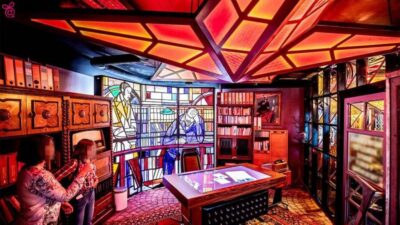
Communist History Tour with House of Terror Option
Read our review →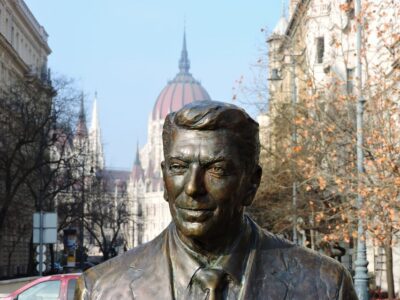
3-Hour Walking Tour About Communism (Small Group)
Read our review →
Memento Park Visit with Private Trabant Transfer
Read our review →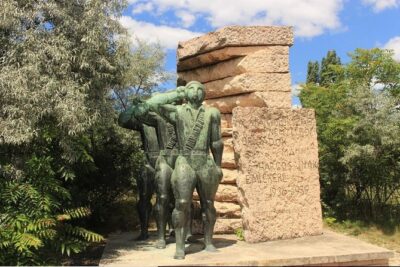
Browse the lists this tour appears in