
Reviewed · COMMUNIST HISTORY TOURS
Communist History Evening Walking Tour of Budapest
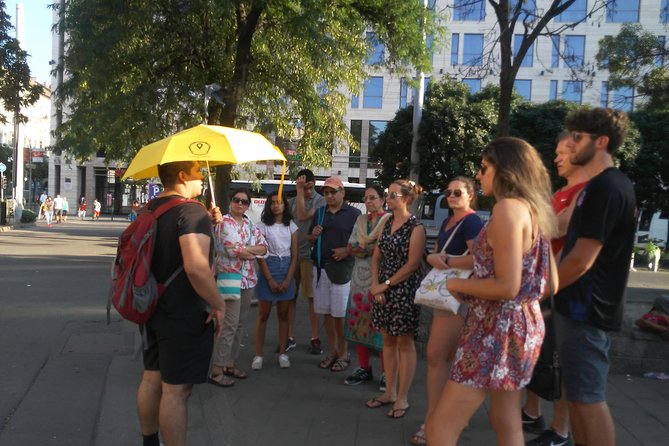
Communism looks different when you see it up close. This 2-hour evening walking tour uses Budapest landmarks to explain how the communist era shaped real life, from the grand sweep of Andrassy Avenue to the hard truths around Liberty Square and Parliament. I especially like the street-level storytelling and the way guide Victoria teaches the topic clearly, with a professor-like command and good humor.
I also like the small-group feel, capped at 15 people, plus simple perks like bottled water to keep you going during the walk. The main consideration is the pace and distance, you need to be able to walk (or wheel) about 3 km on your own.
In This Review
- Key highlights you’ll care about
- Walking communist Budapest, with a clear guide voice (English)
- The small-group size makes a difference
- Start at Blaha Lujza tér, end near Kossuth Lajos tér
- Andrassy Avenue: where the guide reads the city for you
- Why this first segment matters
- St. Stephen’s Basilica: church, communism, and one football escape
- A practical tip for this stop
- Liberty Square: Stock Exchange history and protest memory
- What to watch for here
- Hungarian Parliament Building: the 1956 uprising, right where it happened
- A note on the ending
- Guide Victoria’s impact: clear English, real context, and humor
- Small-group attention you can feel
- Walking tour logistics that affect your comfort
- Price and value: $36.01 for two hours of city-as-history
- Who should book this tour, and who might not
- Should you book? My honest take
- FAQ
- How long is the Communist History Evening Walking Tour of Budapest?
- What time does the tour start?
- Where do I meet, and where does the tour end?
- Is the tour offered in English?
- What is the group size?
- How much walking is involved?
- What is included in the tour price?
- Can I cancel for a full refund?
Key highlights you’ll care about
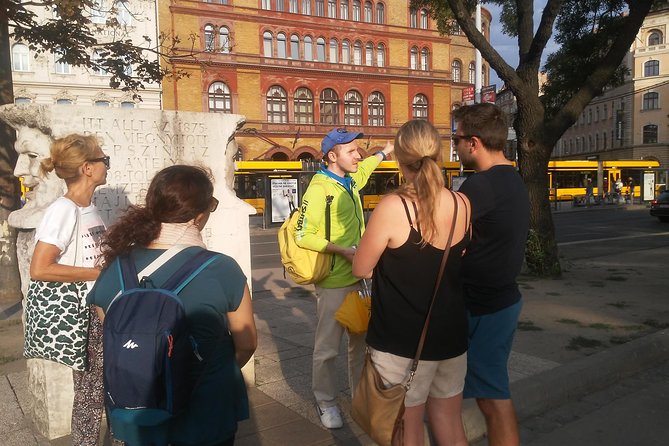
- Max 15 people keeps the tour conversational, not crowded
- Guide Victoria’s teaching style makes complicated history easier to follow
- Andrassy Avenue context shows how the city changed under different systems
- St. Stephen’s Basilica stop connects communism, Hungarian church life, and one football story
- Liberty Square focus brings in the Stock Exchange shutdown and protest memory
- Parliament and the 1956 uprising grounds the tour in a specific turning point
Walking communist Budapest, with a clear guide voice (English)
This is not a museum crawl. It is a focused walking tour that treats the city like a textbook, with stops chosen for what they can explain at street level. You’ll spend the evening moving through key areas, with your guide connecting buildings and public spaces to the communist period and its aftermath.
What makes this work well is the teaching style. Guide Victoria does more than recite facts. Her explanations have the structure and clarity you expect from someone used to teaching, and she keeps it moving so you are not stuck listening for long stretches without something new to look at.
More communist-era tours:
- Budapest: Communist History Tour with House of Terror Option
★ 4.8 · 182 reviews - Budapest: 3-Hour Walking Tour About Communism (Small Group)
★ 4.7 · 70 reviews - Communism in Hungary with a Historian
★ 5.0 · 70 reviews
The small-group size makes a difference
A tour capped at 15 people sounds like a throwaway detail, but it changes the vibe. You can hear the guide, ask questions, and actually track how each stop connects to the next. For an evening tour, that matters because fatigue can set in fast, especially if you get stuck in a long line or a noisy cluster.
If you prefer tours where the guide can answer your question instead of rushing past it, this group size is part of the value.
Start at Blaha Lujza tér, end near Kossuth Lajos tér
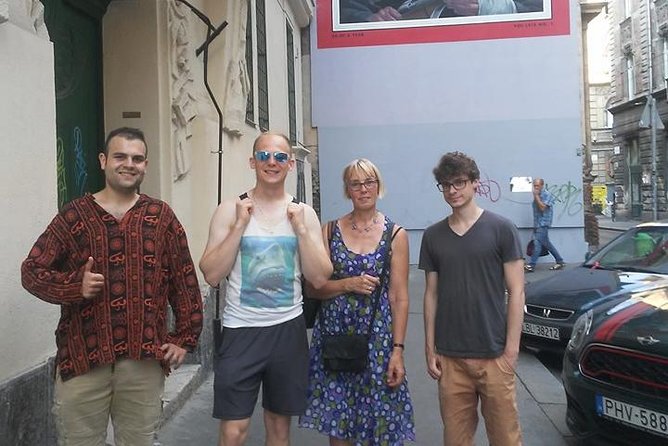
The tour begins at Blaha Lujza tér (1085) at 6:00 pm. You finish at Kossuth Lajos tér 1-3 (1055), close to the Kossuth metro line and tram 2. In practice, that end point is convenient if you want to keep exploring after the tour, because it drops you right where you can transition into other sights.
You’ll also have a mobile ticket, so you should be able to show your ticket right on your phone when you meet up. Confirmation is provided at booking, and the route runs near public transportation, which helps if you want an easy return plan after.
Andrassy Avenue: where the guide reads the city for you
Right after you start, you walk down Andrassy Avenue. This is a smart opening because it sets the lens for everything that follows. Your guide explains changes in the surrounding areas and points out former monuments, so you start noticing how Budapest’s public space can reflect shifting power.
Even if you already know Budapest for its big postcard views, this part is useful because it changes what you pay attention to. Instead of only looking at the architecture, you’ll look for signals of what came before, and what got replaced.
More History Tours in Budapest:
- Budapest: Historic Cruise with Welcome Drink
★ 4.7 · 6,512 reviews - Budapest Historical Sightseeing – Free Walking Tour
★ 5.0 · 1,302 reviews - Buda Castle District Dark History, Legends and Vampire Night Tour
★ 4.5 · 1,240 reviews - BloodThirsty Hungary: Walking tour & Dark Historical Stories
★ 4.9 · 633 reviews
Why this first segment matters
A lot of history tours start at a plaque and stay there. This one starts in motion. By the time you reach the first major stop, you understand the method: buildings and squares are treated as evidence, not just scenery.
St. Stephen’s Basilica: church, communism, and one football escape
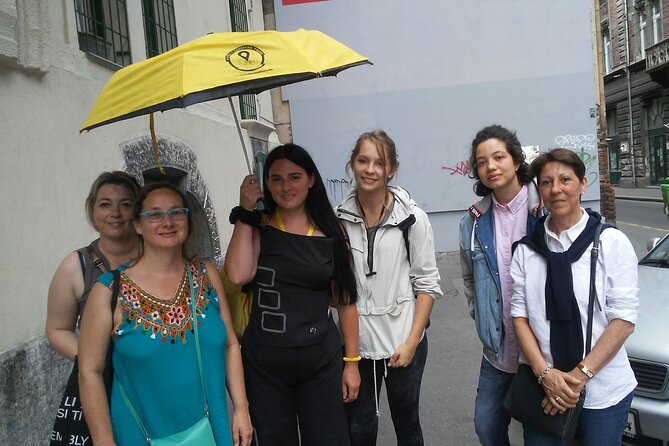
The first major stop is St. Stephen’s Basilica (Szent Istvan Bazilika). The tour ties communism to how the Hungarian church and religion were affected, so you are not only learning about politics. You are also seeing the overlap between state power and religious life, through the lens your guide brings to the building.
This stop also includes a more personal story element: a famous Hungarian football player who fled the communist system and was later buried at the church. Even without turning it into a dramatic tale, that human detail helps the history stick. You connect policy to an individual life, and then the church becomes more than a pretty interior landmark.
The good news for your planning: the stop lists admission as free.
A practical tip for this stop
This is the kind of site where you’ll likely want a bit of slow-looking time, even during a walking tour. If you care about photos, keep your camera ready, but also listen. The guide’s story is the point, not just the view.
Liberty Square: Stock Exchange history and protest memory
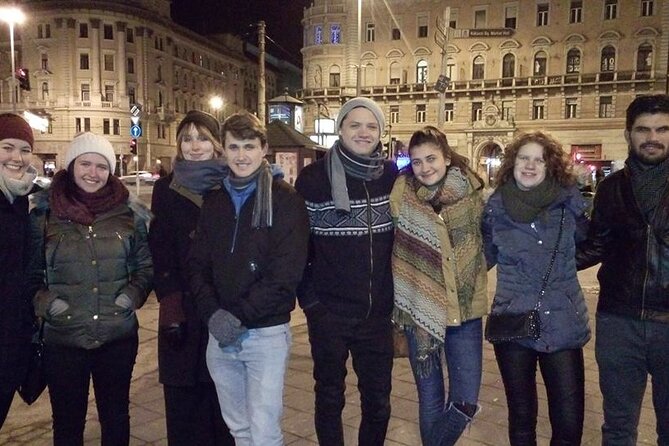
Next up is Liberty Square. This is one of the most compelling stops for anyone who wants communist history in Budapest to feel grounded and specific. Your guide explains that this is where the Stock Exchange used to be, and that it closed at the start of communism.
Liberty Square is also framed as a place of conflict, including bloody protests. That matters because it shifts the tone of the tour from buildings-as-style to buildings-as-evidence of tension. You’re seeing how public squares can become stages for resistance and for state response.
The stop lists admission as free, so you are not juggling tickets and timing.
What to watch for here
Try to keep an eye on the square as a whole, not just any single spot. Liberty Square is about the relationship between space and events, and the guide’s explanation helps you read why certain places become symbols.
Hungarian Parliament Building: the 1956 uprising, right where it happened
The tour’s final big stop is the Hungarian Parliament Building. This is where the tour brings you to a major turning point: the 1956 uprising against the ruling Communist party, along with the mention of considerable bloodshed.
You do not need extra imagination here. When you are standing at the seat of government, your guide’s focus makes the historical point feel immediate and weighty. The value is in how the tour links what you just learned at other stops to this final anchor moment.
As with the earlier sites, the stop is listed with admission as free.
A note on the ending
Because you finish on the Parliament side near Kossuth Lajos tér, it is easy to tack on more time for dinner or follow-on sightseeing in that area. Just plan that the tour ends where many people naturally want to continue, so you might find trams or metro queues forming depending on the time.
Guide Victoria’s impact: clear English, real context, and humor
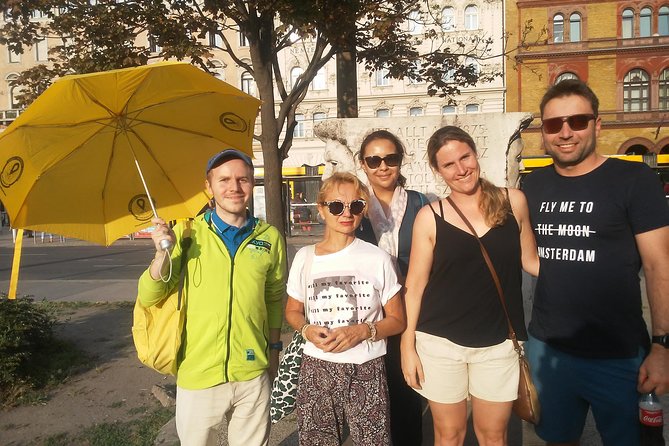
If you’re choosing between history tours, pay attention to the guide. Here, Victoria is a major part of the experience. The teaching style is described as professor-like, and her English is clear and easy to follow. That combination is important on a subject like communism, because the topic can get abstract if the guide talks like a textbook.
Victoria also uses stories and humor without turning the material into a joke. It makes the evening feel less like homework and more like a conversation with someone who understands the city and the subject.
Small-group attention you can feel
With a maximum of 15 people, the guide can manage the pace and adjust when questions come up. That is exactly what you want from an evening walk, because once you lose the thread, you lose interest fast.
Walking tour logistics that affect your comfort
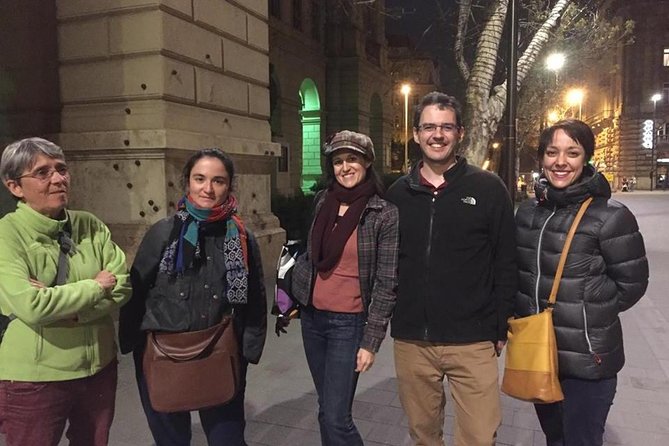
This is a walking experience with a 2 hours (approx.) duration. The tour requires you to be able to walk (or wheel) about 3 km yourself. That is manageable for many people, but it is still a real walk, so wear shoes you trust and plan for evening air and street conditions.
The route runs near public transportation, which is helpful if you need to jump on or off along the way. Bottled water is included, which is a simple but genuinely helpful inclusion when you are out for a couple hours in the evening.
There are also a few content fit notes:
- The tour is offered in English
- Service animals are allowed
- It is designed for most travelers, as long as you meet the walking requirement
Price and value: $36.01 for two hours of city-as-history
At $36.01 per person for about 2 hours, this is not the cheapest kind of walking tour. But it is also not asking you to pay extra for entrances, since the listed stops show free admission. Add in bottled water and a small-group size, and the value becomes clearer.
The biggest reason this can feel like good value is that you are paying for guidance that connects locations into a story. If you are the type of person who enjoys understanding why a place matters, this kind of tour can beat spending that time inside a museum where you can sometimes miss the political thread.
And if the communist topic sparks you, a logical follow-up is the Museum of Terror, which has been suggested as a great pairing for people who want to keep going after the walk.
Who should book this tour, and who might not
You’ll likely love this tour if you:
- Like history tied to real places, not just dates on a wall
- Want a guided explanation in English that stays focused on the communist era
- Prefer a small group with a guide who can answer questions
- Are comfortable walking about 3 km at an evening pace
You might choose something else if you:
- Do not want to cover politically heavy topics like protests and the 1956 uprising
- Have difficulty walking 3 km on your own
- Are looking for a purely scenic, low-information walk
Also, plan for some street noise. Urban meeting points can be busy, and the tour includes multiple street-side moments where background sounds can pop up.
Should you book? My honest take
Book it if you want a guided way to understand communist-era Budapest through the streets themselves, with Victoria’s clear, story-driven explanations and a pace that stays manageable for an evening. The price feels fair for what you get, especially because key stops are listed with free admission and you have a small group capped at 15.
Skip it only if walking 3 km is a stretch for you, or if heavy history is not your thing right now. Otherwise, this is a smart way to see Budapest with a sharper lens and come away with more than just photos.
FAQ
How long is the Communist History Evening Walking Tour of Budapest?
The tour is about 2 hours.
What time does the tour start?
It starts at 6:00 pm.
Where do I meet, and where does the tour end?
The tour starts at Budapest, Blaha Lujza tér, 1085 Hungary and ends at Budapest, Kossuth Lajos tér 1-3, 1055 Hungary. The end point is close to the Kossuth red line metro station or tram 2.
Is the tour offered in English?
Yes. The tour is offered in English.
What is the group size?
The maximum group size is 15 travelers.
How much walking is involved?
You must be able to walk (or wheel) 3 kms on your own.
What is included in the tour price?
The tour includes bottled water. The listed stops show admission ticket free for those segments.
Can I cancel for a full refund?
Yes, you can cancel for a full refund up to 24 hours before the experience’s start time. If you cancel less than 24 hours before, the amount paid is not refunded.
More Walking Tours in Budapest
- Budapest: Buda Castle Walk with Saint Stephen’s Hall
★ 4.5 · 3,012 reviews - Big Bus Budapest Hop-On Hop-Off Bus and Walking Tour
★ 3.5 · 2,206 reviews - Budapest: Buda Castle District Walking Tour
★ 4.6 · 2,108 reviews - Budapest City Landmarks Walking Tour in 2 Hours
★ 5.0 · 2,048 reviews
Latest to land in Budapest
- Visegrád Hike & Castle Tour with Ferry from Budapest★ 4.6 · 3 reviews
- Budapest: Vacation Photographer to collect great memories★ 5.0 · 49 reviews
- Trash Art Museum: Hungary’s First Scrap Metal Exhibition★ 4.3 · 72 reviews
- True Crime Walking Tour in the Buda Castle district★ 5.0 · 26 reviews
- Budapest: 3-Hour Trabant Sightseeing Tour★ 4.7 · 28 reviews
- Audio visual multi-sensory chefs journey dinner experience★ 5.0 · 3 reviews
- Private Szentendre and Vac Tour from Budapest with Transport★ 5.0 · 3 reviews
- Wine Tasting in the Countryside from Budapest★ 5.0 · 14 reviews
Communist History Tours, compared.
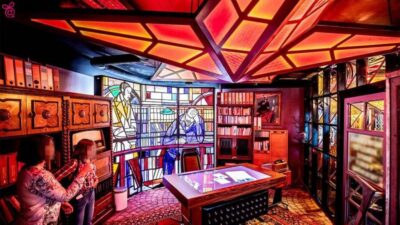
Communist History Tour with House of Terror Option
Read our review →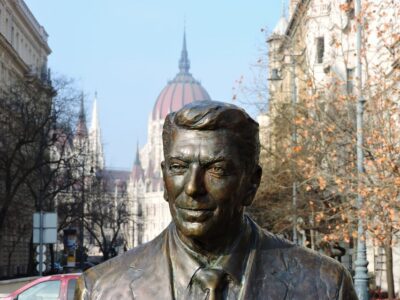
3-Hour Walking Tour About Communism (Small Group)
Read our review →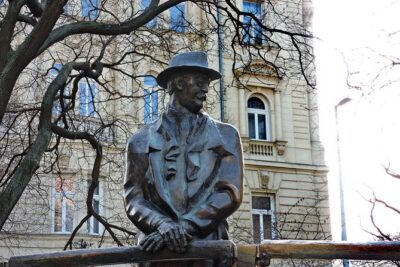
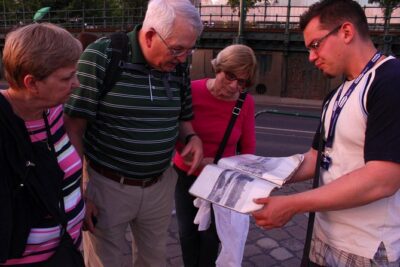
Memento Park Visit with Private Trabant Transfer
Read our review →
Browse the lists this tour appears in